THE PEOPLE HAVE SPOKEN.
You asked. You shared. You demanded it.
So we're bringing it back. The Gallery of Ruto's Lies returns for a special re-air today—the Eighth Day.
🕤 9:30 PM
Don't miss it. Only on KTN.
#ChekiKTN#FactsFirst
@WilliamsRuto William Samoei. You are a thief. You are a Murderer. You are an Arsonist. You are the Chief Extortionist. You are the chief Blackmailer. We are very happy that standard has never let go off your neck. Na wewe nakwambia siku yako inafika. We will stone you publicly like stephen
Trump’s administration is reportedly planning to send US citizens exposed to Ebola to Kenya for monitoring and care instead of returning them to the US, according to NYT.
Itumbi was in the boardroom discussing national matters while saying things like “ata leo trump ametweet akasema anaweza rudi Iran” .Bwana we put these clowns in government,and now the whole nation has become a circus
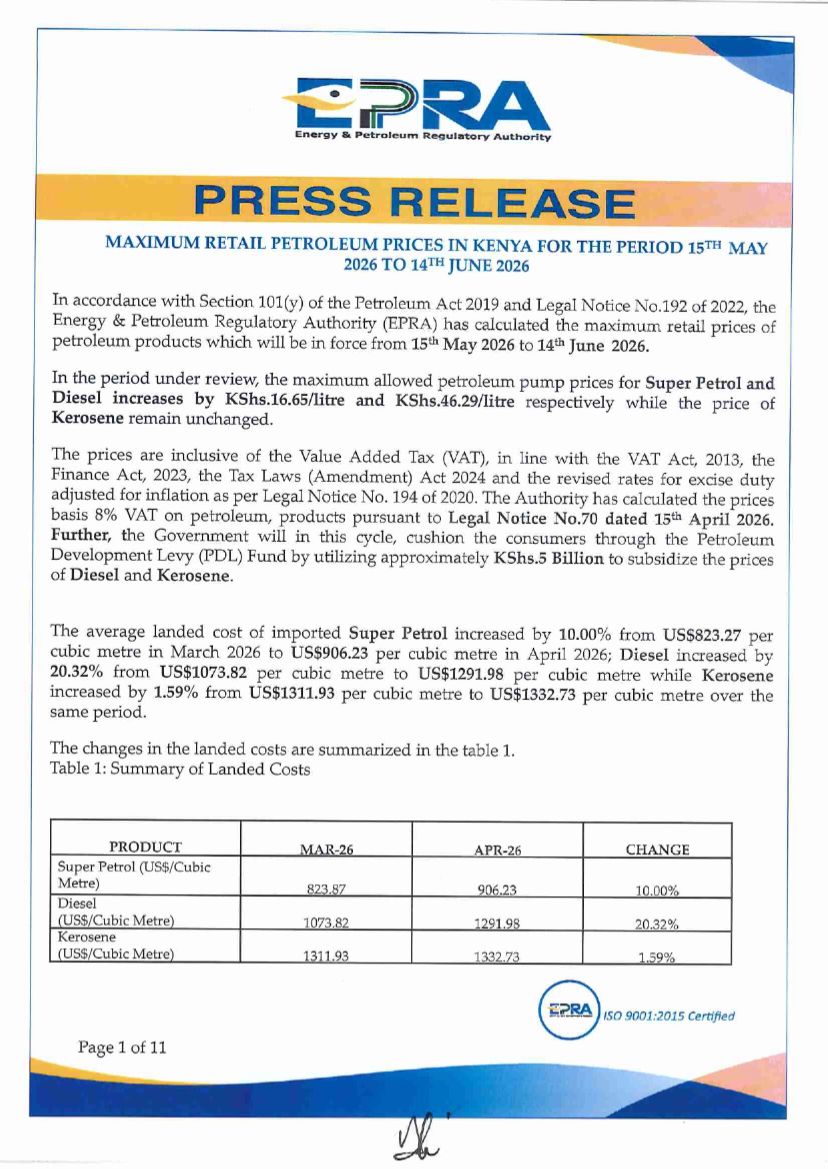
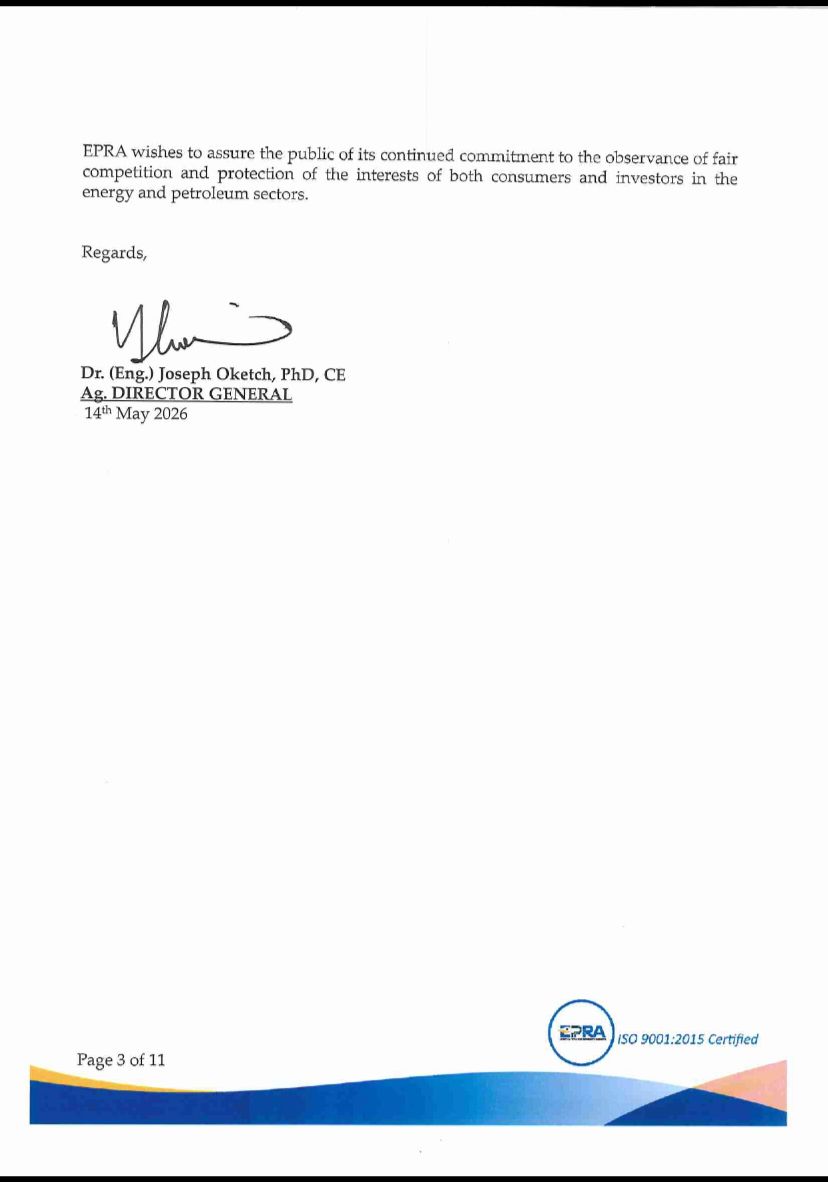
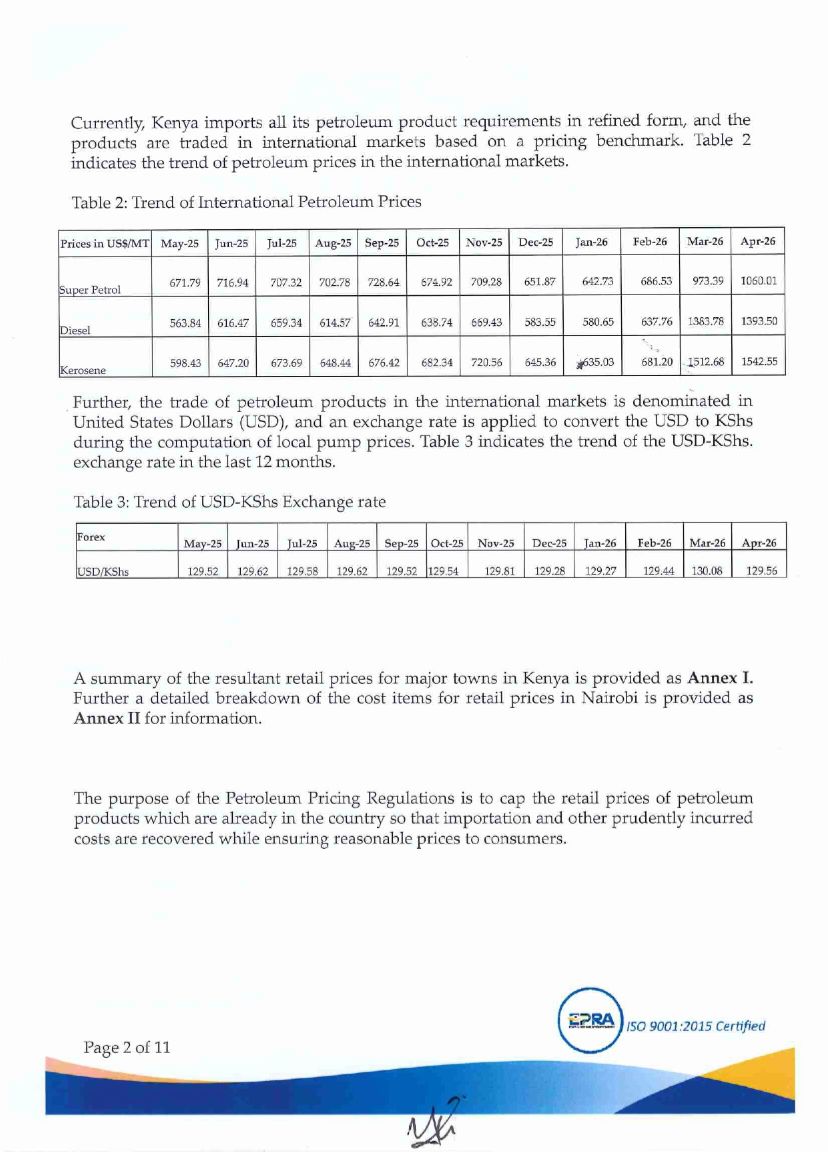
@EPRAKenya has released its Press Release for the period 15th May to 14th June 2026 pursuant to Section 101(y) of the Petroleum Act, 2019. Super Petrol goes up by Ksh.16.65 and Diesel by Ksh.46.29 per litre. EPRA states that the landed cost of Diesel surged by 20.32% which means it has increased from US$1,073.82 to US$1,291.98 per cubic metre.
The Government has deployed Ksh.5 Billion from the Petroleum Development Levy Fund, a fund built from levies Kenyans already pay at the pump, to cushion Diesel and Kerosene. That cushion is clearly not enough. Of concern is that VAT on petroleum has now been pegged at 8% pursuant to Legal Notice No.70 of 15th April 2026, down from 16%. That reduction should have meaningfully softened these prices. Yet here we are. Two consecutive brutal cycles.
Kenyans have a right under Article 35 of the Constitution to interrogate every line of this document. The PDL Fund is public money. Its deployment must be transparent and accountable. We will keep watching.
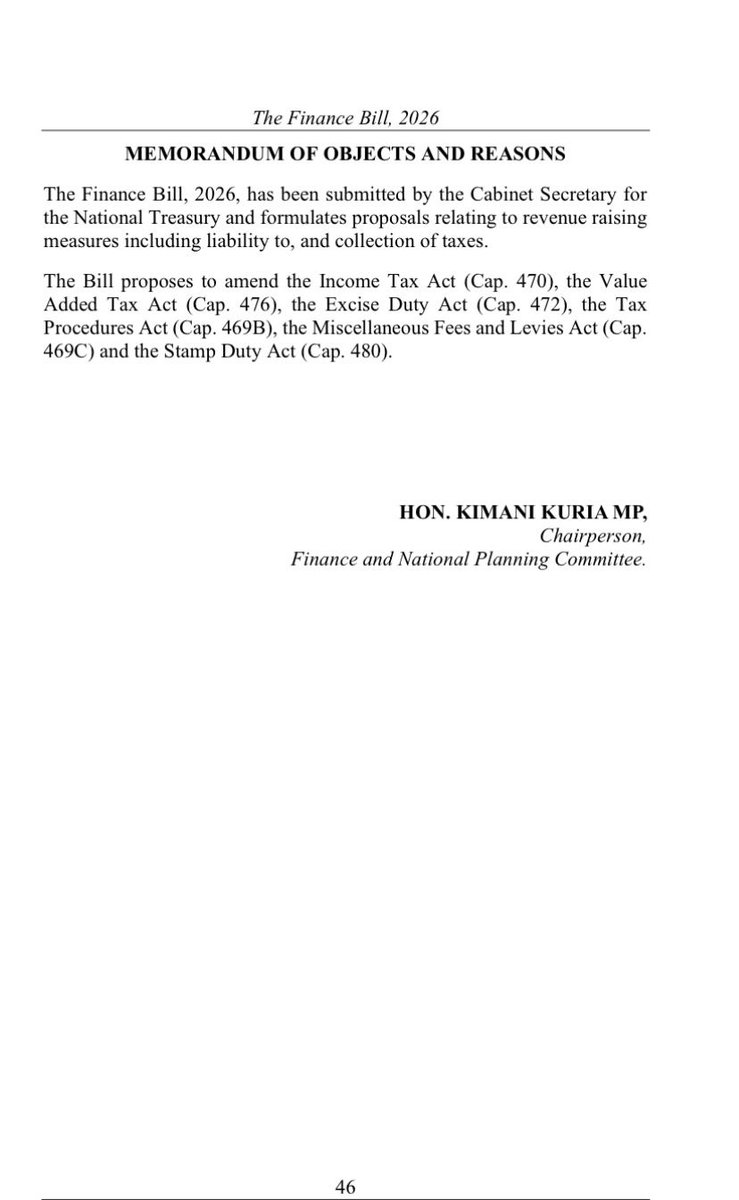
The Finance Bill, 2026 was published on 30th April and is now before Parliament and every Kenyan deserves to know what is in it.
The government targets Ksh3.63 trillion in revenue for 2026/27 and a wider budget deficit of 5.3% of GDP in the 2026/27 fiscal year (July-June) up from 4.7% in 2025/26. These are not unreasonable fiscal objectives but the manner in which the burden of achieving them is distributed is a cause for serious concern.
On tax filing timelines, the Bill moves the income tax return deadline to April 30th which is two months earlier than the current June 30th and compresses nil return filing to January 31st. This reduces the time available for audit completion, cash flow planning and compliance. For small businesses and individual traders, this is not administrative reform. It is an additional compliance cost they can ill afford.
On mitumba, the Bill inserts a new Section 12H into the Income Tax Act which deems profit at 5% of customs value payable upfront before goods are released by KRA as a final tax. A trader importing a bale worth Ksh1 million pays Ksh50,000 regardless of whether they make a profit or a loss. I cannot in good conscience describe this as equitable.
The Bill increases residential rental income tax from 7.5% to 10%. Absent a serious enforcement framework, this will drive non-compliance rather than revenue. The government must fix the enforcement gap before it increases the rate. One without the other is burden-shifting.
On digital financial services, the Bill removes existing VAT exemptions on money transfers and payment processing. These are the tools of financial inclusion that millions of Kenyans including the very people this government says it wants to reach rely on daily. Making them more expensive will not serve the objective of a broader tax base.
By including interchange and merchant service fees within the definition of management or professional fees for withholding tax purposes, the Bill introduces a compliance burden into automated banking processes. That burden will be passed on to businesses and ultimately to consumers.
The amendment to Section 24 of the Income Tax Act empowers KRA to deem at least 60% of a company's undistributed income as dividends for tax purposes. This fails to account for legitimate decisions on reinvestment, working capital and business growth. It is a retrogressive measure that sends the wrong signal to the investors Kenya needs.
A 25% excise duty on telephones for cellular and wireless networks is proposed. A phone is not a luxury. It is how Kenyans bank, communicate, conduct business and access government services. Parliament must interrogate this carefully.
On PAYE, Kenyans were led to expect relief and a restructuring of the tax bands to ease the burden on salaried workers. That proposal does not appear in this Bill. That is not a minor omission. An explanation is owed to every employed Kenyan who was waiting for it.
To be fair, the Bill is not without merit. The reduction of corporate tax for non-resident companies from 37.5% to 30% improves our investment climate. The extension of the tax amnesty to cover liabilities up to 31st December 2025 provides a genuine and welcome pathway to compliance. VAT exemptions on electric buses, bicycles, dialysers, animal feed raw materials and PPP infrastructure are sensible measures. The clarity introduced on trust taxation ensuring beneficiaries are not taxed on income already taxed at the trust level and the recognition of gratuity contributions as exempt income are also steps in the right direction.
Be that as it may, we cannot afford a repeat of June 2024. Parliament must discharge its oversight role with the seriousness this moment demands. They should not merely rubber-stamp what the Treasury has placed before it. Every clause must be scrutinised. Every punitive or ambiguous provision must be rejected or amended.
#FinanceBill2026 #PublicParticipation
Mr Six months!
The youngsters you promised laptops 8 yrs ago are now old enough to see through your LIES.
The youth you promised 8 million jobs in 8 yrs can see through the WHEELBARROW lie you are now peddling.
It has been 8 yrs Mr 6 months and not 3yrs.
No Mr 6 months!