Where to find my stuff:
FA: https://t.co/mSVIRhnB2P
Sexyfur: https://t.co/W9q80ABJ4H
Patreon: https://t.co/w8fdFqINAR
Subscribestar: https://t.co/n8atOP4W54
Facebook: https://t.co/R8TZUUpAwz
@NathanS_YT The only racism in this fandom is "reverse racism" or the racism of low expectations, and it comes from those proclaiming to be the most inclusive. Nobody else gives a shit.
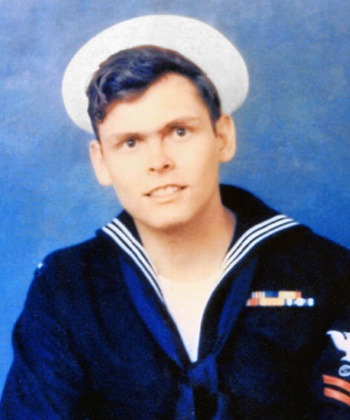
The guards in North Vietnam's prison camps had a nickname for one young American sailor: The Incredibly Stupid One.
In August 1969, they sent him home. It backfired on them. He walked out with the names of about 256 American prisoners hidden in his head, set to the tune of Old MacDonald Had a Farm.
Doug Hegdahl was a 20-year-old Seaman Apprentice from Clark, South Dakota. Before dawn on April 6, 1967, he stepped onto the deck of the cruiser USS Canberra while she was firing on the coast in the Gulf of Tonkin.
"All I know is, I walked up on the deck, it was dark and they were firing, and the next thing I recall I was in the water."
He floated for hours. Vietnamese fishermen pulled him out. On his own ship, the morning muster came up one man short. The crew searched twice and concluded he had gone over the side.
His captors refused to believe anyone falls off a warship by accident. They beat him as a spy.
So he gave them what they wanted to see. He told them he could not read or write. When an interrogator asked what he wanted most, he said, "Why, I'd like a pillow, Sir."
They stopped worrying about him. They handed him a broom and let him sweep the camp.
Every yard he swept was a chance to learn another name.
An Air Force prisoner named Joe Crecca taught him how to memorize. Name. Date of capture. How he was captured. A dog's name, a kid's name, a Social Security number, anything a family could check. Verse after verse, he sang it to himself until it stuck.
He also went after the camp trucks with a little dirt in the fuel tanks. Five of them stopped running.
The prisoners lived by a rule: nobody accepts early release while his brothers stay behind. Hegdahl did not want to go. His senior officer, Lt. Cmdr. Richard Stratton, made it an order. As Stratton later explained it:
"You are the most junior. You have the names."
On August 5, 1969, the North Vietnamese released him as a propaganda gesture. Back home, he sang the list to American officials. Families who had been told their sons were missing learned they were alive.
The next year he flew to Paris and confronted North Vietnam's delegation over the treatment of American prisoners. Stratton later believed it helped keep him alive.
They called him the dumbest man in the camp.
He carried more than 250 families home inside a nursery rhyme.
In 1944, thousands of Japanese on Saipan hid in caves, sure the Americans would torture them if they came out. Many families chose the cliffs instead.
An 18-year-old American Marine from East Los Angeles walked up to those caves at night, alone, and called to them in Japanese.
His name was Guy Gabaldon. He was a Mexican American kid who had grown up partly in the home of a Japanese American family, the Nakanos. That is where he picked up his Japanese. When the war came, the Nakanos were sent to internment camps. Their twin sons, Lane and Lyle, joined the U.S. Army anyway and served in the 442nd.
Fifty years later, he still said it plainly: "These were Americans."
On Saipan, Gabaldon was a scout with the 2nd Marine Regiment. Right after landing, he slipped off on his own and came back with prisoners. His commanding officer, Capt. John Schwabe, threatened him with a court-martial for leaving his post.
The next night, he came back with about fifty.
After that, they let him go out alone.
He crawled to the cave mouths in the dark and promised the people inside water, medical care, and that nobody would hurt them. Night after night, ten or twenty at a time, they followed him out.
On July 8, by his own account, about 800 came out in a single day. Schwabe remembered that day too. It was the day they tagged him the Pied Piper of Saipan.
Not everyone listened. At the cliffs, he begged a mother not to kill her child. He watched her throw the baby and jump. He was still talking about it fifty years later.
His Navy Cross citation says that on Saipan and Tinian he brought in "well over one thousand enemy civilians and troops."
Schwabe recommended him for the Medal of Honor. He received the Silver Star. Sixteen years later, after Hollywood made a movie about him, the Navy upgraded it to the Navy Cross.
He died in 2006 and is buried at Arlington National Cemetery.
I am Japanese. Those caves were full of my people, frightened, starving, and certain that the Americans were monsters.
An American teenager walked toward them in the dark and offered them water.
On this Veterans Day, Japan should know his name.
After looking at a lot of options for what to do with 25+ years of old work, I decided to let some robots take a crack at fixing and rebuilding the old https://t.co/zPirE50Ijb site. They did an impressive job piecing it back together — and they added something new: anyone who subscribes on Patreon or SubscribeStar gets tier-specific access to the archive, authorized through Discord.
Everything up through 2021 should be live later tonight. Work from then to now will go up as we finish testing. Depending on the piece, that can include sketches, web-res, high-res, PSDs, and speedpaints where we have them.
Once we’ve kicked the tires a bit more, I’ll go back through all the older work and post the high-res files and PSDs for those as well.