🔬 #ESMO26 | La Dra. @rebecaLozMe, portavoz de @_SEOM, analiza DASL-HiCaP (LBA4), presentado en la Sesión Presidencial del Congreso de @myESMO 2026.
🧬 Darolutamida + radioterapia + privación androgénica mejora la supervivencia libre de metástasis en cáncer de próstata: 95% vs. 88% a 4 años.
🔬 #ESMO26 | La Dra. @rebecaLozMe, portavoz de @_SEOM, analiza VOLGA (LBA2), presentado en la Sesión Presidencial del Congreso de @myESMO 2026.
🧬 Durvalumab + enfortumab vedotina mejora la supervivencia global en cáncer de vejiga músculo-invasivo: 78% vs. 69% a los 2 años.
🔬 #ESMO26 | El Dr. @ivanpantic1980, portavoz de SEOM y presidente del @GrupoMelanoma, analiza INTerpath-001 (LBA1), presentado en la Sesión Presidencial de @myESMO 2026.
🧬 Primera fase III positiva de una terapia individualizada de neoantígenos basada en ARNm en melanoma #ESMO26
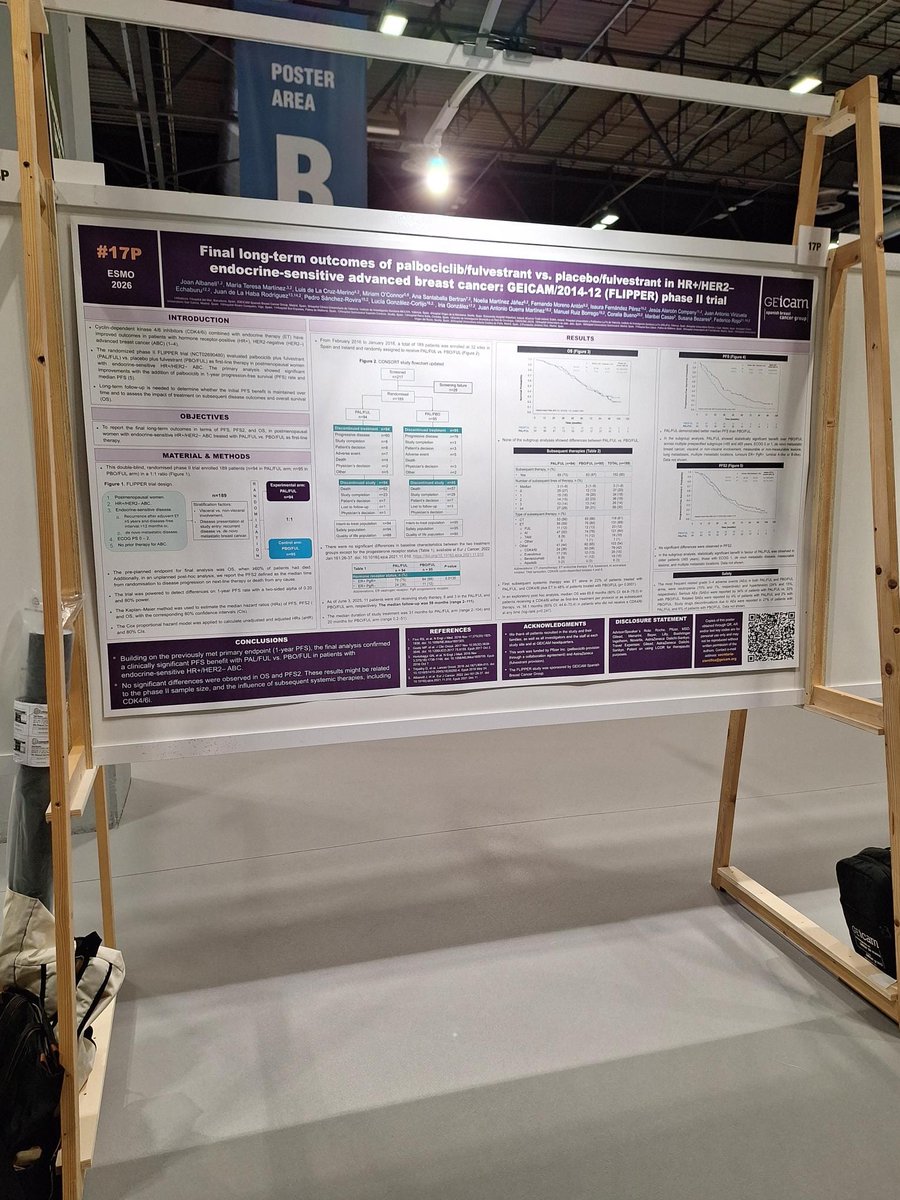
🔬 ¿Qué aportan los resultados a largo plazo del ensayo FLIPPER sobre el tratamiento del cáncer de mama avanzado RH+/HER2− sensible a la hormonoterapia?
Fin de semana muy activo #ESMO26, GEICAM - Spanish Breast Cancer Group ha presentado el análisis final del ensayo de fase II FLIPPER (GEICAM/2014-12), que evaluó palbociclib en combinación con fulvestrant frente a placebo y fulvestrant como tratamiento de primera línea en mujeres posmenopáusicas con cáncer de mama avanzado RH+/HER2− sensible a la hormonoterapia.
📊 Con 189 pacientes y una mediana de seguimiento de 59 meses, los resultados finales confirman el beneficio clínicamente significativo en supervivencia libre de progresión (PFS) observado con la combinación de palbociclib y fulvestrant.
Sin embargo, no se observaron diferencias significativas en supervivencia global (OS) ni en PFS2, un indicador que mide el tiempo desde la aleatorización hasta la progresión durante la siguiente línea de tratamiento o el fallecimiento. Estos resultados podrían estar condicionados por el tamaño de la muestra y la influencia de los tratamientos sistémicos posteriores, incluido el uso de inhibidores de CDK4/6.
🧬 Este seguimiento a largo plazo amplía la evidencia sobre los resultados de la combinación de palbociclib y fulvestrant y aporta información sobre la evolución de la enfermedad más allá de la primera línea de tratamiento.
🔗 https://t.co/ssdgn4cazc
🟣 #ESMO26
🔎¿Influye el patrón de recaída tras la hormonoterapia adyuvante en el pronóstico del cáncer de mama avanzado?
🔬 En #ESMO26, ponemos el foco en hallazgos de gran valor para comprender el impacto del patrón de recaída en el pronóstico y la respuesta al tratamiento del cáncer de mama avanzado RH+/HER2−. El subanálisis del estudio observacional RegistEM (GEICAM/2014-03), presentado en formato póster por la doctora Ariadna Tibau, miembro de GEICAM e investigadora del estudio, analiza los resultados de los tratamientos de primera línea en pacientes que recaen tras recibir hormonoterapia adyuvante.
🧪 El análisis incluyó a 880 pacientes de 39 centros de la red de GEICAM. Quienes presentaban resistencia endocrina primaria, definida como recaída durante los dos primeros años de hormonoterapia adyuvante, obtuvieron peores resultados en respuesta, beneficio clínico y supervivencia.
📉 La mediana de supervivencia libre de progresión fue de 7,5 meses en este grupo, frente a 12,8 meses en pacientes con resistencia secundaria y 21,8 meses en aquellas con enfermedad sensible a la hormonoterapia. Las medianas de supervivencia global fueron de 35, 46,4 y 56,3 meses, respectivamente.
📊 Estos datos de práctica clínica real destacan el valor pronóstico del patrón de recaída y la necesidad de estudios prospectivos que incorporen biomarcadores moleculares para optimizar la secuencia de tratamientos y evaluar nuevas estrategias terapéuticas.
🔗 https://t.co/H0zwPfGh8y
🟣 #ESMO26
Impressive results Academic III PERSEE #ESMO26@Annals_Oncology First positive random trial adding chemo to pembro in PD-L1 ≥50% NSCLC:
🔹 PFS: 16.1 vs 6.9 mo HR 0.56
🔹 OS: 50.2 vs 29.9 mo HR 0.77, NS
🔹 G≥3 TRAEs: 54% vs 19%
Outstanding discussion Prof. Levy
@benlevylungdoc.
#ESMO26 🧬 CheckMate 8HW | Final OS
📖 Simultaneous publication in Annals of Oncology!
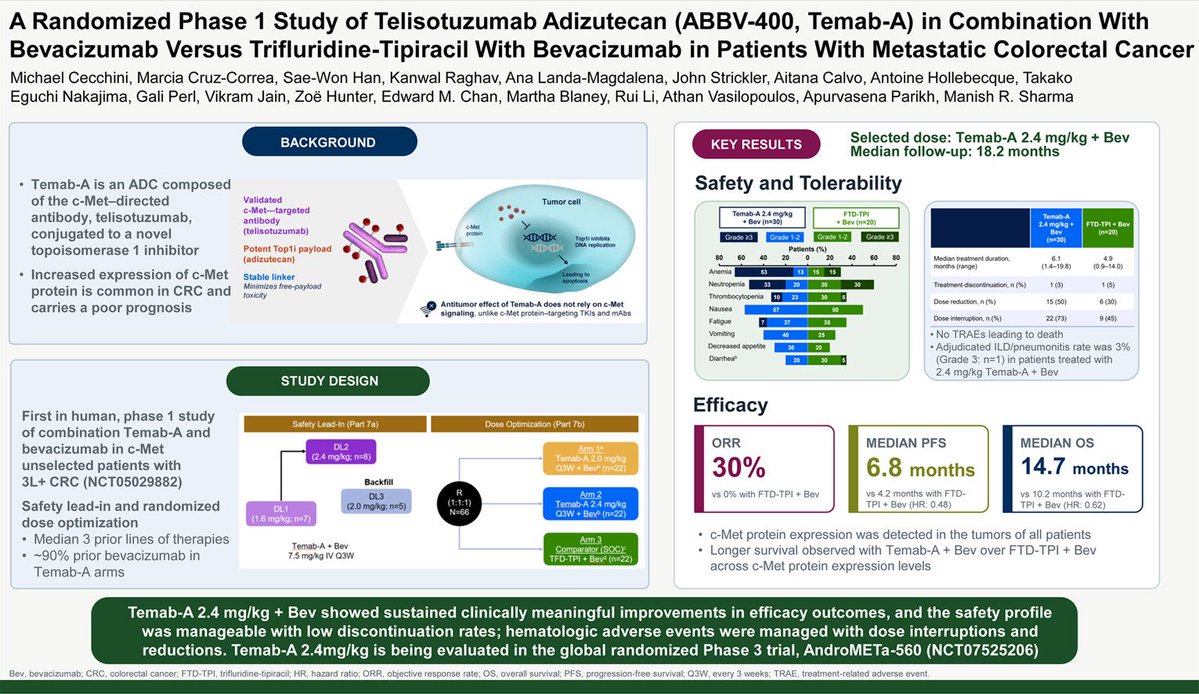
👥 MSI-H/dMMR mCRC | NIVO+IPI
🚀 OS benefit:
🔹 vs NIVO (all lines): HR 0.61 ✅
🔹 vs chemo (1L): HR 0.37 ✅
🔹 vs NIVO (1L): HR 0.66 ⚠️ NS
💡 NIVO+IPI reinforces its role as SOC!
🔗 https://t.co/pjcfidaeHF
@OncoAlert
#ESMO26 🧬 ACTICCA-1 | Phase III
📖 Simultaneous publication in Annals of Oncology!
👥 591 pts | Resected BTC
💊 CisGem vs capecitabine
❌ Primary DFS endpoint not met
📈 DFS: 25.7 vs 17.9 mo (p=.097)
⏳ OS: 58.1 vs 48.2 mo (NS)
⚠️ Higher toxicity with CisGem
🔗 https://t.co/TFsVErq6sp
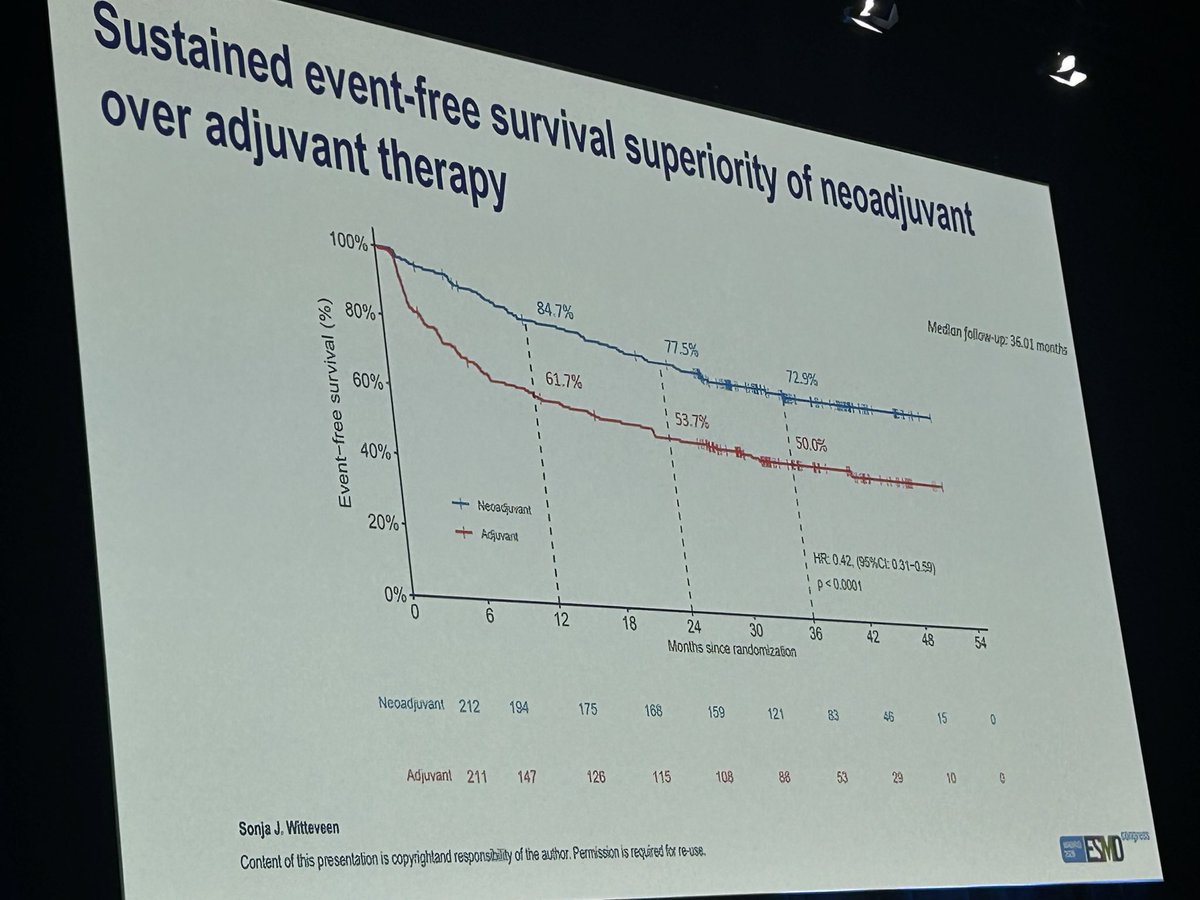
My personal take on the (again) NADINA up date: we cannot omit adjuvant therapy in near pCR; only in pCR #melanoma#ESMO2026@GrupoMelanoma . Before making decisions from asumptions from small trials, we should think about how we translate them into confirmatory trials.
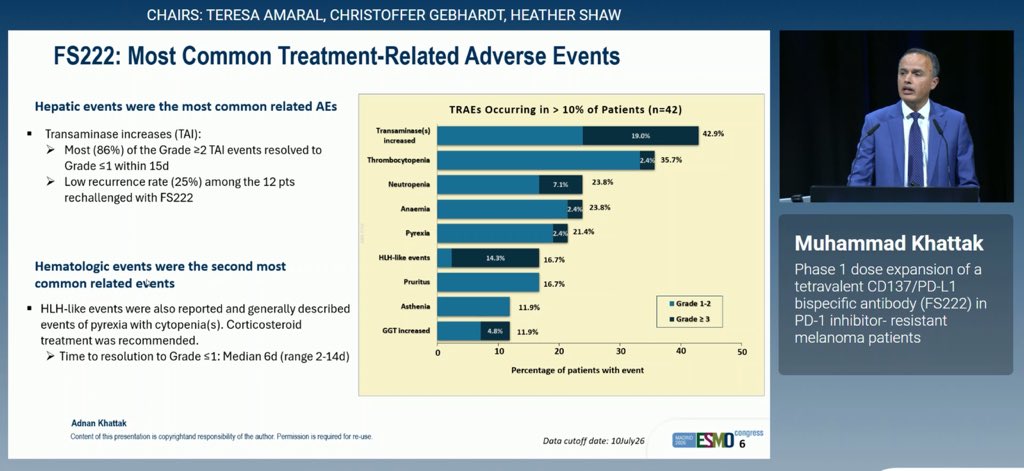
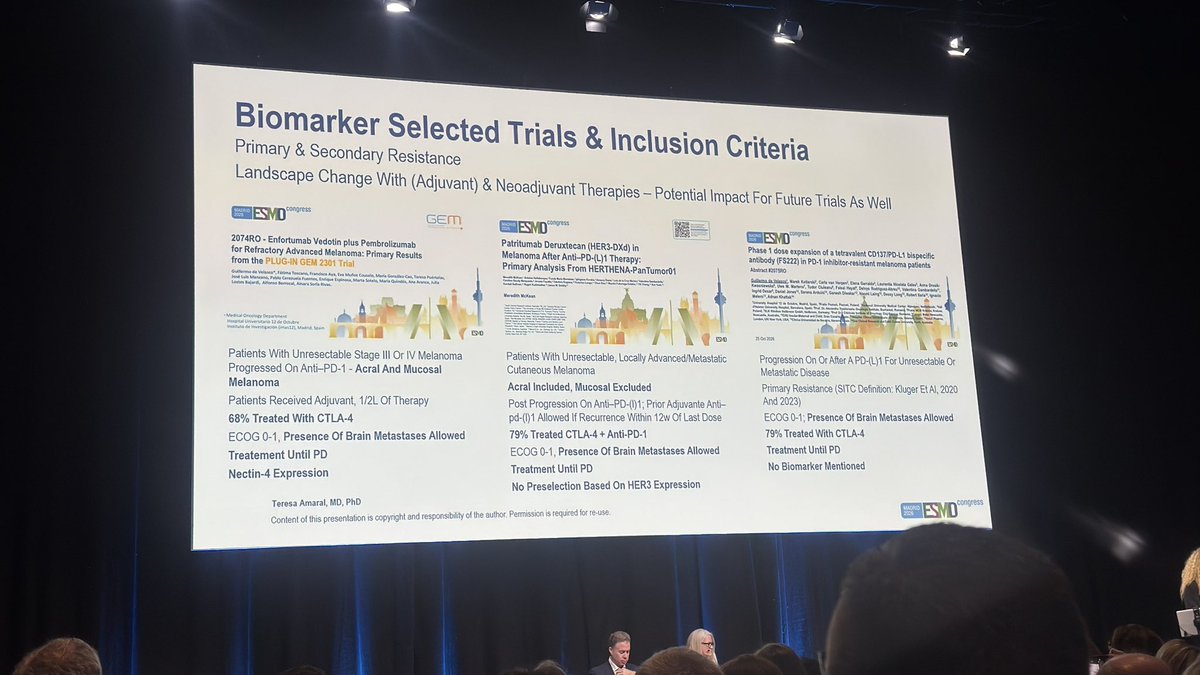
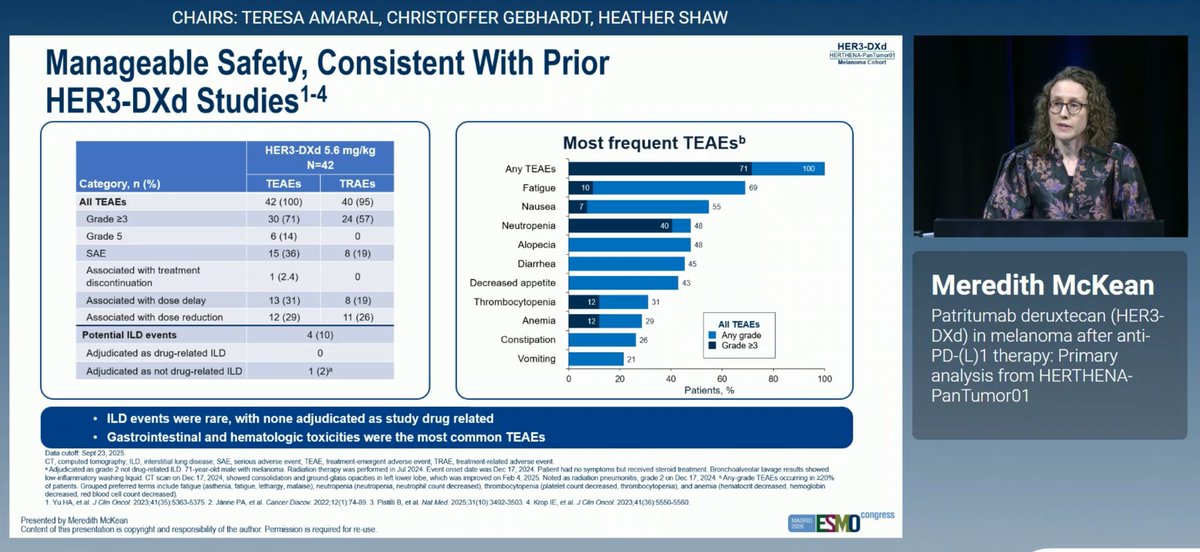
👑 Brilliant discussion by @TeresaSAmaral (the BEST!!!!!!) at #ESMO26 on the evolving post–PD-1 melanoma landscape.
Three very different strategies, remarkably similar signals:
▪️EV + pembro: ORR 32%
▪️HER3-DXd: ORR 21%
▪️FS222: ORR 36%
But the real message: ORR 30% is no longer enough! We need smarter trial populations, earlier referral, meaningful biomarkers and better representation of acral/mucosal melanoma.
@OncoAlert@OncoReporte@myESMO@_SEOM@GrupoMelanoma
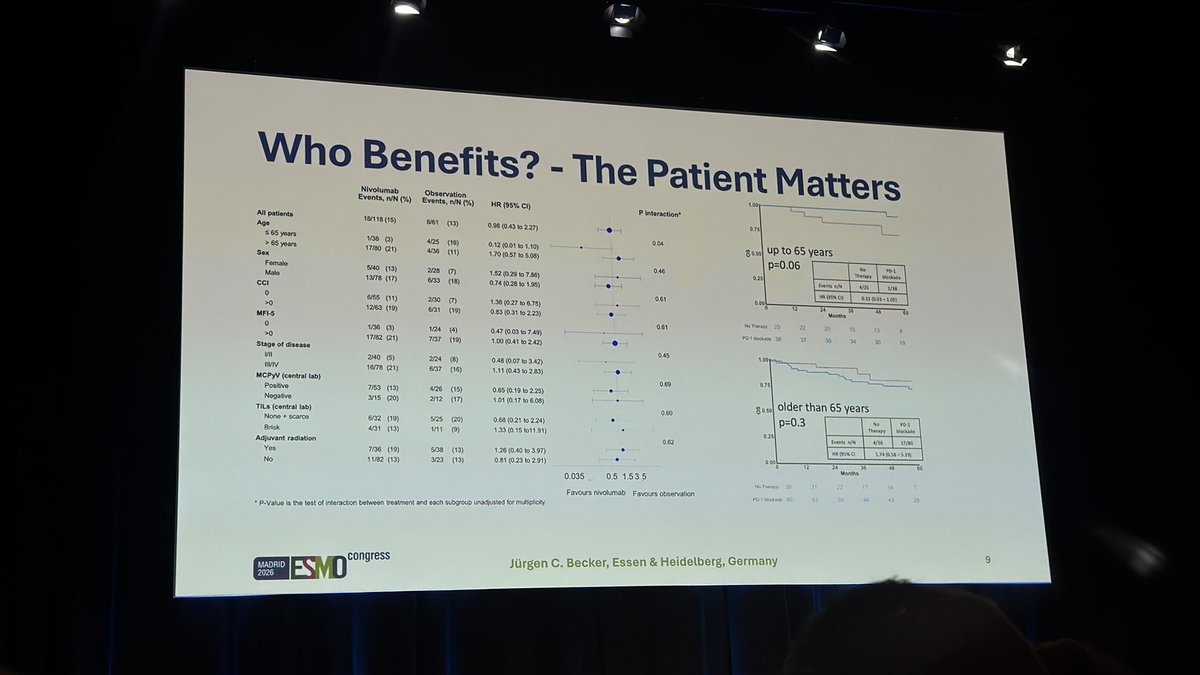
💡#ESMO26 | Long-term ADMEC-O in resected Merkel cell carcinoma
Adjuvant nivolumab vs observation:
▪️ DFI HR 0.54 | DFS HR 0.70
▪️ But no OS benefit → HR 0.98
The interesting part? Mature TLS could identify patients more likely to benefit, while host fitness may determine whether recurrence prevention translates into survival….
Perhaps ADMEC-O is telling us the “O” should stand for Optimize who we treat 🤔
@OncoAlert@OncoReporte@myESMO@_SEOM@GrupoMelanoma
IROCAS trial presented #ESMO26
Have we hit a wall in high risk pathological or ctDNA+ st III CRC (data from DYNAMIC-III?
👉intensifying with irinotecan doesn't work We need to better understand the cancer biology behind these results? #ESMOAmbassadors@myESMO@GrupoTTD@_SEOM
🚨 #ESMO26 | Can IO make surgery unnecessary in cSCC? MATISSE-2: 41 pts with resectable cSCC received neoadjuvant nivo/ipi → nivo
▪️ 25/41 (61%) achieved clinical CR
▪️ No surgery, RT or maintenance therapy in responders
▪️ Median time to cCR: ~ 2 months
▪️ G3–4 immune toxicity: 17%
▪️ No surgical delays or unresectable disease in non-responders
But an important caveat from the discussion: clinical CR may not equal pathological CR….and median follow-up is still only 11 months ☝🏼
A potentially practice-changing concept, but I think we need to know whether “no visible tumour” can safely become “no surgery”!!
MATISSE may be teaching us that sometimes the best surgical masterpiece is the one you never have to paint 🤔
@OncoAlert@OncoReporte@myESMO@_SEOM
🔥🎯 #ESMO26 NADINA, 3y update
Neoadjuvant ipi-nivo vs surgery + adjuvant nivo in macroscopic stage III #melanoma
➡️ 3y EFS 72.9% vs 50.0% | HR 0.42
➡️ 3y DMFS 75.3% vs 57.4% | HR 0.46
➡️ 3y RFS: pCR 91% | near-pCR 62% | pPR 88% | pNR 43%
➡️ G≥3 TRAEs 32% vs 16%
🔍 Read it next to the INTerpath-001 hype: in macroscopic stage III, adjuvant PD-1 alone is no longer the bar.
‼️: ~9% relapse after pCR, and near-pCR (no adjuvant) does worse than pPR (adjuvant given). Room for IO in 1-10% RVT?
🧬 RVT carries its own immune biology.
@myESMO@OncoAlert@_SEOM@brunolarvol
#Melanoma