We are cxcited to represent UCLA Chemical & Biomolecular Engineering at the #APS2025 Global Physical Summit @APSPhysics! 🚀 Our group will present 9 talks + 4 posters showcasing our latest research. Check out our lineup, and we hope to connect with you there!
The result? Cross-linkable polymers that gel rapidly and achieve robust adhesion across diverse surfaces - marking a stark enhancement in properties compared to conventional catechol-based wet adhesives.
Dive into the full details of our work here: https://t.co/79RHO0IVgC
In this work, we utilize ring opening polymerization and thiol-ene click chemistry to produce triblock polycatechol (tbPC) - polymers that feature high density of catechol endblocks bridged with a hydrophilic PEG middle block.
Excited and proud of Advait Holkar, a graduate of our lab, who has been selected as an Activate Fellow! He is launching Prāio Inc., which will focus on enabling low-cost production of sustainable aviation fuel (SAF) through a pioneering protocellular biocatalysis platform (1/2)
🚀 The latest study from @samanvaya's group shows that comb polyelectrolyte stabilizers improve coacervate microdroplet stability for drug delivery. Thanks to @BioPACIFICMIP, high-throughput materials characterization was possible.
https://t.co/fLAbzBk0pc
@softmatter@cnsiatucla
An increase in the salt resistance of the coacervates upon introduction of cPEs is seen to be maintained over 15 days, underlining the role of cPEs in imparting and maintaining stability over extended durations. (6/6)
Number density and avg. microdroplet size are shown to be controlled by varying the cPE and salt concentrations. Turbidity maps, akin to binodal phase maps, depict an expansion of the turbid two-phase region. (5/6)
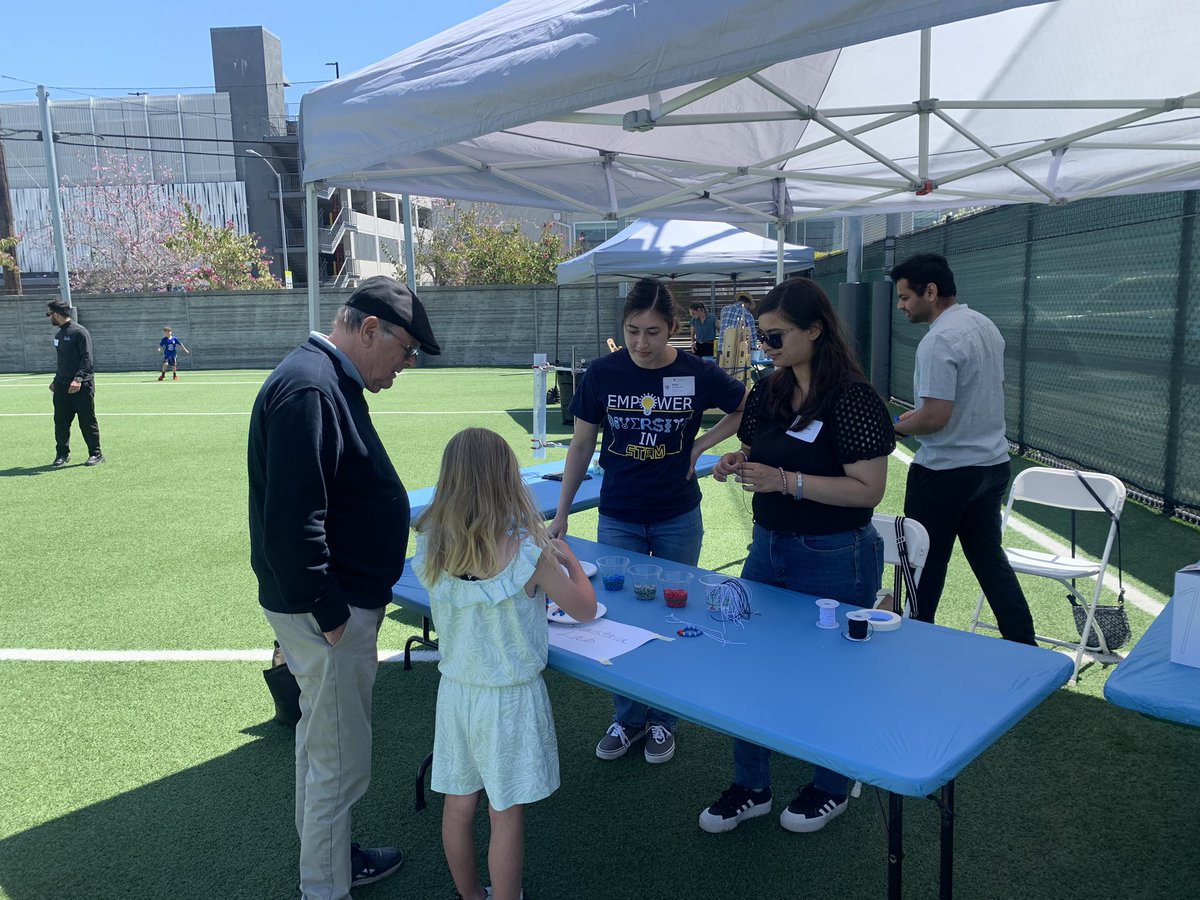
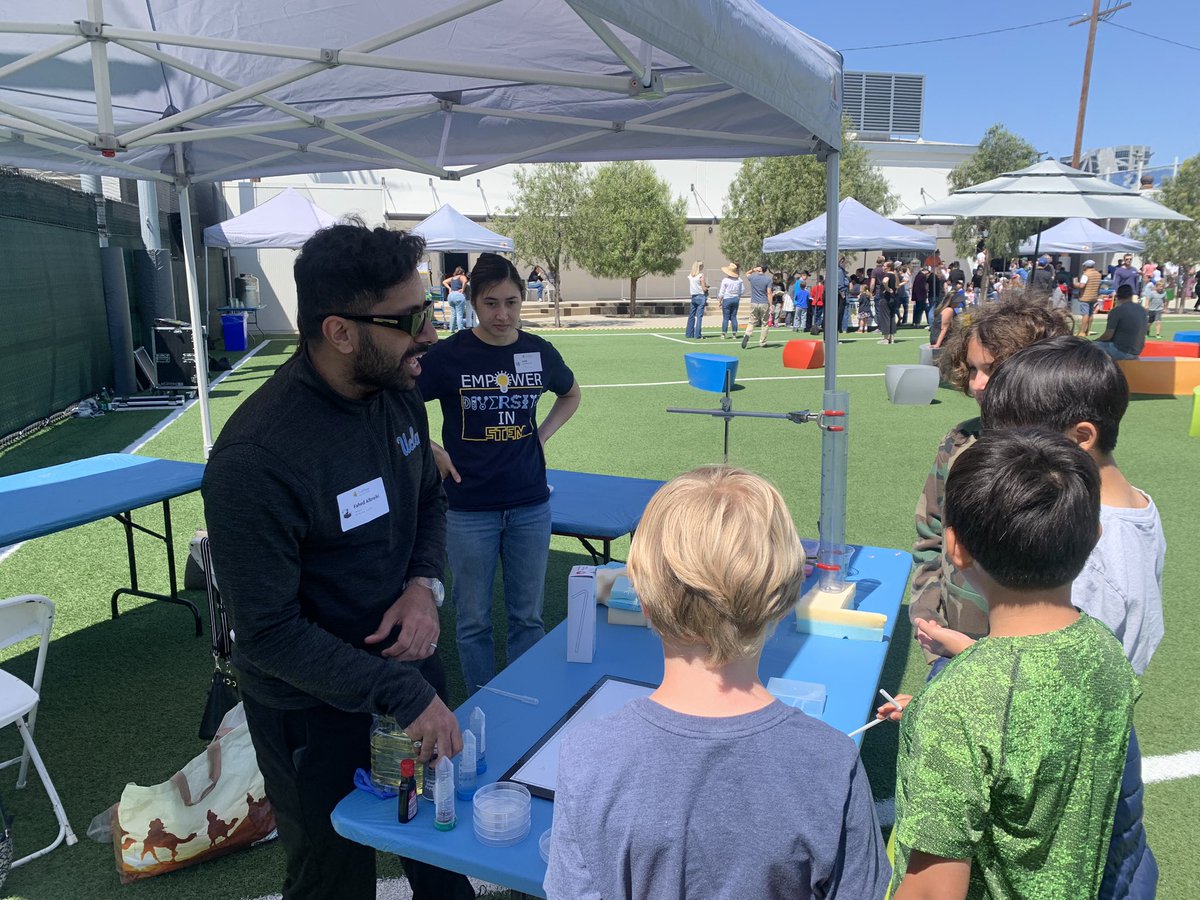
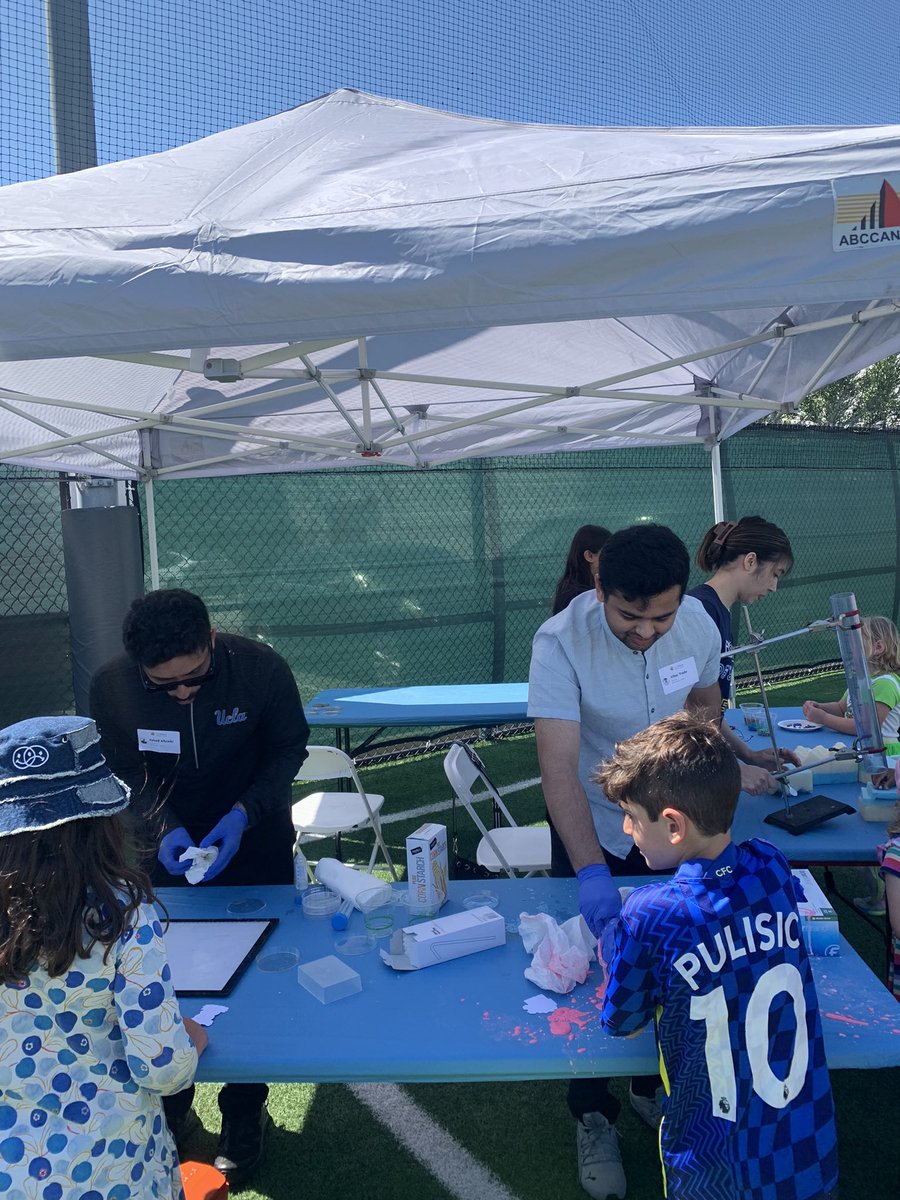
Our group members spent a fun afternoon at the Willows Community School’s Sunday Funday with 100+ kids excited to learn about polymers, surface tension and complex fluids!
🔬 The latest paper from @BioPACIFICMIP researchers @FahedAlbreiki and @samanvaya from @UCLA in collaboration with project scientist Juan Manuel Uruena reveals how block polyelectrolyte additives enhance #3Dprinting of biopolymer inks.
Read it here: https://t.co/9kGVkuzeD0
Our work on enabling 3D printability of gelatin inks in physiological conditions by utilising self-assembled block polyelectrolytes scaffolds is out: https://t.co/ee2Sc2y98R
Congrats to Tobias, @FahedAlbreiki, @DefuLi8 & Alisa!
@samanvaya@UclaCBE@BioPACIFICMIP@ACSPublications
We provide insights about their viscoelastic properties and 3D printability assessments.
Thanks to our collaborators at @KITKarlsruhe and @BioPACIFICMIP for their valuable contributions!
@UclaCBE@UCLAengineering
Our work on enabling 3D printability of gelatin inks in physiological conditions by utilising self-assembled block polyelectrolytes scaffolds is out: https://t.co/ee2Sc2y98R
Congrats to Tobias, @FahedAlbreiki, @DefuLi8 & Alisa!
@samanvaya@UclaCBE@BioPACIFICMIP@ACSPublications
We developed inks comprising gelatin and block polyelectrolyte scaffolds that were printable at physiological temperatures in commercial extrusion-based printers w/ high resolution (<0.5 mm).