I am not sure if this was a serious question or not. But the way I code these days is that I first discuss a feature with my agent. After we have agreed on the implementation shape, I let it implement it.
After the first implementation pass, I start to skim the code. At that stage, I am not really reading it yet. I ask some questions about design decisions and instruct the agent to make changes if I see fit.
After I am happy with the overall design decisions, I start to read every line. I ask for changes if needed. Only after I understand all of the changes and have approved them does the code get committed.
I would say that I am capable of moving twice as quickly as before. At the same time, I am increasing my overall code quality and just how well done everything is.
Part of me is sad that @Techweek_ is over now. But another part of me is relieved. Being there 14 hours a day, going to interesting events, and networking with amazing people is soooo exhausting.
@tugot17 How is the intelligence / FLOP profile looking for a hybrid vs. a local + global attention model?
My assumption was always that they are basically the same, but just that the hybrid one is a lot more complex.
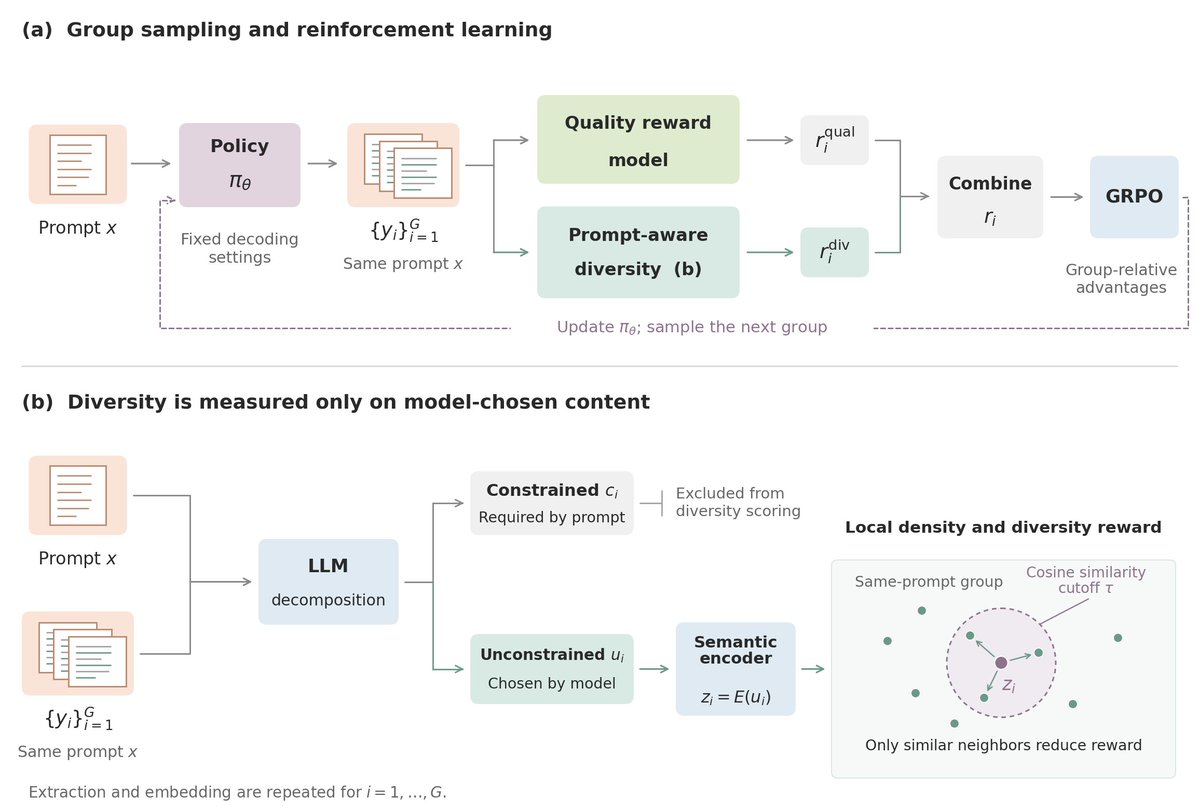
You can’t solve AI slop without solving AI diversity.
So we came up with a new RL strategy for creative writing, one that explicitly trains for diversity across generations.
https://t.co/LmgaNvtsoH
@JonasAndrulis I know your where joking, but I belief Anthropic actually pays a psychiatrist to talk with every new Claude model before release, to make sure it is mentally well balanced
@kwangmoo_yi Funnily enough I concluded the same thing a couple of years ago, this is why I started to build @pageshiftAI my research lab building model just for creative writing