MIT published a brutally honest report on what AI is doing to students.
A committee of professors and students spent five months studying how AI changed learning on campus, and the findings read like a warning to every university on the planet.
Study groups are disappearing. Office hours are emptying out. Problem sets and take-home exams no longer prove anything, because AI can produce credible solutions to almost any written assignment in the undergraduate curriculum. Students who lean on chatbots lose mastery and confidence, and some slip into what the report calls cognitive surrender, reaching for AI at the first hint of struggle.
The numbers are rough. 46 percent of surveyed MIT undergrads use LLMs daily. 90 percent worry about their own overreliance. Undergrads who feel AI makes them replaceable now outnumber those who feel it makes them capable.
The committee's answer surprised me. They refused to fight AI with surveillance. The report calls AI detectors unreliable, says lockdown browsers feel like spying, and warns that policing students builds a classroom atmosphere of mutual distrust.
Instead, MIT wants to rebuild education around the things AI can't replace. That means oral exams, semester portfolios, in-person project work, and a required social component in every subject. The report even floats the idea of rethinking grades entirely, since without a GPA to optimize, much of the incentive to cheat with AI evaporates.
The committee warns professors against replacing undergrad research assistants with AI agents just because they're cheaper, because a university exists to grow people, not output.
The most famous tech school on earth admitted the machines broke its way of teaching. Its answer is more humans, not more software.
Quantum-safe timelines are moving, and the window to avoid the rush is closing. In this article, I look at the threat, cost of the rush, parallels with Y2K, and what to do about it; plus who stands to gain.
https://t.co/UB7ipWoL90
#PostQuantumCryptography#StrategicPlanning
My first Substack; talking oil majors and the opportunity to tokenise assets that could unlock value hidden deep within.
I started Future Vectors to share ideas I believe to be emerging shifts that are worth taking note of and connecting the dots for.
https://t.co/W3mcUsDQPM
A great read by @ossia. Thank you for sharing this story with us.
The Story of MyCodeSchool: Tragedy, Triumph, and Two Friends Who Changed Programmer Education Forever
https://t.co/TeCDku9MIl
An update on the performance of #COVID2019 forecasts, using actual confirmed cases up to the end of 25/02/2020.
The forecast error is +866 cases (1.1%) five days past the forecast origin.
We invite you to kindly read the below details and interpretations.
@spyrosmakrid
(1/6)
@yaneerbaryam The carpenter fallacy. To understand large gains/losses in a Casino roulette, you don't ask a carpenter, but a probabilist.
https://t.co/ocb5x3XiEU
...Tumbleweed...
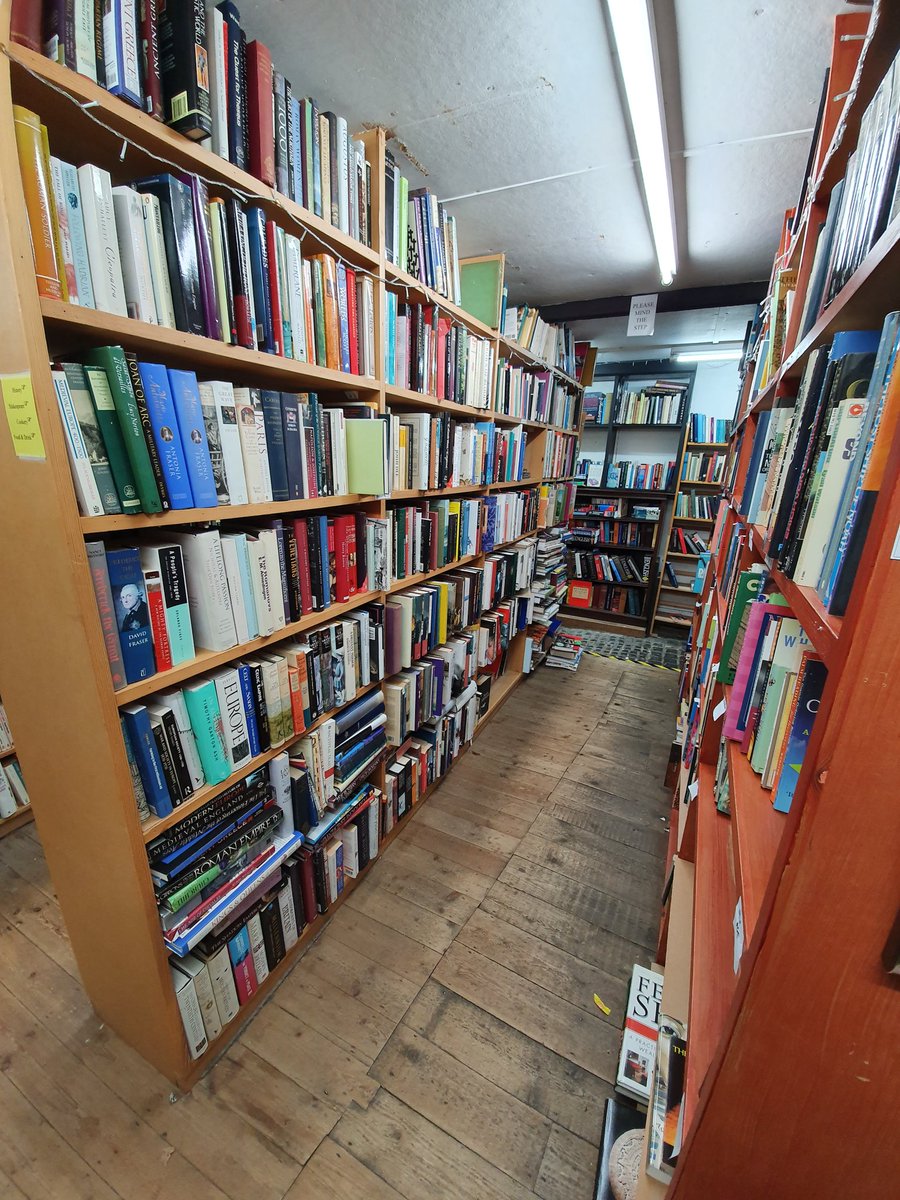
Not a single book sold today...
£0.00...
We think think this maybe the first time ever...
We know its miserable out but if you'd like to help us out please find our Abebooks offering below, all at 25% off at the moment....
Thank you to all those who have offered their support over the last 24 hrs. Today may be the last day of Chanukah, our festival of light, but our determination to banish the darkness of prejudice from our society, whether in Monsey, Hampstead or anywhere else, very much remains.
A big thank you to the @StarbucksUK team at Beaconsfield's M40 J2 Service Station for finding my phone and keeping it for many hours! God bless you and thank you! #starbucks