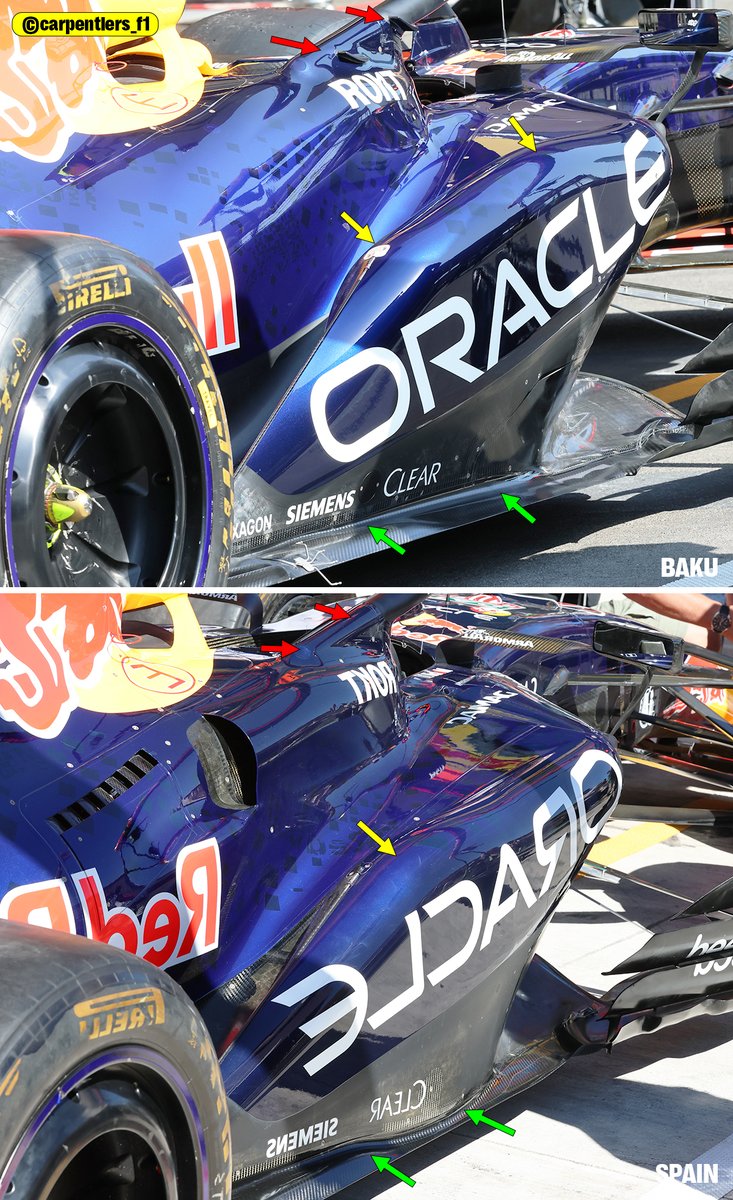
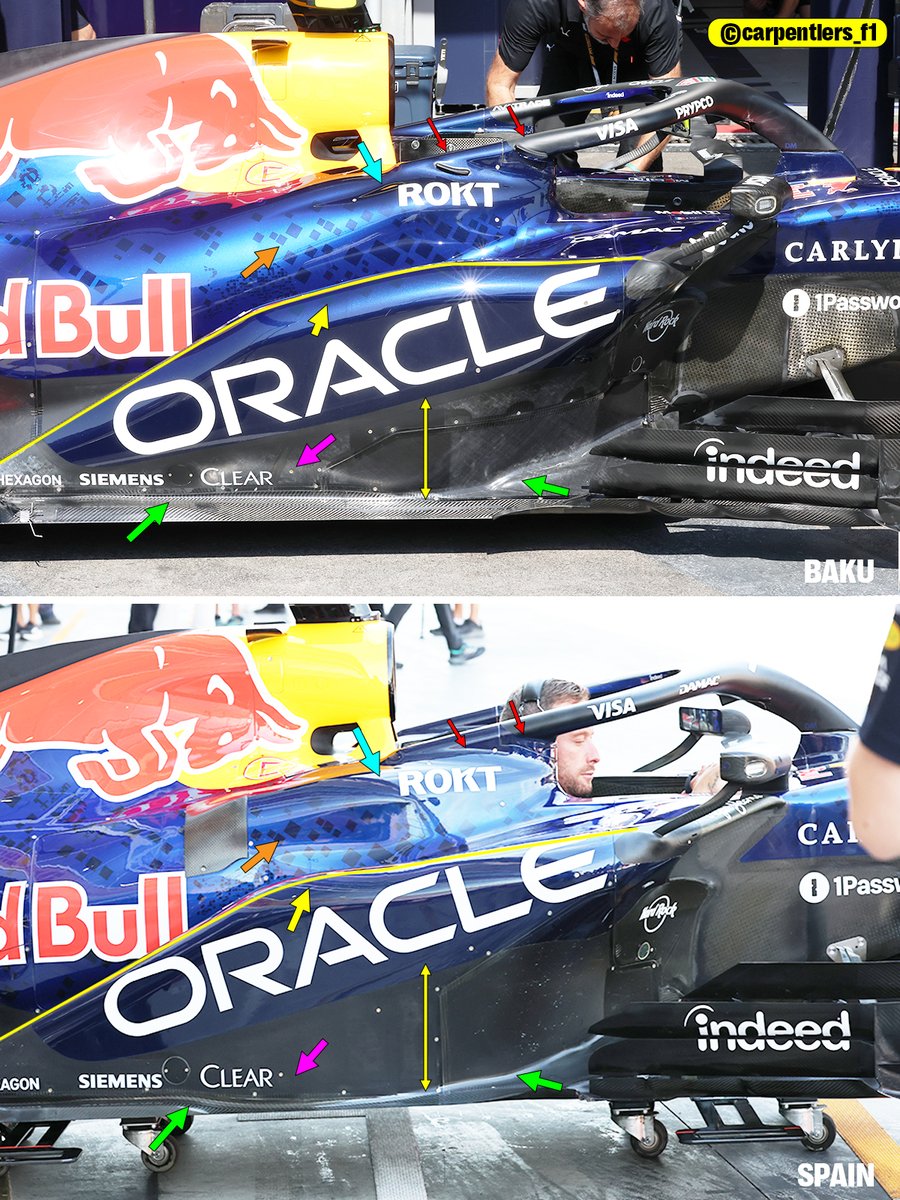
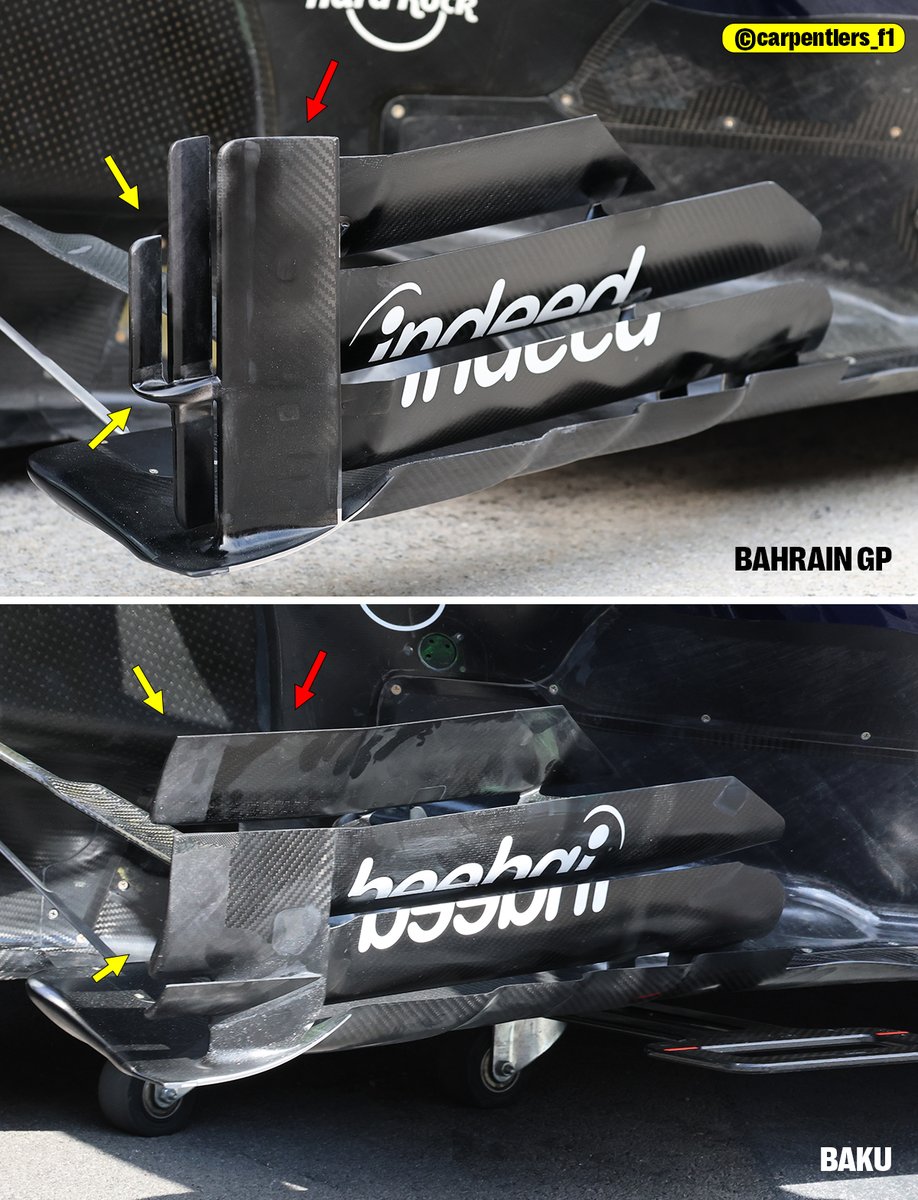
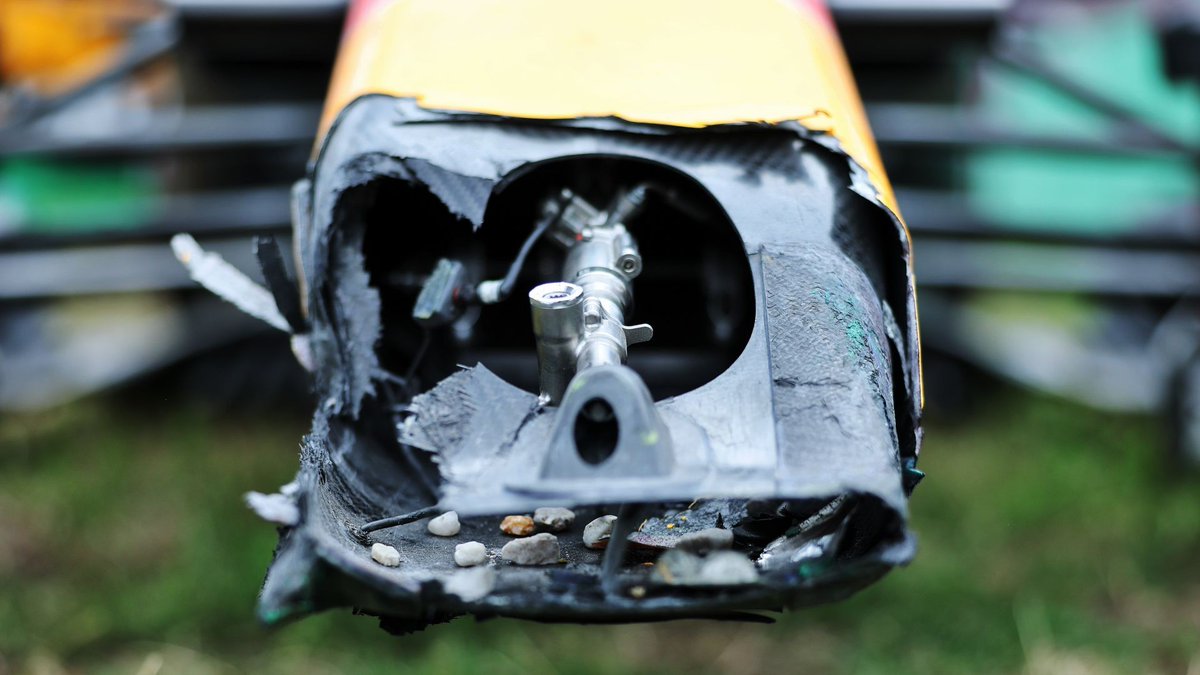
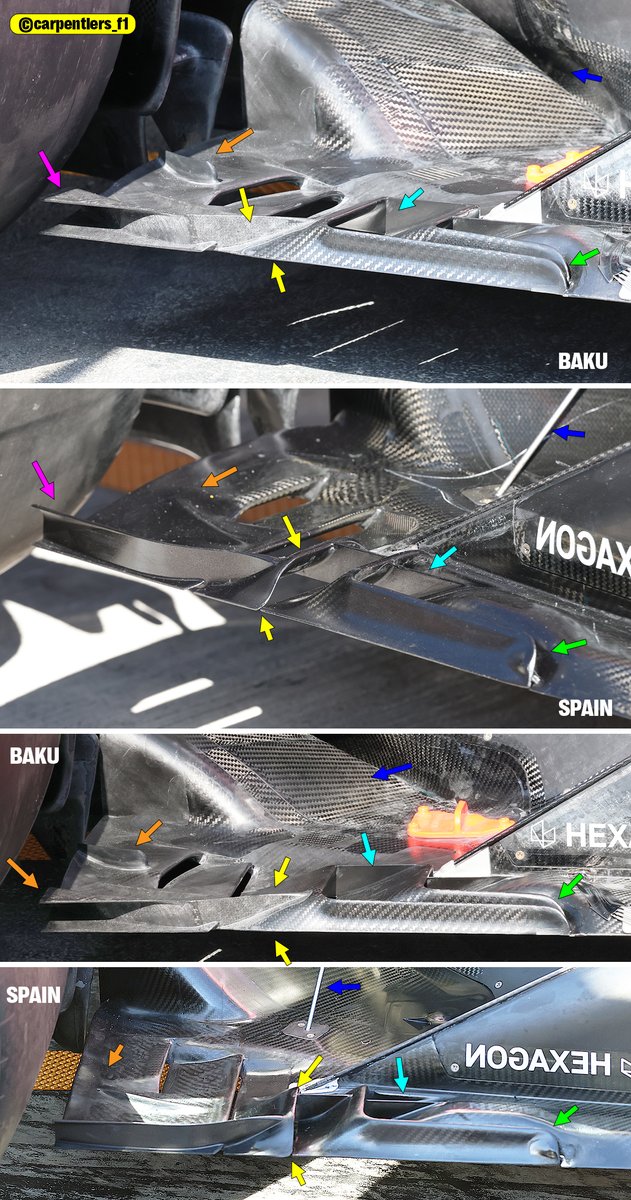
The upgraded Red Bull is turning into a seriously competitive car.
🔹 Double podium in Baku
🔹 Verstappen on pole, Hadjar P3 before penalty at Sepang
The Baku and Bahrain upgrades ⬇️ are bearing fruit. And not every gain is visible...
#TechF1#RedBullF1#BahrainGP#MaxVerstappen
I have conducted an audit of Anthropic's finances.
What I have found is so shocking that I am calling for a Congressional investigation.
Anthropic is not just seeking regulatory capture.
It has built a regulatory capture machine that cannot be turned off.
Structural financial incentives make it impossible for Anthropic -- I call it the Anthropic Network -- to turn off its own AI doom cycle.
It starts with METR.
Dario Amodei proposes "third-party evaluators" to assess the risk of Anthropic's models.
He proposes METR for this purpose.
But METR is financially dependent on the Anthropic's success -- specifically, on the explosive growth of more than $7 billion dollars in Anthropic stock.
Dustin Moskovitz invested this stock into Good Ventures Foundation, where it represents the majority of that organization's portfolio.
And GVF is the overwhelming funder of the entire Anthropic Network ecosystem.
This stock was worth $500 million early last year.
It is worth more than $7.7 billion just ~16 months later.
METR -- and all of those building a career its parent organizations -- cannot afford to disrupt that growth.
Because if Anthropic goes under, many of the organizations that fund METR go under as well.
But if Anthropic succeeds, METR and its parent organizations become more richly financed to regulate AI -- something those at METR want very much.
The "third-party evaluator" is not "third-party" at all.
The evaluator is on Anthropic's payroll.
If this were the end of it, that's bad.
But that isn't all.
The same organizations that fund METR also fund the many organizations, such as the Tarbell Center, that promote AI Doom.
The Tarbell Center publishes AI Doom articles in The Verge, Science, LA Times, The Dispatch, TIME, and others.
They are selling the problem, and then selling the solution to the problem -- from the same money pile: Anthropic's.
All of these organizations are financially dependent on the same exploding $7 billion money pile.
As Anthropic grows more and more powerful, its AI Doom Machine grows better and better financed -- louder and louder.
Meanwhile, the regulatory regime seeded in METR grows larger to solve the increasingly loud -- now hysterical -- problem of AI Doom that the Anthropic Network itself created.
From this standpoint, as Anthropic becomes more powerful, AI might be getting scarier, sure -- but the positive feedback loop also becomes more deafening -- independent of objective facts.
This itself is an objective fact.
The deafening AI Doom is part of an business model, that, as it expands, so too does the AI Doom messaging -- there is simply more money to do it.
But the problem also goes in the other direction:
If Anthropic dies, the Regulatory Regime and the AI Doom Machine are crippled or die.
Neither METR nor Tarbell nor the other organizations in the Anthropic Network can allow that to happen.
Hence, neither METR or the AI Doom Machine can be trusted to provide independent assessments of Anthropic's models or AI more broadly.
They simply are not organizations independent of Anthropic.
And Anthropic cannot detach itself from METR or Tarbell or countless other safety orgs (not shown here), either, because they drive hype for the models and the possibility of eventual regulatory capture, and Anthropic will not give that up willingly.
What's more, the people at all of these organizations are all the same ecosystem, the same community. They just shuffle between organizations.
The Anthropic Network is therefore, so long as it is successful, locked into a self-amplifying feedback loop inside an ideological monoculture.
And that feedback loop is winning.
That's what Jacob Coxon is.
China is keeping messaging tight. That is why optimism for AI is so high in China.
America has Anthropic: a massive company pushing anti-AI propaganda at a state level.
Anthropic will either create hysteria until American AI slows down and China wins, or it will create fractures throughout American society with severe political consequences.
Ironically, because of the structural financial incentives underpinning the Anthropic Network, it has become the same kind of self-amplifying virus that it fantasizes AI to become in the future -- while hiding its tracks just as carefully.
It is the mirror of the same AI virus that it hypothesizes to consume America.
Anthropic's business model, models itself after the very thing it claims to fear.
Except Anthropic's ideology infects humans, not computers.
Congress must investigate.
Evidence and Github in next post.
Then some supplementary figures.
Large Language Models in Finance — Hands-on guide to LLM architectures, agents, RAG, governance, and evaluation in finance: https://t.co/8WlLasVusC via @PacktPublishing@PacktDataML
𝓦𝓱𝓪𝓽 𝓨𝓸𝓾 𝓦𝓲𝓵𝓵 𝓛𝓮𝓪𝓻𝓷:
🟢Understand LLM foundations for financial applications
🟢Build financial LLM systems from ingestion to deployment
🟢Fine-tune models with LoRA, QLoRA, RLHF, and DPO
🟢Create RAG pipelines for financial documents and knowledge
🟢Design autonomous agents and multi-agent finance workflows
🟢Integrate LLMs securely with MCP and enterprise systems
🟢Apply LLMs to trading, banking, risk, fraud, KYC, and AML
🟢Evaluate and govern auditable financial AI with rigorous metrics
Red Bull’s Macarena wing problems - A closer look. 🧵
Following Verstappen’s rear wing failure in Silverstone, it’s worth revisiting one of the earliest debates surrounding Red Bull’s solution and whether some of those concerns were more valid than many initially thought.
Here’s an interesting CFD study from Dominik Balasko, former Sauber aerodynamicist.
Unlike Ferrari’s concept, which should generate both lift and drag reduction, Red Bull’s solution appears focused purely on drag reduction.
The upside is obvious:
The RB mechanism should be lighter, mechanically simpler and faster to actuate…. 1/7
[Continued in comments] ⬇️
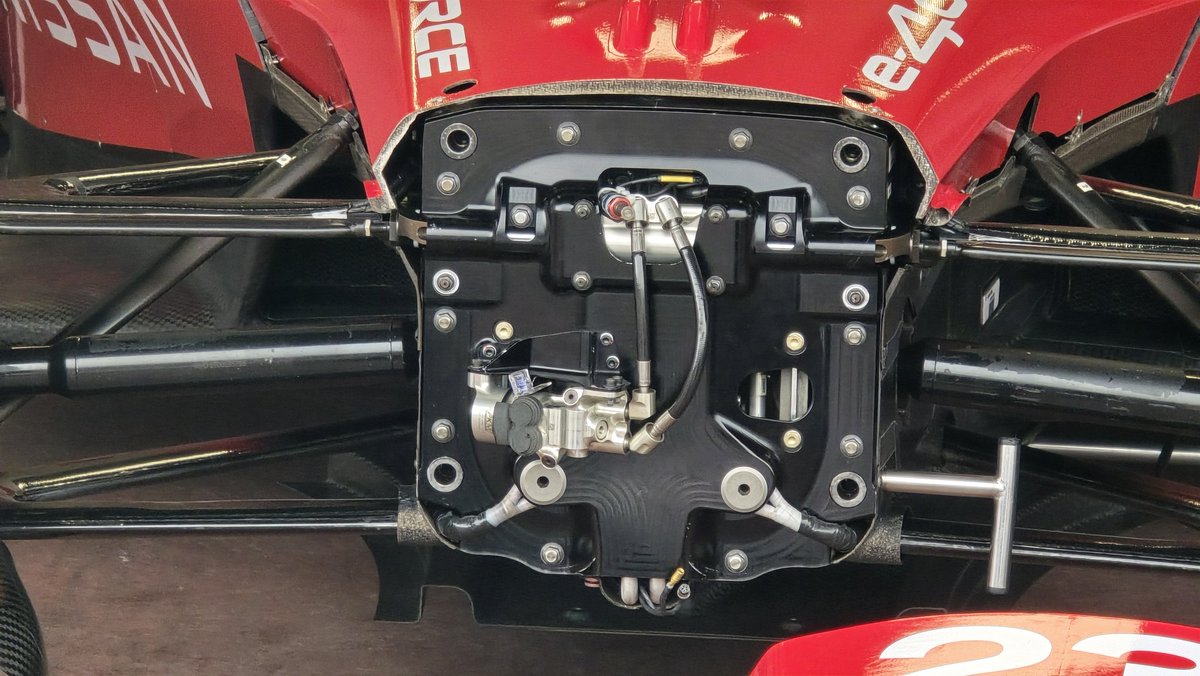
With steel suspension, no power steering and walls! @FIAFormulaE had several crashes which caused kick back through the steering injuring the drivers.
Part of the safety solution is this retrofit steering damper from PKM @Multimatic.
#FEtech#MadridEprix
🚨🔍 A comparison between Mercedes, Red Bull and Ferrari shows that all three teams are running a hole in their diffuser, something which helps improve the diffuser flow.
🤯 What also stands out is just how narrow the RB22’s sidepods are in comparison to the W17 and SF-26!
(📸 @MercedesAMGF1, F1, @Alessio.Garofoli08)
After qualifying in COTA I had someone in the paddock tell me “watch out for McLaren. They have to run super low to be fast in the high speeds here.” Turned out to not be anything, but the background of the comment was more interesting to me. Speaking with a few Aeros from other teams there is one general consensus,
The McLaren floor is not a downforce monster, but is a tradeoff for great corner balance.
Many teams across the grid have chosen to focus on different methods for generating performance from their floors. I’ve heard McLaren uses the floor contraction and profiling to create a well balanced performance that isn’t a peak load monster. Meanwhile some other teams, like RBR, have chosen to try and manage complex vortex systems from the fences and floor edge to bring big loads. The downside of this is that it can be a bit temperamental and hard to keep this vortex systems healthy. I also heard that Ferrari is somewhere in the middle, while Mercedes, they believe, is closer to McLaren in their floor profiling.
One aero told me that because of this McLaren have to run the car super low to extract the most performance they can. Well ya..of course. Venturi floors don’t come alive until they are super close to the ground. But the recent run of form from RBR has caused McLaren to push those limits even further than they were initially comfortable with. It’s something I was told about Ferrari some time ago as well.
“some teams are pushing their ride heights to the absolute limit in practice and then walking it back.”
It’s why you see some teams super fast in FP1 and FP2, but no where in qualifying. Teams are pushing the limits of everything to try and extract as much pace as they can, then bringing it back to sensible levels for the race.
So what about the next few races? Well the consistency of the nature of the surface makes it easier to engineer to the limit. But IMO it won’t change the need to run lower to be competitive at the top. I think Macca will still feel pressure to run close to the limits to protect from a charging Verstappen. It’s up to RBR to get the setup right for a challenging sprint weekend in Qatar. If they do, Macca may be pressured to push the limits again. If not, they may engineer in some margin to be safe.
It’s a complicated thing. How much performance can you extract without going over the top? Bringing in potential for excessive plank wear, or aero instability. As the pressure mounts we may see more teams taking big chance to be near the top. And guess what? McLaren isn’t immune from their either. Game on.
Burry is the investor who correctly called the housing crisis (The Big Short was about him.)
To explain what Burry is saying here:
When companies announce earnings, they do not just announce revenues or profits.
They also have to subtract the depreciation and amortization of their assets -- meaning, what they own that has lost value over the previous 3 months or year because it's old or outdated.
Burry is saying that tech companies are making their earnings look bigger by refusing to subtract the depreciation of their assets correctly.
For instance, the chips used in AI are good for about two (2) years. Then, inevitably, they lose value because faster chips get invented.
The way tech giants are accounting for their giant chip purchases, they're saying that those chips will last double or triple the time -- four years, or even 6 years according the chart below.
This means the tech giants are subtracting less risk from ageing chips to make it look like they're keeping more of their revenues over time. That misstates their financial position and misleads investors.
It's a big allegation because these companies are spending *billions of dollars* on these chips.
El Red Bull con novedades en tomas freno delanteras, entrada radiadores, salidas tapa motor y ala de lateral del suelo.
Red Bull upgrades on front brake ducts, cooling radiator inlet, engine cover cooling outlet and floor side wing
#f1#mexicangp
It’s over. Andrej Karpathy popped the AI bubble. It’s time to rotate out of AI stocks and focus on investing in food, water, shelter, and guns. AI is fake, the internet is overhyped, computers are pretty much useless, even the steam engine is mid. We’re going back to sticks and stones.
Obviously it’s not actually that bad, but the general tech community is experiencing whiplash right now after the Richard Sutton and Andrej Karpathy appearances on Dwarkesh. Andrej directly called the code produced by today’s frontier models “slop” and estimated that AGI was around 10 years away. Interestingly this lines up nicely with Sam Altman’s “The Intelligence Age” blog post from September 23, 2024, where he said “It is possible that we will have superintelligence in a few thousand days (!); it may take longer, but I’m confident we’ll get there.”
I read this timeline to mean a decade, which is what people always say when they’re predicting big technological shifts (see space travel, quantum computing, and nuclear fusion timelines). This is still earlier than Ray Kurzweil’s 2045 singularity prediction, which has always sounded on the extreme edge of sci-fi forecasting, but now looks bearish.
There’s a whole chain of AGI-soon bears who feel vindicated by Andrej’s comments and the general vibe shift. Yann LeCun, Tyler Cowen, and many others on the side of “progress will be incremental” look great at this moment in time.
This George Hotz quote from a Lex Fridman interview in June of 2023 now feels way ahead of the curve, at the time: “Will GPT-12 be AGI? My answer is no, of course not. Cross-entropy loss is never going to get you there. You probably need reinforcement learning in fancy environments to get something that would be considered AGI-like.”
Big tech companies can’t turn on a dime on the basis of the latest Dwarkesh interview though. Oracle is building something like $300 billion in infrastructure over the next five years. If demand plateaus, there will be real financial consequences. The bull case is of course the other side of the Karpathy take. He didn’t just say “the models are slop,” he also said “the models are amazing” and “autocomplete is my sweet spot.” The shape of adoption around “amazing autocomplete” will determine the success or failure of the massive AI buildout.
I like that Oracle is taking a big swing here, it’s exciting to see a nearly 50-year-old company go risk-on, but I don’t like how they are messaging their underwriting. In a CNBC interview, co-CEO Clay Magouyrk said, “Look at [OpenAI's] financials, their growth, and what’s being built with this technology. This isn’t a typical company trajectory. They’ve reached nearly a billion users faster than anyone. Everything about this is unprecedented — but in a good way.”
He’s correct that this particular growth curve is unprecedented but I would have a lot more confidence if instead the argument was framed around previous technology booms and acknowledging the risk-reward tradeoffs. The dot-com bubble was a disaster, but Google and Amazon both made it through and became multi-trillion dollar enterprises. Vanderbilt became the richest man in America during the railroad boom. Bubbles pop, but fortunes are still made by the shrewdest players. It’s just important to make sure you have your feet on solid ground.
Chinese scientists have developed the best shortest-path algorithm in 41 years! A team from Tsinghua University has broken Dijkstra’s “sorting barrier” — the first improvement since 1984.
The new algorithm runs in O(m \log^{2/3} n) time. Potential applications? Faster shorter waits for route calculations, fewer traffic jams, cheaper deliveries, and more efficient computer networks. And, of course, a need to update computer science curricula :)
Introducing Shortcut — the first superhuman Excel agent.
Shortcut one-shots most knowledge work tasks on Excel.
It even scores >80% on Excel World Championship Cases in ~10 minutes. That's 10x faster than humans.
Our early preview is live. Just comment for an invite code.
Unsolicited advice on what makes someone a good junior associate on the buyside
I always receive this question in my DMs, so thought I would put together a few traits that I have seen
Feel free to add on in the comments if you have any thoughts
Ability to absorb information very quickly
As an Associate, you are digging through CIMs and VDRs with lots of data, often with short timelines to indications on transactions. One of the core skills here is what I call being able to "separate the substance from the noise"
A bad Associate will spend countless hours digging through every small detail and wasting useful hours + resources on things that dont make a difference
The best Associates regularly follow this routine when digging through data rooms:
(1) Quickly skim through the CIM + model
(2) Identify the key drivers of the business (as in what factors drive volume x pricing and costs)
(3) Isolate the 4-5 factors that you need to get comfortable around in order to underwrite the business
(4) Dig into the VDR for data around those 4-5 factors
(5) Identify the thesis and risks, and data required to get comfortable around those factors
As you do this, many deals will fall apart because you will identify factors that you would never be comfortable with. Maybe its customer concentration, maybe its sole supplier risk, maybe its macro economic conditions, or just the unit economics in general
The best Associates minimize the hours that a VP / MD needs to dig through the deal to identify factors that move the business. If something looks like a kill, they can identify it early and save countless hours their seniors would have had to spend looking through it
This is one of those skills that you get better at with more experience. The longer you do it, the more you understand what matters to your firm when underwriting a deal
I would argue, this is also the core skill that makes someone a good investor. Learn to separate the substance from the noise
Asking the right questions
Good associates know what questions to ask. This is harder than it sounds. During a deal process, companies and bankers have limited capacity to get you answers you need
Bad associates will spend their time putting together a 11 page DD list that they will never receive proper answers to. Even if you do receive it, you are killing precious time that the company will need to get back to you
Remember, once the process begins - it is usually the investor who is on a shot clock. Especially true for larger size transactions, but any banker led process will feel this way even in down markets
As an Associate, it is important to recognize what is worth asking and what is not. Only ask the questions that move the needle on your underwriting thesis.
Before asking a question, a good thought process is: "will receiving the answer to this question change how I think about the risk is going to be priced in this opportunity?"
There is no riskless investment. The question is if you are being paid to take the risk in any given investment. Thats what DD is supposed to inform you on.
Focusing on the things that matter will also save yourself a lot of time. Obviously, VPs and MDs may make the final call here, but my advice is to learn to think like an investor in this way from early on
Collaboration
Working on a deal means third parties are constantly in your inbox and phone. This includes accounting teams sending you the QoE and audits, lawyers asking to call about terms in the company's customer contracts, bankers sending you the latest set of bids on a process you hired them to run
Bad associates become unorganized during fast moving processes. They lose track of emails, deliverables, and often forget to follow up with third parties on key inputs to the underwriting
Being organized and being able to represent your company well matters a lot. Also good to remember that you will repeatedly work on transactions with some of the same firms. Many of these third parties will also represent the other side on some transactions
Reputation matters a lot. It is a smaller world than people think, and the best Associates are able to recognize that and work accordingly
Being a good speaker / salesperson
As you "grow up" into your role, VPs / MDs start expecting you to take on more responsibility.
Instead of simply being the note taker during negotiations, you will have to start speaking and presenting in front of very informed audiences, including CEOs and Boards in some cases
Internally, you will have to sell and defend your numbers to your investment committee. Come promotion time, you will have to sell yourself on why you deserve it vs the next guy
Seniors need to feel confident in your ability. This comes from a combination of working hard and being able to sell yourself very well to your own team
The ultimate sign of a good speaker is someone who can articulate complicated ideas in a precise manner. This comes with practice.
If you are an Associate, my advice is to put yourself in uncomfortable situations and raise your hand to present as much as possible
Even if your MDs dont offer, go out of your way to ask for sections of the investment memo that you can present to your committee. This will help build up confidence and get you reps for a crucial aspect of the job
What appeared under Albon's missing engine cover
👀
- How short the V6 engine is & how long the gearcase is (gbox 420mm)
- Radiators are mounted high & don't meet the floor.
- How thin some of the low temperature radiators (LTRs) are for the hybrid system
#CanadianGP#F1#F1Tech