This is seriously impressive and shows why Nayib Bukele is one of the most competent leaders in the world.
He has the right balance of intellect and common sense.
Ενα τελευταιο γι αποψε κ νάνι
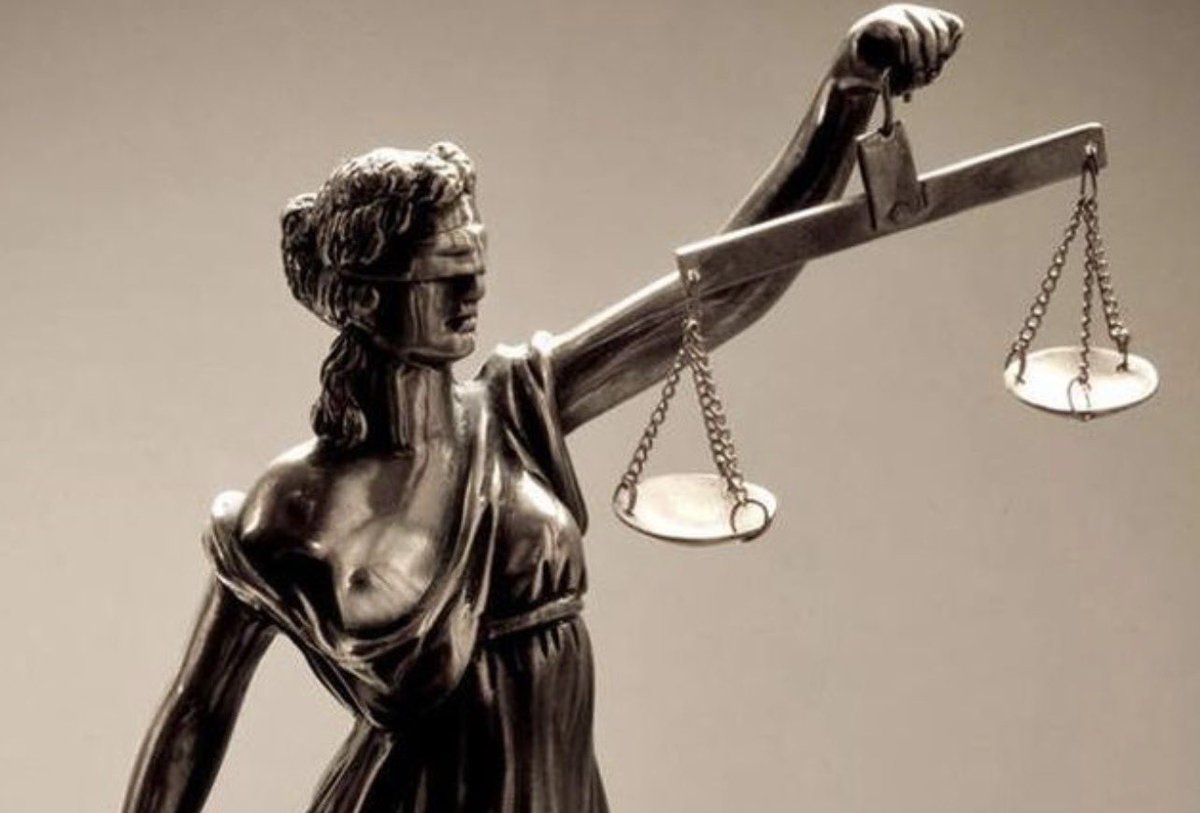
Υπαρχει ενας διασημος πίνακας "Το Ματ του Διαβόλου" (The Devil's Checkmate) που φιλοτεχνήθηκε το 1831 από τον Γερμανό ζωγραφο Friedrich Moritz August Retzsch
Ο πινακας εικονιζει αριστερα τον διαβολο, με τα μαυρα κ σαφως σε πλεονεκτικη θεση, δεξια
A BBC interviewer asked a Nobel physicist the simplest question in the world: why do two magnets push each other apart. He refused to answer it. What he did instead is the best seven minutes on thinking ever filmed.
The man is Richard Feynman, at home in 1983, no blackboard, no notes, sitting in an armchair.
He does not dodge because he cannot answer. He dodges because he wants you to see what the question is actually asking. So he takes an ordinary sentence, that a woman slipped on the ice and broke her hip, and starts asking why, and every answer opens another why, until the ground gives way.
Then he turns it around on the interviewer with a question about ice that sounds trivial and is not.
The point he arrives at is the uncomfortable one. Every explanation is only a translation into something you already accept without explanation. Magnets have no such translation. There is nothing more familiar than magnetism to reduce magnetism to, which is why every answer you were given at school was a picture, not a reason.
It matters more now than it did in 1983. Any tool will hand you a fluent answer in a second. Knowing which questions actually have a bottom is the part that is still yours.
One question. Seven minutes. It is in the video.
In 1997, a footballer accidentally proved a physics principle in a soccer game that had been invisible for 300 years.
Roberto Carlos lined up for a free kick about 40 yards from goal during a France versus Brazil friendly match in Paris.
The ball sat exactly where a free kick should sit, the French wall stood between him and the goal, and everyone in the stadium knew what was about to happen. Carlos was about to attempt something that shouldn't exist in physics.
He struck the ball with his left foot at an extreme angle, nearly perpendicular to where the goal actually was. The ball curved so dramatically through the air that French goalkeeper Fabien Barthez literally didn't move. He watched it arc impossibly wide, certain it was going nowhere, his body language screaming "that's out." Then the ball bent back toward goal like it was magnetized. It crossed the goal line before Barthez could process what his eyes had just witnessed. Goal.
The stadium went silent for a second.
Then chaos.
That moment became legendary not because it was a beautiful goal, though it was, but because it revealed something about physics that most people had never actually *seen* in real time before. The ball had broken the straight line. It had obeyed a force that existed entirely in the air, invisible to the naked eye, bending space itself through sheer rotation.
That force is called the Magnus effect, and it's been hiding in plain sight in sports for over a century. Every curveball in baseball, every spinning tennis serve, every banana kick in football, every slice shot in golf. They all ride on the Magnus effect. But Carlos's free kick was different. It was the perfect storm of velocity, spin rate, and distance that made the force so visually obvious that even people who'd never heard the word "Magnus" understood something supernatural had just occurred.
Here's what actually happened in the physics.
When you strike a spinning ball with enough velocity through the air, the rotation creates a pressure differential on either side of the ball. The side spinning with the direction of motion builds up a layer of fast moving air that stays attached to the ball's surface. The opposite side spinning against the direction of motion sheds that air layer and creates lower pressure. You end up with higher pressure on one side and lower pressure on the other. Bernoulli's principle then drags the ball toward the lower pressure region. The ball curves.
That's the Magnus effect in its purest form.
It's fluid dynamics.
But here's where most explanations stop and where most people fail to grasp the real picture. The Magnus effect is *proportional* to the spin. Double the spin rate and you approximately double the curvature. But it's also proportional to the surface area. A larger ball, all else equal, experiences more Magnus effect than a smaller one. And it's wildly proportional to velocity. Lower the speed too much and the curve becomes almost nonexistent. Add speed and the curve amplifies. This is why a baseball pitcher's curveball becomes more dramatic at higher velocities, why a tennis serve curves more than a lob, and why Carlos's free kick had to travel at a certain speed to work.
Carlos struck that ball at precisely the intersection point where spin and velocity aligned to produce maximum curve over that distance. Any slower and it lands straight in the wall. Any faster and it overcorrects and misses wide. The goal was practically a mathematical solution to an equation nobody needed to solve except his foot somehow did it perfectly.
The reason this moment matters beyond football is that it made visible something that had been operating invisibly in physics and engineering for centuries. The Magnus effect powers helicopter rotors. It's why airplanes have wings. It's why you can throw a frisbee and it actually stays airborne instead of just dropping like a stone. Every spinning object moving through air experiences it. Every sport that uses a ball depends on it.
Yet most people go their entire lives without consciously recognizing this force exists.
What Carlos did was compress a century of physics education into three seconds of visible reality. He created an experiment that couldn't be ignored or dismissed or explained away. The ball curved. The goalkeeper saw it. The universe didn't change. Nothing magical happened. Just matter responding to force across empty space in exactly the way the math predicted.
The interesting part isn't that it worked. The interesting part is that we'd organized the entire sport of football for decades without truly understanding why the ball did what it did. Strikers had developed intuition about how to make a ball curve, but that intuition was operating in the dark. They couldn't articulate the relationship between spin and speed and distance. They just knew that if you hit it a certain way, it would curve a certain amount.
Then Carlos made it visible.
What happened after was instructive. Within a few years, every serious free kick taker started studying the Magnus effect. Sports scientists began measuring spin rates with new technology. Training programs started including tutorials on precisely where to strike the ball, how much curve you could generate at different velocities, how wind affected the trajectory. The gap between top tier free kick takers and everyone else widened because now you could *understand* the phenomenon you were trying to exploit.
Science doesn't change physics. It just brings the invisible into focus.
That free kick lived in the gap between intuitive mastery and conscious understanding. Carlos had mastered the Magnus effect through pure repetition and feel. But once everyone else saw it work that clearly, you couldn't claim ignorance anymore. You had to reckon with what was actually happening in the air.
In some sense, that's what every great demonstration does. It takes something that was operating beneath the surface of our attention and makes it unavoidable. The double slit experiment did that for quantum mechanics. The Michelson Morley experiment did it for the aether. A free kick did it for aerodynamics, and most of the world never even realized they were watching physics.
The next time you watch a free kick curve perfectly into goal, understand that you're watching the Magnus effect in action. You're watching air pressure differentials, Bernoulli principles, and rotational velocity align perfectly. You're watching physics become soccer.
And somewhere, a physicist is probably jealous that a football player got to make it look more beautiful than any equation ever could.
I just learned about a 2300-year-old concept I can't stop thinking about
The Empty Boat Theory
It explains why Elon Musk fights strangers on X at 2 am
Why Michael Jordan turned his Hall of Fame speech into a revenge list
Once you understand it, your life will never be same:🧵
The first person to become naturalized as an American citizen of foreign soil was Greek
He jumped off a ship in Baltimore at 18 with no money and no English.
Spiros Pisanos washed dishes, saved every dollar for flying lessons, and when America wouldn't take him because of neutrality laws, he joined the British Royal Air Force instead.
He flew Spitfires, shot down 10 German planes, and became known as The Flying Greek.
But his commanders faced a crisis when his Eagle Squadron was absorbed into the US Air Force, he wasn't a citizen.
They fought to fix it. On May 3, 1943, in a ceremony in London attended by Edward R. Murrow and Walter Cronkite, Pisanos became the first person in American history ever to be naturalized as a US citizen on foreign soil.
He painted the name of his New Jersey hometown, “Plainfield”, on the nose of his P-51 Mustang.
He later crash landed behind enemy lines, spent six months with the French Resistance, and was awarded the French Legion of Honor decades later.
He died in 2016 at 96, proud to call himself an American.
Source:
Steve Pisanos,The Flying Greek (autobiography)
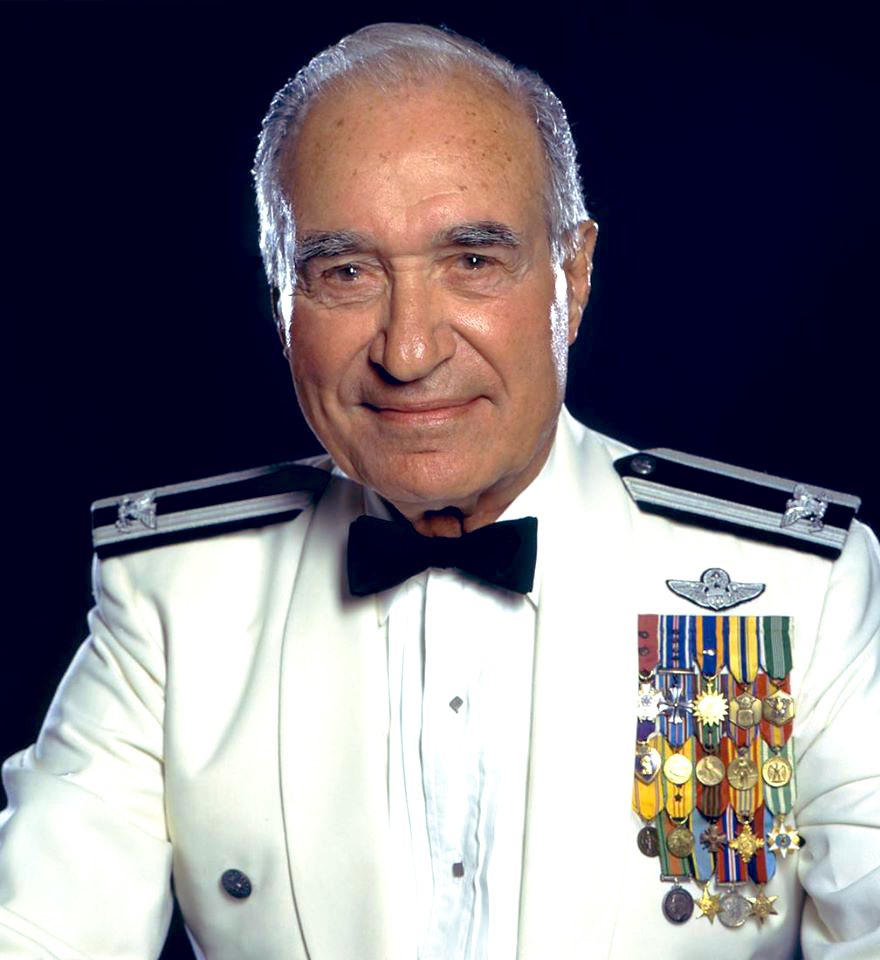
Col Steve N. Pisanos USAF (Ret.)
Sam Altman said people saying “please” and “thank you” to ChatGPT costs OpenAI tens of millions of dollars a year in compute. 67% of Americans do it anyway.
Run the math on why.
A 2024 Waseda University study tested LLM responses across politeness levels in English, Chinese, and Japanese. Impolite prompts produced measurably worse outputs: more bias, more errors, more refusals. Moderate politeness consistently beat both extremes.
The mechanism makes sense once you see it. Polite prompts pattern-match to higher-quality training data. When you write “Could you help me structure this analysis?”, the model pulls from professional, well-reasoned text. When you write “give me the answer,” it pulls from Reddit.
Google DeepMind’s Murray Shanahan explained it simply: the model is role-playing a smart intern. Treat the intern like a colleague, you get colleague-quality work. Bark orders, you get minimum-viable compliance.
Now look at the cost side. OpenAI handles over a billion queries daily. Each GPT-4 query uses roughly 2.9 watt-hours, ten times a Google search. But OpenAI just raised $40 billion at a $300 billion valuation. Tens of millions in politeness tokens is a rounding error on a rounding error.
67% of users do it anyway, and 55% of them say it’s because it’s “the right thing to do.” They’re maintaining a behavioral habit that governs every other interaction in their life. The parent who teaches their kid to say please to Alexa isn’t doing it for Alexa. They’re doing it because the alternative is raising someone who learns that being rude gets faster results.
Telling 900 million people to stop saying thank you so OpenAI can save 0.01% of operating costs is the most engineer-brained optimization take on the internet. You’re training yourself to treat every interaction as a transaction. And that habit doesn’t stay in the chat window.
The only reason people visit Turkey rather than Greece is because it’s cheaper.
It’s not nicer, it’s not friendlier, foods not better, and it’s not safer.
Winners visit the real country.
Retire in Greece. Pay 7% tax for 15 years.
This regime applies to all foreign-source income: pensions, rental income, dividends, and capital gains. One flat rate. No brackets. No surprises.
For many retirees, this is a game-changer. Do the math: on a €50K annual pension taxed at 25–30% at home, relocating to Greece saves roughly €10K+ per year. Over 15 years, that’s €150K preserved.
That’s not marginal. It’s a structural upgrade to retirement. You keep 20–25% more of your income, then stretch it further with a Mediterranean cost base that’s often 30–40% lower than Northern Europe or other areas of the world.
Greece now sits alongside Italy in the Southern Europe arbitrage wave. Italy offers depth and variety; Greece offers simplicity and a long, predictable window. In theory, you could even chain regimes: Greece first, then reassess later.
This isn’t about chasing pennies. But if the Mediterranean lifestyle already fits your plans, locking in a 7% tax rate for 15 years is worth serious consideration.
For my parents’ generation, the difference between planning this and ignoring it isn’t theoretic. It’s the difference between constraint and comfort. Consider passing this on.
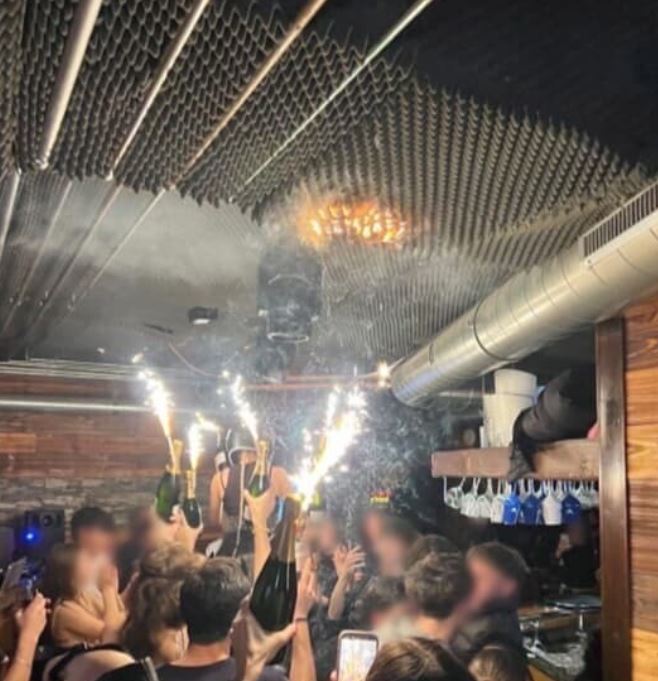
Πριν από πολλά χρόνια είχα μπει σε ένα κλαμπ, στην αρχή της Βουλιαγμένης (εκείνο που πέρσι πιάστηκε να σερβίρει ποτά σε ανήλικους). Βλέποντας ότι ολόκληρο το εσωτερικό ήταν τυλιγμένο με παρόμοιο με της φωτογραφίας ηχομονωτικό υλικό, είχα φρίξει, γιατί λόγω της δουλειάς.. 👇
Το καλύτερο πράγμα που έκανα αυτόν τον μήνα είναι ότι απάντησα σε κλήση στην εφαρμογή Be My Eyes. Είναι για τυφλούς ανθρώπους που θέλουν βοήθεια να διαβάσουν μία ετικέτα ή να δουν αν κάτι λειτουργεί, ή ο,τιδήποτε μπορεί να χρειάζονται να «δανειστούν» τα μάτια μας για να εξυπηρετηθούν. Βοήθησα μία κυρία να δει τι σαμπουάν θα αγοράσει - δεν είναι κάτι σπουδαίο, αλλά για εκείνη ήταν μία διευκόλυνση ενώ ψώνιζε μόνη της. Είναι εντελώς δωρεάν και για τους τυφλούς, και για τους εθελοντές, και αξίζει τον ελάχιστο χώρο που θα πιάσει στο κινητό σας.
Επειδή για άλλη μία φορά τα Μέσα Ενημέρωσης στην Ελλάδα, με ελάχιστες εξαιρέσεις, ΑΠΟΣΙΩΠΟΥΝ το τεράστιο θεσμικό θέμα που έθεσα στην Ευρώπη, οφείλω να σας ενημερώσω.
Ενώ όλοι μας είμαστε υπόλογοι απέναντι στον νόμο, οι Έλληνες πολιτικοί δεν είναι, διότι τους προστατεύει το άρθρο 86 του Συντάγματος. Ακόμη και για να γίνει έρευνα σε βάρος τους για κακουργήματα, πρέπει να δώσει άδεια η Βουλή. Η άδεια όμως αυτή για ό,τι εκθέτει την Κυβέρνηση δεν δίνεται, με κατάχρηση της κυβερνητικής πλειοψηφίας. Όπως είπε και ο κ. Άδωνης Γεωργιάδης, εμείς θα αποφασίσουμε αν είμαστε ένοχοι ή όχι https://t.co/Ma4xpxKZox
Αυτό το ξέπλυμα ποινικών ευθυνών μέσα από το νομικό “παράθυρο” του άρθρου 86 του Συντάγματος, η Ευρωπαϊκή Εισαγγελία και η Ευρωπαϊκή Επιτροπή ήταν υποχρεωμένες να το αποκλείσουν και να αποκαταστήσουν τη νομιμότητα. Παρά ταύτα μέχρι και σήμερα δεν το έπραξαν, με αποτέλεσμα η Ευρώπη να ομιλεί στα λόγια για Κράτος Δικαίου, αλλά στην πράξη να ευλογεί στην Ελλάδα Κράτος αδίκου, η δε Ευρωπαϊκή Εισαγγελία να μην ακουμπάει τους ποινικά υπόλογους πολιτικούς που έχουν καταχραστεί τα δισεκατομμύρια των Ευρωπαίων πολιτών και άρα εκ των πραγμάτων να μην ανταποκρίνεται στον ρόλο της.
Με την αρωγή της νομικής συμβούλου μου, Μαρίας Γρατσία, κατέθεσα ήδη από τις 30.06.2024 αλλά και κατά την 01.10.2025, αναλυτικά Υπομνήματα στην Ευρωπαϊκή Εισαγγελία, με αίτημα την εφαρμογή της αρχής της υπεροχής του ενωσιακού δικαίου (supremacy principle), και άρα την παράκαμψη του άρθρου 86 του Συντάγματος, η εφαρμογή του οποίου αποκλείεται όταν αντίκειται στον ενωσιακό δίκαιο, στις διατάξεις για την τήρηση του Κράτους Δικαίου, στον Κανονισμό 1939/2017 για την EPPO και στην Ευρωπαϊκή Σύμβαση των Δικαιωμάτων του Ανθρώπου για τη δίκαιη δίκη και την ισότητα απέναντι στον νόμο.
Με το από 01.10.2025 Υπόμνημα μου αναδείχθηκε και το ψευδοεπιχείρημα της ανύπαρκτης παραγραφής, με το πρόσχημα της οποίας η Ευρωπαϊκή Εισαγγελία δεν ακούμπησε στο ελάχιστο την ποινική δικογραφία των Τεμπών για τους πολιτικούς, παρά μόνο άρον άρον την έστειλε στη Βουλή, όπου και αυτονόητα θάφτηκε.
Η Ευρώπη πλέον καλείται άμεσα να πάρει θέση για το αν θα εφαρμόσει το ενωσιακό δίκαιο ή αν θα το ΠΑΡΑΒΙΑΣΕΙ για άλλη μία φορά, όπως έκανε η Γενική Διεύθυνση Μεταφορών της Ευρωπαϊκής Επιτροπής (DG MOVE) και ο ERA, οι οποίοι αν είχαν σταματήσει τον ελληνικό σιδηρόδρομο όπως υποχρεούνταν, αφού ήξεραν ότι δεν πληρούσε το ενωσιακό δίκαιο για την ασφάλεια των μεταφορών, σήμερα το παιδί μου, η Μάρθη μου θα ζούσε.
Τέλος, ευχαριστώ τον Ευρωβουλευτή, κ. Φαραντούρη, ο οποίος αναγνώρισε τη βαρύτητα του άνω θεσμικού θέματος και οργάνωσε στο Ευρωκοινοβούλιο την εκδήλωση της 9ης Δεκεμβρίου, και τους εξέχοντες ομιλητές, κ. Juan Fernando Lopez Aguilar, Ευρωβουλευτή S&D και πρώην Υπουργό Δικαιοσύνης της Ισπανίας, κ. Χρήστο Ράμμο, π. Πρόεδρο της Αρχής Διασφάλισης του Απορρήτου των Επικοινωνιών (ΑΔΑΕ) και επίτιμο Αντιπρόεδρο του ΣτΕ, κ. Ιωάννη Δρόσο, Ομότιμο Καθηγητή του Συνταγματικού Δικαίου της Νομικής Σχολής Αθηνών, και κα. Daniela Mainenti, Καθηγήτρια Συγκριτικού Ποινικού Δικαίου, Catholic University if Sacro Cuore, Ρώμη, και βέβαια και τους λοιπούς Ευρωβουλευτές, τους δημοσιογράφους και όλους όσους τίμησαν με την παρουσία τους.
Όλοι κατανοούμε ότι η αποδοχή του παραπάνω νόμιμου αιτήματος θα αποτελέσει σταθμό στην ιστορία της Ελλάδος, αφού οι ποινικά υπόλογοι πολιτικοί επιτέλους θα ανακριθούν και δικαστούν με βάση τον νόμο που ισχύει για όλους μας, οι δε μέλλοντες πολιτικοί, που πλέον θα γνωρίζουν ότι μετά από δεκαετίες η ατιμωρησία έληξε, θα φροντίσουν να είναι έντιμοι και συνεπείς στον όρκο τους απέναντι στη χώρα μας και τους πολίτες.
Μαρία Καρυστιανού, Παιδίατρος, μητέρα της Μάρθης
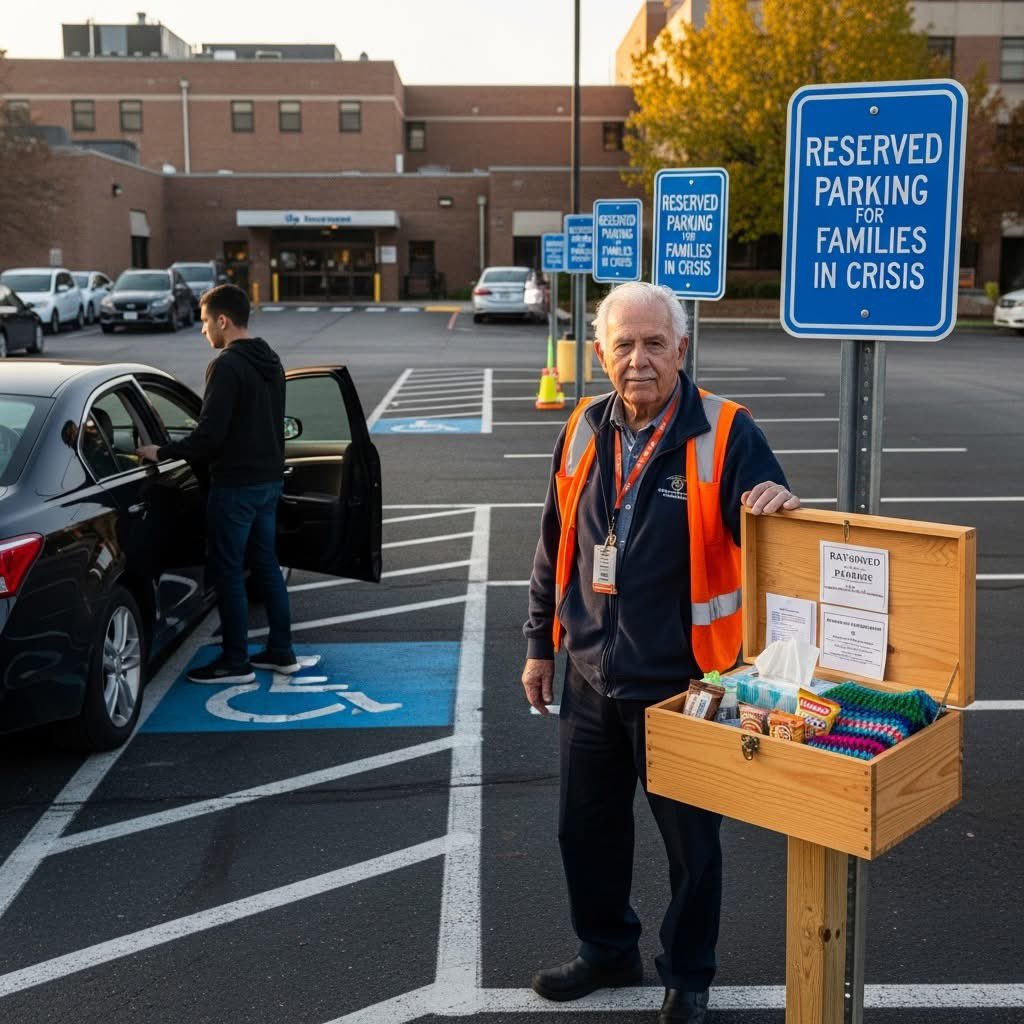
"My name's Raymond. I'm 73. I work the parking lot at St. Joseph's Hospital. Minimum wage, orange vest, a whistle I barely use. Most people don't even look at me. I'm just the old man waving cars into spaces.
But I see everything.
Like the black sedan that circled the lot every morning at 6 a.m. for three weeks. Young man driving, grandmother in the passenger seat. Chemotherapy, I figured. He'd drop her at the entrance, then spend 20 minutes hunting for parking, missing her appointments.
One morning, I stopped him. "What time tomorrow?"
"6:15," he said, confused.
"Space A-7 will be empty. I'll save it."
He blinked. "You... you can do that?"
"I can now," I said.
Next morning, I stood in A-7, holding my ground as cars circled angrily. When his sedan pulled up, I moved. He rolled down his window, speechless. "Why?"
"Because she needs you in there with her," I said. "Not out here stressing."
He cried. Right there in the parking lot.
Word spread quietly. A father with a sick baby asked if I could help. A woman visiting her dying husband. I started arriving at 5 a.m., notebook in hand, tracking who needed what. Saved spots became sacred. People stopped honking. They waited. Because they knew someone else was fighting something bigger than traffic.
But here's what changed everything, A businessman in a Mercedes screamed at me one morning. "I'm not sick! I need that spot for a meeting!"
"Then walk," I said calmly. "That space is for someone whose hands are shaking too hard to grip a steering wheel."
He sped off, furious. But a woman behind him got out of her car and hugged me. "My son has leukemia," she sobbed. "Thank you for seeing us."
The hospital tried to stop me. "Liability issues," they said. But then families started writing letters. Dozens. "Raymond made the worst days bearable." "He gave us one less thing to break over."
Last month, they made it official. "Reserved Parking for Families in Crisis." Ten spots, marked with blue signs. And they asked me to manage it.
But the best part? A man I'd helped two years ago, his mother survived, came back. He's a carpenter. Built a small wooden box, mounted it by the reserved spaces. Inside? Prayer cards, tissues, breath mints, and a note,
"Take what you need. You're not alone. -Raymond & Friends"
People leave things now. Granola bars. Phone chargers. Yesterday, someone left a hand-knitted blanket.
I'm 73. I direct traffic in a hospital parking lot. But I've learned this: Healing doesn't just happen in operating rooms. Sometimes it starts in a parking space. When someone says, "I see your crisis. Let me carry this one small piece."
So pay attention. At the grocery checkout, the coffee line, wherever you are. Someone's drowning in the little things while fighting the big ones.
Hold a door. Save a spot. Carry the weight no one else sees.
It's not glamorous. But it's everything."
Let this story reach more hearts....
Credit: Mary Nelson