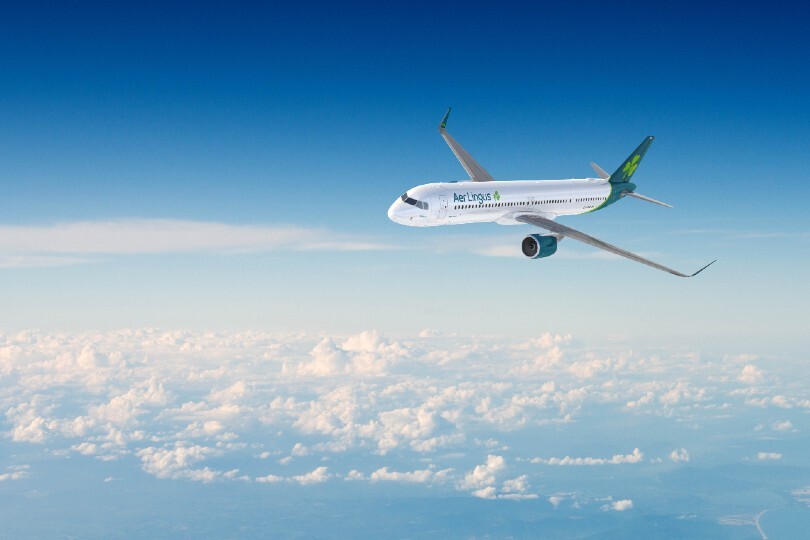
We've teamed up with @AerLingus to celebrate the return of the non-stop route from Dublin to Miami ✈️🇺🇸
You could win return flights to Miami for you & a friend, and it's so easy to enter:
FOLLOW & REPOST
Winner announced Friday, Sep 1.
Good Luck! 🤞
https://t.co/WglAlq9xvU
Our connectivity researchers are working on ways to slash the amount of time and money it takes to roll out high-speed broadband. They developed a robot that crawls along power lines, wrapping them with fiber-optic cable. No more digging trenches!
Mars has rocks. Lots and lots of rocks. NASA’s Perseverance rover is ready to start checking them out for signs of ancient life.
https://t.co/wAXrPGVLT3
With topics like explainable/interpretable ML, federated learning, gradient boosting, causal inference, ROC analysis, and many others, 2021 has been a great year for machine learning research already. #DataScience#MachineLearning https://t.co/jhLGHuwsou
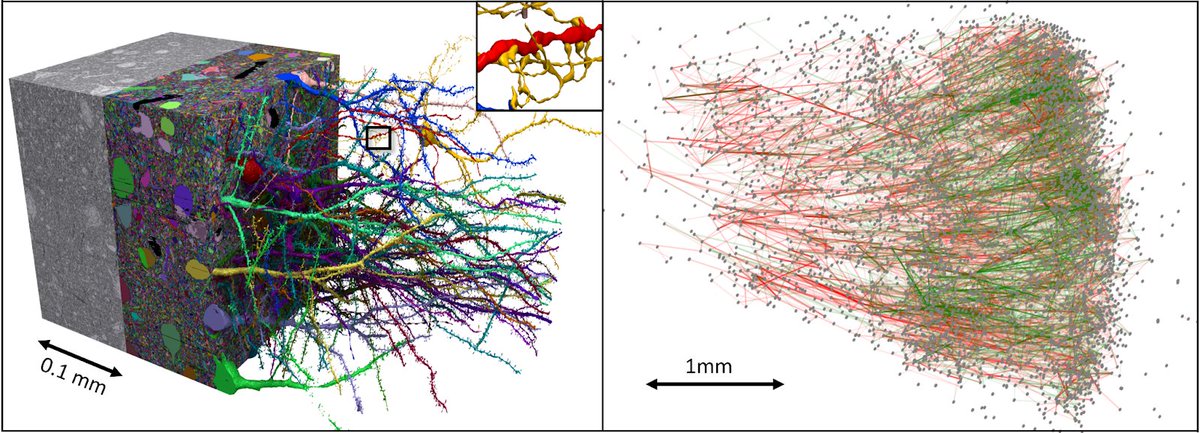
Today, in collaboration with the @Harvard Lichtman Laboratory, we're releasing a novel resource to study the human brain — an imaging dataset covering a cubic mm of cortical tissue with traces of tens of thousands of neurons and 130M annotated synapses. https://t.co/FywrdxFWgt
What’s next in tech and the future of hybrid work? Find out at #MSBuild, a free, all-digital event, on May 25-27.
Register now: https://t.co/vrDv6cZyAV
Reconstructing the 3D world from 2D video requires monocular depth estimation and video panoptic segmentation, but they are typically considered separately. Today we present ViP-DeepLab, which does both at once while achieving state-of-the-art performance→https://t.co/QSZsdiVdB1
Introducing a model-based #RL approach for robot navigation, called hierarchical predictive planning (HPP), that enables agents to align their goals on the fly in order to solve the decentralized rendezvous task. Learn more at https://t.co/PQ5wPq7ZI4
Interpretability in deep learning for finance: a case study for the Heston model
https://t.co/c7ro0Gvm5k
by Damiano Brigo et al.
#DeepLearning#NeuralNetwork
After 167 days in space, the longest duration mission for a U.S. spacecraft since the final Skylab mission in 1974, Dragon and the Crew-1 astronauts, @Astro_illini, @AstroVicGlover, Shannon Walker and @Astro_Soichi, returned to Earth this morning!