I built a game where you drive a danfo through Lagos 🚌
Load passengers, dodge okadas, beat the traffic. Plays in your browser, no download.
https://t.co/XE3xm87QXH
#LagosRun#Lagos#IndieGame
Release - Cement FCCPC Establishes Possible Price Manipulation
Tuesday, August 18, 2026: Findings from an industry-wide investigation conducted by the Federal Competition and Consumer Protection Commission (FCCPC) suggest possible manipulation of prices of cement in the Nigerian market.
This is the preliminary summation of the 40-page field reports collated following a three-month cross-border study by the Anticompetitive Practices Department (ACP) of the Commission, undertaken in response to widespread public complaints over the high cost of cement, a common staple in the country's construction industry.
Concerns were raised over the comparatively high retail price of cement in Nigeria compared with other markets, despite the country's substantial limestone deposits, significant domestic production capacity and reported surplus installed capacity relative to domestic consumption.
Significantly, all the major cement manufacturers in the country cooperated with the Commission by making their records available except one of them.
Publicly available estimates indicate that three major undertakings account for more than 90 percent of installed production capacity in the country.
The ACP investigations extended to markets in Sub-Saharan Africa like Kenya, Tanzania and South Africa as well as Egypt, Morocco and Algeria.
Metrics adopted included the availability of limestone, the basic raw material for cement production, as well as other variables such as population, production capacity and consumption.
In Kenya, for instance, the 58.6 million population (76% lower than Nigeria’s) has domestic cement demand of approximately 9.3m MTPA (metric tonne per annum) in 2025. Retail price in Nairobi is $5.40 (N7,344). Kenya is endowed with limestone.
In Tanzania, with population of 66.3m (72% lower than Nigeria’s) and the domestic cement demand is 9.3m MTPA (2025), a bag of cement sells for $4.80 (N6,528).
In Togo, a bag sells for $6.75 (N9,180). Significantly, Togo does not have limestone deposit.
Comparatively, in Nigeria, market intelligence reviewed by the Commission shows that the retail price of a 50kg bag of cement rose significantly during the first half of 2026.
A bag reportedly selling for between N9,300 and N9,700 in January was selling for between N10,500 and N13,000 by mid-year. By July, prices of between N13,000 and N15,000 were reported in some parts of the country.
The Commission's survey indicates that Nigeria has installed cement production capacity of more than 60 to 65 million metric tonnes annually, while estimated domestic consumption is approximately 25 to 30 million metric tonnes. Nigeria is also a net exporter of cement to neighbouring markets.
Of particular concern to the Commission is that this level of production capacity has not resulted in the downward pressure on domestic prices that might ordinarily be expected in a competitive market with substantial excess capacity.
Information provided by industry participants has identified energy costs, depreciation of the Naira and its effect on imported machinery and spare parts, as well as transportation and logistics costs, among the factors contributing to cement prices. The Commission is testing these explanations against verified information on costs, production, pricing and market conditions.
However, the weight of preliminary findings provides sufficient grounds for the investigation to continue.
Next is to determine whether prevailing cement prices can be explained by legitimate costs and market conditions, or whether there is evidence of coordinated conduct, abuse of market power, restriction of domestic supply, anti-competitive distribution practices or other conduct contrary to the provisions of the FCCPA.
Accordingly, the FCCPC has issued Notices of Commencement of Investigation and Summons to Produce to the key players in the sector...
Please see the slides for full details:
@NigeriaGov@NGRPresident@NGRSenate@HouseNGR
And for the ones who continue to blab about “dining”, “frolicking “ etc. That’s a delusional narrative for honoring a president’s invite. But if we apply your “Dining” logic broadly to others, your hypocrisy becomes obvious and you will scramble to make excuses.
The truth is I will continue to engage the government wherever necessary because it’s a duty of leadership. Not easy but necessary for the sake of the children and for solutions. Engagement is not endorsement.
My fight is different, and your own fight is valid. But take it to the appropriate quarters and quit wasting your time here.
My oga has said I should leave you people alone now, so, as you were…
Courtroom thrown into chaos as a woman reportedly died after collapsing during a court session.
The woman had been arrested by the NDLEA in Edo three months ago and was allegedly held in their custody without arraignment for three months. Reports claim she fell ill in custody and repeatedly requested medical attention but was ignored. She later collapsed in a Federal High Court and was confirmed dead.
A business owner in the oil and gas sector approached us that he would like to buy two units of the @nordmotion Max pickup for his company. Apparently, he was impressed with the vehicle after some rides with his peers in the sector.
To my shock, yesterday, my team told me that the bank, a bank operating in Nigeria told him that they do not finance Made-in-Nigeria vehicles, and they even suggested to our customer that he should go for foreign brands instead.
The most provocative part of this is that all of the brands they suggested to him identified as Made-in-Nigeria brands in their filings with the Bureau of Public Procurement (BPP).
Which means they decide who they want to be whenever it suits them.
This is yet another example of the needless sabotage and institutional bias against Nigerian manufacturers and assemblers that we experience in this sector.
The President aims to grow us into a $1 trillion economy. Nigerians want to buy Made-in-Nigeria products, we are working very hard to produce world-class vehicles, but some banks, who should play the role of credit facilitators, are displaying open prejudice against locally made vehicles.
What sort of economic sabotage is this?
Many of us who continue to assemble and manufacture vehicles here do so not just for profit, but out of patriotism and belief in the long game. We see this as a marathon, not a sprint.
We cannot continue using Nigerian resources to strengthen foreign factories while starving our own indigenous companies of opportunities.
If we truly want this country to be better, then we must support goods and services made in Nigeria, especially those of us who have shown we can deliver world-class standards. The support has to be real, not just in words, but in policy, in finance, and in action.
Every time we deny support for local production, we export jobs, skills, and economic growth that should belong here.
Seriously, get married and have a dual income household on time. The longer you postpone this, the harder it is to compound the benefits. It is the greatest middle-class hack to wealth. Forget all the stupid gender extremism here. Fall in love, get married, build together.
A PASSIONATE APPEAL TO THE COMMANDER-IN-CHIEF OF THE FEDERATION
Dear President @officialABAT GCFR
Your Excellency Sir,
Warm greetings to you from the entire body of Resident Doctors in Nigeria; a vital group of young medical professionals who provide specialist care and constitute a significant portion of the nation’s healthcare workforce.
We write to you today with deep concern and a profound sense of duty to draw your urgent attention to the worsening state of Nigeria’s health sector. Our healthcare system, Sir, is on the verge of collapse, a situation that has now assumed the dimensions of a national emergency and a matter of national security.
Your Excellency, we are aware that some individuals around you may have assured you that the challenges facing resident doctors have been resolved. Respectfully, Sir, that information is not accurate. Our realities in the hospitals across Nigeria tell a different story. Many of our members are yet to receive their legitimate entitlements, despite several signed agreements and repeated assurances from government representatives.
We are not politicians. We are doctors; men and women devoted to saving lives, working long hours in often harsh and under-resourced conditions. Our appeal is simple and sincere: we seek not luxuries, but the basic salaries, allowances, and welfare packages that have already been approved and promised by government.
Sadly, while many in privileged positions continue to receive their full emoluments without delay, the frontline doctors who shoulder the burden of patient care are left struggling. This inequity is demoralizing and threatens the very foundation of our healthcare delivery system.
Mr. President, you have always been known for your compassion, fairness, and courage in addressing difficult national challenges. We therefore appeal to your fatherly leadership to personally intervene and resolve the long-standing 19-point demands of the Nigerian Resident Doctors in order to restore hope, trust, and stability to our health sector.
We believe that under your decisive leadership, Nigeria’s health system can once again stand strong to serve our people with dignity and save countless lives.
May God grant you the wisdom, strength, and goodwill to act swiftly in the interest of all Nigerians.
Thank you Your Excellency for your kind attention and anticipated action.
Dr. Mohammad Usman Suleiman
President, Nigeria Association of Resident Doctors
27:10:2025
@officialSKSM@SenGodswill@muhammadpate@SalakoIziaq@MobilePunch@daily_trust@GuardianNigeria@ARISEtv@channelstv
An Open Letter to His Excellency, President Bola Ahmed Tinubu (@officialABAT)
Your Excellency,
First, permit me to extend my heartfelt gratitude for your recent recognition of the Super Falcons. Their heroic performance and your thoughtful reward have reignited national pride and reminded us all of the value of acknowledging excellence.
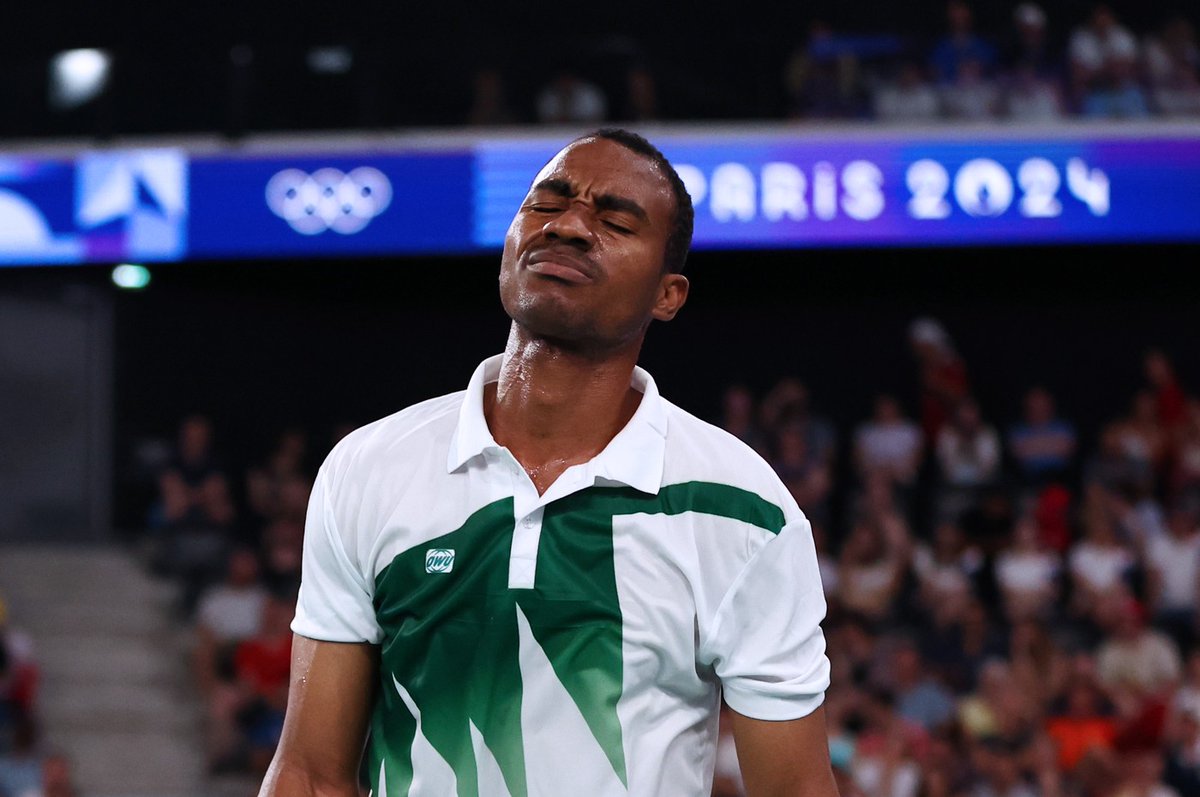
That said, I humbly draw your esteemed attention to another silent hero of Nigerian sport, Anuoluwapo Juwon Opeyori (@AnuoluwapoJuwo1)
Mr. President, Opeyori is not just a name in badminton; he is the embodiment of Nigerian resilience, consistency, and quiet excellence. He is a five-time African Badminton Champion, a feat no individual, living or dead, has ever accomplished. Even more astonishing, he won four of those titles consecutively, a demonstration of unmatched dominance on the continent.
As if that were not enough, he is the first African badminton player in history to qualify for back-to-back Olympic Games, proudly flying the green-white-green at both Tokyo 2020 and now Paris 2024. At the Paris Olympics, he also bears the additional responsibility and honour of serving as General Team Captain of the Nigerian contingent.
Yet, despite these historic achievements, his name remains largely uncelebrated on home soil. Mr. President, it is said that a nation is only as great as the people it chooses to recognise. His story is not only one of personal triumph, it is a reminder of what is possible when talent meets grit, patriotism, and perseverance.
In this spirit, I respectfully appeal for your recognition of this exceptional Nigerian. Doing so would not only uplift a deserving champion, it would inspire countless young Nigerians who dare to dream in less-visible sports; proving to them that excellence will never go unnoticed.
Thank you in advance, Mr. President, for your attention and for your continued support of Nigerian athletes across all disciplines.
God bless Nigeria 🇳🇬
With deepest respect,
Oludare Oluwashina Charles
There isn’t even a basis for comparing the trajectory of children from privileged homes with those from poor households. The system is rigged in favour of the former, and that advantage begins as early as the food they eat. A child attending an elite primary school in Abuja and another enrolled in an LEA primary school, where the local government chairman is more invested in acquiring new wives than repairing classrooms with collapsing ceilings, are not in competition. One already has a head start.
Some of the people who justify unplanned parenthood often claim that the future of our children is not in our hands, that God will provide for what He has created. Nothing could be further from the truth. The fact that, let’s say, 0.009% of children from impoverished backgrounds manage to break the cycle—compared to their peers from wealthy homes who typically retain their advantages—is not a success story. An outlier is not a template.
Another mistake we make is to guilt-trip those whose parents have given them a head start through legitimate means—as though it is somehow shameful to have never hawked gala in traffic, or as though suffering is the only vehicle to authentic success.
Not all privileged children come from extravagantly wealthy families. Some are simply the result of deliberate and strategic parenting. One couple might have ₦200 million to raise their children—less than the cost of a single car in someone else’s garage—and choose to invest it in elite private schools, where their children build lifelong high-value social networks. Another couple with the same resources may have ten children and end up providing them with the same conditions as the poor. The outcomes are often vastly different.
A privileged background is not a guarantee of success, but it offers a significant head start over those without it. The rare exceptions who rise from poverty do not invalidate this reality.