Dreams are good. Action is what makes people pay attention so stop waiting for the perfect moment get up today and make that decision and start your future self will thank you.
One of my favorite conversations with Leye is this one.
He talked about design, faith, purpose, and what it means to build meaningful work without losing yourself in the process.
If you’re a designer, creator, or simply someone trying to navigate purpose and ambition well, I’d highly recommend giving this a watch. (Link below)
A note before I start. I am Catholic, and the Papal encyclical I reference shapes how I read this moment. I am not asking anyone to share my opinions or my beliefs. I am explaining how I see things.
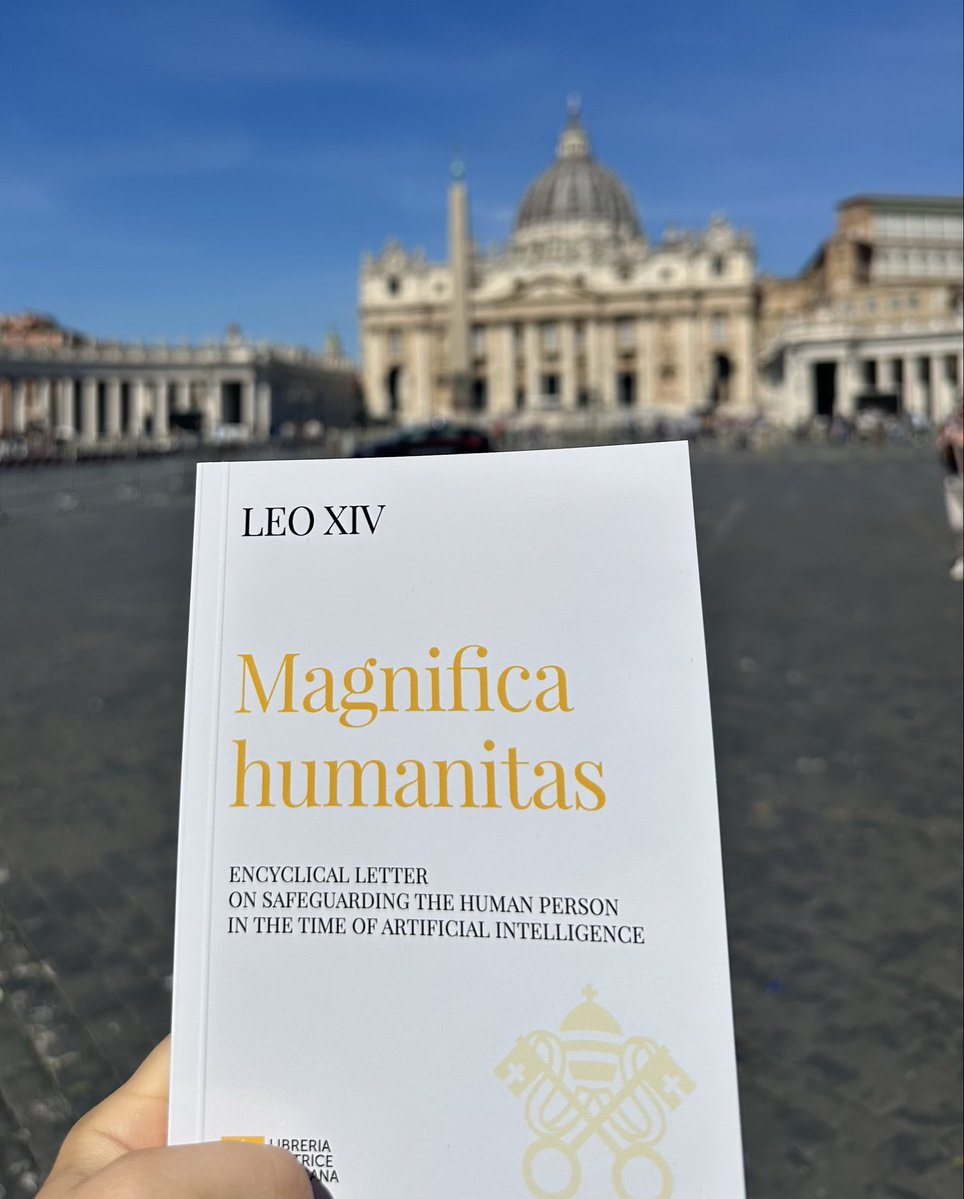
The Pope just preserved many jobs and created many new job openings through the conversation around the encyclical - Magnifica Humanitas, his first encyclical. It is long, and I am still reading it.
The line that stays with me is his predecessor Leo XIII's response to objections that the Church should focus on eternal life rather than worldly matters. He said the proclamation of the Gospel cannot overlook the concrete lives of people. Leo XIV is making the same argument now, about AI.
I once had to give a presentation on behalf of the Nigerian Society for Corporate Governance to an audience of Nigerian directors and senior management in 2024. They were not fully sold on the impact of AI. A lot has changed in two years.
The transformative effect of AI will be felt not just in this era but for generations. The Church is worried for good reason. AI could alter the nature of society itself.
AI Ethics and Governance have moved from "nice to have" afterthoughts to imperatives if societies and organizations are going to survive and thrive. AI is shifting from a productivity tool to an adversarial and manipulative product.
Someone wrote this on Twitter: "Gunpowder used to be for entertainment, then it was used to kill. Drones used to be for entertainment, then they were used to kill. AI is used for entertainment."
Even in corporations, when AI is positioned as an augmentation tool rather than a means of labor replacement, organizations fail when they measure adoption rather than outcomes. Several large enterprise coding tool rollouts this year have shown exactly this pattern.
As the encyclical insists, the priority is to build a more human society rather than allow a few powerful people to use AI to destroy the social fabric we once knew.
The global policy contrast is now sharp. Chinese courts have begun ruling that companies cannot terminate employees solely to replace them with AI, though the mechanism is driven more by state direction than by worker dignity. The United States has no coherent worker doctrine, and its major AI labs are priced as if labor displacement is the business model. Europe has a doctrine but no platforms at scale. Africa has neither.
Africa has the largest number of young people entering the job market globally. Yet conversations and policies on the impact of AI on Africa and African jobs are still not taken seriously at the highest levels.
The African Union's continental AI strategy has existed on paper since 2024, but most member states have not operationalized it. Meanwhile, the slavery already inside the AI supply chain is African. Kenyan data workers sued OpenAI in 2023 over content moderation conditions that left some with diagnosed PTSD. Documented data labeling rates across the continent have been reported well below local minimum wages. The harms are not theoretical or future; they are here.
The goal should be to improve our societies by creating greater abundance for everyone. That means both increased capacity and full employment. They are not mutually exclusive. Africa needs both.
Three things make the math in Africa different from that in the West. Demand is not saturated; it is suppressed. The continent has doctor-to-patient ratios at fractions of WHO minimums, class sizes that swallow up learning, agricultural extension reach in single digits, and legal services most adults will never access. We have major problems with scale and access.
Many of the processes and workstreams needed in Africa to create more employment have yet to be developed. There is no scaled health insurance infrastructure to disrupt in most countries, no mass legal services market to compress, no formalized tutoring industry to replace.
The demographic math runs the opposite way from the West. Africa is adding roughly fifteen to twenty million people to the workforce every year through 2050. Aging Europe needs AI to cover work that fewer workers can do. Young Africa needs AI to create the work that more workers want to do. This will also help rebalance the migration equation.
The thesis, however, holds only if the value capture is local. If foreign AI platforms serve African demand without local workforce participation, capacity expands, but employment does not. You get extraction, not absorption.
Closing that gap requires policy. Local data sovereignty. Local language coverage as a structural moat. Regulatory requirements that AI deployment include local workforce participation. This is why the doctrine gap matters more than the platform gap, and why the policy work has to start now rather than later.
The narrow goal of profitability, which treats humans as expendable tools, is not the model we should import. This should be our priority in Africa, and we should be actively working towards how these new technologies can help us achieve it. The encyclical gives that work cover. The Catholic church is a major global institution lending its voice to this debate. The question is whether the continent's boardrooms, capitals, and policy desks will pick it up.
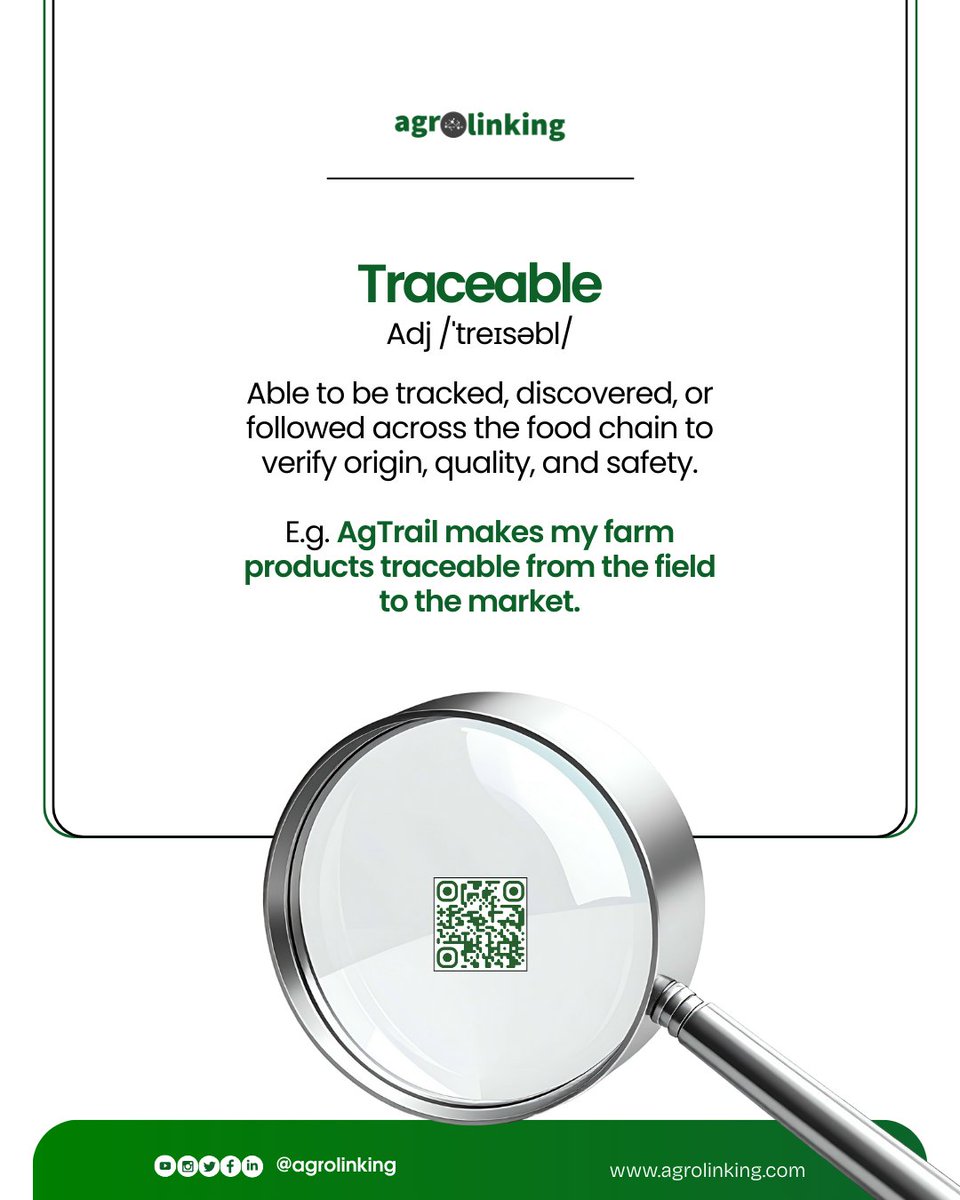
On AgTrail, every product carries a traceable identity through its batch code. From origin to market, each batch code becomes a reliable reference that helps identify products quickly, manage safety risks, and build trust in trade.
Book a demo to get started with AgTrail and bring full traceability into your supply chain:
#AgTrail #WordOfTheDay #FoodTraceability #FoodSafety #SupplyChain
Anthropic co-founder Chris Olah was invited to speak at today's presentation of Pope Leo XIV's encyclical "Magnifica humanitas."
Read the full text of his remarks: https://t.co/CoBfkVOVcy
As we wrap up the month, we’re opening the floor for your questions on Agrolinking’s women’s offer.
Join our Ask Us Anything session this Friday to understand how AgTrail can support your work and how to get started.
📅March 27 | ⏰ 3:00 PM | 📍 Google Meet
Register here: https://t.co/f3S21m0rCF
#Agrolinking #AgTrail
Women in agri-food, this one is for you.
1️⃣ Free One-on-One Business Call
For the first 5 female-led agribusinesses
(Use code IWD2026 at https://t.co/9DM4Qe9tvr)
2️⃣Win a Free AgTrail Subscription
For 1 farmer, 1 processor, and 1 exporter
(Winners selected through social media tagging)
3️⃣ 10% OFF Annual AgTrail subscription for women-led agribusinesses
Valid til March 31.
Tag a woman who should benefit from this opportunity.
#agrolinking #AgTrail
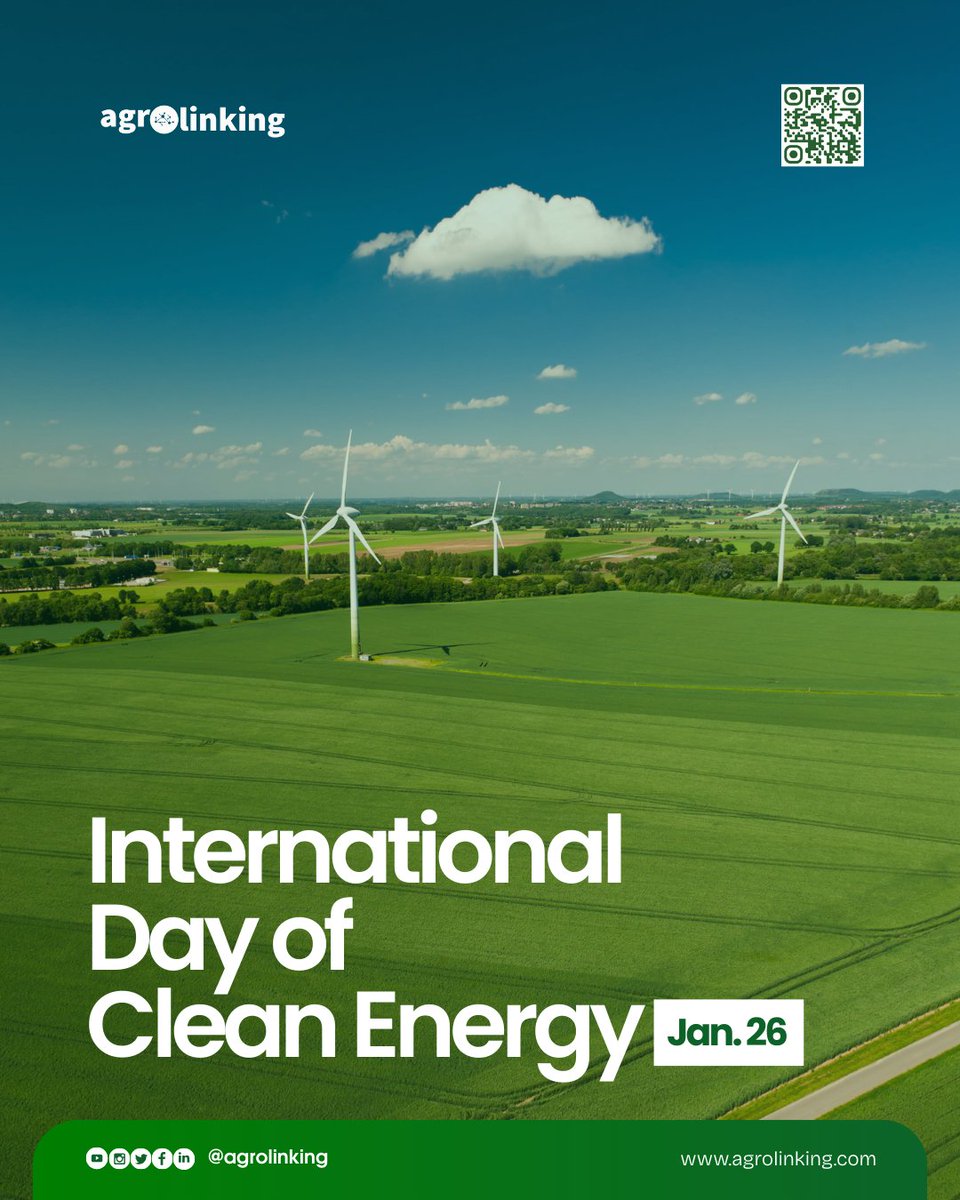
Clean energy is a key driver of safe and efficient food systems. Reliable energy supports food production, processing, storage, and market access. It improves efficiency, reduces losses, and strengthens food safety across the supply chain.
As food systems become more complex, clean and reliable energy supports resilience, transparency, and trust, especially for farmers and agrifood actors operating at scale.
#InternationalDayOfCleanEnergy #CleanEnergy #FoodSystems #FoodSafety #SustainableDevelopment #Agrolinking
Stop losing out because buyers can’t verify your crops. With AgTrail, your products are fully traceable from field to market, proving origin, quality, and safety.
Build trust and earn more with AgTrail. Get started today: https://t.co/1VPikEkUYx