Eventually, everyone gets forgotten. In just a few generations, no one will remember your name, your struggles, your achievements,or your failures.
Whatever feels so important now will disappear https://t.co/mnx5zqIleJ, why spend your precious time taking everything so seriously?
The sheer terrifying scale of Daenerys and Drogon decimating the Golden Company and the Lannister forces in seconds will always be breathtaking visual television.
Dragons in open combat were literally a cheat code in Westeros. Absolute poetry in motion. 🐉🔥⚔️
He may no longer be here… but his Qur’an recitation still lives on. 🤍📖
May Allah forgive him, have mercy on him, and make the Qur’an a light in his grave.
The day I learnt this hack was the day I know why the rich keep getting richer.
If you even invest up to N1bn, you can negotiate for as high as 30-40% so that's N300m-N400m every year and your N1bn is still intact.
You don't even need to work anymore.
Ignorance is not bliss.
Netanyahu clearly disagrees with Trump. He promised to continue bombing Iran regardless of Trump claims to negotiations with Iran or not.
The U.S. and Israel are having a clear divergent objectives regarding their war on Iran.
RANSOM AND RESCUE: THE TRUTH WE ARE NOT BEING TOLD
By Salihu Tanko Yakasai.
The Kebbi and Kwara kidnapping incidents reveal a painful truth. Behind the official rescue statements lies a cycle of negotiations, payments, and denials. Until we confront this openly, Arewa will continue to carry the heaviest burden.
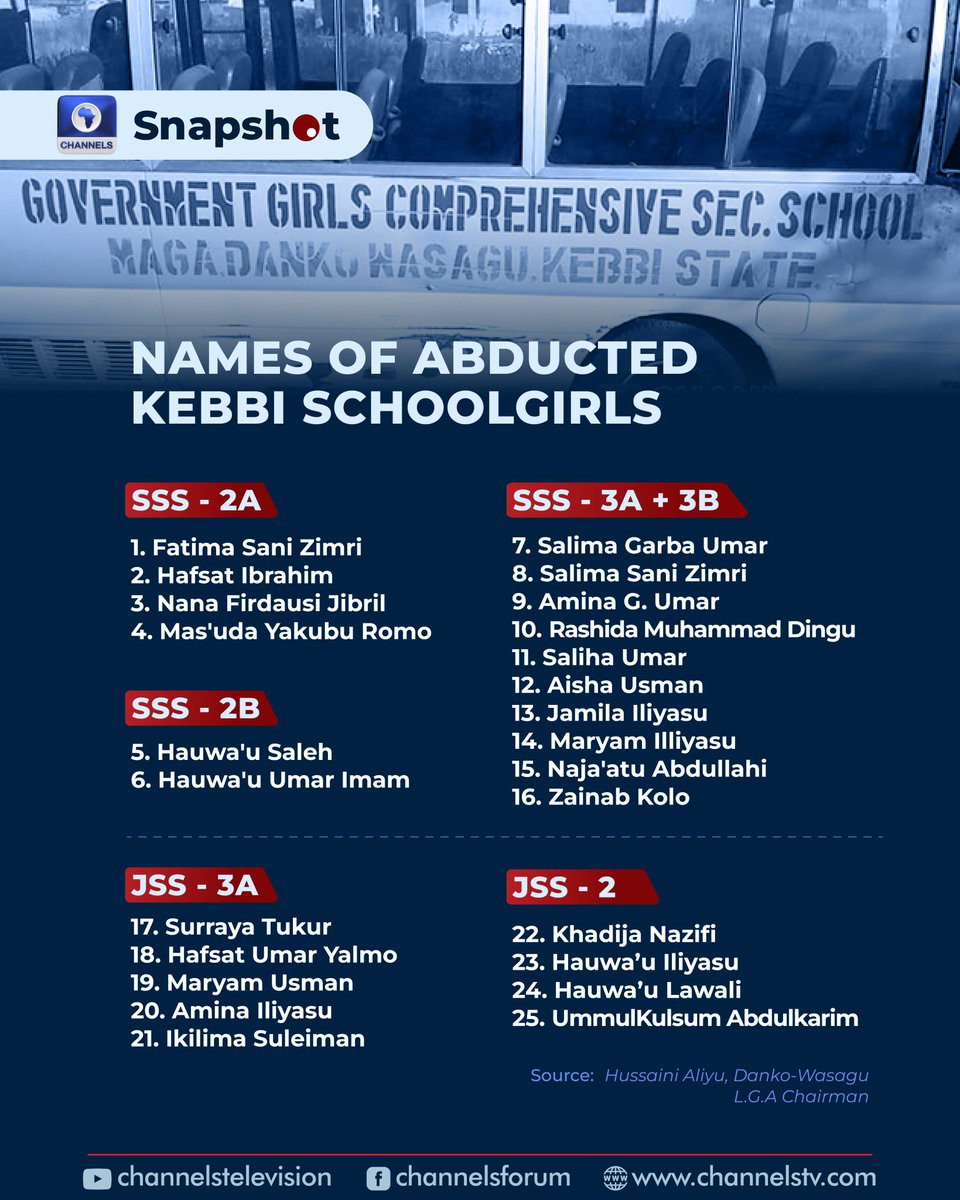
I was genuinely relieved when news broke that the 25 girls abducted in Kebbi State had been “rescued” yesterday Tuesday, 25 November. It felt like a small victory, coming just days after the Eruku church members in Ekiti LGA of Kwara State were also declared “rescued.” The president quickly issued statements, backed by a full chorus from the Presidency’s media team and supporters.
But my relief didn’t survive the day.
Soon after, the bandits who kidnapped the Kebbi girls released their own video. The girls sat with them, and the abductors openly mocked the official narrative. “Karfi bai anshe ku ba,” they said, meaning force did not free you. They pressed the girls: “Gwamnati ta kasa ansar ku ko?” which meant that the government couldn't rescue you, and the girls replied yes. The bandits even mentioned negotiations with “manyan mutane,” dismissing any claim that security operations led to their release.
It immediately reminded me of Bayo Onanuga’s comment on Arise TV same day, about the Kwara case. He said: “Security agencies reached out to the kidnappers and demanded the release of the victims, and they complied.” That was the moment my excitement dissolved. Between the Kebbi video and Bayo’s explanation, the truth is hard to ignore: ransom was paid. Bandits do not release captives out of goodwill, and no terrorist group simply “complies” with polite requests.
This raises a harder question: What exactly separates the negotiations done openly by local officials in Zamfara and Katsina from what the federal government just did quietly? The difference now seems cosmetic. While local officials were caught on camera; the federal government operated off-camera. The outcome is the same though, enormous sums flowing to terrorists!
And as long as ransom remains the path of least resistance, these kidnappings will only escalate, Kano State which has largely been spared, is also becoming a go-to destination for the kidnappers It also begs an uncomfortable possibility: are our government, both state and federal, as well as the security forces unable to prevent these attacks, or conduct effective rescue operations when they happen, making ransom the only viable option? Because every ransom paid today funds the next attack tomorrow, while steadily weakening our government and security institutions.
Whatever the case, one thing is certain. This crisis is far from over. Nigerians, especially in Arewa, must brace ourselves for a long road ahead, because the current strategy is not breaking the cycle. It is feeding it!
A nation that keeps buying back its own citizens is not winning the war. It is slowly losing itself!
Allah shi kare mu, amin!
JUNGLE JUSTICE: THE HYPOCRISY OF THE SOUTHERN NIGERIANS!
By Salihu Tanko Yakasai.
Everywhere you look in this country, you can see rot in the system. The complicity of those who should know better is evident, and the vices that have become normalized persist across different parts of Nigeria. From chronic underdevelopment in all six geopolitical zones, including the oil producing states and the so-called economic hubs, to the regions that pride themselves on their religiosity, there’s no shortage of poor leadership.
However, one thing I find both amusing and troubling is how quickly the South amplifies the problems of the North, often presenting them as unique or exclusive to us, totally oblivious to theirs.
For clarity, I am not excusing the North. I have addressed our issues many times, particularly regarding insecurity. In fact, some readers may recall that I was arrested by the DSS in 2021 during the administration of late President Buhari after I criticized the handling of the Tegina schoolgirls’ abduction. I have also written openly about the failures of northern leaders, including my 2012 article, "19 Northern Governors: The Certified Parasites." I have consistently urged young
northerners to build capacity and equip themselves to add value to Arewa and the country as a whole. Yes, we have been vocal in our criticisms and have held our leaders accountable.
What I rarely see happen, is that same objectivity from many in the South. Whenever something occurs in the North, they swiftly condemn all northerners collectively, presenting it as if the entire region is guilty or that such acts are widespread and culturally accepted.
Take jungle justice as an example. The killing of Deborah in Sokoto is often cited as a favorite reference point by Nigerians from the South. For the record, my position has always been clear: Deborah should have been handed over to the authorities if she committed any crime. No one has the right to pass judgment outside the law. Her killing was jungle justice, plain and simple. Does that mean blasphemy is condoned? Absolutely not. But it should be the courts, not a mob, that decides.
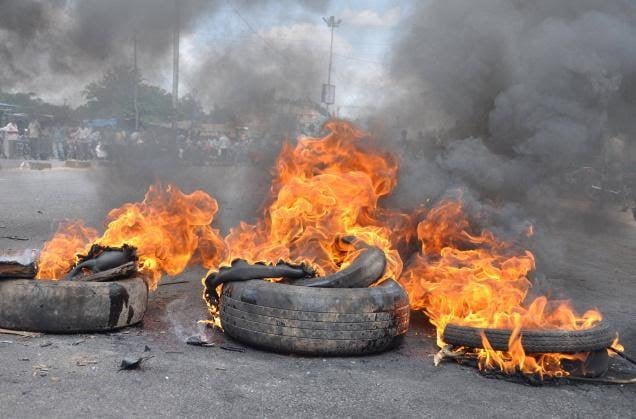
However, here’s the hypocrisy: that same jungle justice is also widespread in the South. Burning people alive with tires, stoning them, or using cutlass to unailve them is rampant all over the South.
Many high-profile killings of northerners have occurred there in recent years. Harira Jubril and her four daughters were murdered in Anambra in 2022 by suspected ESN operatives. Sixteen northerners were lynched and burned in Uromi, Edo State, in 2025. The violence at Sasa market in Ibadan in 2021 left many Hausa residents dead and displaced. In the same year, armed separatists shot dead northern traders in Orlu and Umuaka, Imo State. These are not rumors; these are facts.
Yet, somehow, these incidents are downplayed or ignored. When you mention them, some people respond by saying Deborah was killed “in the name of Islam,” as if that magically makes the killing of northerners acceptable merely because it
wasn’t done “in the name of Christianity,” even though the perpetrators were Christians.
Even in the Southwest, where many present themselves as morally superior, the jungle justice carried out by the Oodua People’s Congress (OPC) is conveniently forgotten. OPC began as a rights group but quickly morphed into a vigilante outfit linked to violent clashes across Lagos in the late ’90s and early 2000s. Human Rights Watch documented killings ranging from beheadings, torture, arson, and ethnic attacks in areas such as Ketu, Mile 12, Ajegunle, Idi-Araba, Ojo, and Isolo. Northern traders, civilians, and even police
officers were victims, with official estimates of the death toll nearing 500. Yet this history rarely makes its way into their moral lectures. Curiously, their memory seems to begin and end with Deborah or similar acts in the North.
1/2
وَعَسَىٰ أَن تَكْرَهُوا شَيْئًا وَهُوَ خَيْرٌ لَّكُمْ ۖ وَعَسَىٰ أَن تُحِبُّوا شَيْئًا وَهُوَ شَرٌّ لَّكُمْ
“But perhaps you hate a thing and it is good for you; and perhaps you love a thing and it is bad for you”