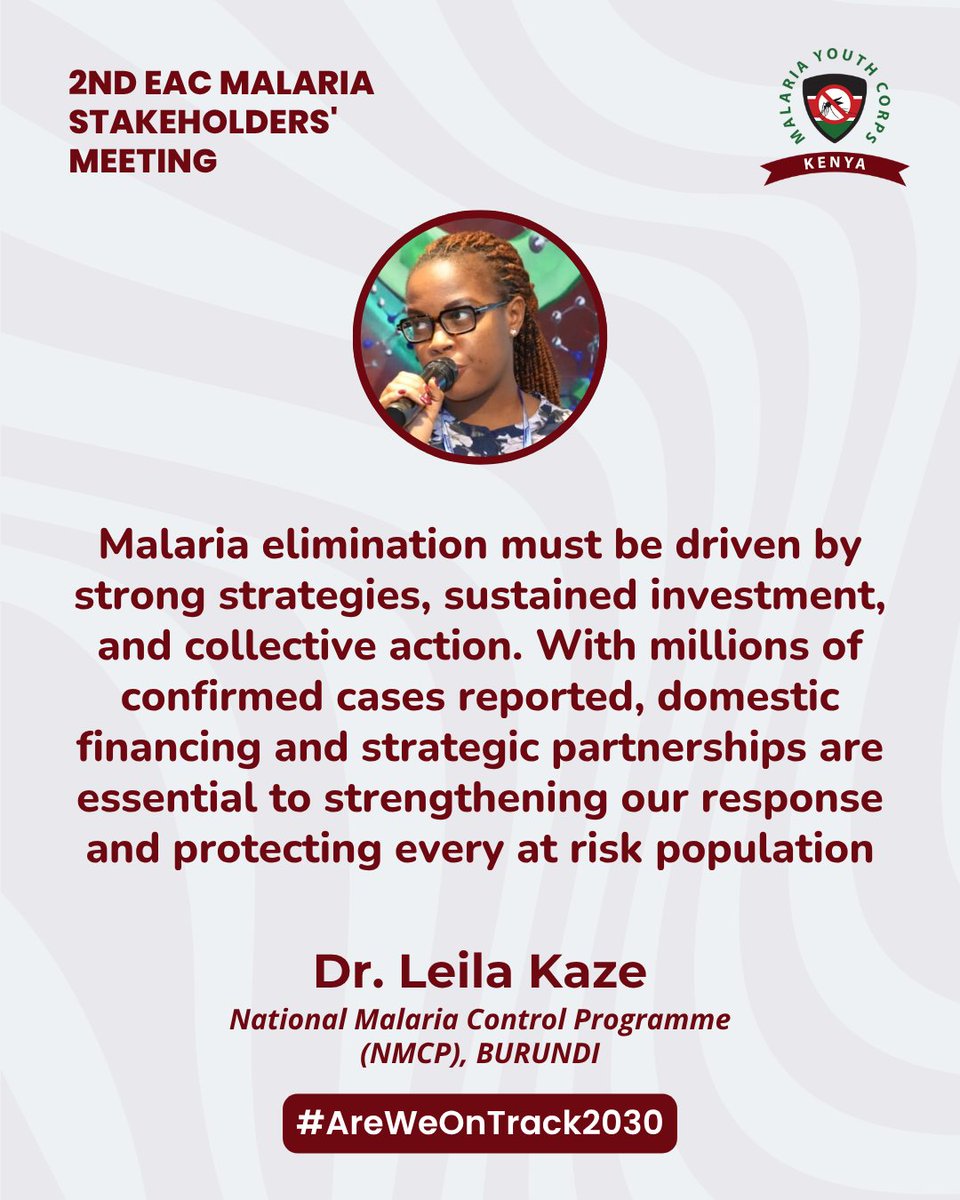
Malaria elimination requires collective intervention. Pulling resources together, working closely with communities and proper awareness is key to malaria elimination
#AreWeOnTrack2030
At the 2nd EAC Malaria Stakeholders’ Meeting, Dr. Leila Kaze of Burundi’s NMCP stressed the need to turn commitments into action and ensure life-saving interventions reach every at-risk community.
Are we on track for 2030?
#AreWeOnTrack2030#Malaria2030#EndMalaria#KeMYC
The path to malaria elimination requires more than existing interventions. It demands scientific discovery, investment in local talent, and partnerships that translate research into solutions for communities.
Malaria 2030: Are We on Track?
#AreWeOnTrack2030
Domestic financing is fundamental to malaria elimination. Governments must take the lead in ensuring that resources are available to sustain interventions and accelerate progress towards a malaria-free future.
#AreWeOnTrack2030#EndMalaria
Speaking at the 2nd EAC Malaria Stakeholders’ Meeting, Prof. Bernhards Ogutu, a Clinical Researcher at KEMRI, emphasized the need to listen to communities affected by malaria and bring all stakeholders together to accelerate progress toward elimination
#AreWeOnTrack2030
Our goal is simple: no child should die from malaria, no family should suffer its devastating effects, and no child should miss school because of a disease we can prevent and treat. 🌍🤝 #AreWeOnTrack2030
Genomic surveillance is vital to staying ahead of malaria.
Dr. Francis Chikuse of Africa CDC highlighted gaps in regional genomic analysis and widespread insecticide resistance, calling for stronger surveillance and technical capacity.
#AreWeOnTrack2030#GenomicSurveillance