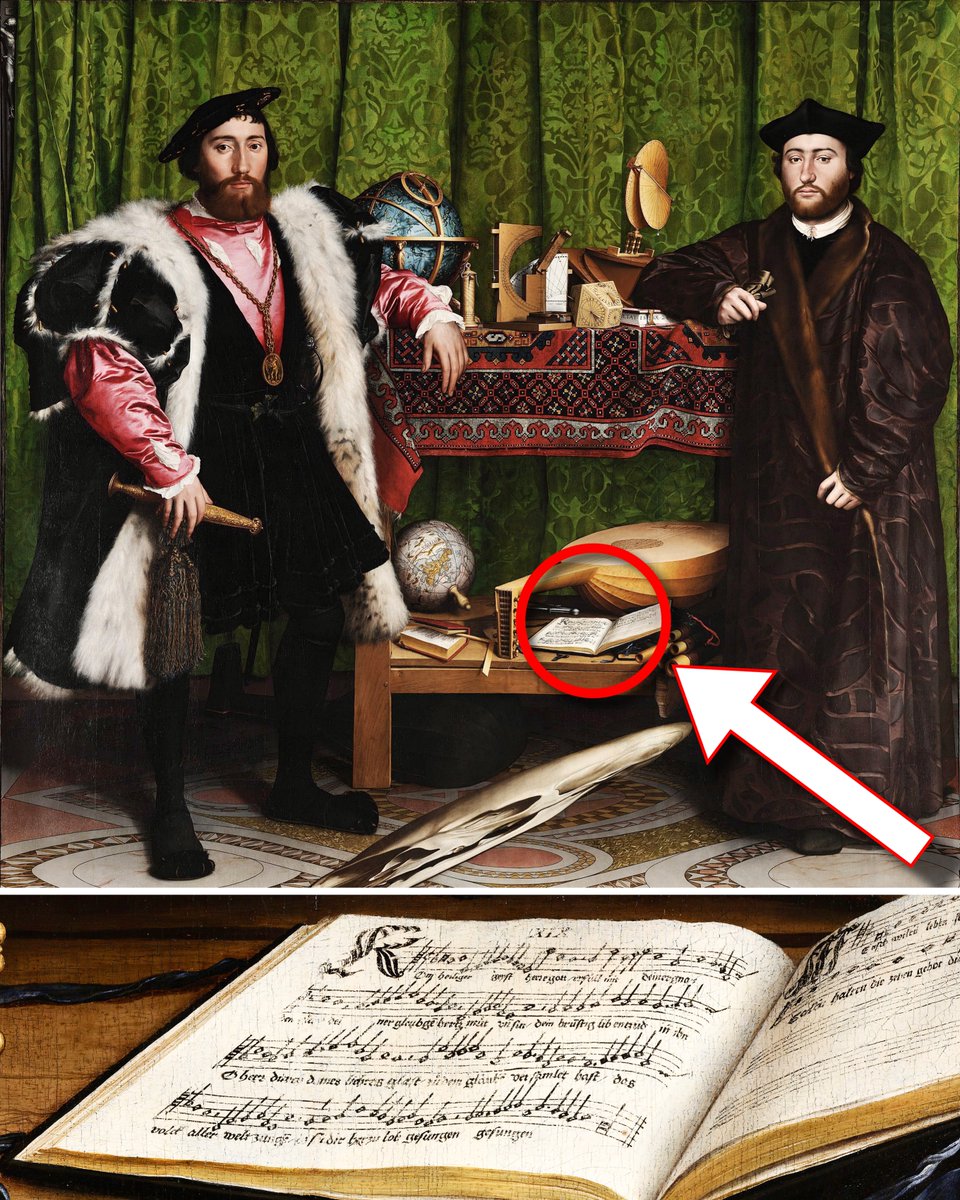
This 500-year-old portrait may seem ordinary, but it's one of the most mysterious in history.
There's so much detail that you can read every musical note on this small page.
But look closer — an unsettling secret is hiding in plain sight... 🧵
Introducing Sora, our text-to-video model.
Sora can create videos of up to 60 seconds featuring highly detailed scenes, complex camera motion, and multiple characters with vibrant emotions.
https://t.co/YYpOAcrXQ3
Prompt: “Beautiful, snowy Tokyo city is bustling. The camera moves through the bustling city street, following several people enjoying the beautiful snowy weather and shopping at nearby stalls. Gorgeous sakura petals are flying through the wind along with snowflakes.”
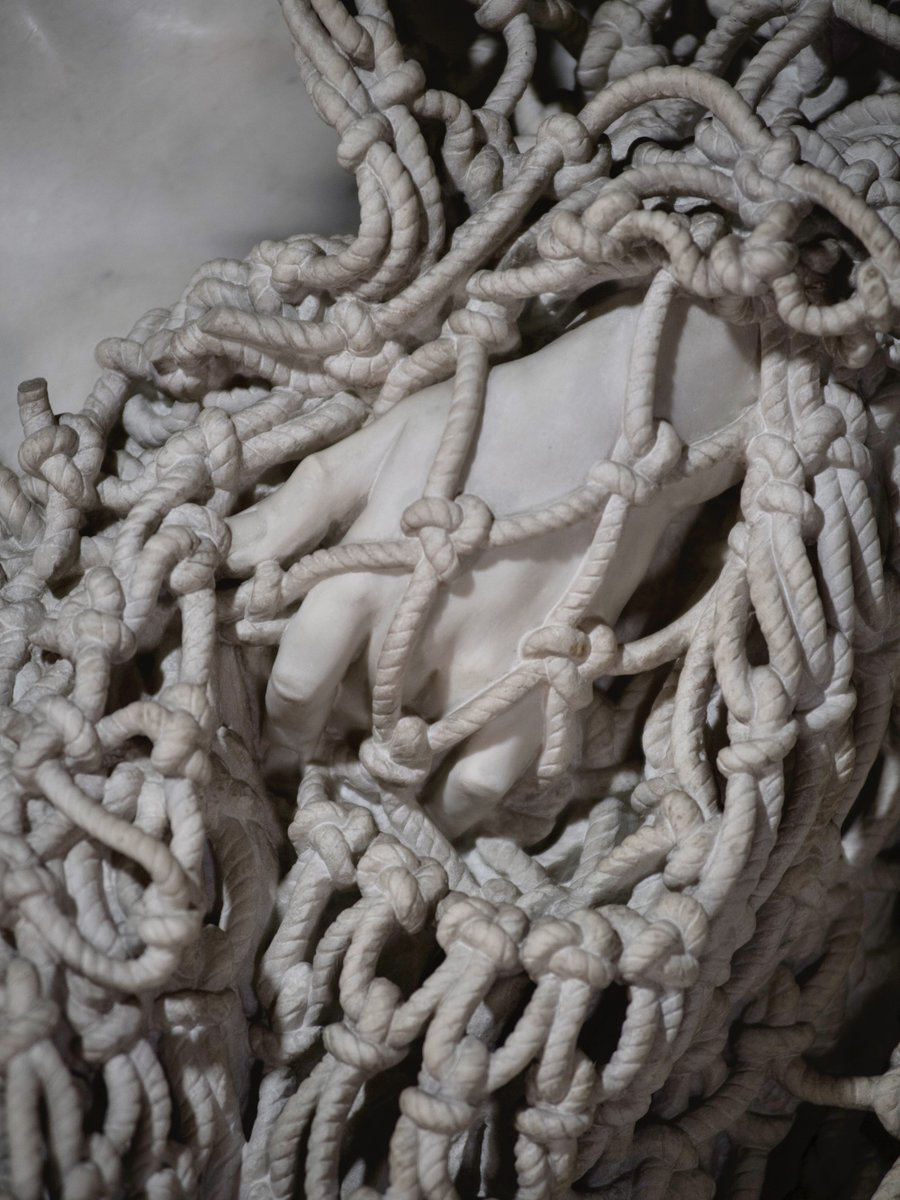
Some things shouldn't be possible to carve from stone, but the master sculptors managed it anyway.
A thread of impossible details of marble sculptures 🧵
The Qasr al-Farid, known as 'The Lonely Castle,' holds distinction as the largest rock-cut tomb within the archaeological marvel of Hegra, situated in Saudi Arabia during the 1st century CE, under the dominion of the Nabataean Kingdom. This ancient realm's dominion extended from the Levant to northern Arabia, granting them control over the pivotal Incense Route traversing the Arabian Peninsula. The Nabataeans, enriched by trade, established opulent cities like Petra and monuments such as the Qasr al-Farid.
Found within the archaeological site of Madâin Sâlih in northern Saudi Arabia, the Qasr al-Farid is an intriguing structure. Despite its 'castle' designation, it was actually a tomb, constructed around the 1st century AD. The tomb stands as one among the 111 monumental tombs scattered throughout the Madâin Sâlih landscape. Notably, UNESCO recognized this site as a World Heritage site in 2008. What sets the Qasr al-Farid apart is its isolation; unlike most monumental tombs in Madâin Sâlih, which were constructed in groups, this tomb stands alone.
Curiously, historical records reveal that the Qasr al-Farid was never brought to completion. Unfortunately, the reasons for this, as well as the identity of its intended occupant, remain shrouded in mystery. Whether it was abandoned by its owner or its workmen, the answers are lost to time.
As the 3rd century A.D. dawned, the once-thriving Incense Route began to wane due to the turmoil faced by the Roman Empire. This decline in political and economic stability had a far-reaching impact, leading to the deterioration of trade along the route. Towns lining the path suffered as a result, marking the end of an era.
The Biden administration is hunting for malicious computer code it believes China has hidden deep inside the networks controlling power grids, communications systems and water supplies that feed American military bases, according to U.S. officials. https://t.co/icwK8fyH37
The German translation of "If It's Smart, It's Vulnerable" is out today. The German title is "Was vernetzt ist, ist angreifbar: Wie Geheimdienste und Kriminelle uns im Netz infiltrieren" https://t.co/9pxV3gqh4K
Sorry, but https://t.co/rvOhn0c6zM is down temporarily-- working to restore service.
(details: this is our second blast of abusive traffic from an AWS customer today apparently from an AI company harvesting Internet Archive texts at an extreme rate)