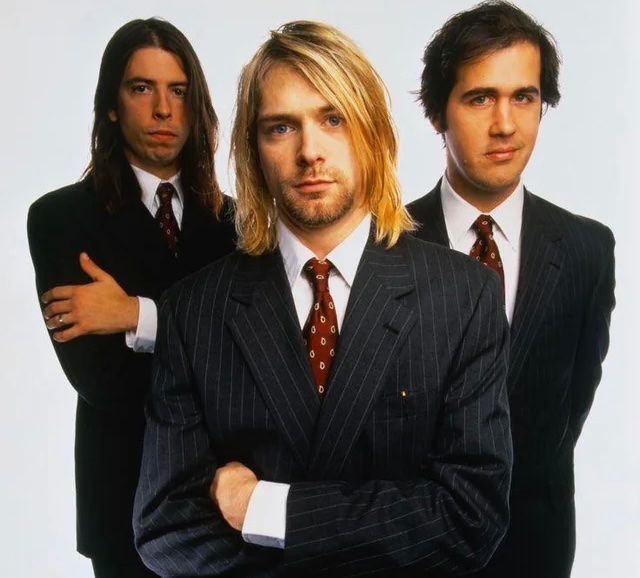
Nirvana changed the game forever in the 90s. They sold over 75 million albums and turned grunge into a global phenomenon.
"Nevermind" wasn't just an album… it was a revolution.
🎾 Tennis, Jannik Sinner vince gli Internazionali d'Italia e diventa il più giovane a vincere tutti i tornei Masters 1000 in carriera.
Nella finale a Roma sconfitto Casper Ruud in due set. Sugli spalti anche il presidente Sergio Mattarella.
📰 @ultimoranet
@Juventina962@civones sono juventino. e smettiamola con queste puttanate. era fuorigioco, e fare i piangine così non porta da nessuna parte. ammettiamo che abbiamo una squadra da 6-7 posto e un allenatore che non dà quel di più necessario.
The Who’s “Baba O’Riley” from 1971 is one of rock’s most powerful generational anthems and appears on the album Who’s Next.
Pete Townshend wrote the song inspired by his spiritual beliefs in the Indian guru Meher Baba—hence the title “Baba”—and in the minimalist composer Terry Riley—hence “O’Riley.” Townshend used an EMS VCS3 synthesizer to create that famous pattern of repetitive notes that opens the song, simulating an electric violin and giving it a sound that was innovative for the time.
The lyrics, written primarily by Roger Daltrey, speak of rebellious youth, life in the countryside, escaping the city, drugs, and the search for freedom, with phrases that capture the frustration and energy of young people in the 1970s.
It was recorded at Olympic Studios in London and at Record Plant in New York during the sessions for *Who’s Next*, following the failed *Lifehouse* project. The electric violin was played by Dave Arbus, a guest from the band Fairport Convention, and the famous final synthesizer solo was created by Townshend manipulating the instrument live in the studio.
The song was never released as a single at the time but became a classic on the radio and at The Who’s concerts, where it always creates one of the most epic moments as thousands of fans jump and sing along to the chorus.
It perfectly represents The Who’s transition from the mod rock of the 1960s to the more powerful and experimental rock of the 1970s and remains an anthem that defines youthful rebellion and the pure energy of rock.
il 10 Maggio 1968 Jimi Hendrix
e i suoi Experience si esibiscono
in due leggendari concerti al
Fillmore East di New York,
con il supporto di Sly & the Family Stone
e del Joshua Light Show.
I set dalla durata di 50 minuti,
includevano questa scaletta:
"Lover Man", "Fire", "Foxey Lady",
“Red House", "Hey Joe",
“Sunshine Of Your Love",
“Hear My Train A Comin'",
“Can You Please Crawl Out Your Window
“Purple Haze" e "Wild Thing".
#JimiHendrix #pillolerock
il 9 Maggio 1984 Bruce Springsteen
pubblica “Dancing in the Dark",
un singolo estratto dall’album
“Born in the USA”.
La canzone arrivò al secondo posto
nella Billboard Hot 100 ed al primo
nella US Mainstream Rock.
Il celebre videoclip, diretto da
Brian De Palma, mostra un concerto live di Springsteen, dove invita una giovane ragazza del pubblico a salire sul palco
per ballare con lui. La ragazza protagonista è l'allora ventenne e
sconosciuta Courteney Cox.
De Palma aveva indicato a Springsteen quale ragazza chiamare sul palco,
ma Bruce pensava si trattasse di una
fan selezionata nel pubblico e scoprì
solo in seguito che si trattava di un'attrice venuta da New York per l'occasione.
Nel settembre 1985, il videoclip vinse l'MTV Video Music Award per
il “Best Stage Performance"
#BruceSpringsteen
press play ▶️
il 5 Maggio 1998 i Pearl Jam
pubblicano “Wishlist",
un singolo scritto da Eddie Vedder
ed estratto dall’album “Yield”.
Il brano raggiunse la sesta posizione
in entrambe le classifiche Billboard,
nella Mainstream Rock e nella
Modern Rock Tracks #PearlJam