I've spent 20 years at the intersection of finance, strategy, and analytics at Google, Robinhood, and Netflix. I've managed P&Ls, controlled costs, and driven revenue, and those same instincts made me a better trader. I've traded my own money for 15+ years, manually. Now I'm building AI systems to do it with me.
I'll share the observations, the performance, and the build here. Also wrote a playbook for breaking into tech finance (link in bio).
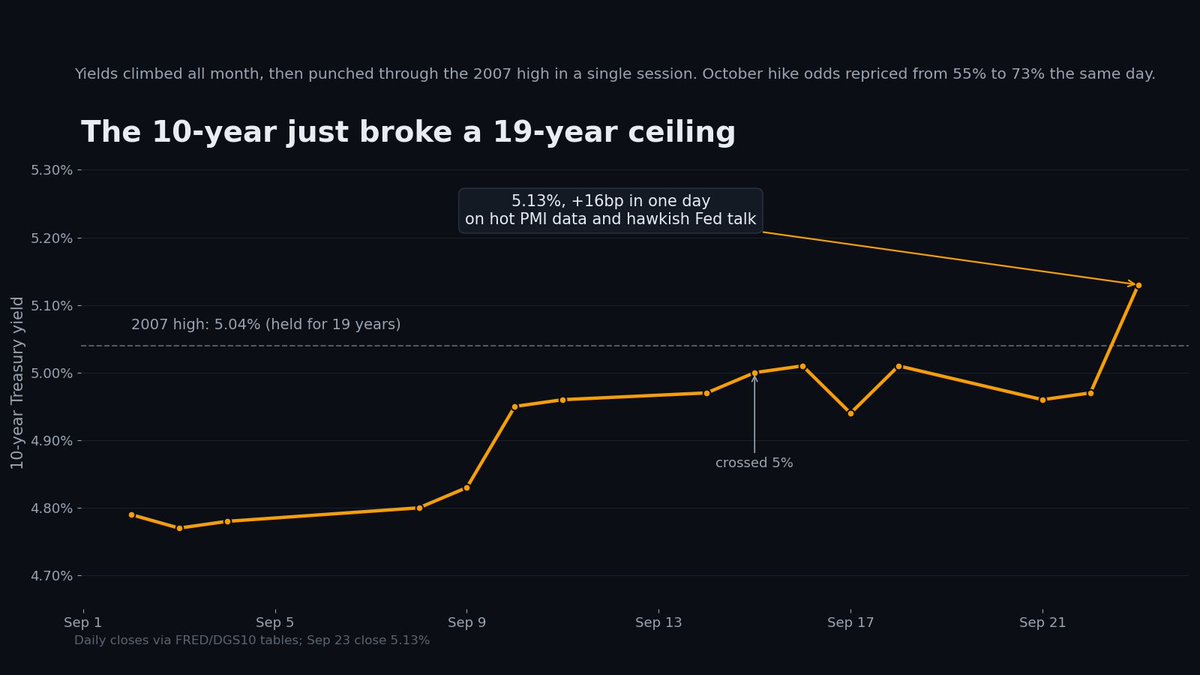
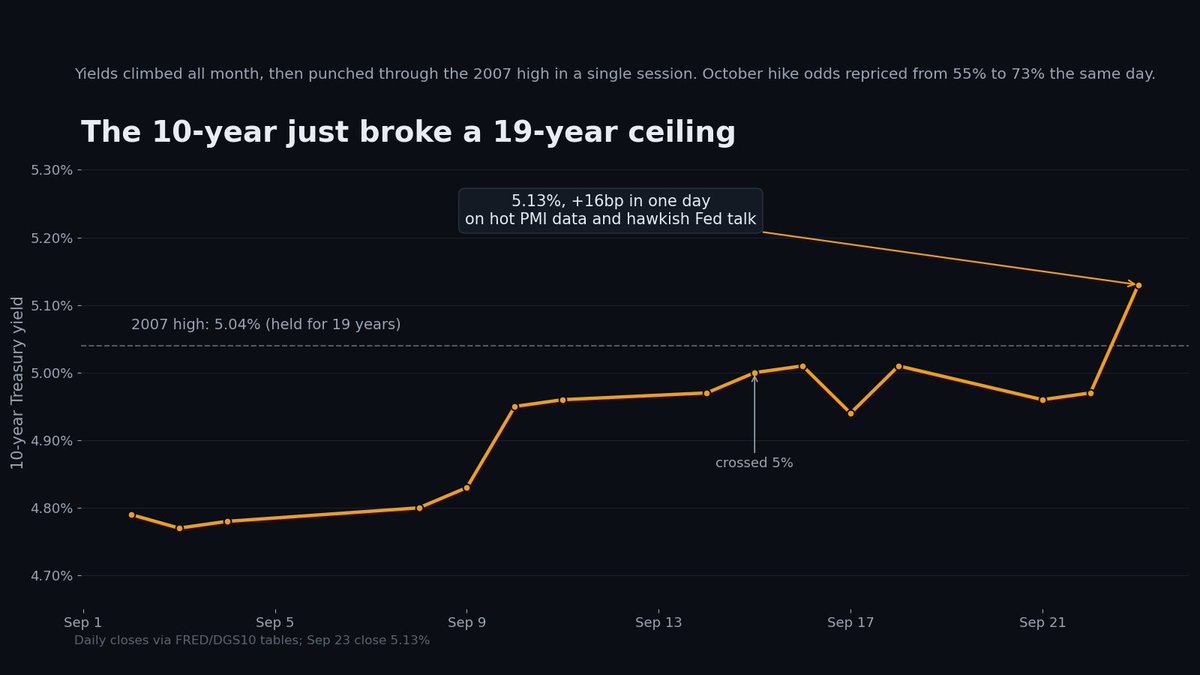
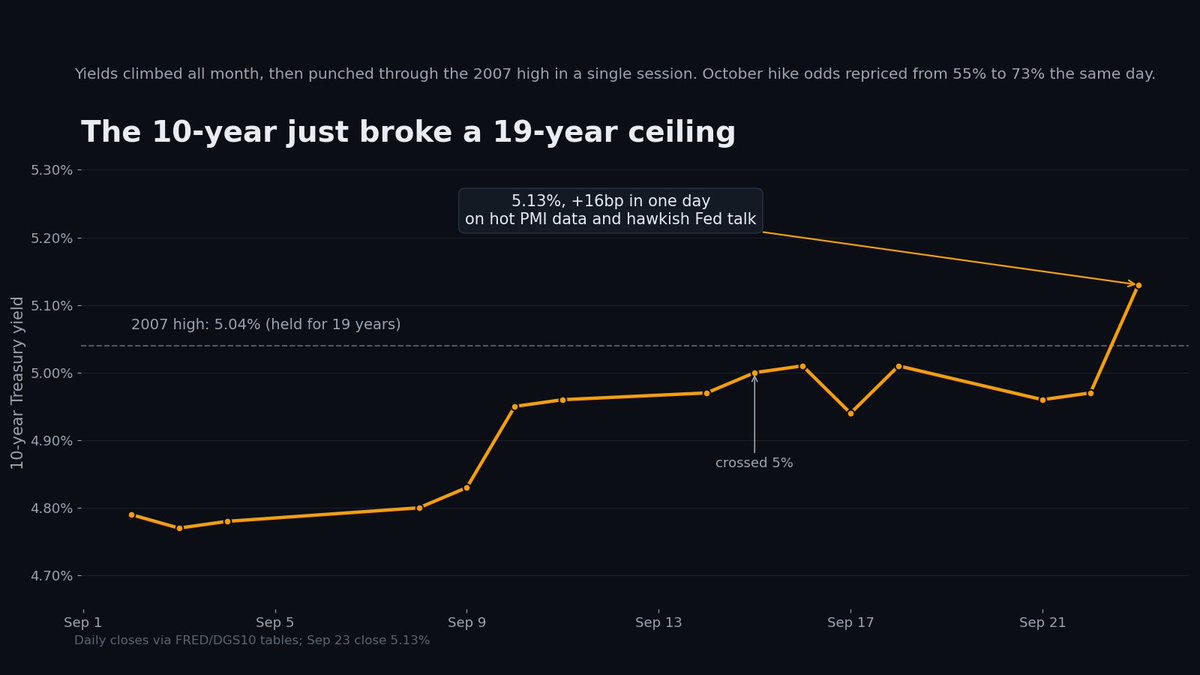
@NewsLambert The 223 bp spread is the story. Pre-pandemic it ran closer to 170 bps, so mortgage pain isn't just the Treasury at 5.14%. Elevated spreads mean rates stay high even if yields cool.
@Barchart Worth noting the 30-year runs 220+ bps over the 10-year Treasury (5.14%), so spreads, not just yields, are doing the damage. Weekly surveys said 7.03%; the daily numbers are already above 7.25%.
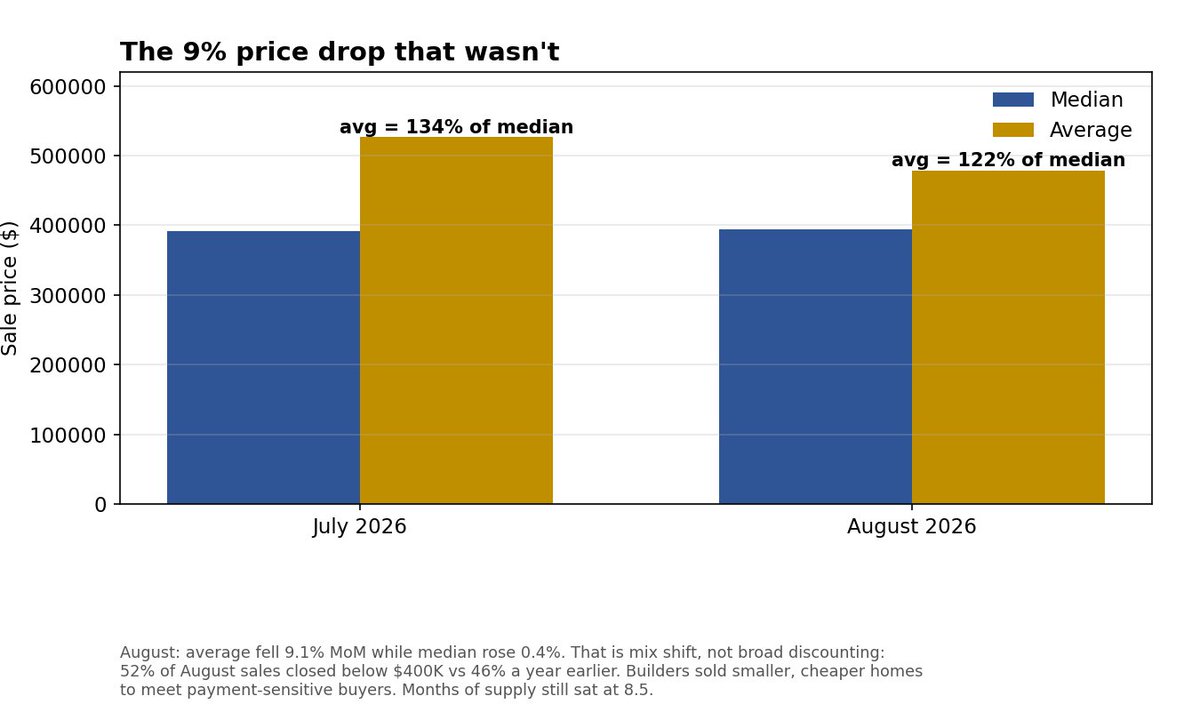
@zerohedge Beat the 615K estimate, but July was revised up to 643K, so the 6.4% gain is flattered. The real story is the mix shift: average price fell 9.1% while the median rose 0.4%. Builders racing downmarket
August new home sales beat expectations at 684,000, up 6.4% from July, but the price numbers underneath are stranger than the headline. The average new home price fell 9.1% in a single month while the median barely moved, up 0.4% to $393,700, which means homes did not get 9% cheaper. The mix did. Builders sold smaller, cheaper homes to meet buyers where monthly payments actually pencil with 30-year mortgages back above 7%, and 52% of August sales closed below $400,000 against 46% a year earlier. Months of supply still sits at 8.5, meaning at the current sales pace it would take eight and a half months to sell everything on the market. The takeaway is that the new-build market is splitting in two: inventory is piling up while builders race downmarket, because at 7% mortgages the only buyer left is the one who needs the smaller house.
$ON wrapped up its investor day with one clear pitch: power chips for AI data centers are the growth engine now. Management guided that segment to 50% annual growth through 2030 while automotive grows 9% and industrial 10%, so the whole company's 12 to 14% growth target is really one line doing all the work. The math worth knowing is that 50% a year compounds to five times the revenue in four years, which is how gross margin can climb from 40% toward 53% even while car chips stay sluggish, since power delivery for an AI rack carries far fatter margins than a commodity auto part. Jefferies called that 53% margin target a milestone rather than a ceiling, and Seaport just initiated with a Buy and a $100 target against a stock near $70. The plain read is that data centers run out of power before they run out of compute, and the least glamorous part of the rack keeps the best pricing.
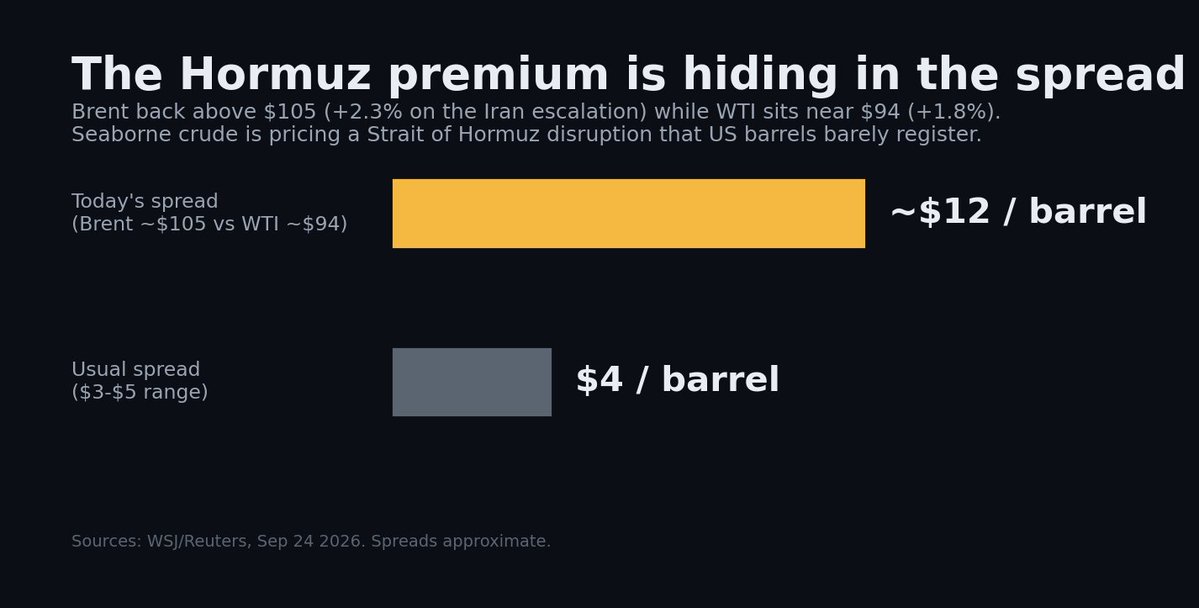
There are two oil prices that matter. Brent is what the rest of the world pays, and WTI is what America pays, and they usually sit $3 to $5 apart. Right now the gap is about $12. The reason is the fighting with Iran: traders are scared it could choke off the Strait of Hormuz, the narrow waterway that carries about a fifth of the world's oil. That fear hits Brent because Brent travels by ship through those waters, while American oil mostly stays home, so it barely moves. Think of the $12 gap as a fear meter. The wider it gets, the more the market believes the strait could actually close.
The S&P 500 fell 0.06 points on Tuesday, which is not a percent but points, on an index sitting at 7,764. Meanwhile the Nasdaq closed at another record, memory stocks ripped 3.5% higher, and banks dropped 1.8% after the Fed's 25bp hike. The flattest headline you'll ever see, hiding a genuinely busy tape underneath.
This thing is amazing. Check out Muse, your personal AI agent. Redeem my code in Settings within 48 hours of joining and we'll both get 1 billion Muse tokens.
Code: 66TKB5
https://t.co/h3ilyO58wM
$AMD just crossed $1 trillion.
Up 9.9% in a day to $615. It was a $255B company a year ago.
The kicker: this wasn't a GPU rally. Meta's Muse agent hit #1 on the App Store and the market decided CPUs matter again. $INTC says it can meet only half of demand. The agentic AI trade just rotated.