Albert Einstein is one of the smartest people to have ever lived.
But what if I told you there might have been a man even smarter, who never won a Nobel Prize?
The story of the smartest person you probably have never heard of...
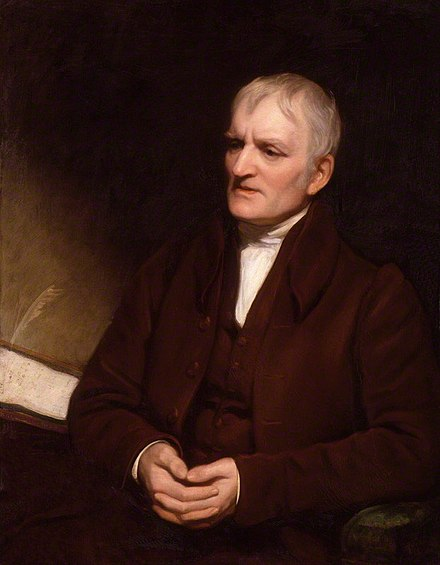
6 more quotes from John Dalton...
1. "My head is too full of triangles, chemical processes
and electrical experiments, etc., to think much of marriage"
2. “If I have succeeded better than many who surround me, it has been chiefly - may I say almost solely - from universal assiduity.”
3. "The field of science is large; it is, therefore, impossible for any individual to cultivate the whole."
4. “No new creation or destruction of matter is within the reach of chemical agency. We might as well attempt to introduce a new planet into the solar system, or to annihilate one already in existence, as to create or destroy a particle of hydrogen.”
5. "If I had a wish, it would be to know a lot of things. Knowledge is the greatest gift."
6. “No new creation or destruction of matter is within the reach of chemical agency. We might as well attempt to introduce a new planet into the solar system, or to annihilate one already in existence, as to create or destroy a particle of hydrogen.”
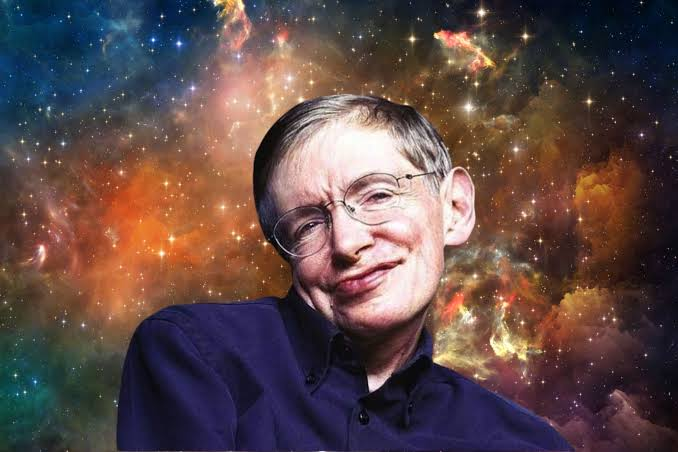
Stephen Hawking on Aliens and UFOs: "Our only chance of long-term survival is not to remain inward looking on planet Earth but to spread out into space. We don't appear to have been visited by aliens. I'm discounting reports of UFOs - why would they only appear to cranks and weirdos?"
Robert Oppenheimer was a complicated man.
But his views on God may have been the most complicated thing about him.
Here is the story of Oppenheimer's journey with religion and philosophy...
A well-known historic moment is Oppenheimer paraphrasing a verse of the Bhagavad Gita 11:32 after witnessing the the Trinity Test.
He famously said, "Now, I am become Death, the destroyer of worlds".
But what was his relationship with Hinduism or religion, if he even had one?
Oppenheimer first was introduced to Eastern philosophy during his studies at Harvard - some reports say that he was even more interested in the Hindu philosophical classics than physics. Whilst teaching at Berkley in his 30's his curiosity for it seemed to deepen.
He spent long winter nights with a Sanskrit professor studying its teachings deeply - it was here that he was first introduced to the Gita.
In his words, he thought it was "quite marvellous", and would later call it "the most beautiful philosophical song existing in any known tongue".
It is said that he kept his worn version of the Gita on his desk, often giving copies to friends. The impact of the Hindu philosophies was so deep that later in his life he named the Gita, and other Sanskrit classics among the ten books that most shaped his life.
When speaking at a memorial service for President Franklin D. Roosevelt, he quotes his own translation of Bhagavad Gita 17:3, "Man is a creature whose substance is faith. What his faith is, he is".
Some believe that Oppenheimer's relationship with the concept of God was intellectual and philosophical rather than religious. He was influenced by these spiritual and philosophical teachings but didn't adhere to any one religious faith.
When asked after a lecture at the Princeton Theological Seminary about his "concept of God" Oppenheimer said:
"I don't use the word (God) because it seems to me the most ambiguous word I know".
Perhaps even he didn't know...
The rest of Robert Oppenheimer's famous monologue after the Trinity test goes as follows:
"We knew the world would not be the same. A few people laughed, a few people cried, most people were silent. I remembered the line from the Hindu scripture, the Bhagavad-Gita. Vishnu is trying to persuade the Prince that he should do his duty and to impress him takes on his multi-armed form and says, “Now, I am become Death, the destroyer of worlds.” I suppose we all thought that one way or another."
Robert Oppenheimer was a complicated man.
But his views on God may have been the most complicated thing about him.
Here is the story of Oppenheimer's journey with religion and philosophy...
A well-known historic moment is Oppenheimer paraphrasing a verse of the Bhagavad Gita 11:32 after witnessing the the Trinity Test.
He famously said, "Now, I am become Death, the destroyer of worlds".
But what was his relationship with Hinduism or religion, if he even had one?
Oppenheimer first was introduced to Eastern philosophy during his studies at Harvard - some reports say that he was even more interested in the Hindu philosophical classics than physics. Whilst teaching at Berkley in his 30's his curiosity for it seemed to deepen.
He spent long winter nights with a Sanskrit professor studying its teachings deeply - it was here that he was first introduced to the Gita.
In his words, he thought it was "quite marvellous", and would later call it "the most beautiful philosophical song existing in any known tongue".
It is said that he kept his worn version of the Gita on his desk, often giving copies to friends. The impact of the Hindu philosophies was so deep that later in his life he named the Gita, and other Sanskrit classics among the ten books that most shaped his life.
When speaking at a memorial service for President Franklin D. Roosevelt, he quotes his own translation of Bhagavad Gita 17:3, "Man is a creature whose substance is faith. What his faith is, he is".
Some believe that Oppenheimer's relationship with the concept of God was intellectual and philosophical rather than religious. He was influenced by these spiritual and philosophical teachings but didn't adhere to any one religious faith.
When asked after a lecture at the Princeton Theological Seminary about his "concept of God" Oppenheimer said:
"I don't use the word (God) because it seems to me the most ambiguous word I know".
Perhaps even he didn't know...
The rest of Robert Oppenheimer's famous monologue after the Trinity test goes as follows:
"We knew the world would not be the same. A few people laughed, a few people cried, most people were silent. I remembered the line from the Hindu scripture, the Bhagavad-Gita. Vishnu is trying to persuade the Prince that he should do his duty and to impress him takes on his multi-armed form and says, “Now, I am become Death, the destroyer of worlds.” I suppose we all thought that one way or another."
Richard Feynman is probably one of the best teachers ever.
Here are 5 of his best pieces of wisdom...
1. The scientific method:
"In general, we look for a new law by the following process. First, we guess it. Then, we compute the consequences of the guess, to see what, if this is right, if this law that we guessed is right, we see what it would imply. And then we compare those computation results to nature."
2. Scientific theories:
"Notice, however, we never prove it right. Suppose that you invent a good guess, calculate the consequences, and discover that every consequence that you calculate agrees with experiment. Your theory is then right? No, it is simply not proved wrong."
3. Beauty of science:
"You can recognize truth by beauty and simplicity. It’s always easy when you’ve got the right guess and make two or three little calculations to make sure it isn’t obviously wrong to know that it’s right."
4. Philosophy of science:
"The philosophers, who are always on the outside, making stupid remarks, will be able to close in. Because we can’t push them away by saying, well, if you were right, you’d be able to guess all the rest of the laws."
5. Understanding nature:
"But the principles must be principles about something. The principles that I just spoke of, the conservation of energy– the energy of something– and quantum mechanical laws are quantum mechanical principles about something. And all these principles added together still doesn’t tell us what the content is of the nature, that is, what we’re talking about."
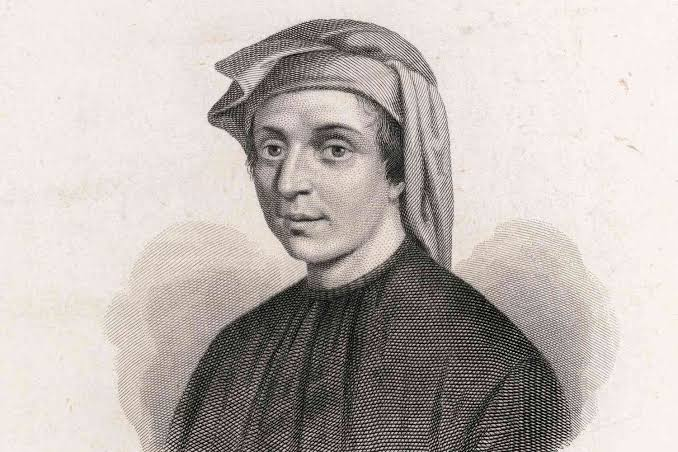
When the Indians' work was being introduced to Africa, an Italian mathematician named Fibonacci heard of the news and in addition to the Arabic numerals introduced Europe to the concept of 0 we use today.
1500 years after its banishment the West accepted 0 as a number.
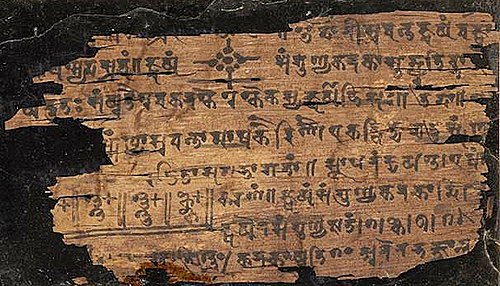
The first recorded use of the modern zero, represented at the time by a large dot, was found in the Bakshali manuscripts, which were carbon-dated to the 3rd or 4th century.
But the West had some catching up to do.