Lab’s first paper of 2026 is out @CORTEXjournal!
Not every EEG frequency component in SSVEP is a clean signature of feature-selective processing. #EEG#science#Research
https://t.co/xU8NcVdb04
Here is AlViN Lab's schedule at @VSSMtg !
We are very excited to present seven posters at the VSS 2026!
Alongside our work at Sabanci University, several projects were developed through international collaborations! Come and check it out!
Applications are now OPEN for 13 #PhD fellowships in the Doctoral Programme in Cognitive and Brain Sciences at CIMeC, University of Trento, Italy!
Research fields: brain, neuroscience, cognition, language, neuroimaging, vision and more.
Apply by May 7
🔗 https://t.co/TOIAlzDa21
I made a Claude Code skill that generates conference posters 🛠️
Instead of a static PDF, it outputs a single HTML file — drag to resize columns, swap sections, adjust fonts, then give your layout back to Claude. 🔁
🔗 Skill 👉 https://t.co/KhYV8anbxL
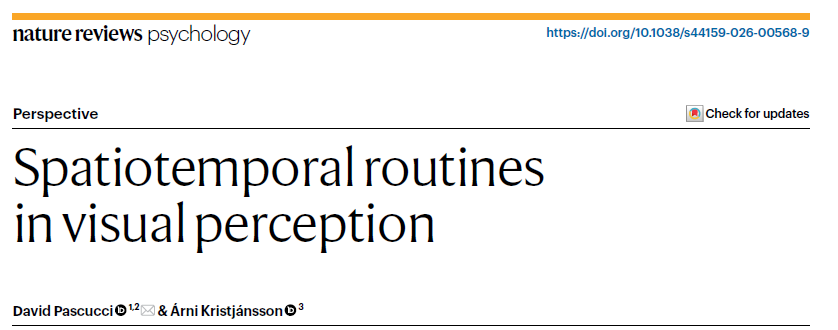
In our recent paper now available in @CORTEXjournal, we show that some rhythmic responses can emerge purely from retinotopic variations in signal strength shaped by cortical organization.
An important caution for frequency-tagging studies! #EEG#SSVEP#vision
Lab’s first paper of 2026 is out @CORTEXjournal!
Not every EEG frequency component in SSVEP is a clean signature of feature-selective processing. #EEG#science#Research
https://t.co/xU8NcVdb04
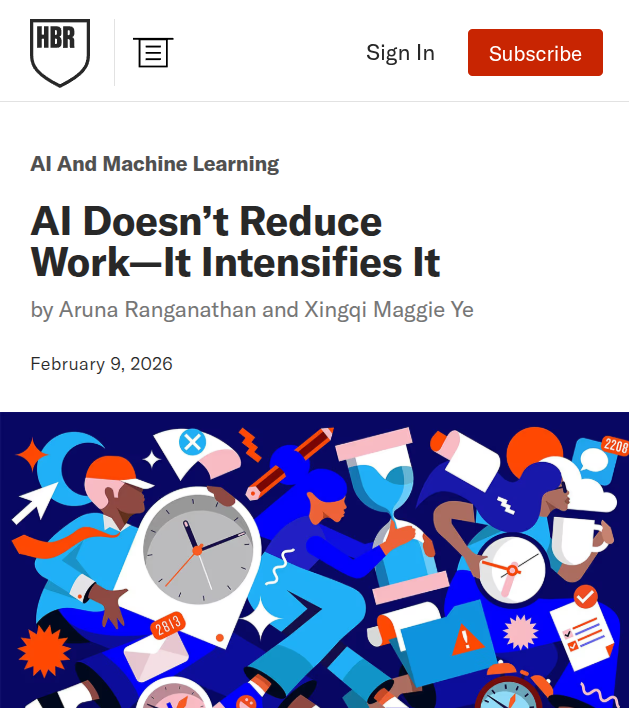
Harvard Business Review makalesi AI kullanımının iş hayatına etkilerinin, düşünüldüğü gibi iş yükünü azalttığı yönünde değil; aksine çalışanları daha yoğun iş temposunda hissettirdiğini gösteriyor.
Bunun sebebinin ise AI’ın bilgi eksikliğini doldurması olduğu öne sürülüyor.
A super interesting new study from Harvard Business Review.
A 8-month field study at a US tech company with about 200 employees found that AI use did not shrink work, it intensified it, and made employees busier.
Task expansion happened because AI filled in gaps in knowledge, so people started doing work that used to belong to other roles or would have been outsourced or deferred.
That shift created extra coordination and review work for specialists, including fixing AI-assisted drafts and coaching colleagues whose work was only partly correct or complete.
Boundaries blurred because starting became as easy as writing a prompt, so work slipped into lunch, meetings, and the minutes right before stepping away.
Multitasking rose because people ran multiple AI threads at once and kept checking outputs, which increased attention switching and mental load.
Over time, this faster rhythm raised expectations for speed through what became visible and normal, even without explicit pressure from managers.
It’s not too late to apply for the PhD position in my lab! Please send your documents (cover letter, CV, transcripts, names of references) through the official application platform by Nov 25!
We are deeply saddened to share that Dr. Paul Ekman has passed away. His groundbreaking research transformed our understanding of emotion, facial expression, deception and compassion. We are creating a memorial page if you would like to share a reflection: https://t.co/39ctcg8E9w
It took me two hours to submit all the recommendation letters. That time of the year I guess. Some of the students are excellent. I hope they will get the positions they deserve. #academia#AcademicTwitter
Looking for a PhD program where you can study vision from different perspectives (computer vision, neuroscience, perception, image processing)?
Consider applying to NYU!
https://t.co/zXS38hKzbq
I'm recruiting PhD students to join my new lab in Fall 2026! The Shared Minds Lab at @USC will combine deep learning and ecological human neuroscience to better understand how we communicate our thoughts from one brain to another.
This is going to revolutionize education 📚
Google just launched "Learn Your Way" that basically takes whatever boring chapter you're supposed to read and rebuilds it around stuff you actually give a damn about.
Like if you're into basketball and have to learn Newton's laws, suddenly all the examples are about dribbling and shooting. Art kid studying economics? Now it's all gallery auctions and art markets.
Here's what got me though. They didn't just find-and-replace examples like most "personalized" learning crap does. The AI actually generates different ways to consume the same information:
- Mind maps if you think visually
- Audio lessons with these weird simulated teacher conversations
- Timelines you can click around
- Quizzes that change based on what you're screwing up
They tested this on 60 high schoolers. Random assignment, proper study design. Kids using their system absolutely destroyed the regular textbook group on both immediate testing and when they came back three days later.
Every single one said it made them more confident.
The part that surprised me? They actually solved the accuracy problem. Most ed-tech either dumbs everything down to nothing or gets basic facts wrong.
These guys had real pedagogical experts evaluate every piece on like eight different measures.
Look, textbooks have sucked for centuries not because publishers are idiots, but because making personalized versions was basically impossible at scale. That just changed.
This isn't some K-12 thing either. Corporate training could work this way. Technical documentation. Professional development.
Imagine if every boring compliance course used examples from your actual job instead of generic office scenarios.
We might have just watched the industrial education model crack for the first time. About damn time.
Drawing on methods from psychophysics across ten experiments, Boger and Firestone examine the cognitive and computational foundations of style perception. Their findings suggest that this capacity is grounded in known psychological processes
https://t.co/HtWpBgkoqK
What you see when you look at this image depends on the culture you grew up in. The question is: Are you shocked to hear that people see rectangles or circles? That and more of the best from @ScienceMagazine and science in this edition of #ScienceAdviser: https://t.co/orzq7A56eR
I am excited to share my research today at @Stanford on “Building wholes and processing patterns: Integration processes and familiarity effect in symmetry perception” — join us at 3 PM in Wu Tsai Neuroscience building E275! Looking forward to this.