This is one of all time favorite books on programming, and it goes way harder during this agentic era.
My myriad review agents follow many guidelines from this book.
The bar for software really should be higher, and it’s sad to see people ship slop.
This line from Atomic Habits isn't ready to leave my head:
"It doesn't make sense to continue wanting something if you're not willing to do what it takes to get it. If you don't want to live the lifestyle, then release yourself from the desire. To crave the result but not the process is to guarantee disappointment."
recommended reading. i basically memorized beej's guide to berkley sockets as a young fellow. and while his essay has no definite conclusion,mi can very much relate emotionally.
https://t.co/oDumXNrRRq
Coding used to be the bottleneck and isn’t anymore so now there is a lot of brain power being spent at companies to play bottleneck whackamole while tokens are cheap.
Problem: code review
Multiple levels of automatic code review of AI written code doesn’t really increase trust, and AI code review still lacks the context behind WHY. So there’s all this effort to document everything by adding MCPs to every context store: jira, confluence, gmail, slack, zoom calls, google docs, whatever. The goal is to get to the first approve/reject recommendation before a human even looks at it.
Problem: human time
Human time is precious, your teams are overloaded, everyone is busy, and has their own brain split between 15 things, so let's intelligently @ people directly in public channels. Round robin it between reviewers, add leaderboards, daily reminders, and some public shaming. But wait. Someone says- can we just…skip human review?
Problem: defect escape
Whether or not we got a review from a human (rubberstamp or meticulous), we still need to prevent defect escape. Auto merge approved code to main which deploys to staging. Force it to bake on staging for X hours. Run every test suite against it (nothing new). Have adversarial agents use headless browsers to try and break your stuff. Should probably fix things too?
Problem: blast radius
This one isn’t new either. If you’re going to yeet out code that no human has looked at, you should probably reduce your blast radius with progressive deployments. Squeeze out a little bit, have an agent watch your error logs and dashboards, set a confidence threshold for rollback vs perseverance.
Problem: incident triage
If something breaks at 3am, unconnected to an ongoing deployment, you shouldn’t have to wait for a human. Have an agent triage the issue and link to relevant dashboards before the human can roll out of bed to get to their laptop.
Problem: conflicts
Your PR queue is a traffic jam. Agents will need to be constantly rebasing, resolving conflicts, and regenerating changes as main moves underneath them.
Problem: trust boundaries
How much rope can we give our agents? Under what conditions can we let yhem act without asking permission? Whose agent is going to be the first to screw up and leak PII?
Gotta wrap it up, my toddler is waking up. What did I miss?
Exe .dev wrote their own distributed DNS server to handle multi-region propagation for fast booting VMs that need an accessible CNAME immediately.
A year ago this would have been a crazy thing to do for a small startup. Nowadays, pretty reasonable. The world changed so quickly.
Hobinya seremonial dan kasi sambutan.
Kalo dikritik, tersinggungan lalu gas ke wa pribadi menuju doxxing.
Kerja nomer dua, nama baik adalah utama
Kalo melaju pake kendaraan, harus dikasi jalan
Kalo berobat harus dikasi spot terdepan.
👍
Top KOE
SING LIYANE BENG2
Sebuah langkah balik yg tepat, juga contoh nyata sikap tidak membiarkan setiap usaha penyimpangan demokrasi berlalu begitu saja tanpa ditangkal. Semoga bisa jadi kesadaran bagi semua. Hormat utk bu dosen!
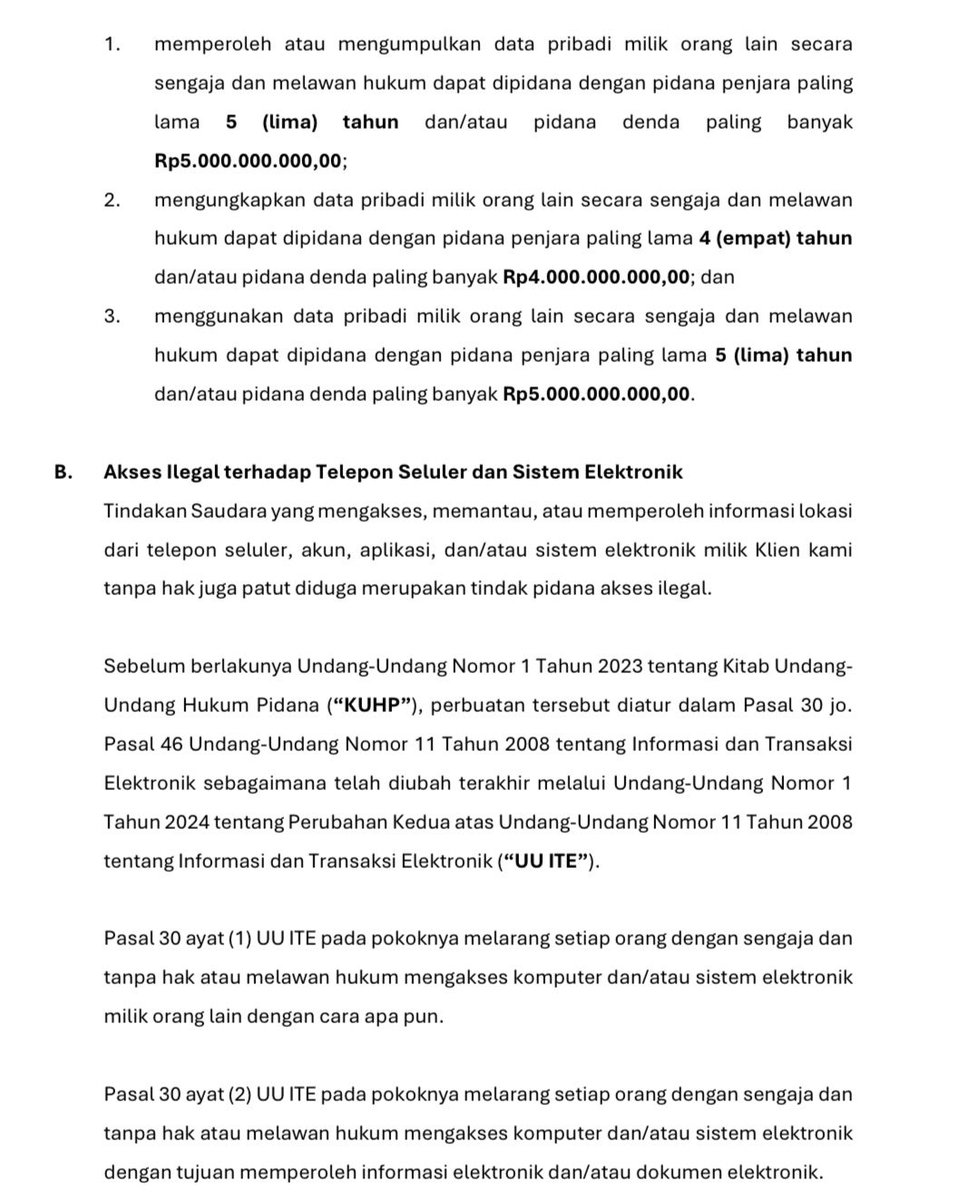
Sudah mengirim somasi ke nomor yang mengancam, saya lampirkan juga somasinya secara terbuka melalui twit ini, agar bisa dijadikan periksa oleh pihak terkait.
Silahkan bagi warganet yg mau menggunakan substansi somasinya bila mengalami situasi serupa. Bisa dikirim secara pribadi.
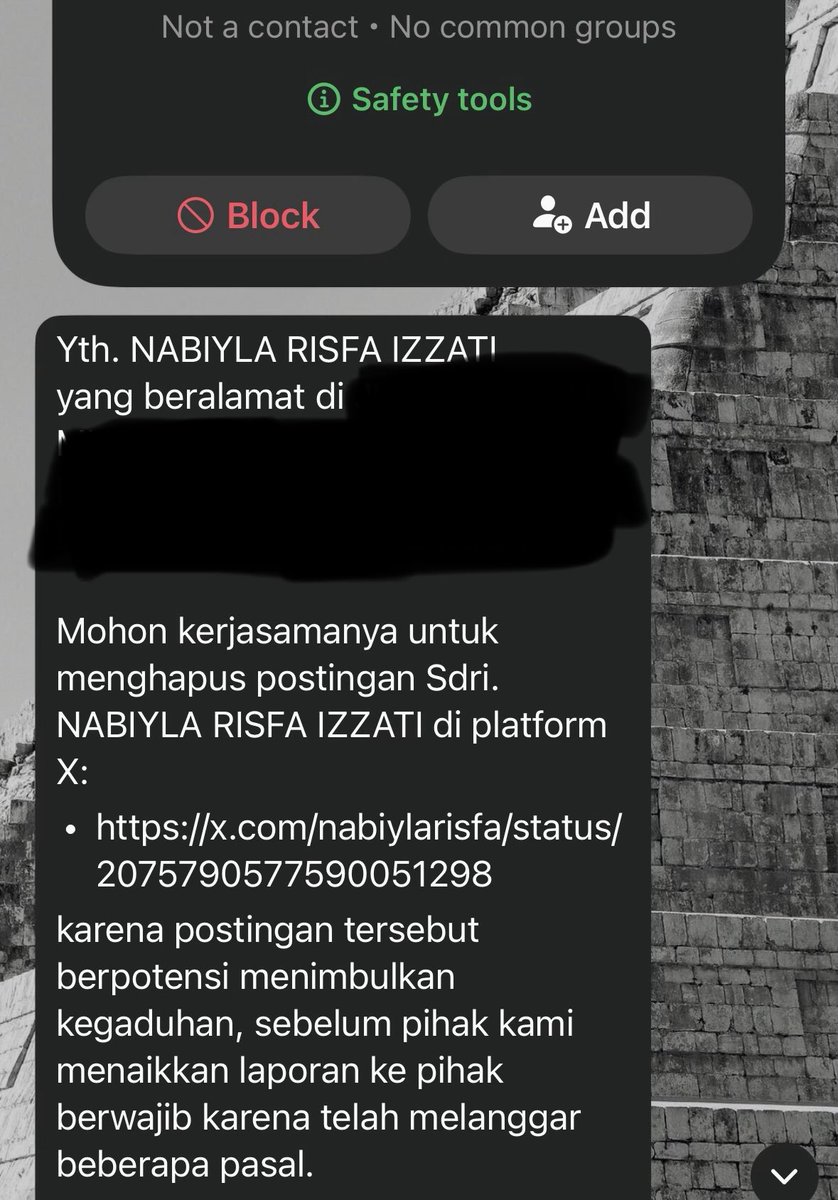
Tadi siang habis dapat ancaman untuk menghapus postingan twit tentang Menteri PU (terlampir), dengan membuka data pribadi yang berisi alamat, NIK, TTL, data keluarga, dan lokasi terakhir gawai saya.
Saya sedang draft somasi dan akan kirim balik sebagai jawaban 🙏
alhamdulillah standar suami di islam itu yang QAWWAM, udah jelas dari dulu
ga kebayang semisalnya Nabi ﷺ pulang dakwah, perang, atau dagang, terus sampe rumah planga-plongo klemar-klemer demi “safe space” WKWKWKW
Hadaanallah (semoga Allah memberi kita hidayah)
Super agree!
Decision making muscle ini super penting karena efeknya langsung ke efisiensi kerja.
Orang yang terlatih taktis dalam decision making itu naturally fokus ke pareto dan bisa ignore noise.
Sementara yang ga terlatih cenderung ngetreat semua informasi seolah2 sama pentingnya, akhirnya sering kedistract noise, kerja ga efisien.
Dari pengalaman kerja di private capital investment yang terbiasa deciding strategic decisions with minimum info, either datanya bolong, waktunya kurang, atau dua2nya.
Dua decision making techniques ini yang selalu bantu saya:
1. Deal killers first.
Dengan info minim, urutan bertanyanya dibalik. Jangan cari data yang mengkonfirmasi thesis, cari 2-3 hal yang bisa KILL thesis.
Kalau lolos, sisanya detail yang bisa dinego.
Kalau ga lolos, stop.
Saving weeks of team and board resources.
Nobody’s time wasted.
2. Sizing effort by reversibility. Keputusan yang murah di-undo, decide cepat walau data kurang.
Sementara yang mahal atau irreversible, boleh diperlambat.
Sering lihat orang kebalik, mikirin hal kecil sampai berminggu2, tapi buru2 di decision besar.