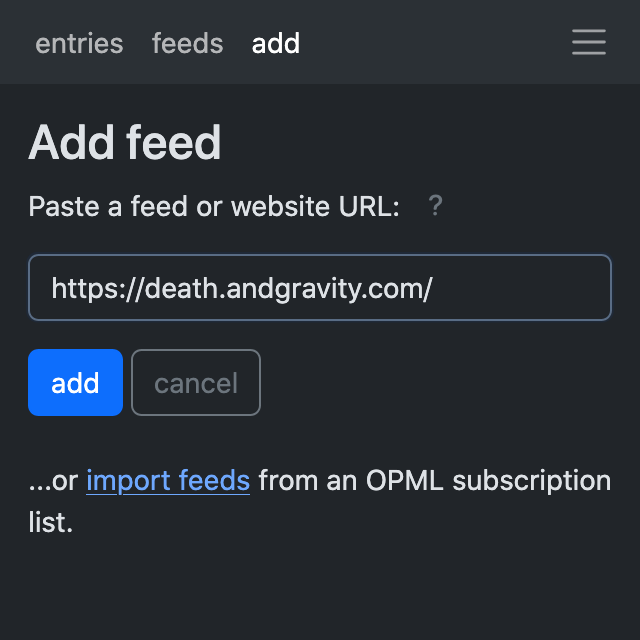
reader 3.25 is out, now with feed autodetection! (so you don't have to hunt #RSS URLs with view-source: anymore) (early release because of some migration bugs 😅)
New article up: DynamoDB crash course: part 2 – data model (what the main abstractions are, what you can do with them, and how they scale) https://t.co/JZfomQKm09
This series brings the important stuff in one place, so you can get a mental model of how it all ties together without having to read the entire documentation twice.
While the AWS documentation is *mostly* comprehensive, it's also all over the place, including some other places that aren't the documentation at all, like the AWS blog (it's ok, it's Amazon).
DynamoDB crash course: part 1 – philosophy
This is part one of a series covering core DynamoDB concepts and patterns, all the way up to single-table design; the goal is to get you to understand idiomatic usage and trade-offs in under an hour. Today, we're looking at what DynamoDB is and why it is that way.
https://t.co/eoDjtPKqX2
@charliermarsh@alsuren And you can’t do this if dependency/env resolution isn’t super fast. (Or at least the experience isn’t as nice.) Performance is a feature that unlocks other features.
If you are preparing for interviews or want to know the nitty-gritty of LRU cache you should read this. Long but a very good one. @_andgravity explained stuff amazingly with code & test cases.
#python#Programming#WebDevelopment#TechNews#OpenSource
https://t.co/A5E3ptgNoM
the only advice i've found worthwhile is "the important things aren't as important at first, you can learn them as you need them", "if you're not having fun you'll probably get bored", and "learn what your friends are using because you can ask them questions about it" shrug