I found a way to make the best use of my AI overnight. I just assign a goal with as much detail as possible to Codex and ask it to use multiple agents to break down the goal and work like a team to finish it
Which obviously sucks up my usage, so I add a contingency plan: ask it to monitor its own usage, and whenever the remaining usage drops below 5%, I ask it to schedule a task which has the information to resume the goal as soon as the usage is restored and repeat it until the goal is finished.
Every advice one gives is giving it to himself in your shoes.
Exibit A “If it float or flies- Rent”
This is advice perhaps applicable to Burry, not the top 10 things that a 26 year old need to know.
1. Never stop exercising or learning.
2.Accept compromise to begin relationships.
3. Manifest the power of compounding.
4. Never gamble.
5. Have kids and be a good parent
6. If it flies or floats, rent it.
7. Buy half the house you can afford.
8. Art in the eye of the beholder is cheap.
9. Be thankful for and to all.
10. Be charitable.
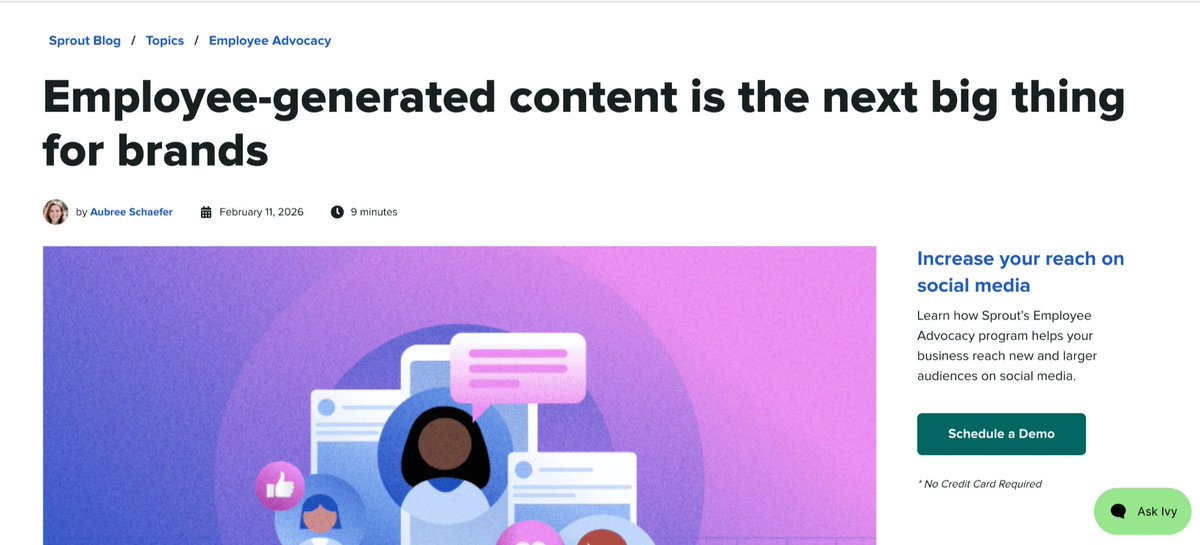
If you run any b2b business, employee-generated content is one of the most underrated marketing strategies right now.
Only the top 5% of companies understand ECG (Employee-Generated Content) well. Here is everything you need to understand why this is the next big thing
EGC is a very commonly known phenomenon in the consumer business, where companies like Wispr Flow and Cluely have turned office space into a studio and built content departments that shoot everything.
But it is fairly uncommon in the b2b world, right, because only a handful of companies have done it well and here is everything they are doing
-Awareness generated by the content is being used for total compensation as a bonus, which gives an incentive to employees for creating content for the company
Most people don’t know how to write or create content, but they can definitely answer questions about their field.
That’s why they usually have one person who will interview/conversation them with questions related to their field and work, which can then be turned into content, and they never lose their actual opinion or voice.
Content Pillars - Everyone only posts about their expertise. The founder will talk about stories of running the business and solving problems. GTM will talk about how they are using AI or the GTM strategy that they have used to grow the company; the content strategist will talk about content production workflows, etc
Most people will find this to be giving too much information about the internals of the company and spending too much time on content; however, it is one of those moments where, if you are doing this right now, you will be super ahead, like any business that was using Instagram to post videos in 2018.
Because the compound effects are not only seen in the pipeline that this builds for the business but also in communicating the work culture to potential employees, communicating the vision of the business, and developing a direct line of communication to customers without PR jargon.
This is one of the best ads of 2026, reminded me of Apple's Think Different campaign because you can never guess the company till the end.
The overall concept of the Ad shows an NPC character in a video game set which feels like a game but is actually a set that was designed to look like a game.
The character is moving like everyone else, but in one of the lines at an institution, he realizes he is in a simulation and manages to run away, and as he is running away, he turns into a human
Now the interesting part is they haven't talked about the company or product until this point, and then they finally reveal that this ad is for Coinbase. It is so good because
- They tell a great story and don't promote Coinbase in your face
-but still it completely aligns with the values of Coinbase and what crypto stands for
-It is just a great freaking idea
The overall concept is a great example of wonderful creative direction executed with perfect Art Direction
I have created over 100 videos in the last year that reached 9M+ people and brought 70,000 followers, and here's how the algorithm of each short-form platform works ( Applicable to individuals and brands )
You will be amazed by how similar and how different the social media algorithms are to each other. I have had the exact same video be a viral hit on Instagram and a complete flop with 900 views on TikTok, and another one be a super hit on YouTube Shorts and a complete flop on Instagram.
The humans behind them are the same, but the pattern of consumption is different. TikTok is where short-form video was born, so it's only fair to start there.
TikTok used to be, and still is, the social media platform, while Instagram became a creator's platform, taken over by polished videos and salesmen. TikTok stays the platform of the pyjama man. The unpolished, laying in bed, greenscreen yapping still holds the reins on the TikTok algorithm. The reason and the result of this is that it promotes community; you argue and bond in the comments, and that's what makes people come back to the platform, which is exactly what was missing from YouTube and Instagram up until last year.
And that's when Instagram noticed, started copying the TikTok algorithm, and decided to push natural yapping content far more than it used to. Videos with genuine personality, in bed, on a greenscreen, while walking to work, sitting in a cafe talking about random things, is what is being rewarded now.
The core essence, once you strip away all the social media jargon, is that what works on both Instagram and TikTok comes down to one thing: whether you can get people to start fighting in the comments.
Which is not the case with YouTube ( to an extent ). The consumption pattern on YouTube has been the same from the beginning. People come to YouTube not for your opinion but for information. Any piece of content that delivers genuine value without the fluff gets to see the light of day in the darkness of its algorithm.
TikTok is all about opinions
Instagram is about entertainment and some education
YouTube is all about education and some entertainment
Why do boring B2B tech companies need to make content:
This is one of my most asked questions, and here are 5 reasons that can change your mind
>Most of the content that B2B companies make is targeted towards awareness and not conversion.
>It helps you reduce friction during the procurement process because the team on the other side is already aware of your operations, how you work, your case studies and other companies that you have worked with. This cuts the time to close by building trust and makes the life of your sales team easier.
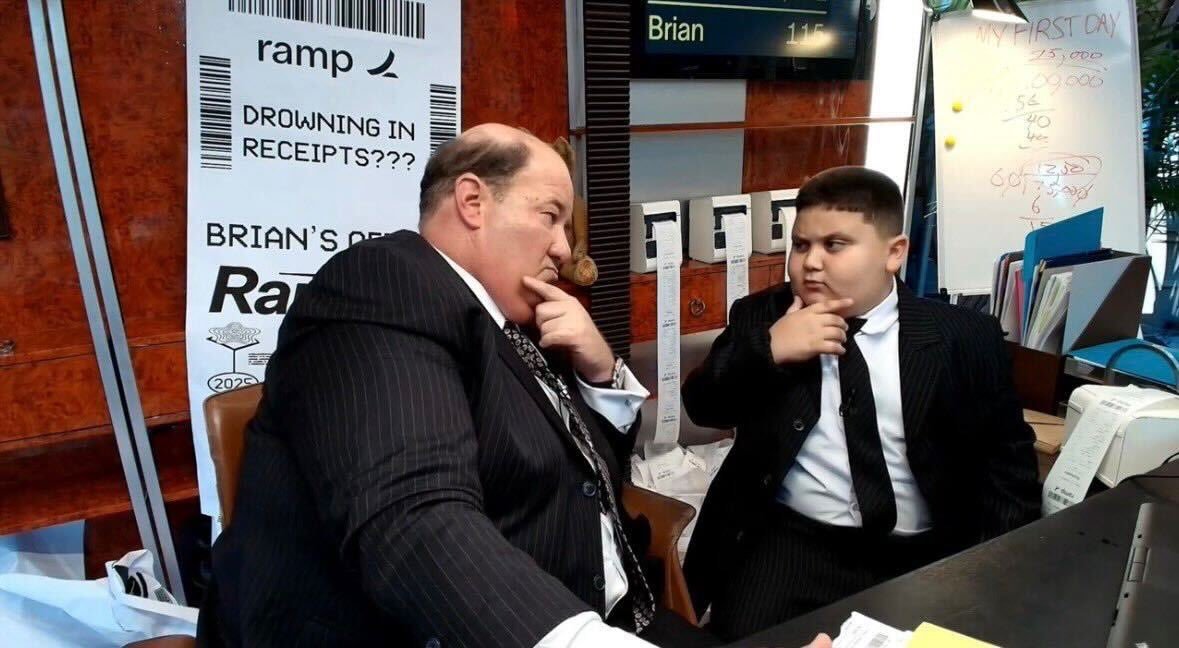
>Ramp is the best example of this; all the brand activation with Brian Braughmeger from Office and pop-in New York helps them build brand affinity, which shows up when the outbound team reaches out to a prospect because they have already heard of Ramp on multiple touchpoints.
>The whitespace - B2B marketing has not changed in decades, but now there are new ways that the majority of your competition is not aware of, and you can get ahead of everyone in your industry.
The Triple Whammy - Other than the actual marketing use case, it solves the PR problem because you control your own narrative and have direct access to your audience, and the hiring problem, because now people know your values and it becomes easier to attract the right talent.
I studied the content and distribution strategy of the top 10 most viral tech companies, and here are a few common patterns that I found that you can apply:
Most of the money that tech companies spend on influencer marketing tends to go to waste because of attribution problems.
3. Coordinated Campaigns. Influencer marketing is still a very new mode, meaning that the tools, data and ROI are very hard to measure on a bigger scale, and to solve for this, top brands use coordinated campaigns.
Whether that's a launch or just promoting a new feature, it's moving towards coordinated volume distribution campaigns.
You divide your list of creators depending on reach and give everyone similar briefs and talking points. This happens across platforms, and even a lie told a 1,000 times sounds like truth; this is just marketing after all.
And the best part is ROI can be directly measured by the bump in sales and signups.
2. EGC. Only the top 5% of companies understand EGC (Employee Generated Content), but most viral brands understand it very well.
To the point that it is now part of the employee compensation package. For B2B tech companies, it's mostly on X and LinkedIn, where all the team members are made to post about their expertise and how they are building their part of the company. Sales talking about how they get customers, technology about how they are using AI, and so on.
For consumer companies, it goes a step further, where they have also started treating their offices like a T.V. set, where you would have an in-house content team that documents everything, and they hire content creators and actors to be regular features for skits and dramas.
Most of these efforts bring top-of-the-funnel awareness, which is then converted into sales with direct efforts like ads or email marketing.
1. Direct Distribution. The companies that are most ahead in the content game are those that are building their own network of distribution with digital IPs. A digital IP can be anything from a YouTube channel to a subreddit.
>a stock broking company building a finance education channel
>an AI company building an educational AI channel
>a VC firm building event IPs to get the best founders and networking
Because these are long-term assets for the company, where they can plug their own products for life.
3 Reasons Why Experiential Branding Budgets Will 10X in the Next Decade
Most experiential branding is either for brand extension, like stores or for brand activations.
Brand activation is when you want to introduce a product to a small subset of your actual audience to test it out or to spread awareness about it, but it will become much more important due to the following reasons:
1. The compound wheel - The best use of any marketing dollar is if you can create an exponential outcome: a viral campaign, a viral video, etc., but all of it is going to be increasingly hard as more and more companies flood content. In such a scenario, if you can spend on an event where you are not only doubling down on giving the best experience to your actual 1,000 core fans, but the second order is the content that these people will produce and post online and the content your own team will produce. One event is used in 3 ways.
2. Only consumer and fashion brands used to take it seriously, but now, as more and more technology and AI companies try to focus on brand building, the biggest budgets will be spent on events and offline experiences, because that becomes the best way to build community around the company.
3. Sensory Aspect - Most people fail to understand the short-lived nature of any marketing campaign online; it's a sea of the same thing, but when you engage people with physical senses, you leave a longer impact. That's why physical consumer brands have always had the most brand affinity.
This was bound to underdeliver. The hype got so out of hand that nothing would live up to it.
But the bigger question is whether Ramp was always behind this or if they just paid him to use the hype
3 Reasons Why Experiential Branding Budgets Will 10X in the Next Decade
Most experiential branding is either for brand extension, like stores or for brand activations.
Brand activation is when you want to introduce a product to a small subset of your actual audience to test it out or to spread awareness about it, but it will become much more important due to the following reasons:
1. The compound wheel - The best use of any marketing dollar is if you can create an exponential outcome: a viral campaign, a viral video, etc., but all of it is going to be increasingly hard as more and more companies flood content. In such a scenario, if you can spend on an event where you are not only doubling down on giving the best experience to your actual 1,000 core fans, but the second order is the content that these people will produce and post online and the content your own team will produce. One event is used in 3 ways.
2. Only consumer and fashion brands used to take it seriously, but now, as more and more technology and AI companies try to focus on brand building, the biggest budgets will be spent on events and offline experiences, because that becomes the best way to build community around the company.
3. Sensory Aspect - Most people fail to understand the short-lived nature of any marketing campaign online; it's a sea of the same thing, but when you engage people with physical senses, you leave a longer impact. That's why physical consumer brands have always had the most brand affinity.
Huge fan of independent thinking
Huge fan of delayed gratification
Huge fan of technology
Huge fan of creating for myself and for fun
Huge fan of learning utterly random things
Huge fan of food from different cultures
Huge fan of deeply obsessing
Huge fan of art
Huge fan of philosophy
Huge fan of following the road less travelled
Huge fan of going balls deep in everything
Huge fan of pain
Huge fan of life in general
huge fan of burning my bridges
huge fan of putting all my eggs in one basket
huge fan of burning the candle at both ends
huge fan of judging books by their covers
huge fan of poking the bear
huge fan of rocking the boat
huge fan of sweating the small stuff
huge fan of taking it personally
huge fan of reinventing the wheel
huge fan of measuring once and cutting twice
huge fan of biting off more than i can chew
huge fan of playing with fire
huge fan of running before i can walk
Terafab approximate size comparison between Giga Texas, the Pentagon, Apple Park, and the Mall of America.
There has never been a building this large. Elon Musk says it will be the most valuable building by far.