The Architectural Edge: Why Kaspa Outpaces Ethereum for DEX Infrastructure
Building a Decentralized Exchange (DEX) on a traditional single-chain blockchain like Ethereum is like trying to run a high-frequency trading firm on a narrow, one-lane highway. While Ethereum pioneered automated market makers (AMMs), its sequential design forces every transaction to wait in a single queue.
Kaspa’s BlockDAG architecture—complemented by the Toccata hard fork—rebuilds the Layer 1 foundation to handle the intensive demands of decentralized trading natively. Kaspa offers several architectural advantages that make it a superior backbone for a modern DEX compared to Ethereum.
Parallel Processing vs. Sequential Bottlenecks
Ethereum processes transactions sequentially. One block is added at a time, roughly every 12 seconds. When thousands of traders rush to swap assets during market volatility, the network bottlenecks, causing a massive surge in gas fees.
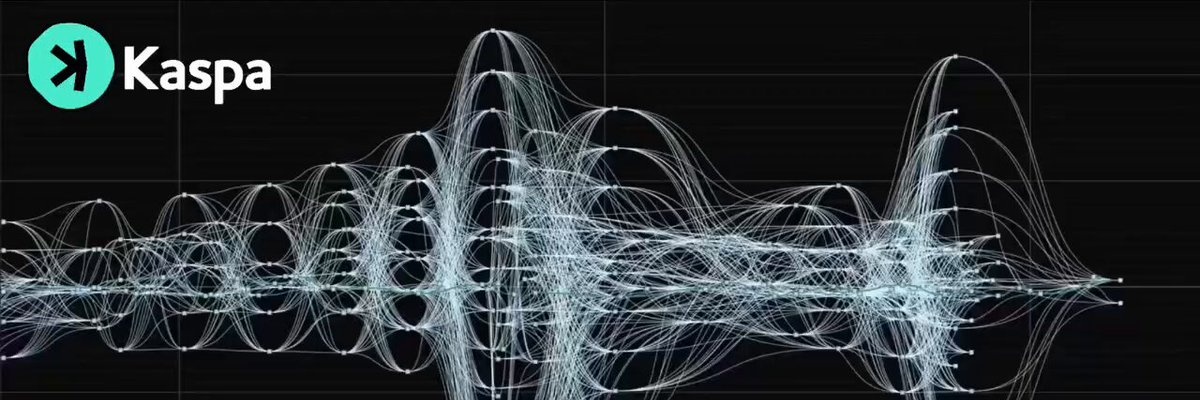
Kaspa replaces the single blockchain with a Directed Acyclic Graph (**BlockDAG**). Using the GHOSTDAG protocol, the network processes multiple blocks **in parallel** simultaneously (~10 blocks per second on mainnet). For a DEX, this means transactions don’t get jammed in a single queue; trades are woven together concurrently without degrading network performance.
Structural Defense Against Predatory MEV
Because Ethereum relies on a public mempool where a single block producer dictates the exact sequential order of transactions every 12 seconds, **Maximal Extractable Value (MEV)** bots thrive. They spot a pending trade and "sandwich" the user—buying right before them and selling right after—forcing the trader to execute at a worse price.
Kaspa's Advantage: Real-time decentralization dismantles the mechanics of MEV bots. With Kaspa producing blocks at a rapid-fire pace, there is no single consensus leader holding a monopoly over transaction ordering for long intervals. Rapid parallel block creation and real-time sequencing make it virtually impossible for bots to accurately predict the state and insert predatory sandwich attacks. Traders get the exact execution price they expect.
Sub-Second Latency (CEX Speed, DEX Security)
Waiting 12 seconds for a block—and minutes for true finality—is a lifetime in live trading. While Layer 2 rollups speed up execution, they fragment liquidity, introduce bridge vulnerabilities, and complicate the user experience.
Driven by the Rusty Kaspa engine, the network features sub-second block times. After just 10 seconds, a trade has accumulated roughly 10 layers of confirmation deep within the DAG structure. A DEX on Kaspa delivers the instant, responsive user experience of a Centralized Exchange (CEX) while settling entirely on an ultra-secure, decentralized Layer 1.
.
Predictable, Sub-Cent Transaction Fees
High traffic turns Ethereum into a playground for whales, where a simple token swap can easily cost $20 to $100+ in gas fees.
Because Kaspa scales horizontally at the base layer rather than relying on vertical scaling, the throughput handles massive volume natively. Transaction fees remain consistently sub-cent (<$0.01), making micro-swaps and algorithmic high-frequency trading economically viable for retail users.
**Official Toccata Release — Mainnet Hardfork Activation Included** (Links in reply)
We’re excited to announce the official Kaspa release containing the **Toccata Hardfork** activation logic.
Toccata is scheduled to activate on mainnet at DAA score `474,165,565`, expected around **June 30, 2026, 16:15 UTC**.
This is a consensus-changing upgrade. All node operators, miners, pools, exchanges, indexers, wallets, and infrastructure providers must upgrade before activation to remain compatible with the network.
Toccata introduces a major expansion of Kaspa L1 capabilities, including:
• **Native L1 covenant support** through transaction introspection, allowing for more expressive contracts, including stateful contracts
• **Covenant IDs**, providing stable covenant lineage across UTXO transitions, so covenant instances can preserve continuity as their state moves from one UTXO to the next
• **ZK proof verification on L1** via `OpZkPrecompile`, enabling to trustlessly offload computation off-chain.
• **Partitioned sequencing commitments**, improving support for based ZK applications by making lane-local proving scale with relevant activity rather than global throughput
Please upgrade as soon as possible and verify your nodes are running the new release well before the activation DAA score.
Thank you to everyone who contributed to designing, implementing, reviewing, and testing Toccata.
This marks the end of the Bitcoin religion.
Meanwhile, $KAS impresses with new records and features. As do many other alt coin.
Bitcoin maxis are a dying breed.