I find the hatred of this bottom-tier racist, Senator Celeste Amarilla, towards Mbappé especially ironic because there is an asterisk over her own place in the racial hierarchy she appears to worship. As a Mestiza woman, she would not even be considered fully white by the white supremacist purists whose approval her racism seems so desperate to earn.
There is something profoundly pathetic about people who borrow a hierarchy that does not even place them at the top and then use it to sneer at a black man who has surpassed them in wealth, achievement, influence and global stature. That Mbappé’s skin colour can still be treated as a mark against him by people who rank far below him on almost every meaningful ladder of human accomplishment tells you all you need to know about the intellectual bankruptcy of racism.
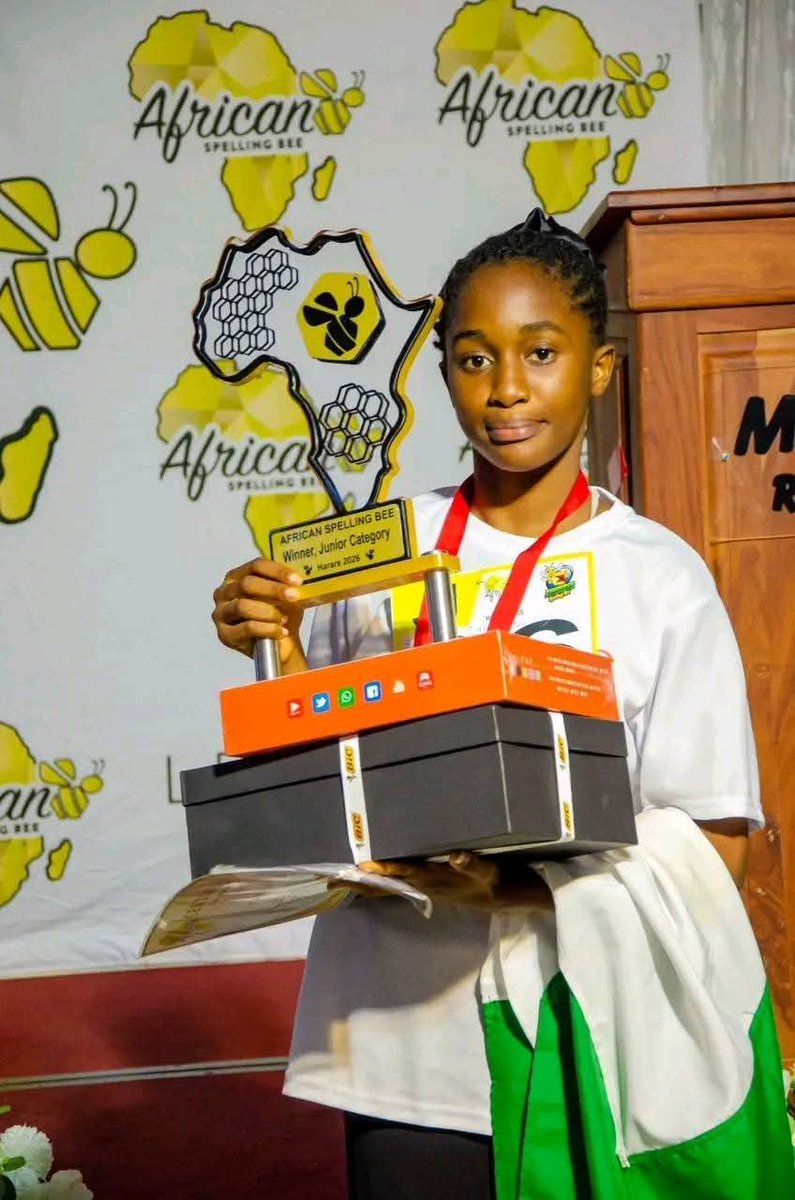
Nigeria is on an absolute intellectual winning streak on the global stage! 🇳🇬🔥
While we are rightfully celebrating our brilliant boys who secured Mathematics gold in Rome today, we must also amplify the story of another history-maker.
Meet Adeolu Damilola Oreofe. 🧵👇 (1/4)
"In 7th grade [in New York], I had 7 subjects. In Nigeria, I had 15 subjects! I'm 11-12, with 15 subjects." - @Drea_KnowsBest
Listen On iHeart: https://t.co/2olipt9rPn
Watch On YouTube: https://t.co/IqPIwjJsGW
First thing we need to understand with figures of speech is that context matters a lot.
Let me explain.
This will be quite lengthy, so skip it if you have a short attention span.
Euphemism: A polite substitution used to soften meaning. It is the use of a mild, polite, or indirect expression instead of one that may sound harsh, unpleasant, or offensive.
Examples:
She passed away instead of She died.
They let him go instead of They fired him.
The purpose of a euphemism is to avoid causing discomfort or offense through one’s choice of words.
Dysphemism: A harsh substitution used to intensify meaning or express disapproval. It uses a harsh, blunt, or offensive expression instead of a neutral or polite one. (Opposite of Euphemism)
Examples:
He croaked instead of He died.
Calling a house a “shack” or an old car a “heap of junk.”
These two figures of speech are not the focus because he used Peller as an example to illustrate the decline of education and the glorification of mediocrity. The best expressions to examine here are synecdoche and metonymy, which are often confused with each other.
Moving on.
Synecdoche is a figure of speech in which a part of something represents the whole, or the whole represents a part.
It is a special type of substitution. (Hold on don’t draw your conclusions yet.)
Examples (Part for the Whole):
All hands on deck. (Hands = sailors or crew members.)
There are many mouths to feed. (Mouths = people.)
Whole for Part:
Nigeria won three gold medals. (Nigeria = the Nigerian athletes.)
The school celebrated its success. (The school = the students and staff.)
Now for metonymy. It is a figure of speech in which you refer to something by the name of something else that is closely associated with it, rather than by its own name. Get it?
For example:
The White House announced a new policy.(The White House refers to the U.S. President or administration, not the building itself.)
The Crown will address the nation. (The Crown refers to the monarch.)
People confuse synecdoche and metonymy because they both involve substitution, but they work differently.
I’ve been seeing tweets saying it’s synecdoche and I don’t think some people understand the subtle difference. That’s where I come in.
The best way to understand them is this:
Synecdoche = inclusion (part–whole relationship).
Examples:
Hands = workers
Wheels = car
Heads = cattle or people
Metonymy = association (relationship by connection).
Examples:
Aso Rock = the Nigerian government
The Crown = the monarch
Nollywood = the Nigerian film industry
Synecdoche specifically depends on a part–whole relationship, whereas metonymy depends on any close association.
What do I mean?
Peller is known to be uneducated, so when ycee says “Peller culture,”
he is not saying Peller is literally a part of illiteracy as a whole. Instead, Peller has become associated with illiteracy because of his reputation as a known olodo.
That is metonymy.
It can only be synecdoche if Peller is presented as one member of a larger class, and the intention is for that member to stand for the entire class.
For example:
If he had said “Peller is the face of olodo culture in this country.”
Here, Peller is one individual standing for the larger group of illiterate people. Remember: part–whole representation.
So, in conclusion, “Peller culture” is best analyzed as metonymy because:
Peller’s name is being used because of its perceived association with the idea of illiteracy/glorification of mediocrity.
The name “Peller” becomes shorthand for the olodo uprising that ycee was criticizing.
He was not attacking Peller personally. Instead, he used Peller’s public image as a symbolic reference to a wider social issue. That is a metonymic use of the name.
You’re welcome.
An interesting point is that synecdoche is often treated as a subtype of metonymy because it is simply a more specific form of associative substitution.
I don’t know why people forget I am still a surgeon, since I got the NDC House of Representative ticket for Surulere 1. People call me Honorable and have removed the surgeon from my name, anyway Saturday I had endoscopic sinus surgery by 7am and by evening I became a politician
This woman is expressing frustration regarding food waste at MCC Onitsha. She notes that the too much of food donations has led to a situation where beggars are consuming only the meat and discarding the remainder of the meals.
Neighbors have put mattresses and plexiglass up in their windows to block the noise from this data center in Virginia.
It's a high pitched whine from the natural gas turbines that power it.
The noise never stops 24/7.
With profound humility, gratitude, and a clear sense of purpose, I accept our party's nomination to serve as its candidate for Governor of Lagos State in 2027.
I am deeply grateful for the confidence our great party has placed in me and for our shared belief that Lagos deserves much better—inclusive leadership that works for everyone.
The real work begins now. Together, we will build the Lagos that we know is possible.
My friends, it’s time - O TI Ya!