Holiday tradition: learn something new every year.
This year → Swift + launching an iOS app.
The result: Jott Down - voice-first idea capture with AI that connects the dots.
https://t.co/tH1ZyfHMiS
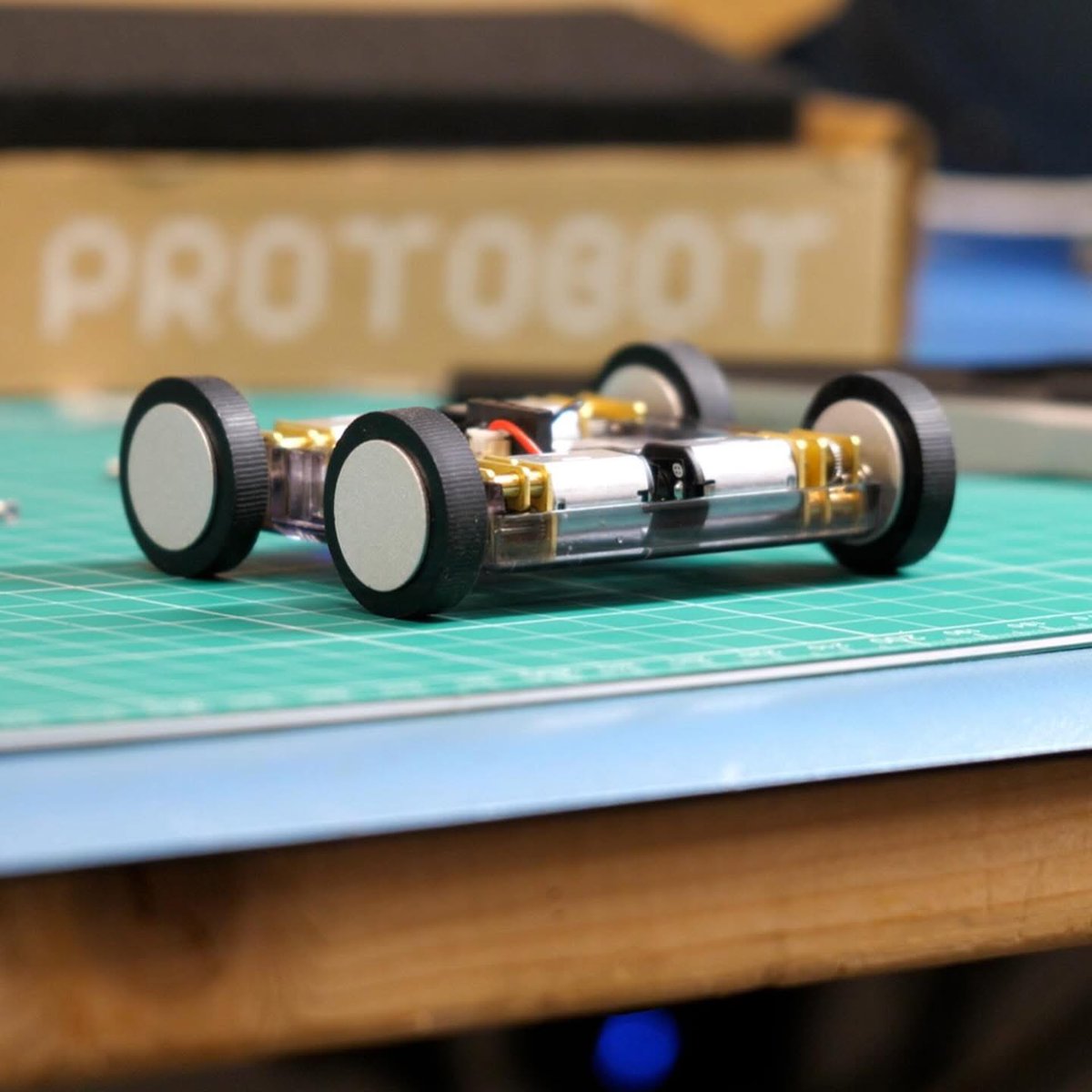
Super excited to announce that #ProtoBot kits are now officially available for pre-order: https://t.co/JvK5YluWh3
After months of development, they’re finally here 🙈 The full build video drops in a couple of days - stay tuned!
Good Question.
The short answer is that I don't view low latency and scalability as separate problems.
The architecture is built around independent silos that can scale horizontally without introducing large shared bottlenecks. A few examples:
• Workloads are sharded across independent units
• Tokio workers are pinned to dedicated CPU cores
• CPU isolation and IRQ affinity tuning
• RPS/XPS tuning and multi-queue NIC utilization
• Strategic use of io_uring and XDP/eBPF where they provide measurable benefits (compio)
• TCP processing kept as close to the execution path as possible
• BBR + FQ and extensive network-stack tuning
• Continuous profiling and latency instrumentation
The goal isn't just a lower average latency number. It's maintaining predictable latency as load increases. And once we're operating at this level, the biggest challenges are usually contention, cache locality, scheduler migrations, lock contention, and cross-core communication, and not the raw CPU horsepower anymore.
In practice, I'd rather add another independent shard than make an existing one bigger.
P.S. I also have a healthy distrust of the happy path. Reality has a habit of finding edge cases we forgot to imagine, so smaller failure domains tend to age better than giant shared systems.
For years, I've been building low-latency networking and automation systems for myself and fellow traders.
Now I'm putting that experience into something entirely my own. https://t.co/eWeq8AK7y3 is officially live and open for users.
Built by the engineer who writes the code, runs the infrastructure, answers the support tickets, and obsesses over every millisecond.
Rust 🦀 powered. Trader Focused. Lowest Latency Static IPv4/IPv6 software and infrastructure at the lowest price, available today.
Just started. @algoipin
#AlgoTrading #TradingInfrastructure #LowLatency #Networking #RustLang #FinTech #AlgorithmicTrading #DevOps #Infrastructure #TechFounder #StaticIP #staticip #ipv4 #ipv6
@GripFangWolf I’m guessing you can buy Put Options to ensure downside protection and write a python script for doing Iceberg type limit orders using the API?
@ZiddiBakra I recently started checking in all the plans inside a plans/ folder in each repo where I work. That way, when we run code review on CI or locally it has context on what the requirement / scope of work is and it gives more useful feedback and not just cosmetic ones.
We are introducing 3 new and exciting BTech programmes in Materials Science & Engineering, Mechanics & Computing, and Aerospace Engineering at IISc!
These future-ready undergraduate programmes are designed to shape engineers who will lead across interdisciplinary domains.
@_neerajagarwal@AshwinBadri2 At 10%, if you want to enter at Sell 50 INR, you're effectively setting a LIMIT order at 45INR. At 2-3%, you're setting LIMIT at 48.5. How is 10% better?
@AshwinBadri2 At 61,750 qty, -3L is close to 5 pt slippage. One would assume that's an acceptable scenario on Market Orders with default Price Protection of ~3% of the price?