Pliny the Elder described Roman hydraulic gold mining in Spain using a technique called ruina montium ("the wrecking of mountains"), which he witnessed firsthand while serving as a Roman procurator....
In his book Naturalis Historia (Natural History), 1st Century AD Roman naturalist and philosopher Pliny the Elder gives an interesting and dramatic account of Roman mining in Spain:
"The third method used for extracting gold rivals the achievements of the Giants. By the light of lamps, long galleries are cut into the mountain. Men work in long shifts measured by lamps, and may not see daylight for months on end. Local people call these mines ‘deep-vein’. The roofs of these are liable to give way and crush the miners, which makes diving for pearls or getting purple-fish from the depths of the sea seem comparatively safe. So much more dangerous have we made the earth. Arches are left at frequent intervals to support the mountains above. In open-cast and deep-vein mining masses of flint are encountered. These can be split by fire-setting which involves the use of vinegar. Fire-setting in galleries usually makes them suffocatingly hot and smoke-filled. Instead, therefore, the rocks are split by means of crushers which carry 150 pounds of iron. The miners then carry the ore out of the workings on their shoulders, each man forming part of a human chain working in the dark; only those at the end of the line see daylight. If the bed of flint seems too long, the miners bypass it. Yet flint is considered relatively easy to work. There is a kind of earth consisting of clay and gravel called ‘conglomerate’ which is almost unworkable. The method used in this case is to attack it with iron wedges and crushers. Conglomerate is considered the hardest of all things – except the greed for gold which is even more stubborn.
When the work is completed the miners cut through the tops of the arches, beginning with the last. The opening of a fissure gives warning of the impending collapse, but this is only seen by a watchman perched on the top of the mountain. With a shout or a wave the look-out gives the order for the miners to be called off and at the same time rushes down from his vantage-point. The ruptured mountain falls asunder with an unimaginable crash, and is accompanied by an equally incredible blast of air. Like conquering heroes the miners contemplate their triumph over Nature. Yet even at this juncture there is no gold visible, nor did they have any positive indication that there was any when they began to dig. The mere hope of obtaining their coveted prize was sufficient reason for embarking on such danger and expense.
Another equally laborious and even more expensive task involves the feat of bringing streams along mountain-ridges – often a distance of 100 miles – to wash away the debris from mining operations. The miners call these water-channels corrugi, a term derived from the word ‘confluence’, and they involve countless problems. The incline must be steep to produce a surge rather than a steady flow of water and consequently high-level sources are required. Gorges and crevasses are bridged by aqueducts. Elsewhere, impassable rocks are cut away to allow space for hollow wooden troughs. The workmen cutting out the rock hang suspended by ropes, so that viewed from a distance the operation seems to involve not so much a species of strange animals as of birds. Most hang suspended as they take the levels and mark out the route – man leads rivers to run where there is no place for him to plant his own footsteps. The washing of the ore is spoilt if the current of the stream brings silt, or urium as this residue is called. To avoid this the water is guided over flint or pebbles.
#drthehistories
La Revista Derecho del Estado lamenta el fallecimiento de uno de los grandes filósofos del derecho de nuestro tiempo, el profesor Robert Alexy (1945 - 2026 ). Sus principales obras la Teoría de la argumentación (1983) y la Teoría de los derechos fundamentales (1985) 🧵
🏺🌿 El INAH descubrió K'oxol Ja' II, un asentamiento maya de más de mil años de ocupación bajo la Terminal Multimodal de Progreso, Yucatán. El sitio cuenta con 21 estructuras y revela cómo vivían los mayas comunes y gestionaban el agua. 💧
Helicopters Rescue Nepal Flood Survivors, With More Than 1,000 Still Missing
Hundreds were killed in Nepal and Tibet. Reporters flew with rescuers to remote Himalayan areas, where shocked survivors described a torrent of mud sweeping away villages
https://t.co/Q12cuoZ98j
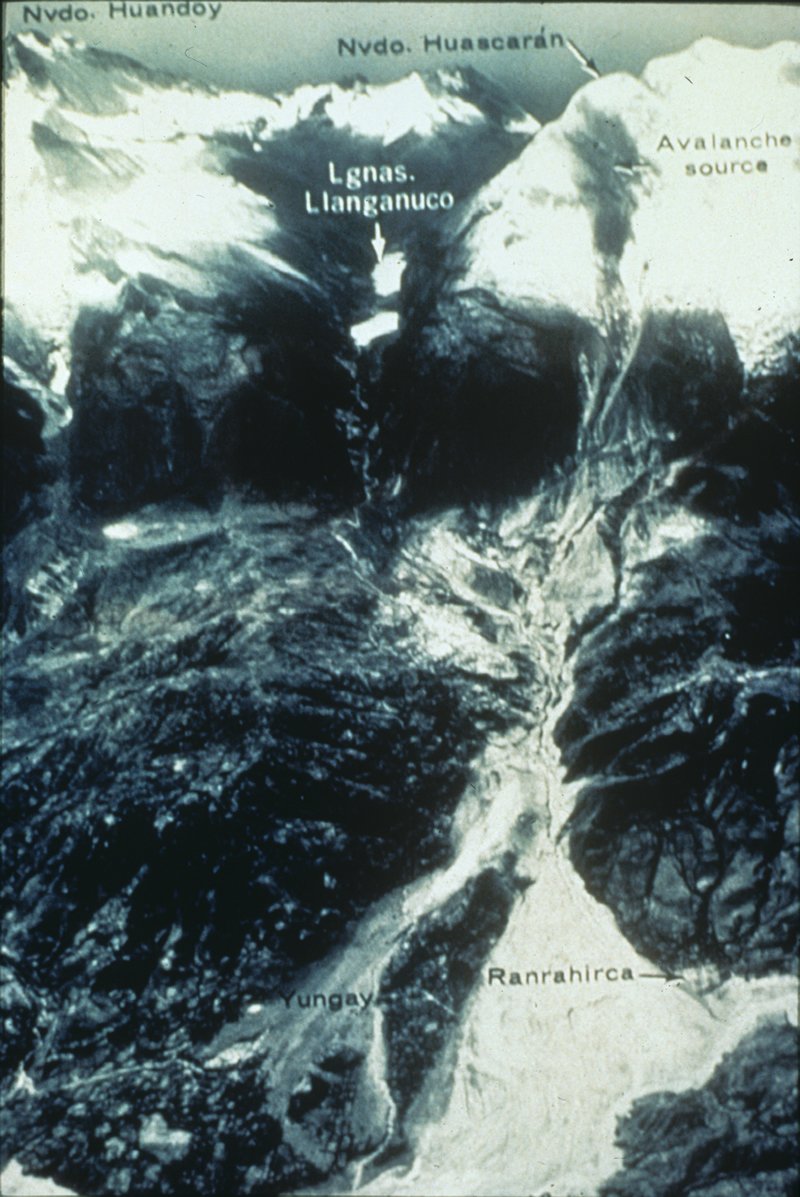
In 1970 a strong earthquake with its epicenter in the Pacific Ocean, which also affected Andean areas, caused a glacier to break off on the Huascarán mountain, resulting in a flood that completely destroyed the city of Yungay, in Peru.
In 1970 a strong earthquake with its epicenter in the Pacific Ocean, which also affected Andean areas, caused a glacier to break off on the Huascarán mountain, resulting in a flood that completely destroyed the city of Yungay, in Peru.
This image helps explain what happened along the Nepal–Tibet border. According to reports, a magnitude 4.4 earthquake on the Tibetan side triggered a massive ice avalanche, which then led to the flash flooding of the Bhotekoshi River in Nepal. Around 1,000 people are missing, and many have been killed.
This image helps explain what happened along the Nepal–Tibet border. According to reports, a magnitude 4.4 earthquake on the Tibetan side triggered a massive ice avalanche, which then led to the flash flooding of the Bhotekoshi River in Nepal. Around 1,000 people are missing, and many have been killed.
In addition to the earthquake, the melting or loosening of glaciers was possibly also a factor. A cautionary tale for the Andean countries. The convergence of seismic and climatic risks should not be underestimated.
#Colombia, #Ecuador, #Peru, #Bolivia, #Chile, #Argentina
This image helps explain what happened along the Nepal–Tibet border. According to reports, a magnitude 4.4 earthquake on the Tibetan side triggered a massive ice avalanche, which then led to the flash flooding of the Bhotekoshi River in Nepal. Around 1,000 people are missing, and many have been killed.
The Light of Two Worlds: a historical novel about Manuela Espejo and José Mejía
The Light of Two Worlds is a vindication of two figures from Quito who deserve far more attention than they receive in the history books
Available on Amazon.
Read more:
https://t.co/BNVOZihH7g
Adiós a Nick Mills, historiador y politólogo, quien hizo del Ecuador el centro de su vida intelectual
Nick D. Mills falleció este lunes, cobijado por el amor de su familia, en su casa en Nuevo México. Tenía 85 años.
@GonzaloOrtizEc
https://t.co/7059uVxNER
The Light of Two Worlds
The Story of José Mejía and Manuela Espejo: A Historical Novel
In colonial Quito, Manuela Espejo guards the memory of her brother Eugenio, who dreamed of a continent’s freedom.
Her husband, José Mejía, raises his voice in Cádiz
https://t.co/NeIAZSyvAz
Breve biografía de Fanny Natalia Carrión de Fierro
Poeta, narradora, crítica literaria y profesora universitaria ecuatoriana
Doctora en Literatura, autora de libros de poesía, cuentos cortos y crítica literaria, profesora y una madre ejemplar
Leer más:
https://t.co/OAeglD7BqH
Cap. 3. Profesionales legales y auxiliares junior
Tercer capítulo de mi libro «Cómo usar la IA para Mejorar y Conservar tu trabajo»
Publicaré mis 7 libros para suscriptores de pago. También pueden adquirirlos en Amazon
Leer más:
https://t.co/2jzbHd7E2C
La lectura experta (reconfigura el cerebro: concentración, empatía y razonamiento complejo) requiere tiempo, silencio y un entorno
La sociedad saturada de estímulos rápidos, especialmente las clases más vulnerables, no desarrolla el pensamiento profundo https://t.co/4ugRwszBGv
Blanco Dolor
Poema de mi madre Fanny Carrión de Fierro
Blanco dolor
el de saberte ausente
del sueño
que te inventa
cada tarde.
Y azul
este llevar a todas partes
tu voz y tu milagro.
Leer más:
https://t.co/bNbEZm3KdP
El mercado bursátil está peligrosamente sobrevalorado
Mi columna en @eluniversocom
El S&P 500 ronda los 7.600 puntos, un máximo histórico.
Mi libro “El colapso bursátil que viene - y cómo invertir para el largo plazo” es para el inversor común
https://t.co/SsGCKiUKUv