I'm quite happy to share the news that the gapseq paper just got published: https://t.co/fdNYRCsGAy. It's about a novel method for metabolic pathway prediction and metabolic model reconstruction.
@marouenbg challenging indeed... In the past, the 'gene-for-x' search was often flawed. At least, it is 'polygenic' nowadays 😆 But gwas is only correlating gene loci. Where is the environment in this? The old 'heretic' Lewontin on this 'naive current prejudice': https://t.co/AIxZoor8nK
Our latest in @nature: Fe2+ promotes a one-pot reaction network that resembles the Krebs cycle and amino acid synthesis, starting from just pyruvate and glyoxylate Congrats @KamilaMuchowska and @ajaanubahu! @unistra@CNRS @INC_CNRS https://t.co/4RxAzpfVFu
Our paper on coexistence within microbial communities is now published in @NatureComms. We use empirically inspired assumptions in our model to simulate how interactions take place through the chemical environment. Collective work of great undergrad and grad students in the lab.
At which spatial scale do cells interact inside microbial communities?
Here how we measure it!
From Martin Ackermann's talk #SPP1617conference. More in our preprint: https://t.co/HXBeKCU1tm from @MicSysEcoLab and former member @simon_vanvliet.
Latest preprint from the Schulenburg group together with @RoderichRoemhi1! Evolutionary stability of collateral sensitivity to antibiotics in the model pathogen Pseudomonas aeruginosa https://t.co/CZozomLzwQ
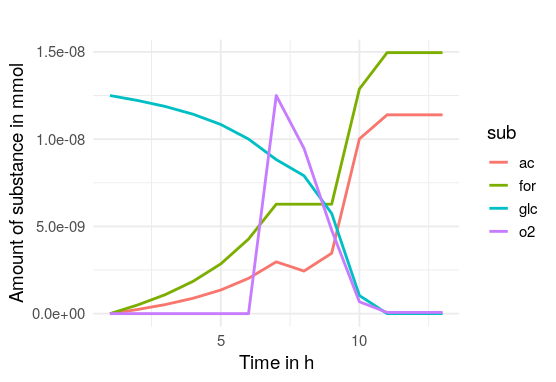
In a new study, we used BacArena to explain the context-dependency of metabolic interactions by an extracellular invertase in the #microbiome of C. elegans https://t.co/FExklwtCn4 #microbialecology#crossfeeding
Clustering co-abundant genes identifies components of the gut microbiome that are reproducibly associated with colorectal cancer and inflammatory bowel disease https://t.co/iCPEqDkLk2