Omega or Grand Seiko is the way. Honestly, the GS spring drive movement is an engineering marvel. Can’t go wrong with the history of the speedmaster either.
Chrono24 if you want a gray-market marketplace that you can trust.
Rolex is an amazing brand and they have great engineering but the customer experience is torture…which emphasizes their lore and drives demand up further.
1/5 🚨 One year ago, President Trump signed EO 14300, ordering the NRC to overhaul nuclear regulation. The result? Historic firsts, 33 active rulemakings, and what Chairman Nieh calls the biggest redesign in 50 years.
Cleared for the next step. ✅
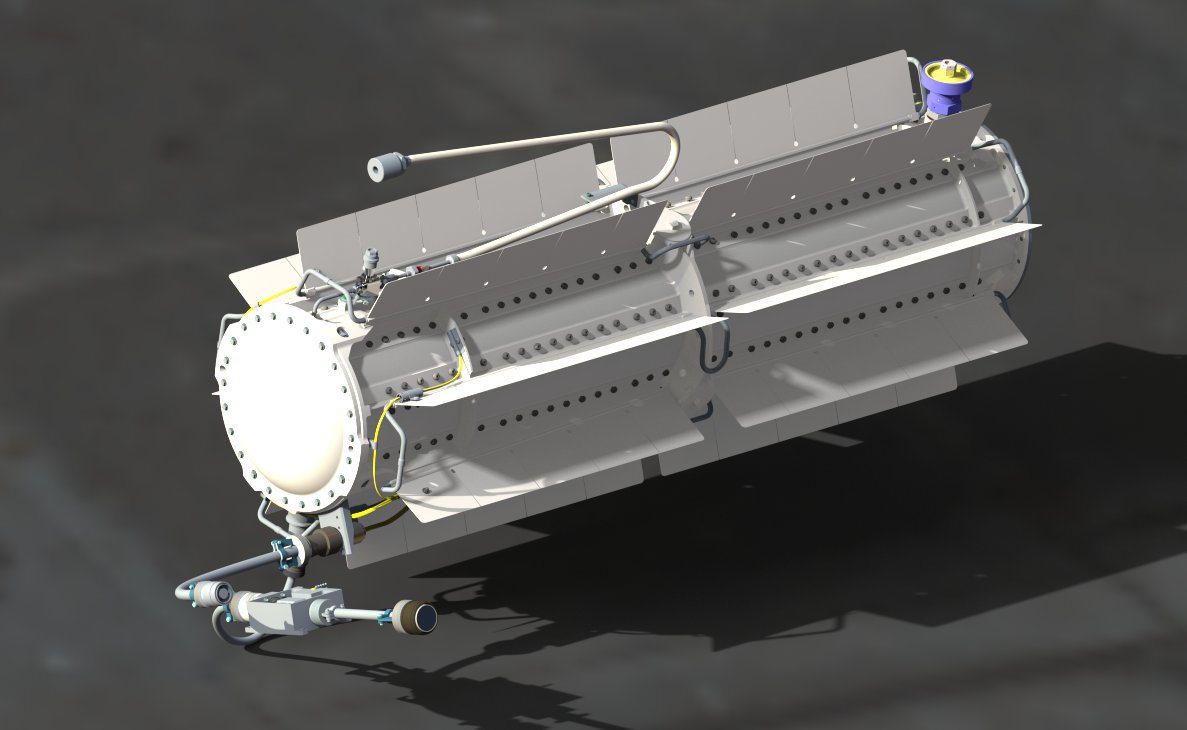
Our Next-Generation Radioisotope Thermoelectric Generator passed its critical design review, advancing nuclear power for deep space missions.
Learn more: https://t.co/cn8tMYNkvh
1.) hardening the compute infrastructure to tolerate LEO+ is not a small/cheap task. Especially as transistor density increases.
2.) Even with hardened electronics, useful life will be diminished compared to terrestrial compute.
3.) Along the same line, upgrading to avoid obsolescence is easier in a current facility vs. launching a completely new cluster.
4.) Cost per token is rapidly declining on earth, so the delta may not be as big as what's being projected with today's numbers. Combine that with local 'off grid' power solutions like SMRs and terrestrial compute sounds viable long-term.
All of these things are solvable, but I'm not seeing a lot of discussion on these topics.
@NoLimitGains This is a good move, it prevents speculation in the secondaries before IPO. It’s normal course of business for a board to approve secondary transactions.This has nothing to do with trading once they are public.
It’s not illegal and they aren’t acting as doctors here. They can make a financial decision to bypass the TPA’s coverage policies for the benefit of their employee. They can be hesitant to do this because it sets a precedent (see ERISA) that future cases with similar diagnosis should be covered.
idk who needs to hear this but 65% of employer purchased health insurance is 'self-funded,' which means the employer is the ultimate decision maker on denials. Insurance companies are essentially middle men called TPAs. Employers typically default their decision making to the TPA, but can overrule with a 'benefit exception.' Call your HR office if you get denied. This strategy was often successful when I used to deal with cancer treatment denials.
Self Funded = Employer covers expenses for medical care for employees, TPA manages the funds via their network and processes, TPA charges a fee for management. Typically reserved for medium to large businesses.
Fully Funded = Employer opens access to a specified health plan for their employees and pays some arbitrary % of the premiums (if they are nice). Employer has little to no say on coverage without impacting premiums significantly.
#UnitedHealthcare #insurancedenials
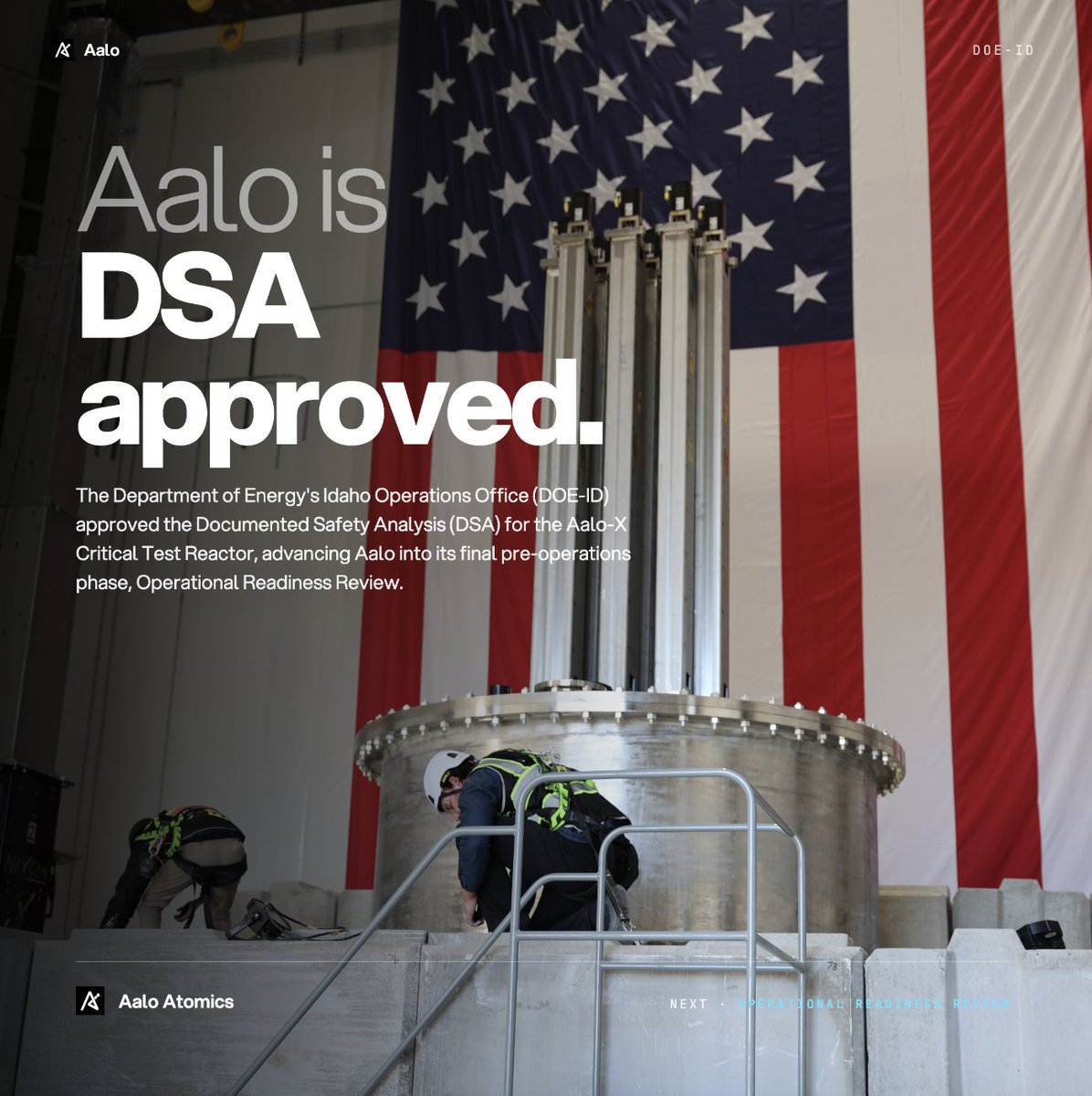
On April 30th, the Department of Energy's Idaho Operations Office (DOE-ID) approved the Documented Safety Analysis (DSA) for the Aalo-X Critical Test Reactor, advancing Aalo into its final pre-operations phase, the Operational Readiness Review.
The DSA is the authoritative safety basis for a DOE nuclear facility. It demonstrates that a facility can be operated safely across its full range of normal, off-normal, and accident conditions.
In the Aalo-X Critical Test Reactor, Aalo will test its full-scale nuclear core. The reactor contains nuclear fuel, moderator, control rod drive mechanisms, shielding, and instrumentation systems that are direct analogs of what will operate in the 10 MWe Aalo-X reactor being built next door.
To further the CTR as an on-ramp to commercial deployment, no components used to achieve this milestone were repurposed:
- Fuel assemblies were designed and assembled in-house.
- The entirely new, compliant reactor facility was completed in a matter of months.
- The commercial fuel supply chain was excercised from mining through on-site uranium delivery.
- The reactor was designed and built modularly in-house and transported on commercial trucks to Idaho.
- The reactor was built to NQA-1, the standard for commercial reactor quality, rather than ANS 15.8, which governs prototype reactors.
A regulatory milestone at this level is the output of many people doing difficult, detailed work over a long period. We want to thank DOE leadership and the review staff who executed the DOE-STD-1271 framework, along with the modernized NE orders. We also want to give a huge thank you to the team at Aalo who carried out this work, along with our partners and advisors.
The final phase before criticality is the DOE-led Readiness Review, in which DOE verifies that the people, facility, and programs can be cleared to operate as documented.
Today’s DSA milestone proves our team’s execution discipline, and we are looking forward to next steps.
Onward to criticality.
FULL CIRCLE: In April 1965, the U.S. launched its first and only space reactor into space.
SNAP-10A was a sodium-potassium-cooled fast reactor developed as part of a @DeptofWar R&D project to power a satellite.