Marlon Brando won the Academy Award for Best Actor for On the Waterfront (1954), a performance celebrated for its remarkable naturalism.
When Eva Marie Saint accidentally dropped her glove, director Elia Kazan kept the cameras rolling as Brando picked it up and slipped it onto his own hand. A spontaneous gesture became a perfect example of Brando’s ability to make a character feel utterly real.
brian wilson é claramente um ser de luz enviado pelo espírito santo, eu nao to nem brincando. ele faz parte de uma linhagem antiga de pessoas neurodivergentes que tem um contato mais próximo com o divino e abrem as portas da percepção para o mundo (o louco na idade media etc)
não aguento mais abrir o Instagram e ter uma songamonga gravando vídeo sentada no chão com uma calça jeans larga de lavagem clara, uma camisa solta, um microfone grudado em algum objeto numa mão e na outra uma caneca de café ensinando uma idiotice como se fosse um grande mousse
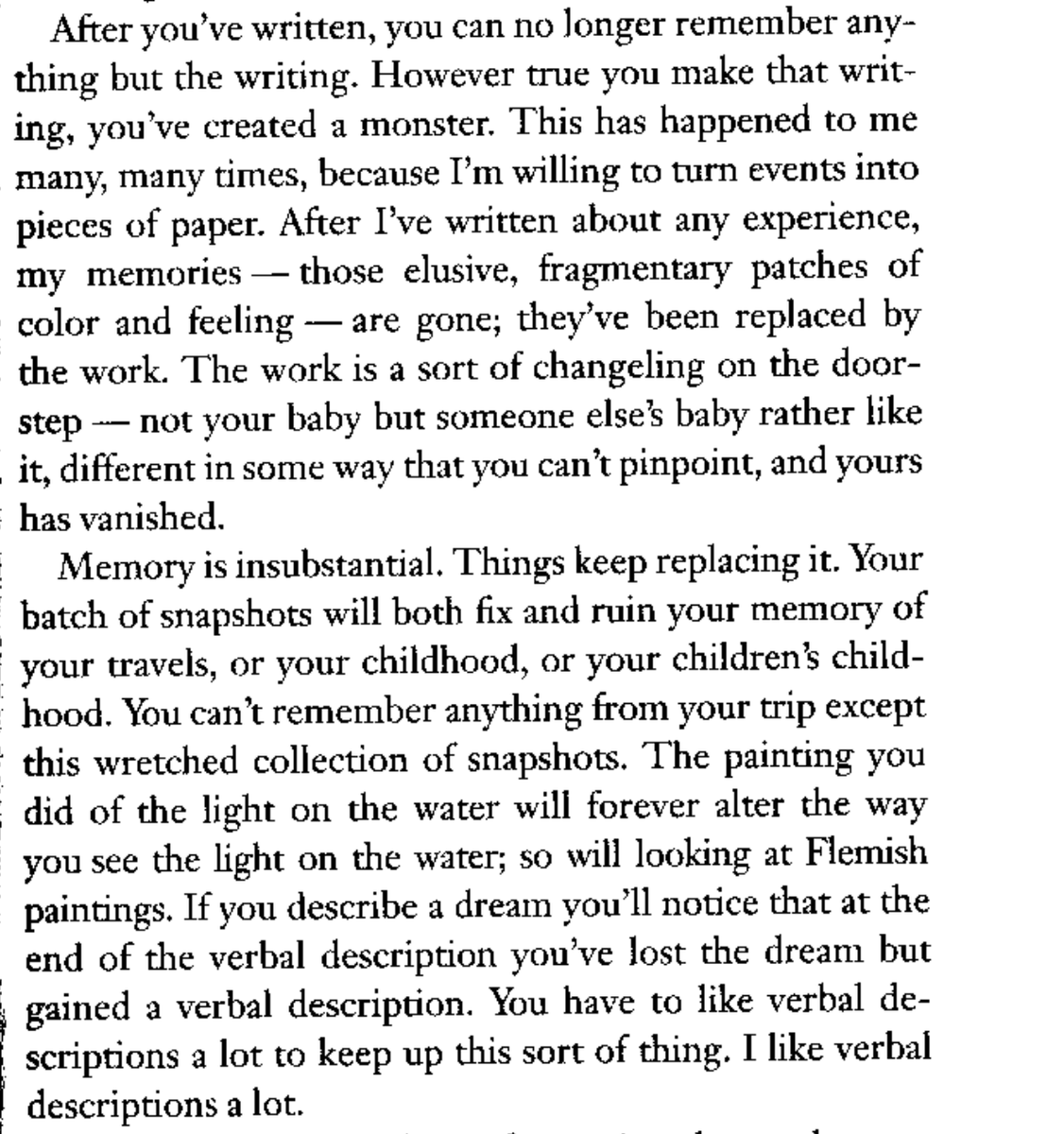
Annie Dillard is our greatest nature writer. But her writing on writing always floored me. I used to assign "To Fashion a Text" to my grad students and the discussions would always land on this wonderful meditation. We are richer for her willingness to trade memories for words.
One of my favorite Annie Dillard quotes, from a marvelous bit of advice she gave the creative writing students at the University of North Carolina (Chapel Hill), titled “Notes for Young Writers.” Thanks to @Image_Journal, we have a written record of it.
https://t.co/Qmd6dUIMdc
com cinema, música, literatura... as pessoas esqueceram que a alteridade é extremamente importante pra arte... amo o texto do james baldwin falando sobre como ele se sentia vendo a bette davis no cinema e como ele se relacionava com ela por meio da diferença
queria um estudo do porquê nos últimos anos passaram a tratar 30 anos como cadáver definhando sendo que a perspectiva pra essa idade na mídia já foi Sex and the City sabe
James Stewart and Cary Grant on working together in George Cukor's "The Philadelphia Story" (1940) & how this memorable scene was improvised:
"James Stewart: I play a writer who falls in love with Katharine Hepburn. The night before her wedding I have a little too much to drink. This gives me the courage to go and talk to Cary, who’s playing her ex-husband. So I go to Cary’s house and knock on the door. It’s obvious I’ve had too much to drink, but he lets me in.
It was time to do the scene, and Cary said, ‘George, why don’t we just go ahead? If you don’t like it, we’ll do it again.’ So, without a rehearsal or anything, we started the scene. As I was talking, it hit me that I’d had too much to drink. So, as I explained things to Cary, I hiccuped. In answer to the hiccup, Cary said —out of the clear blue sky —‘Excuse me.’ Well, I sort of said, ‘Umm?’ It was very difficult for me to keep a straight face, because his ad-libbed response had been so beautifully done. Cary had an almost perfect humor.
Cary Grant: Jimmy simply mesmerized me on the screen. When I watched him act, I felt like a triangle player in the orchestra who keeps watching the conductor and then, when he finally gets the baton signal, he misses his triangle."
("Evenings with Cary Grant", Nancy Nelson, 1991)
P.S: Remembering the great American Filmmaker George Cukor on his 127th birthday!
one of the reasons to get into cinema (or the history of any art form) is to marvel at the physical lengths people used to go to to realize a vision. I think this will get harder and harder to understand in an AI “art-on-demand” culture. It won’t be intuitive how they did this
The kindest thing literature does is remind you that your peculiar little feelings have always existed. Someone, in some century, was equally confused by love, bored by society, tired of performing, and hungry for meaning.