@Karajarati I noticed you used "d" to connect the verb ad aruɣ with the previous sentence, we don't do that in Kabyle only middle atlas berbers use "aha" to connect two verbs or verbal sentences.
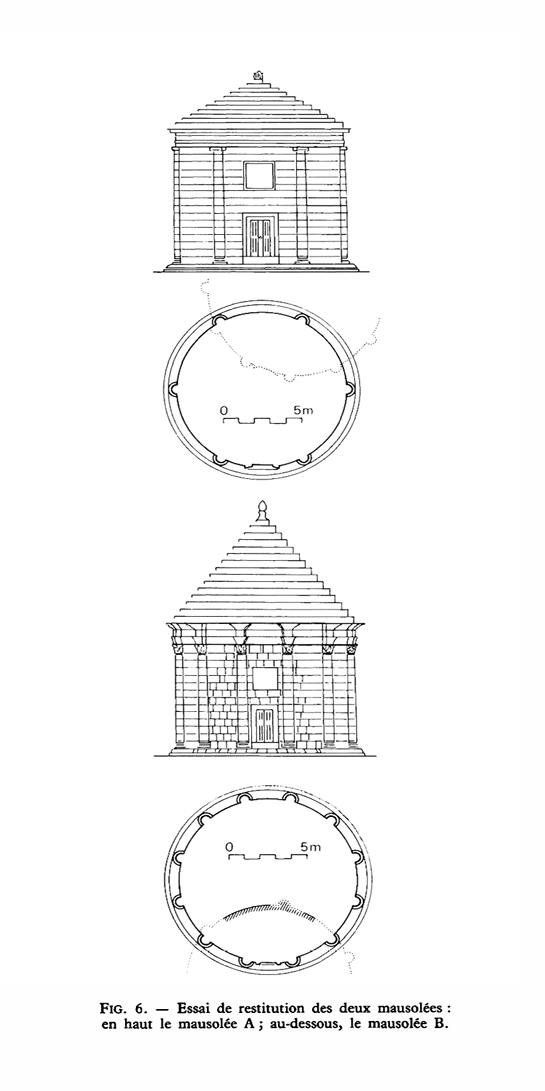
The Mausoleum of Taksebt, located in Kabylia (Algeria), is a Roman-era mausoleum measuring 11 m in diameter and approximately 15 m in height. It was probably the mausoleum of a Romanized notable who most likely lived during the 2nd or 3rd century AD and came from the nearby ancient city of Rusippisir. Moreover, it was built over an older mausoleum of a similar layout dating back to the 2nd–1st centuries BC. Both monuments can be placed within a well-attested African tradition of circular-plan structures with engaged columns, topped by a stepped cone, which on a smaller scale recalls the architecture of the Medracen and the Royal Mausoleum of Mauretania (Hellenistic Numidian architecture). Thus, despite the high level of Romanization of those who erected this monument, they chose to build a mausoleum that was fully in continuity with the Numidian period.
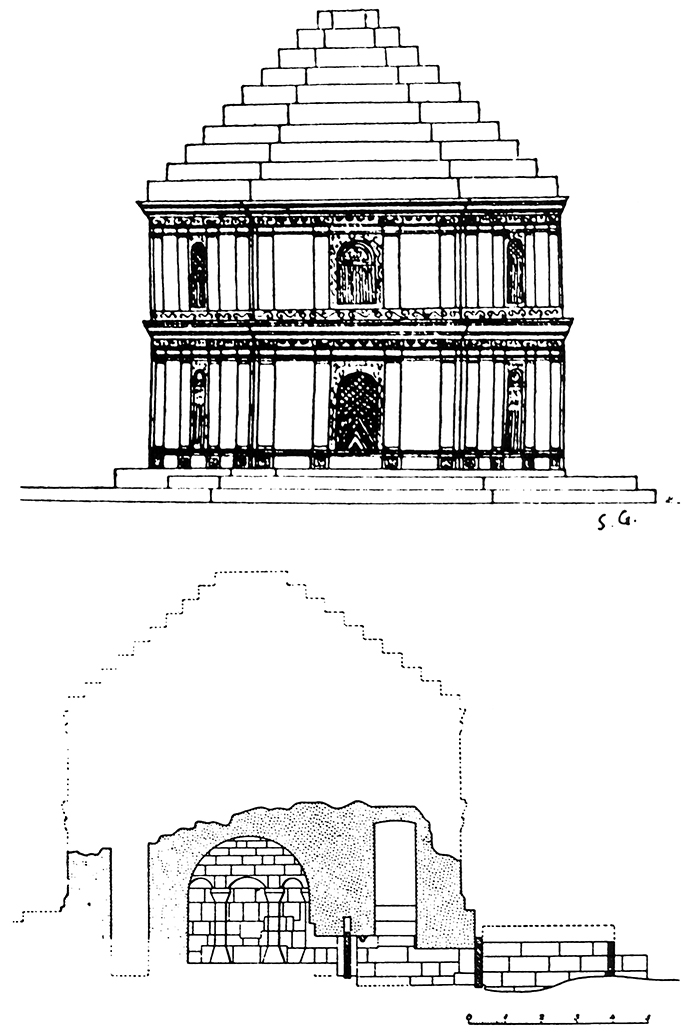
The Mausoleum of Blad Guitoun, near modern Thenia (Kabylia, Algeria), is a Late Antique mausoleum (5th-6th c. AD), likely built for a Christian Berber chief. it's octagonal and two-storied, crowned with a stepped pyramid, it stands on a square platform with a possible eastern altar, echoing earlier North African royal tombs like the Medracen. Its façades combine geometric carvings and Christian symbols (chalice & fish), framed by Ionic half-columns in a late style reminiscent of regional churches such as the basilica of Tigzirt. Inside, a circular burial chamber surrounded by an annular gallery suggests both Libyan tradition and possible ritual use (incubation?). The fall of the Empire appears to have led to a resurgence of Libyan artistic traditions, maintaining continuity with forms and techniques developed during the Pre-Roman period. Indeed, here, the monument shares striking similarities with the Royal Mausoleum of Mauretania, which dates to the early 1st century BC.
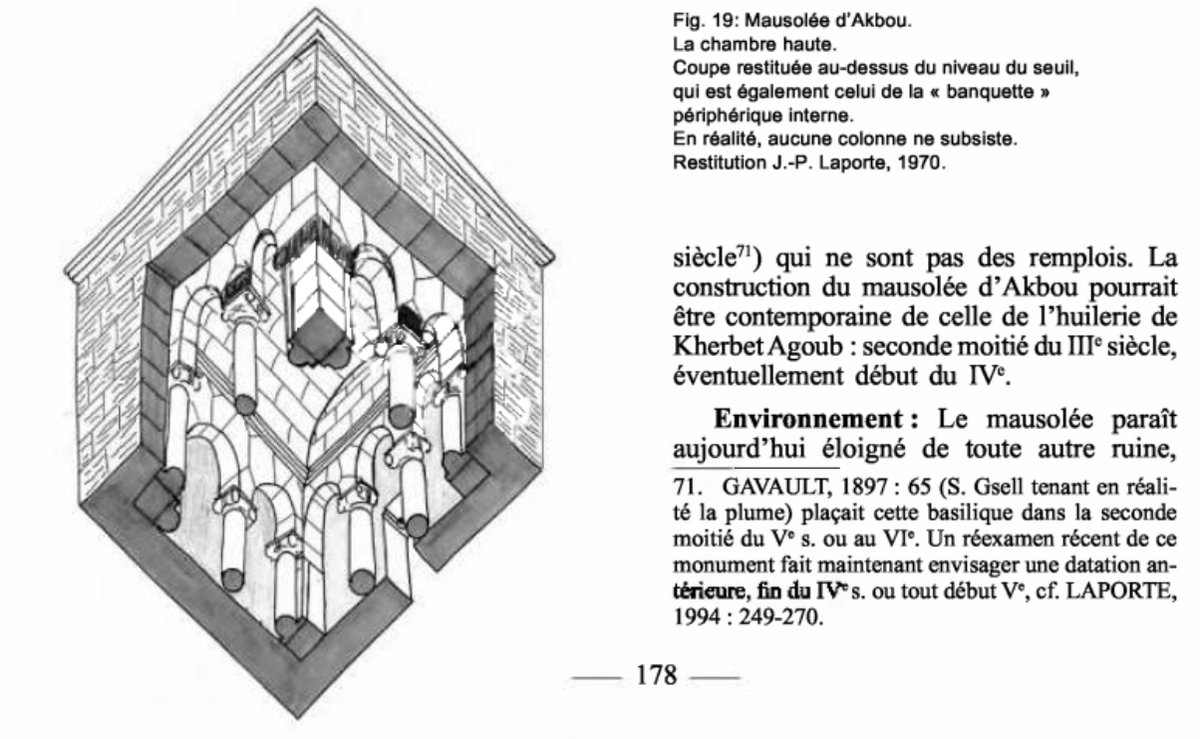
The Mausoleum of Akbou, located in the Soummam Valley in Kabylia (Algeria), is a cubic, stepped funerary monument originally crowned by a pyramid. It is believed to have served as the tomb of a Romanized local chief. Built of finely cut stone and measuring just over 5 m on each side, the mausoleum stands on a rocky outcrop overlooking the plain. It originally had 4 identical façades with false doors facing the cardinal points; only the north door was functional and was topped by a white marble inscription, now badly damaged. The false doors were decorated with carved panels, including circular motifs enclosing a swastika symbol.
Inside, a vaulted chamber with engaged columns and Ionic capitals supports a barrel vault. A sort of lower crypt probably contained sarcophagi. Architectural details date the monument to the second half of the 3rd century or the early 4th century AD. (Photo Credit IG: @SightsofAlgeria)