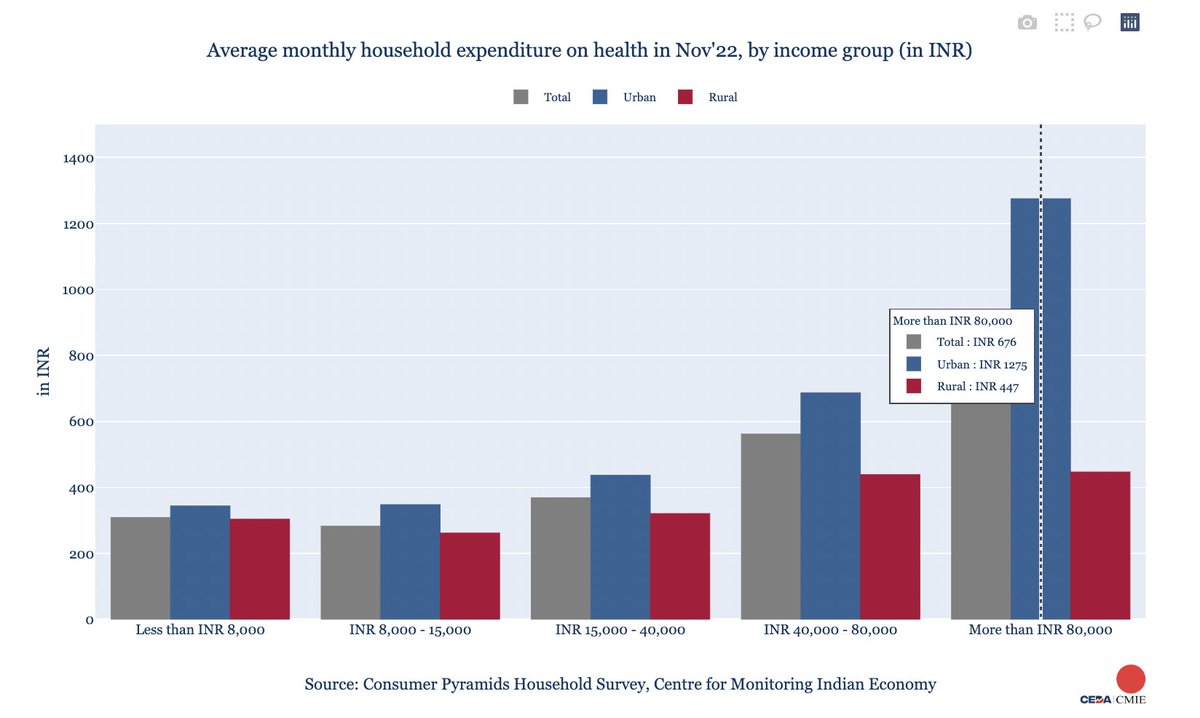
💊🩺💉Medicines, doctors, hospitalisations, health insurance, medical tests or health-enhancement services: what comprises the bulk of household expenditure on healthcare in India?
Read our latest CEDA-@_CMIE bulletin to find out:
https://t.co/ISkEumfLhv
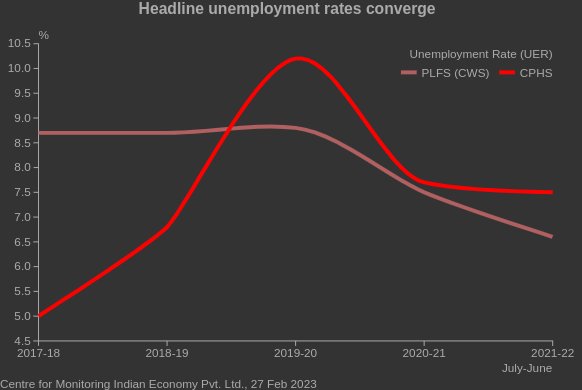
👩🏭👩🌾👩🔧Who are India’s workers? Where do they work? What kind of jobs do they have and what are the employment patterns that exist in the labour market?
Find answers to all these and more in our #MayDay special reading list! 🧵:
IV: How did the Covid-19 pandemic impact people’s economic lives, including their access to jobs?
In December 2022, we published a special publication compiling the CEDA- @_CMIE Bulletins examining the same.
Access it here: https://t.co/TJKxABhyAI
Dasgupta also discusses the role of understanding the role of differing #health difficulty levels on the women in the sample and checking baseline differences in health-seeking #behaviour
🚨CPHS Research Webinar🚨
@somdeepc (@IIM_Calcutta) will present "Sweet Cash: Is #Healthcare a Normal Good for #Women in Developing Countries?"
Aparajita Dasgupta (@AshokaUniv) will be discussant
🗓️ 13 April 2023
⏰ 7 PM IST
Sign up below!
https://t.co/rWvlspkoTC
Aparajita Dasgupta begins the discussion of the paper with suggestions on analysing real per capita expenditure of households in CPHS and looking at data on health insurance in the hospital patient data
Why do #Indian households borrow money? The latest @CedaAshoka-@_CMIE bulletin investigates ⬇️
@_cphs data is used to examine #household borrowing across #states, #income groups, and urban/rural regions
https://t.co/G27JH3icdR
🚗💰🏠Purchasing vehicles, meeting business expenditure, consumption or repaying old debt?
What are the most common reasons for household borrowing in India? @PreethaJoseph & Raashika Moudgill find out for our latest CEDA-@_CMIE bulletin:
https://t.co/BFvUMEbjye
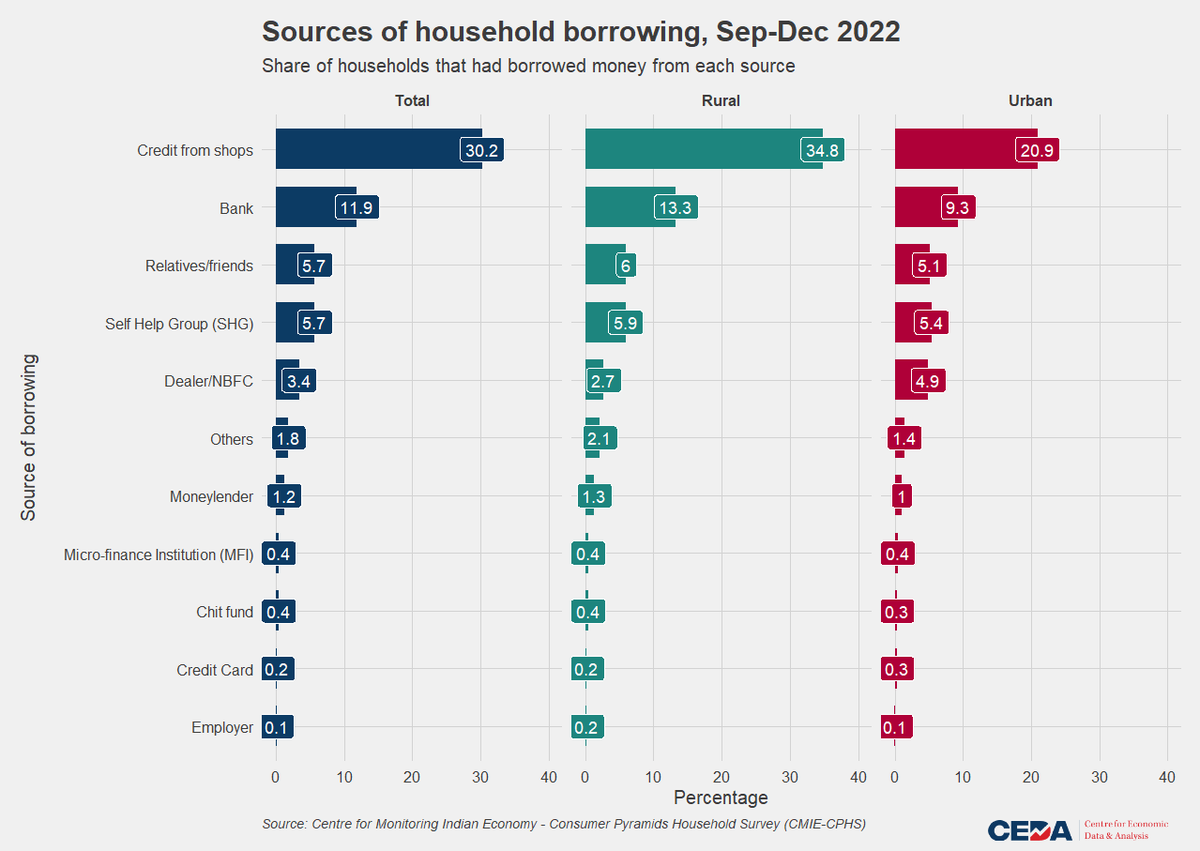
Indian households borrow money in different ways and from a range of sources.
What are some of the most common sources for borrowing in the country? Find out 👇
https://t.co/b32utQXVM3
Fascinated to know that the most common source of credit for Indian families is *shops*, not banks!
QR-based UPI payments may have made waves, but the good old "udhaar" isn't going anywhere.
Insightful data crunching by @akshichawla: https://t.co/54sOTRIQwj
@CedaAshoka
Fascinating insights from @_CMIE consumer pyramids household survey. Trade credit from shops is the single largest source of credit in rural areas and seems to be understudied aspect of household finances. @CedaAshoka https://t.co/rrhK5Y3szw