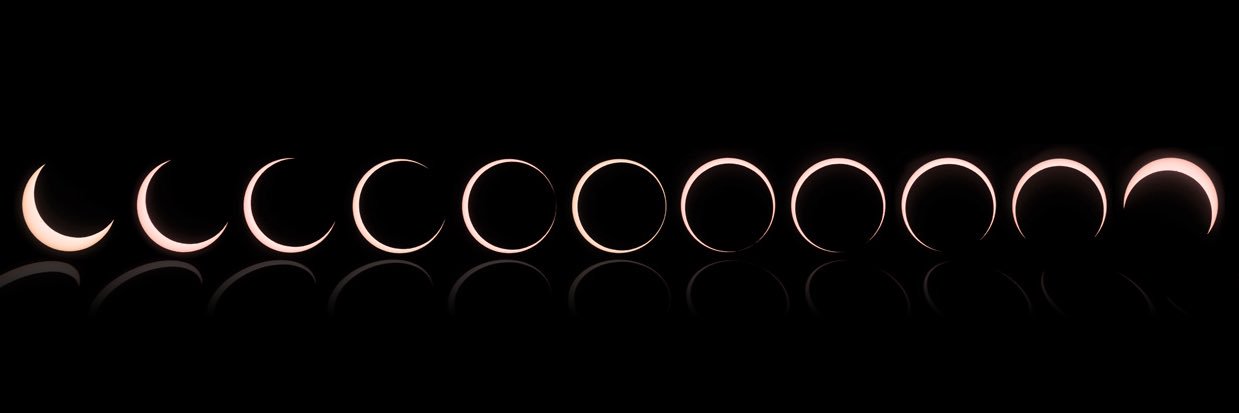
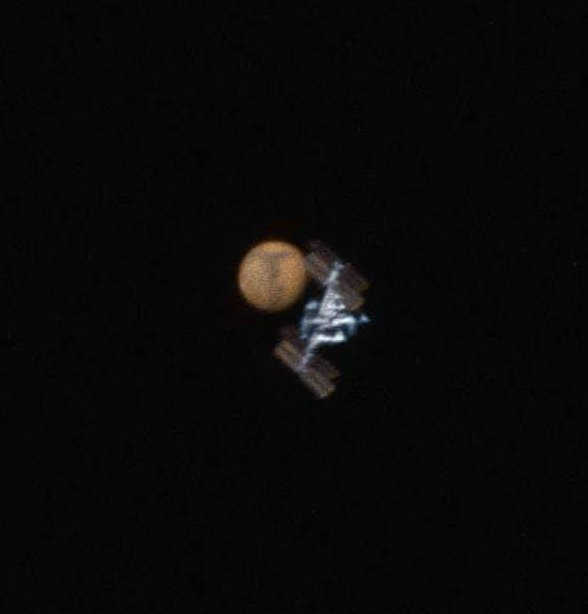
💥🌕 Impact de Falcon 9 sur la Lune : cette simulation montre l’évolution du panache de débris et de la colonne d’éjectas dans les minutes suivant la collision, prévue le 5 août 2026 près du cratère Einstein.
📄 : William Jo et al. / UT Austin
✍️ : arXiv:2607.23904
NEWS 🚨: A Falcon 9 upper stage abandoned in orbit since Jan. 2025 will hit the Moon on August 5 at ~5,437 mph (8,750 km/h)
It's projected to carve out a 100-foot crater
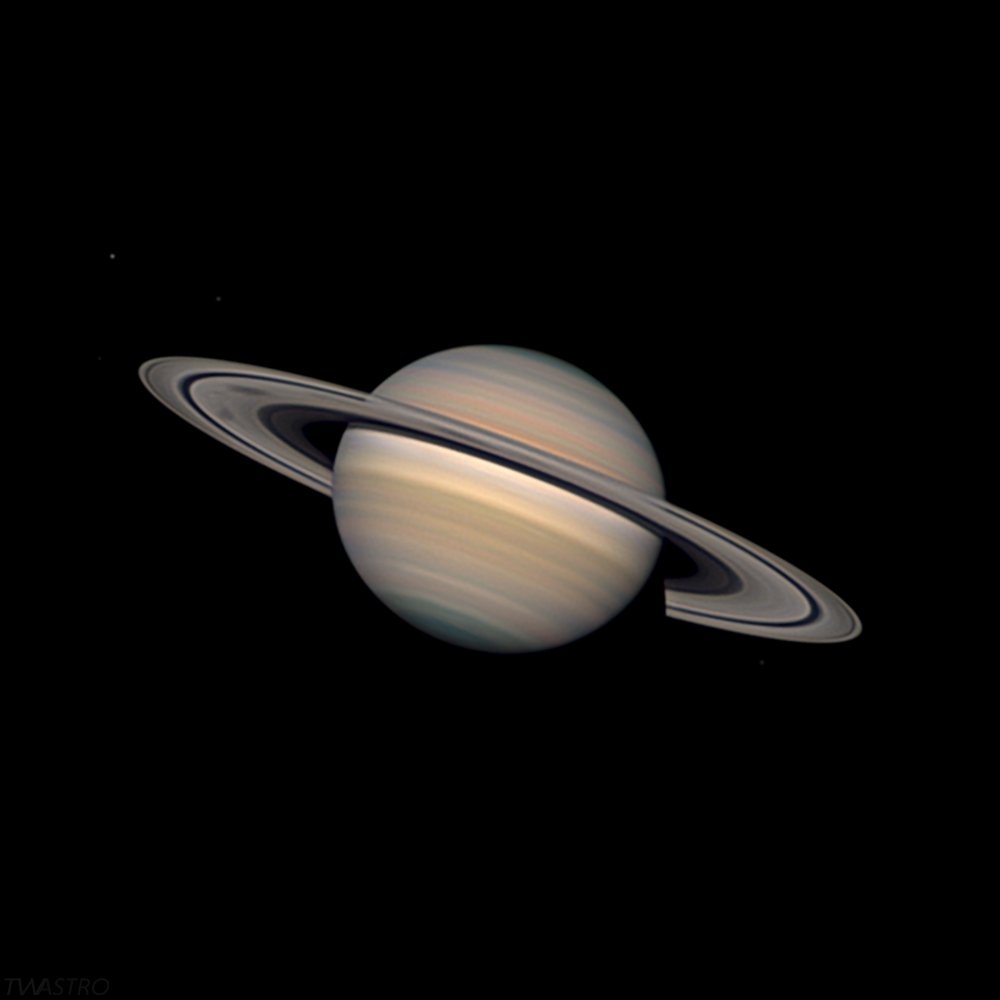
Saturn this morning under excellent seeing. Several large and prominent ring spokes are seen (I even spotted some visually!), with the Encke and Maxwell ring gaps also well defined.
See the replies for a timelapse of the ring spokes orbiting the planet.
First introduced at WWDC26, Apple today shared more details about "iPhone App Resizability," explaining that iPhone apps can no longer assume a single fixed size and instead need to adapt to whatever canvas they're given, whether running side by side, on external displays, on iPadOS, or through iPhone Mirroring on the Mac.
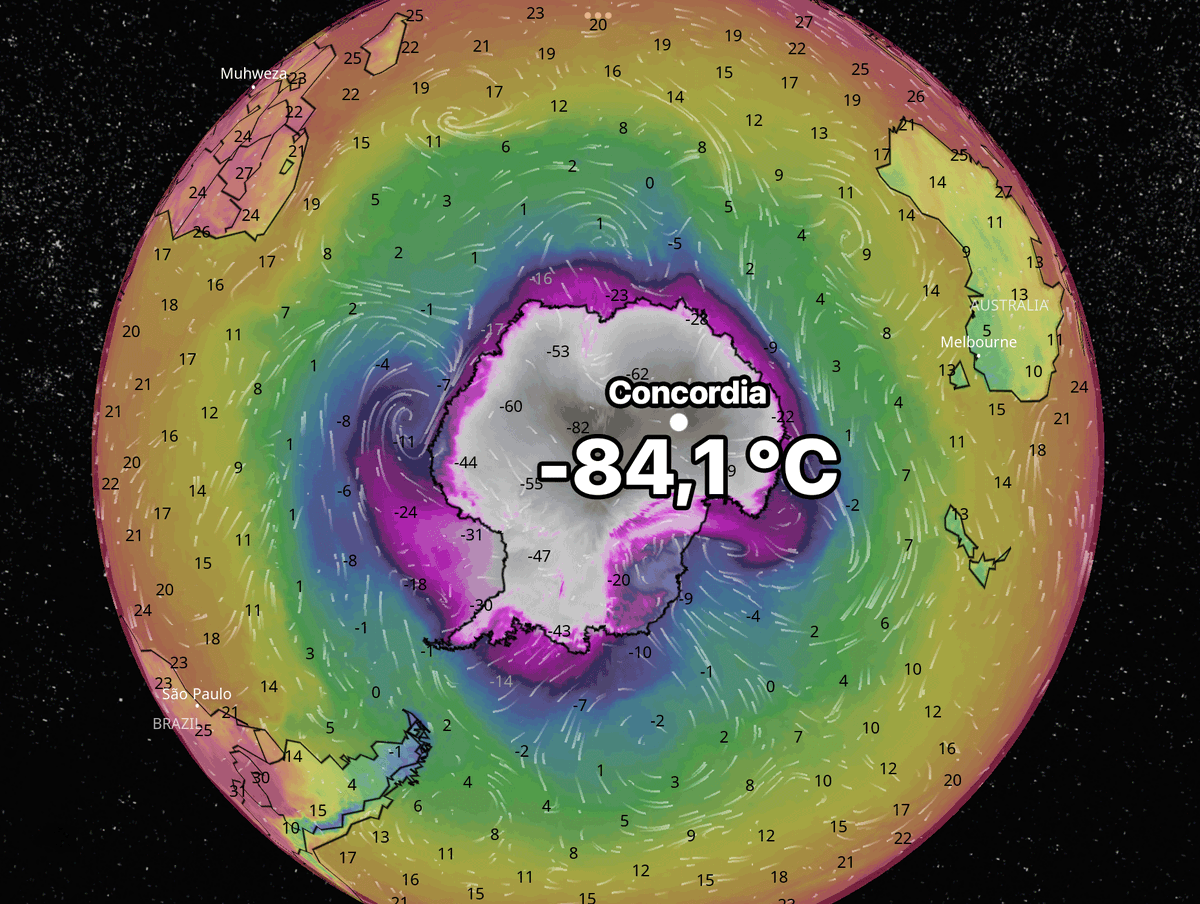
The temperature at Antarctica's Concordia Research Station dropped to −84.1 °C on Saturday, July 18. 🧐 It was the lowest temperature recorded anywhere on Earth since 2012. 🥶
57 years ago today, humans first landed on the Moon. The source code that helped get them there? It’s on GitHub.
Margaret Hamilton led the MIT team responsible for Apollo’s onboard flight software. The Apollo Guidance Computer software eventually grew to about 145,000 lines of code. 👀
Explore the original Apollo 11 guidance software for the Command and Lunar Modules. 🌕
https://t.co/x1lDIB4vjX
Image credit: Draper Laboratory; restoration by Adam Cuerden, via Wikimedia Commons.
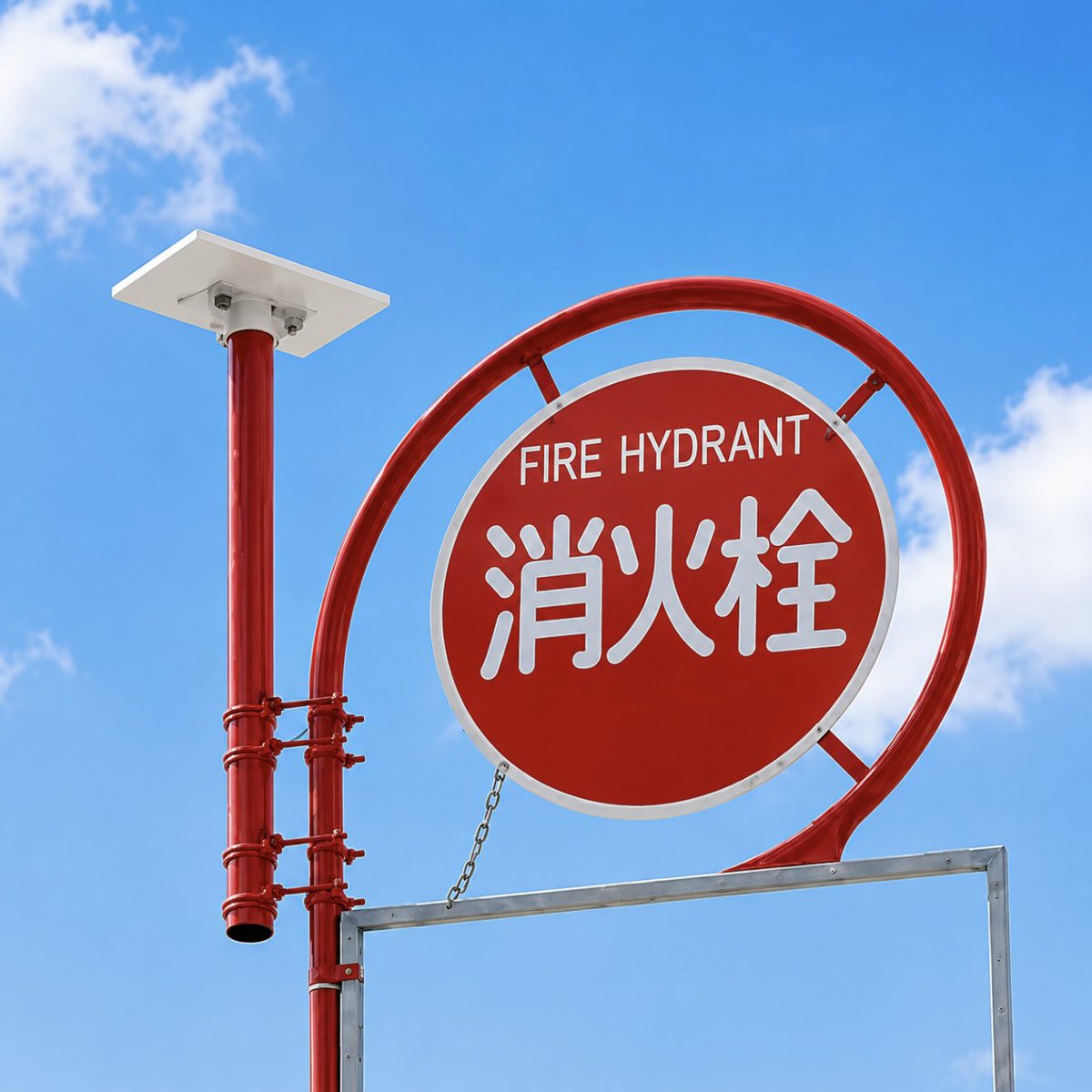
These are meant as resilient off-grid hubs. The white panel atop the pole in the demo photo is almost certainly a solar panel, paired with batteries to power the Starlink terminal when the grid fails in an earthquake or disaster.
Starlink draws modest power and has already proven effective in quakes (e.g., Noto 2024) using solar generators and portables. Japan has developed distributed solar/microgrids precisely for this since 2011. It's still early testing, so the full power setup is part of what's being verified.
BREAKING: Japan is testing Starlink-powered fire hydrant signs as emergency communication hubs.
• Japan has approximately 120,000 fire hydrant signs installed nationwide.
• The technical demonstration was conducted by Shokasen Hyoshiki Co., Ltd., a company that manages fire hydrant signs across Japan.
• The test explored mounting Starlink equipment on a fire hydrant sign to provide satellite internet connectivity.
• The goal is to transform existing fire hydrant signs into temporary Wi-Fi and emergency communication hubs during disasters.
• Residents could use them to access emergency information and stay connected if cellular and terrestrial internet networks go down.
• The project is currently an early-stage technical verification and has not yet been deployed commercially or nationwide.
This demonstration shows how @elonmusk's Starlink could help keep communities connected when traditional networks are unavailable.
Seems like no one's noticed the 80TB of astrophysics data from 30+ sources that just dropped on @huggingface.
...and you only need ~4GB of RAM to load it.
We're talking over 80TB of galaxy imagery taken across the spectrum, spectra of galaxies and stars, time series of variable stars, and a whole zoo of assorted measurements and physical data.
And all of it can now be wrangled on your laptop, thanks to Multimodal Universe's just released cross-matching. SDSS x Gaia means you can match 800k objects against 122M objects, and it never climbs above ~4GB of RAM.
Huge congrats to @smith42mike for leading this and making the world of astro accessible to probably 10,000x more people. Let's discover some shit
Tropical Storm Bavi has been named to the west of the Marshall Islands, and the early model runs for her potential future intensity are some of the most extreme you will ever see.
The ECMWF, which is historically one of the less aggressive models, showed Bavi hitting ~871 mbar earlier today. Now, the latest run is barely budging from this ultraviolent estimate, still dropping Bavi down to ~882 mbar between the Philippines, Taiwan, and Japan. This in no way means we’re super likely to actually see that happen, as it would take an absolutely perfect sequence of meteorological events to occur, but it at least shows how explosive the conditions in the Philippine Sea are.
For context, the most intense tropical cyclone ever recorded on Earth peaked at 870 mbar.