Trump’s teleprompter operator accused of betting on the president’s speeches
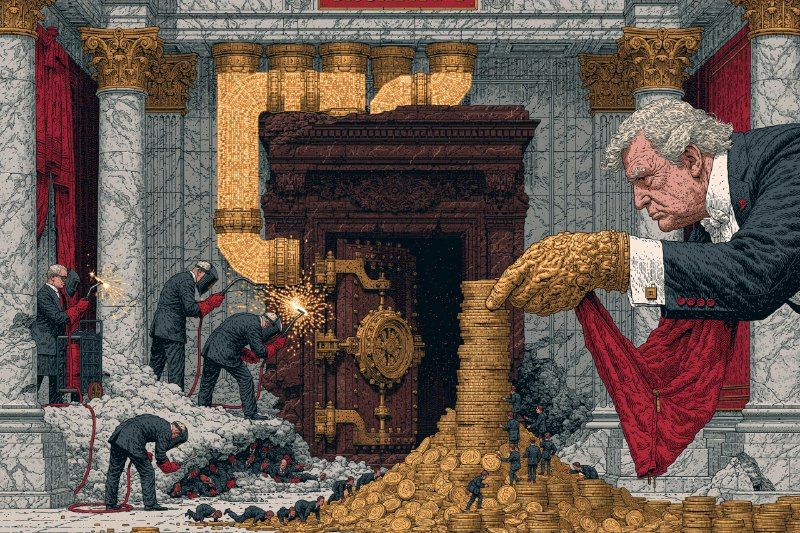
Gabriel Perez, who worked for Donald Trump for 10 years, placed bets on Kalshi for three months. In particular, the bets, which earned him hundreds of thousands of dollars, involved Trump’s speech at the World Economic Forum in Davos. According to ABC News, Perez adapted to Trump’s frequent departures from the teleprompter, which led him to cancel bets in the middle of the speech. The incident came to light after Kalshi reported suspicious activity to the CFTC. Perez was placed on paid leave.
Trump Media has begun selling high-speed access to Trump’s social media posts. This data can also be used by prediction markets, where the outcome of an event is determined by the timestamp of a transaction record. For example, Polymarket did not accept the outcome of Strategy’s BTC sale in May because the sale data appeared later.
Asset manager T. Rowe Price, with $1.9 trillion under management, is launching its first actively managed multi-token crypto ETF.
The $15 million fund trades under the ticker TKNZ on NYSE Arca, with a management fee of 0.75%. At launch, the crypto ETF held 40.8% of its assets in BTC and 18.4% in ETH. Another 11% is allocated to BNB, 9.4% to SOL, 9.4% to XRP, 6.5% to HYPE, 3% to Stellar, and 1.3% to DOGE. Stablecoins and dollar cash equivalents account for 0.3%. TKNZ also allows for portfolio rebalancing.
Bloomberg ETF analyst Eric Balchunas said the product has too low a BTC allocation at 40.8%. He also considers the amount of altcoins, especially HYPE at 6.5%, to be too high. TKNZ can also stake its coins, although this option will not be available at the initial stages.
Citadel Securities invested $400 million in https://t.co/wWq5qeykam at a $20 billion valuation
The crypto exchange plans to use the funds to expand its activities in tokenization and derivatives. These are the first institutional investments in https://t.co/wWq5qeykam since its founding. Previously, the project raised $26.7 million in an ICO in 2017. In November 2025, Citadel also invested $200 million in its competitor, the crypto exchange Kraken. Its valuation was also $20 billion.
https://t.co/wWq5qeykam is linked to Trump. It contributed $38.6 million to a super PAC associated with the president’s midterm campaign. In addition, in 2025, Trump Media bought 2% of the supply of the platform’s CRO token. In return, https://t.co/wWq5qeykam purchased $50 million worth of the company’s shares. The two companies are also connected through the launch of prediction markets.
Czechia is blocking Polymarket as an unlicensed gambling platform
Internet providers are required to block access to its domain within 15 days. At the same time, the director of the Gambling Regulation Institute, Jan Rehola, noted that they are not banning innovation. He emphasized that all companies that allow betting must meet the same requirements.
The organization referred to similar actions by regulators in the Netherlands, France, and the United Kingdom. They consider prediction markets to be gambling, despite their being positioned as event contracts. Previously, access to Polymarket was restricted in Germany, Belgium, Romania, Switzerland, Poland, Greece, Cyprus, Portugal, Spain, Brazil, and Ukraine.
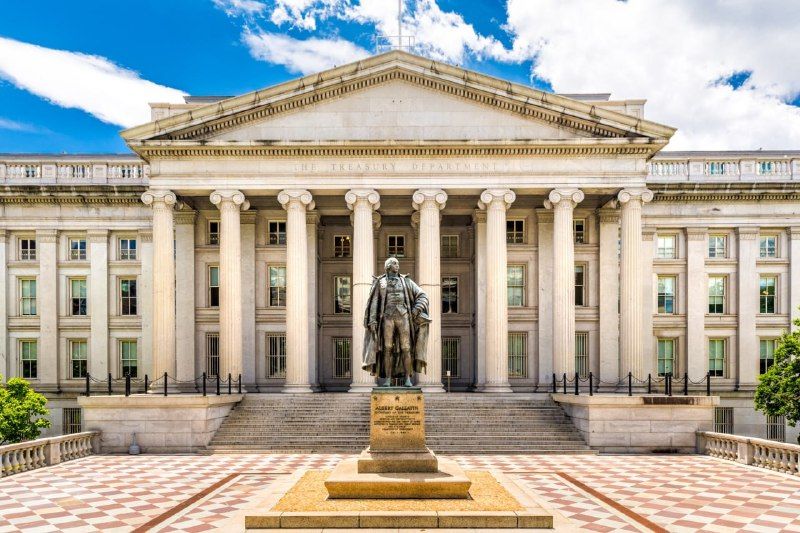
The U.S. Treasury has frozen 131 million USDT in crypto wallets linked to Iran
Tether froze 4 wallets on the Tron network. They were linked to the IRGC and Iran’s Central Bank. Most of these funds were withdrawn through the DTC Pay payment service and the Bitso crypto exchange. In addition, the Treasury imposed sanctions on more than 50 individuals, organizations, and vessels that were helping Iran evade sanctions. A significant share of these companies was based in the UAE.
In April, Tether blocked 344 million USDT on the Tron network across 2 addresses at the request of the U.S. In total, the company has frozen more than $4.4 billion, of which $2.1 billion was at the request of U.S. authorities.
Japan has adopted legislative amendments that recognize cryptocurrency as a financial product and lower the tax rate
The country's bicameral parliament approved amendments to the Financial Instruments and Exchange Act. The changes classify cryptocurrencies as financial products, similar to stocks and bonds. Currently, the tax on profits from digital assets is as high as 55%. However, the amendments reduce the rate to 20%. After paying taxes at the maximum rate, an investor will retain 1.8 times more profit — 80% instead of 45%. At the same time, the amendments allow losses to be carried forward for three years into future periods.
The reform is expected to take effect in January 2028, as its implementation will begin in fiscal year 2027. In addition, the changes tighten rules on insider trading and increase penalties and prison terms for crypto-related violations. The new provisions also lay the groundwork for the domestic issuance of spot crypto ETFs.
The British tax authority (HMRC) is changing the rules for the accounting of crypto lending and liquidity pools.
From April 6, 2027, capital gains tax on these transactions will be deferred until the tokens are disposed of. In particular, borrowed crypto assets will be recorded at market value at the time of the loan. At the same time, any collateral will no longer be recognized as a taxable event.
The changes will affect individuals and trustees — in total, about 700,000 people. Under the current rules, tax liabilities arise when cryptocurrency is sold, exchanged, or spent. The new measures are intended to close regulatory gaps and reduce excessive tax burdens on users.
The ECB has selected 36 companies to test the digital euro as part of a year-long pilot project set to begin in the second half of 2027.
The participants were chosen from more than 50 financial institutions. They include both traditional banks (Deutsche Bank, UniCredit, BPCE) and digital platforms (Revolut Bank UAB, Stripe Technology, Adyen NV). ECB Executive Board member Piero Cipollone noted strong market interest in the initiative and the private sector’s readiness to advance CBDCs.
In the project, companies will be able to act as distributors, acquirers, or perform both roles. Distributors will provide ECB staff with access to beta versions of digital euro accounts and payment services. Acquirers, in turn, will ensure acceptance of CBDC payments for businesses, including cafes, restaurants, and e-commerce companies. A full launch of the digital euro is scheduled for 2029.
The U.S. and U.K. finance ministries have unveiled a joint roadmap for the development of digital assets.
They called on the Bank of England and the U.K. Financial Conduct Authority, together with the U.S. CFTC and SEC, to develop approaches to tokenized assets. They need to establish standards for custody, reserve segregation, and consumer protection. In addition, they should support competition and innovation in stablecoins, tokenized deposits, and other similar assets.
The finance ministries of both countries also instructed them to explore options for cross-border capital raising in these sectors. However, their priority is to legally guarantee reserve payouts to stablecoin holders even in the event of an issuer’s bankruptcy.
At the same time, the U.S. government transferred 3.8 thousand BTC ($235.2 million) and 30 thousand ETH ($53 million) to Coinbase Prime. They were linked to drug trafficking. In March 2025, Trump issued an executive order requiring confiscated cryptocurrencies to be moved into a strategic reserve fund. The U.S. holds 328.4 thousand BTC ($21.2 billion), or 1.6% of all coins.
Strategy sold MSTR shares for $467 million without buying BTC
The sale of 4.8 million common shares helped increase the company’s reserves to $3 billion. At the same time, Strategy retained 843.8 thousand BTC ($54.5 billion), or 4% of all coins. The unrealized loss on BTC purchases stands at $9.2 billion (14.5%). Earlier this month, the company made its largest sale of 3.6 thousand BTC for $216 million at an average price of $60.2 thousand per coin.
The company now has enough funds to cover 20 months of debt payments. This improves the company’s stability, which led to a rise in the price of STRC preferred shares. In particular, they have climbed 24.5% from the low, from $71.3 to $88.7. The price increase was also supported by a 50 bps dividend hike last month, to 12% annually.
SBI Holdings and the Solana Foundation have joined forces to create a blockchain-based financial market in Japan.
As part of the deal, the Solana Foundation will acquire a stake in SBI R3 Japan. In turn, SBI Solana Global will support the issuance and distribution of stablecoins, including SBI’s JPYSC (yen) stablecoin. They will also work on structuring and distributing RWAs, including corporate bonds, promissory notes, and real estate. In addition, the company plans to develop cross-border settlement infrastructure. Separately, Japan’s tokenization leader, Progmat, has moved its token platform worth 452 billion yen ($2.7 billion) to the Avalanche network.
Over the course of a month, SBI Holdings invested $489 million in crypto projects, including the Bitbank exchange — $288 million — and EDX Markets — $76 million. The Japanese financial conglomerate also invested $125 million in the DeFi project Gauntlet.
The United Kingdom has presented a roadmap for the development of tokenized finance through 2035.
The report was published by Christopher Woolard, the government’s representative on wholesale digital markets. Tokenization could increase Britain’s annual economic output by up to £33 billion ($44.1 billion). Annual tax revenues could also reach up to £14 billion ($18.7 billion). However, Woolard notes that this scenario is only possible if the necessary infrastructure is built quickly.
He also calls for priority to be given to a pilot issuance of digital government bonds (DIGIT) by the first quarter of 2027. In addition, Britain needs to expand the use of tokenized collateral and create payment infrastructure for tokenized assets and stablecoins. However, for deep adoption of these technologies, the UK needs to establish clear legal and tax standards.
The U.S. Department of Justice plans to drop charges against a man accused of creating the $722 million BitClub financial pyramid scheme
According to Bloomberg, the office of the deputy attorney general in Washington ordered federal prosecutors in New Jersey to dismiss the criminal case. At the same time, the parties are considering including a prohibition on bringing the case again. However, the final terms are still being worked out before the filing is submitted to court.
The case concerns Matthew Gotsche, who has pleaded not guilty. He is accused of conspiracy to commit wire fraud and selling unregistered securities. According to Bloomberg, he assembled a team of lawyers linked to the Trump administration to lobby the Justice Department. Three of his co-defendants previously pleaded guilty.
Circle has received final OCC approval for a U.S. banking license
Circle National Trust will be under direct federal supervision by the U.S. banking regulator. Once launched, the company’s bank will provide Circle and its affiliates with digital asset custody services. At the same time, the OCC-approved business plan allows for potential expansion. Depending on demand, it may provide securities custody services to institutional clients, including banks and other financial institutions.
When filing its application in June 2025, Circle planned to oversee USDC reserves under federal supervision. However, that option has now been postponed indefinitely. According to CoinMarketCap, USDC, with a market capitalization of $73.3 billion, holds 23.4% of the stablecoin market.
The US has passed a housing development bill that includes a ban on CBDCs without Trump’s signature
The president said he would not sign it until Congress passes a law requiring proof of citizenship to participate in federal elections. However, the housing development bill was approved by a bipartisan majority. In the Senate, 85 senators supported the bill, while 5 opposed it; in the House of Representatives, 358 voted in favor and 32 against. If the president does not sign the bill and does not veto it within 10 days, it automatically becomes law.
The 21st Century Housing Sector Development Bill is a bipartisan bill aimed at improving housing affordability. In particular, it encourages construction and expands financing options for building projects. At the same time, some Republicans insisted on adding a ban on the issuance of CBDCs to the bill.
Crypto is becoming banking infrastructure — while Trump makes $1.4 billion from it and retail investors lose $3.8 billion. Crypto Recap No. 153
Week 29, July 6–12, 2026
This week cemented crypto within the framework of regulated finance on both sides of the Atlantic. Swift launched a pilot for tokenized deposits with 17 banks, Europe continued issuing MiCA licenses, and Coinbase received UK approval for equities and derivatives. Institutionalization is outpacing rulemaking: the IMF and the Bank for International Settlements are debating whether tokenization will strengthen the system or add risks. At the same time, crypto’s political economy in Washington intensified. Trump reported $1.4 billion in income from tokens, while retail holders of his memecoin lost $3.8 billion, according to Nansen.
MiCA is turning into the operating system of the European market. The EU’s Markets in Crypto-Assets regulation (MiCA) has evolved from a filter into infrastructure. On July 7, Ripple received a license in Luxembourg and the right to operate in 30 countries across the European Economic Area; 280 out of more than 3,000 companies have obtained authorization. On July 9, the European Commission proposed extending MiCA to tokenized securities and issuers of stablecoins outside the EU, collecting feedback until September 30. The unlicensed exchange AscendEX is shutting down and does not guarantee client payouts. Revolut announced the delisting of USDT from August 31 — Tether refused to comply with MiCA requirements.
Traditional banks are taking over the crypto rails. Tokenization has moved from crypto exchanges to banks. On July 10, Swift launched a pilot for tokenized deposits on blockchain with 17 banks, including Citi, HSBC, UBS, and BNP Paribas — a common ledger will enable 24/7 settlement. On July 8, Coinbase received a UK investment-services license and opened perpetual futures, equities, and commodities to institutional clients. IMF official Tobias Adrian warned that tokenization shifts risks from intermediaries to smart contracts, and without common standards it could lead to fragmentation. The U.S. Securities and Exchange Commission (SEC) is considering an “experimental exemption” for such platforms.
Trump’s crypto wealth is becoming a political issue. The president’s personal income from crypto has become the subject of legislative dispute. On July 6, Trump called the $1.4 billion he earned from tokens “completely legal”: the TRUMP memecoin generated $636 million, and World Liberty Financial generated $588 million. According to Nansen, 989,000 of the 1.48 million wallets holding the token lost $3.8 billion. Senator Kirsten Gillibrand introduced a bill banning officials from profiting from cryptocurrencies, while the MAGA Inc. committee received $56.2 million from the industry. The executive order on a strategic BTC reserve has become stuck on legal issues — the U.S. holds 328,400 BTC ($20.7 billion).
Swift launches a pilot project for blockchain-based tokenized deposits with the participation of 17 banks
The first participants in the project are Citi, HSBC, UBS, BNP Paribas, Standard Chartered, Wells Fargo, BNY, DBS, and MUFG Bank. The shared ledger will allow institutions to transfer funds for customers around the clock, including at night and on weekends. Swift emphasized that this approach preserves the existing credit standards of modern banking systems. At the same time, it improves customer service and liquidity management efficiency.
Swift developed the product in nine months, taking into account feedback from international financial institutions. The company also noted that the project lays the groundwork for future upgrades, including AI-agent trading.
North Carolina has passed a bill on prediction markets recognizing CFTC supremacy
The bill was signed by Governor Josh Stein. CFTC registration will allow prediction markets such as Polymarket and Kalshi to operate legally in the state. At the same time, the federal regulator has exclusive authority over how the market is run. This approach differs from that of other states, which seek to assert local control, leading to lawsuits with the CFTC.
In addition, starting January 1, 2027, the state will introduce one of the most favorable tax regimes for prediction markets. Companies will have to pay 6% of their net revenue from fees collected from North Carolina residents. At the same time, the state has raised the tax on sports betting operators from 18% to 23% of gross gaming revenue.
Block will pay a $45 million fine for making false promises about security
The company led by Jack Dorsey promoted Cash App as a service comparable to bank-level protection. Nearly all 50 states took part in the settlement with Block. Regulators also accused the company of lacking a consistent fraud detection system.
In addition, state authorities criticized a social media promotion called “Cash App Friday.” It allowed customers to win prizes if they posted their unique app identifier.
Block did not admit wrongdoing. However, the company has committed to providing 24/7 live support. It must also stop claiming that Cash App is safe.
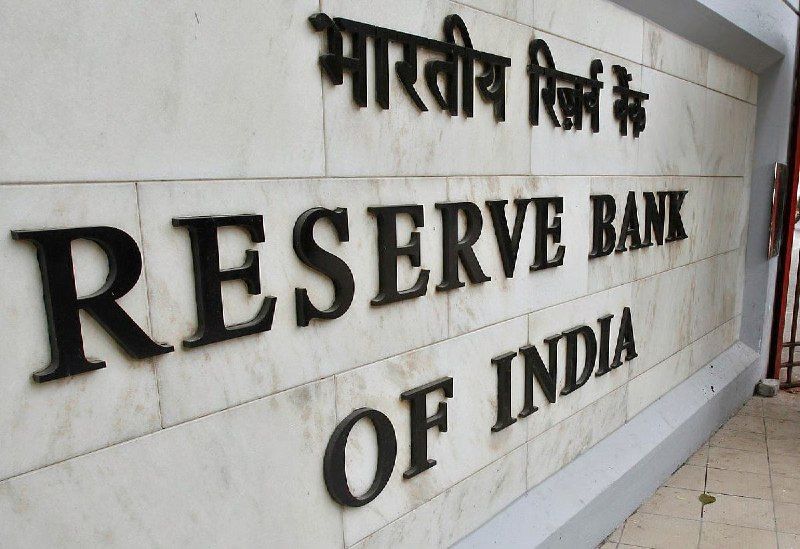
India’s central bank intends to ban financial institutions from investing in cryptocurrencies
The regulator is concerned that private foreign-currency stablecoins pose risks to national monetary policy. At the same time, rupee-backed stablecoins could lead to a decline in the state’s revenue from fiat currency issuance. They also carry risks to financial stability during periods of market turmoil. However, there are currently no significant stablecoins denominated in Indian rupees.
The central bank also noted that foreign crypto exchanges do not allow income disclosure. In particular, fewer than a quarter of Indians who made crypto transactions filed declarations. At the same time, India remains the largest cryptocurrency market, with 39 million users and assets worth $2.1 billion.