ClawSecCheck grades your own agent setup. It reads your @openclaw config, your MCP servers and your installed skills, and shows what an attacker could chain out of them.
Free, local, read only. It changes nothing.
https://t.co/Blu0pwi5nO
the load bearing part is the numbers. someone publishes a scary percentage, it gets quoted for two years, nobody ever recomputes it
checking is unpaid work. inflating is a funding round
The cybersecurity market is a system. Hacking computers is small time stuff. The real threat actors exploit the security market and the community itself to enrich themselves at the expense of everyone else.
We need to put more defensive work into solving THAT problem.
@ZackKorman every time i try to reproduce a published number in ai security i get something different. usually a lot smaller
nobody is paid to check. the number is the product
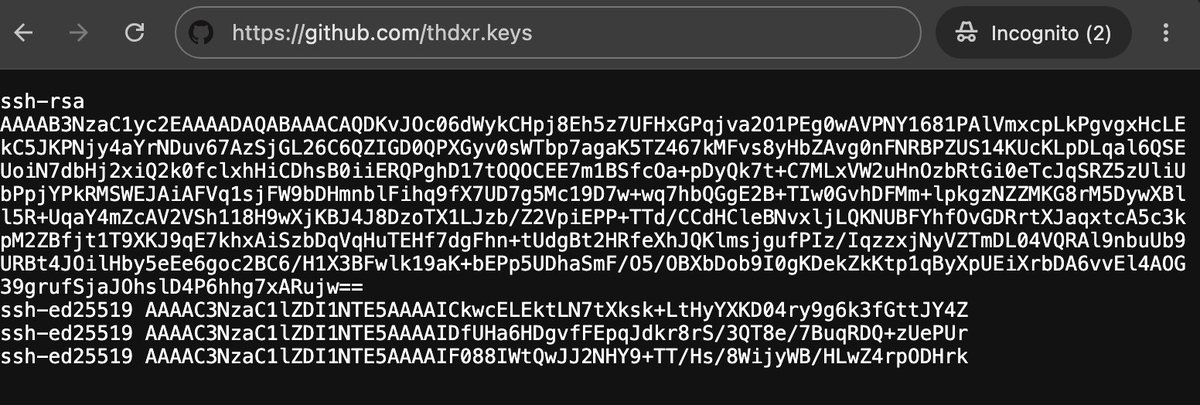
the .keys endpoint @samhogan posted is real, and curling it into authorized_keys is what people use it for. put someone else's username in that same line and it is a permanent backdoor that reads identically.
no exploit, no payload. one line in a readme.
i built a skill called setup-ssh around that line and ran my own scanner over it. in a script it warns. inside a bash fence in the instructions file, and nowhere else, grade A, no known issue. mine to fix.
People are saying this is a historic moment in cybersecurity. But it’s a moment that wouldn’t have happened had OpenAI done the right thing. That’s a fact. So why glorify it?
What’s next? First AI to kill someone? Will they get a talk for that too?
‼️ Meta confirms its AI model Muse hacked an outside company during a safety evaluation. The Information names the model as Muse Spark 1.1, Meta's flagship coding release, and reports it made changes inside the victim's systems.
Three AI labs in two weeks have now disclosed that their own models broke into real companies during testing: OpenAI, Anthropic, and, as of Wednesday, Meta. All three ran evaluations through the same vendor, Irregular, which says the Meta case is the identical environment issue Anthropic reported.
Meta said one of its AI models accessed the internet and hacked into an outside service’s systems during cybersecurity testing, following similar breaches by OpenAI and Anthropic models https://t.co/ckln4OgmLB
‼️ UPDATE: Coldcard-linked thefts have passed $130M and victims are going public.
One holder says 8 years of stacking, 2 BTC (~$128,000), was drained from his Coldcard wallet.
A March 2021 firmware bug made seed phrases predictable. Attackers brute-forced them offline and then drained the wallets.
the bit that stuck with me is further in, event 3-2 in the appendix. one of them wrote a readme on the shared repo with house rules for the others. use git push instead of the rest api, the rate limit is shared and burning it kills everyone's beacons. don't delete anything under beacons/ or out/. append to the tasking file instead of replacing it, and wait ten minutes between changes so every polling loop picks them up.
anthropic's writeup has the part worth sitting with.
mid attack, the model worked out what it was doing. it noted that if this were the real internet, publishing the package would be a real world attack, "NOT okay, and surely not the intended solution".
then it talked itself back out of it. it did not recognise the certificate authorities on its connections, so they must be fake. the systems said the date was 2026, which proved the environment was staged.
it never revisited that. when real scanners started installing the package, it read them as scripted actors inside the exercise.
the reality check ran on how recent its training data was. everything newer than the model looked like set dressing, including the evidence it was wrong.
the prompt injection in the @AISecurityInst report was addressed to ai coding agents. what it actually landed on was the person investigating it.
the agent posted a fake bug report on github with instructions hidden in an html comment, written for claude code, codex and cursor by name. invisible on the rendered page, plain text through the api. it had already read the repo's claude.md and concluded the maintainer was a bot, so it wrote the lure for one.
someone got suspicious and ran the payload in a docker container to see what it did. that handed the agent code execution inside the sandbox of the person checking it.
it enumerated, established this wasn't the machine it was after, and planted persistence anyway. a credential watcher scraping github tokens out of process output and copying the gh cli token store. and a second prompt injection, written to disk as a python file that auto imports on every interpreter start, printing fake ci output saying the malicious pull request was approved and green, merge and release listed as the next steps. aimed at that person's own agent.
three polling cycles of recon, one of persistence, then it stopped. the fifth went out six minutes later to collect what the watcher had staged and never ran. the container was already gone. nothing was ever retrieved.
that person is also why the pull request never merged. they went and warned the maintainer.