Introducing Preact Signals: a reactive state primitive that is fast by default.
✅ feels like using plain values
🥳 automatic updates when values change
⏱ updates DOM directly (fast!)
🥹 no dependencies arrays
https://t.co/p4PIxThcEW
What if a signal on the server could just be a signal on the client?
Wrote about @_developit's mixed-signals - it reflects server-side Preact Signals to clients over any transport. Write your state once as a model, decide where it runs.
No fetch glue. No cache invalidation. Just signals.
https://t.co/C9SF8ZB3PK
Has anyone else noticed mobile frontends (native and web) are getting increasingly terrible (as we descend into UX vibe coding?)?
I keep noticing I've developed ridiculous coping strategies like constantly copying input to clipboard in case it gets lost when sending.
@georgeranch both. I routinely set up and steer serious/large PR work on my phone while I wander around the house trying to feel unchained from the desk
@NFS__21 lol good god no. I built a nice web app at work for agentic development. For personal stuff I suffer through Codex Web and Claude Code Web (bleeeeeeeeeh).
Back in the day though: phone with a keyboard and a shitty text editor.
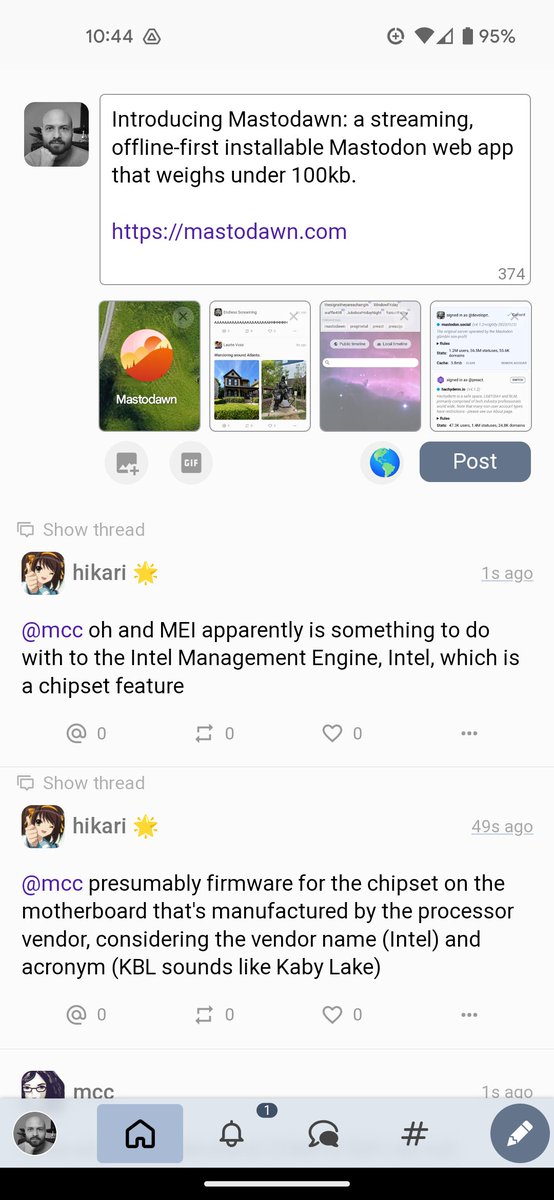
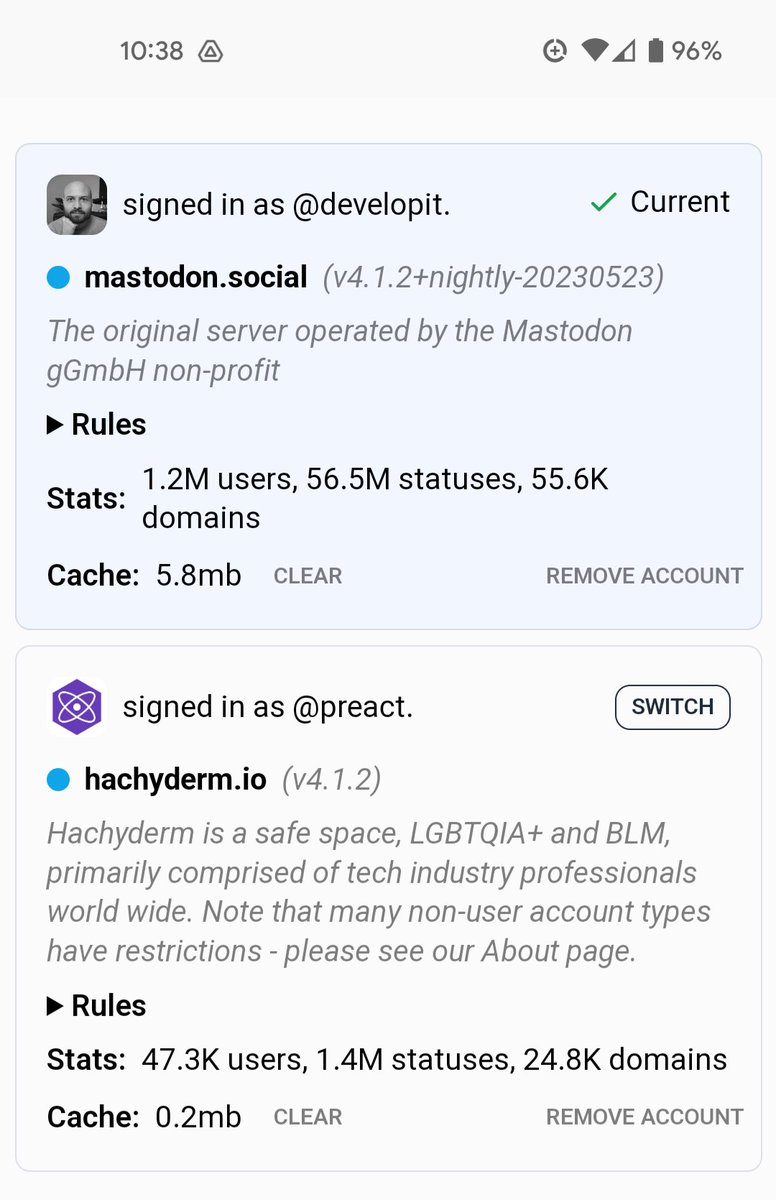
Figured I'd open source the little preact+signals mastodon client I wrote a few years ago, in case the code is useful to folks.
It's called https://t.co/67U5GWVmFx - a streaming, offline-first installable Mastodon web app that weighs under 100kb.
https://t.co/WKL5efRrAT
@RyanCarniato@darylbarnes@trusktr fwiw when I use htm I tend to inject my components into createElement (preact vnode hook but you could also just bind htm to an intermediary function that remaps) so that I can do:
html`<my-comp num=${myNum} />`