Where finance meets art
Prints, paintings, and compositions inspired by markets, crises, and economic cycles.
Shop on Etsy + Custom Orders 👇
LIFE IS GOOD 🙏🏻
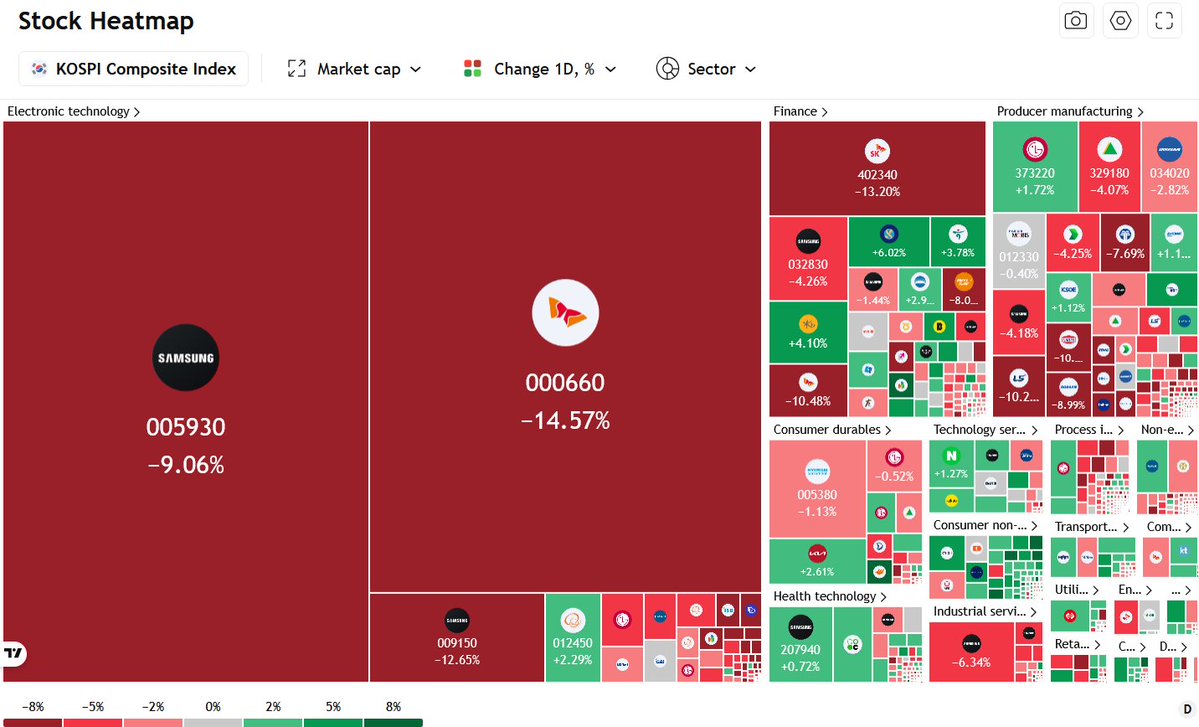
🚨SOUTH KOREAN MARKET JUST SAW ANOTHER BLOODBATH:
The KOSPI plunged nearly -8% on Thursday, driven by surging fears over the durability of the leverage-driven AI trade.
SK Hynix, lost almost -15% and Samsung Electronics, fell -9%, with the two chipmakers combined erasing $290 billion in market value in a single session.
In effect, the Korea Exchange temporarily suspended program selling on both the KOSPI and KOSDAQ after an outsized drop in futures triggered a sidecar mechanism.
Leveraged products tied to the two stocks were hit even harder, with the CSOP 2x Long SK Hynix and Samsung ETF losing as much as -31% intraday.
Adding to the pressure, foreign investors sold 4.4 trillion won, or $2.8 billion, of KOSPI shares during the session, even as retail traders added to their positions.
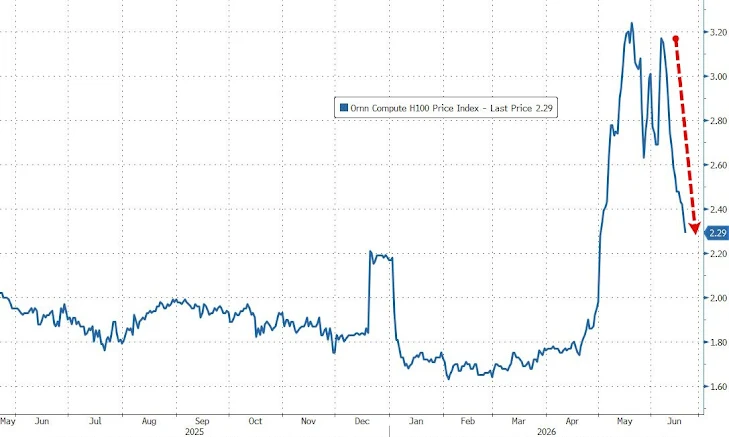
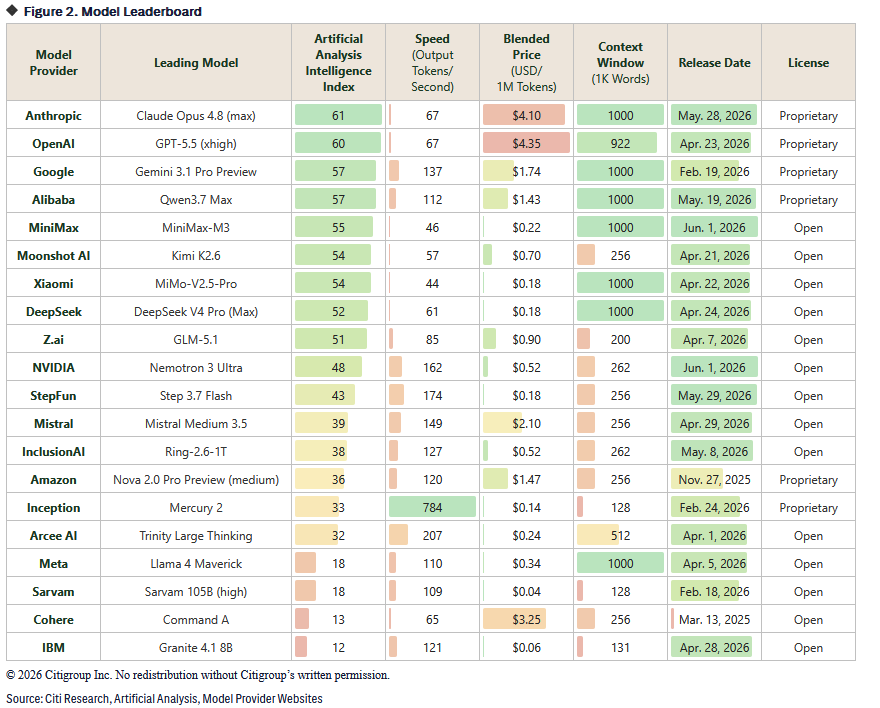
This comes after Meta, $META, revealed plans to rent out spare AI computing capacity, raising fresh doubts about whether AI infrastructure spending has outpaced actual demand, triggering a broader chip selloff in the US that spread directly into Korea's chip-heavy market.
Separately, reports that Apple is in talks to source chips from Chinese suppliers raised concerns over Samsung and SK Hynix's pricing power in the DRAM market.
The KOSPI is now down -18.5% from its all-time intraday high set on June 19.
In just 3 weeks, Korea's benchmark index has rallied +25% and then dropped -20%.
This is not normal market behavior. Is the chipmaker bubble bursting?
BREAKING: The US Economic Surprise Index is up to 63.2 points, the highest since August 2023.
This index measures economic data relative to consensus estimates, turning positive when data beats estimates and negative when data misses.
This metric has risen +57.6 points since late April, posting the largest 7-week increase since Q1 2022.
The move comes amid stronger-than-expected jobs data, ISM Services PMI, factory orders, ADP employment, job openings, and ISM Manufacturing PMI.
The US Economic Surprise Index is now approaching the 79.6 peak recorded in July 2023, which would mark the highest level since the early 2021 pandemic recovery.
US economic data is crushing expectations.
BREAKING: Semiconductor stocks now account for a record 18.8% of the S&P 500’s market cap.
This percentage has more than TRIPLED since 2022.
Over this period, the semiconductor index, $SOX, has rallied a massive +546%.
To put this into perspective, semiconductors accounted for less than half of their current weight at the peak of the 2000 Dot-Com Bubble.
Meanwhile, the Magnificent 7 stocks now reflect a record ~33% of the S&P 500’s market value.
Tech is all that matters.
⚠️Hedge funds have almost never owned more tech stocks:
Global Info Tech now accounts for a RECORD ~25% of total hedge fund gross exposure.
TAP IMAGE TO SEE FULL INSIGHT👇
https://t.co/tUH1JiFyLM
⚠️The performance gap within US tech stocks is approaching Dot-Com Bubble territory:
The top 20% of S&P 500 tech stocks have outpaced the bottom 20% by ~120 percentage points over the last 3 months, the 2nd-largest reading on record, according to Bloomberg data.
During the peak of the 2000 Dot-Com Bubble, this gap reached ~135 percentage points before the entire sector collapsed.
This gap has QUADRUPLED over the last year alone, rising faster than it did during the speculative frenzy of 1999 and 2000.
This comes as the top 20% of tech stocks have gained +110% over the last 3 months, nearly matching the levels seen at the height of the Dot-Com Bubble in February 2000.
At the same time, the bottom 20% has declined -10% over the same period.
Are we approaching the AI bubble peak?
The US job market is sending conflicting signals:
US hiring rate fell -0.3 percentage points in April, to 3.2%, the 2nd-lowest since the 2020 pandemic low and in-line with 2008 levels.
This metric has now been at or below 3.5% for 26 consecutive months.
Excluding the government sector, the private hiring rate declined -0.4 percentage points in April, to 3.5%, in-line with the 2020 low.
Both figures are also significantly below the 2001 recession levels.
Meanwhile, JOLTs and the May jobs report both crushed expectations.
Despite the bullish numbers, US hiring remains historically depressed.