The replies to this person's tweet lack a nuanced understanding of aesthetics. Let me tell you why I don't think this room works.
First, the gold decorations make the room look like an ersatz Versailles. Go to Getty Images and type in "Oval Office." Then zoom in on the gold decor. You'll notice that the lines are very blunted and muddied; they lack the sharp lines and fine detailing that you'd expect on something made by an artisan. Hence why some people have suggested these decorations are from Home Depot (true or not, that's the impression).
You can see the difference between the first and second photos. The first, of course, is of the Oval Office; the second is the reception room from the Hotel de Cabris in France, which was made during the 18th century under the direction of Louis XVI. Even at this distance, the second image looks much better because it was designed and executed by artisans working within a coherent visual language. You can really see the crisp lines and detailing.
Second, the White House was designed by James Hoban, an Irish architect who migrated to the US for economic opportunities (what a great American story!). He originally designed it in the Neoclassical style, drawing on Palladian and Georgian influences.
Neoclassicalism was a reaction against the Rococo movement, which reactionaries saw as overly ornate and frivolous. A bit of gold used sparingly and strategically can look fine in a Neoclassical building, but the amount Trump used has so radically encrusted the room that it's now in Rococo territory, making it look like a mismatch of aesthetics. You can see an example of gilded Rococo architecture in the third slide. Although it's not my thing, the effect is totally different because it's coherent.
IMO, architecture sets the terms for you can decorate a space. Modernist furniture looks best in modernist buildings, just as Craftsman furniture looks best in Craftsman homes (see fourth slide). You don't have to do period recreations — sometimes mixing two aesthetics, or old and new, can make a space feel more natural — but having a sense of aesthetic history (art, architecture, furniture, fashion) can help you create better aesthetics.
The Oval Office offends on at least three levels: the ersatz nature of the decor, the way it grates against Hoban’s Neoclassical vision, and the way it misunderstands the classical-republican symbolism that the White House was meant to project in the first place. As others have noted, this is the kind of decor you'd expect from dictators who rob their own country.
When the genre you're entering relies a lot on external pressure (ie other players competing for the same resources) you NEED to provide some sort of scarcity and competition.
When alliances become the norm, the fear of other's intentions goes away, and it loses half the fun.
What’s the over under on Sykkuno posting a long reply but also say that he’s being battling a mental illness behind the scenes and that’s what led him to these bad decisions
Lost & Found – Official Announcement Trailer
Lost & Found is an adventure-mystery game where you return townsfolk’s lost belongings. It features a hybrid animation style that blends 2D, 3D, pixel art, & more.
#gamedev#indiegames#animation
Lost & Found – Official Announcement Trailer
Lost & Found is an adventure-mystery game where you return townsfolk’s lost belongings. It features a hybrid animation style that blends 2D, 3D, pixel art, & more.
#gamedev#indiegames#animation
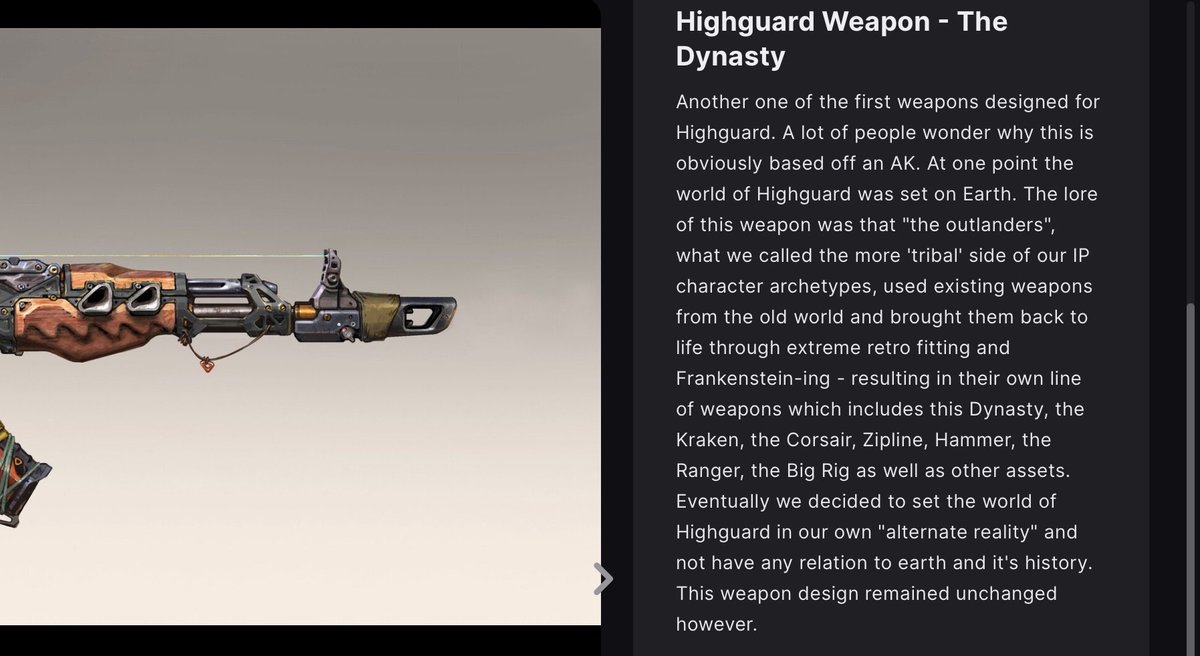
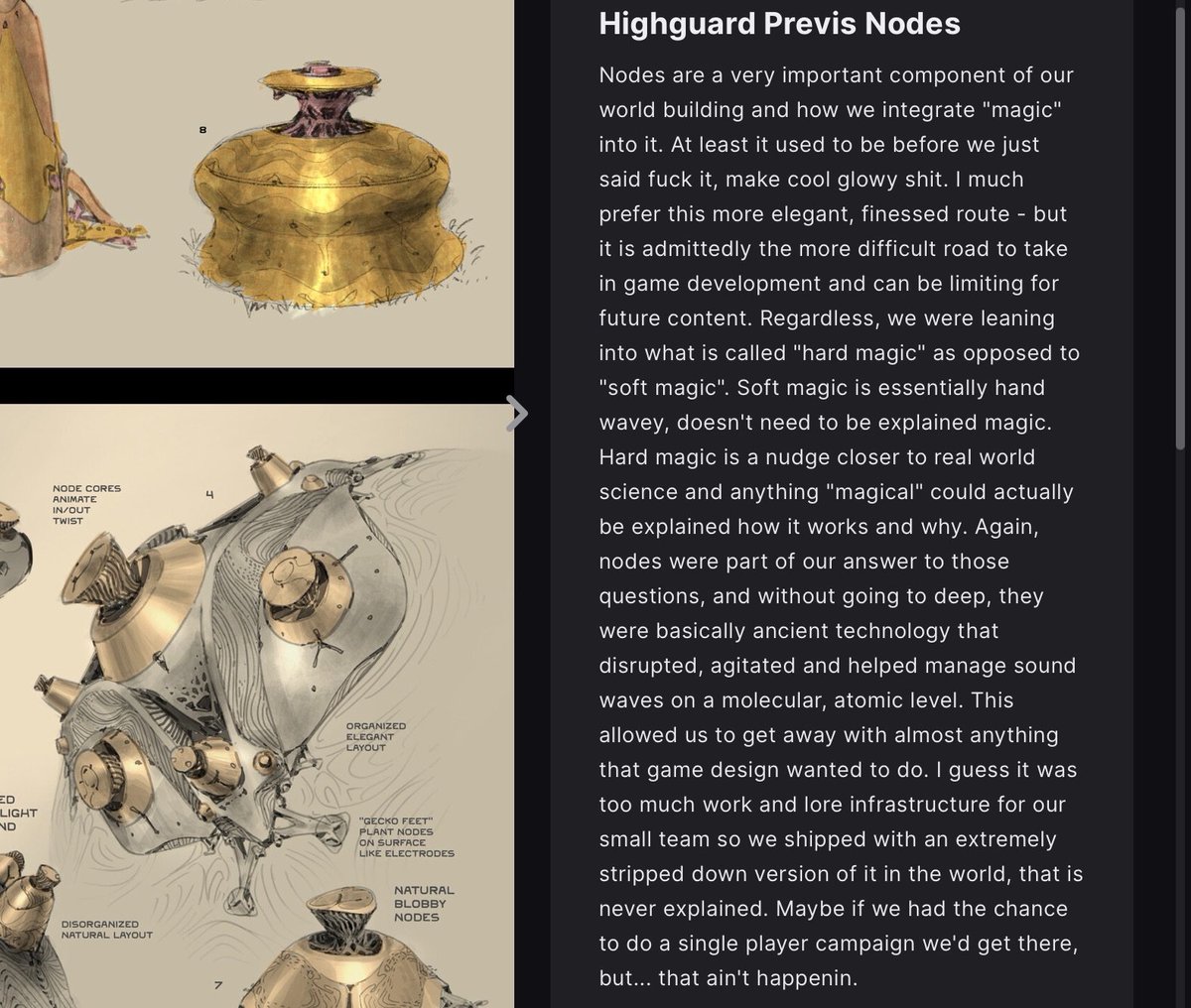
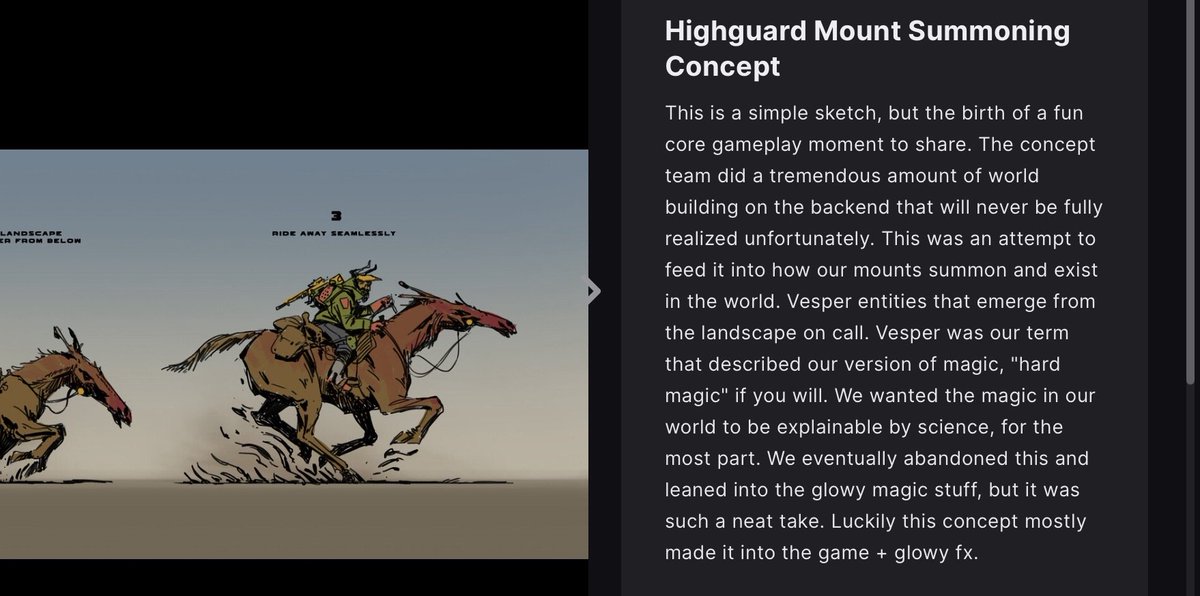
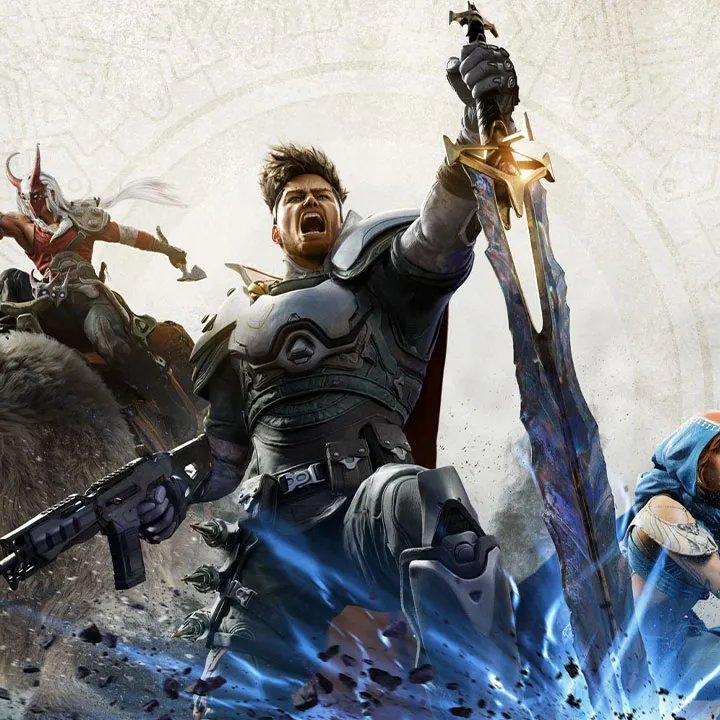
A friend sent me these retrospectives from one of the concept artists on highguard, and it's helped put a picture together for me of what went wrong, at least visually and thematically that I wanted to talk about since I studied this topic and wrote essays on it years ago
We all saw that when highguard launched, it tried to sell itself as some bold fusion of sci fi and fantasy, yet it collapsed immediately, and when my friends and I watched one of us play it on stream, we were constantly baffled by the design choices, and we haven't been alone
reading these articles, a pattern becomes obvious; hard sci-fi nerds trying to write a fantasy story the only way they know how
first the magic system had to be scientifically explainable, then that approach was scrapped, and the magic was allowed to just "do whatever"
both of these instincts come from the same misunderstanding that I am so sick and tired of seeing again and again
This is not about aesthetics. this has nothing to do with time periods, realism, or setting.
- Fantasy is not when dragons and swords
- Sci-fi is not when lasers and spaceships
The difference between sci fi and fantasy is not what the world looks like, it is how the world justifies itself.
Science fiction operates on the assumption that the universe is governed by stable, interrogable systems.
Sci-fi asks
- how does this work?
- what caused this?
- what happens when we scale it?
The universe is explainable and systemic, it has methodology
Even if the sciences is fictional, it behaves like science, rules are established, constraints are respected, exceptions demand explanation. The rules do not break unless you have a damn good reason.
This is why things like midichlorians and the holdo manoeuvre in star wars are universally hated. Hyperspace had been implicitly treated as transportation, not a relativistic superweapon. The moment it becomes a fleet-ending missile, the audience asks;
- "why wasn't this used before?"
- "why isn't it used constantly now?"
- "what does this mean for every space battle in the franchise?"
Sci-fi is fragile in this way, once you bend a rule, the entire system recalculates.
Sci-fi collapses when mechanics are violated. A sci fi story establishes that ftl travel works one way, then rewrites it for spectacle, the audience loses interest
Fantasy however, operates much differently, the universe is instead governed by meaning.
Fantasy asks:
- who are you?
- what was foretold?
- what must be sacrificed?
The universe is intentional and symbolic, it has psychology
Magic is not physics, it is will, myth, pact, inheritence, taboo, sacrifice, fate, and destiny.
Magic is predictable in the same way a person is predictable, a person has patterns, biases, desires and moral weight. You can anticipate how they'll behave but they can still refuse you, betray you, surprise you, reward faith, and punish arrogance.
Magic in good fantasy behaves the same way, it is internally coherent because it is a relationship tied to values, history and identity, not a math equation.
Fantasy collapses when meaning is violated. A fantasy story establishes that magic responds to oath and sacrifice, then later lets it solve problems without cost or alignment, the myth collapses
When you are writing fantasy, and reduce magic to particle theory, you strip it of mythic weight
When you give up and let it just "do whatever", you strip it of consequence
Both of these mistakes come from the same false binary i mentioned before
- sci fi is realism
- fantasy is random nonsense
This is wrong. Both can be strict, both can be disciplined, both can be deeply structured, but they are structured much, much differently
Why does this matter? why not just do whatever? it's all just fiction anyway? so what if I put a 2006 honda accord in my setting with orcs and elves and dragons?
This sounds reasonable at first, freeing and anti-pretentious. But it's completely wrong and fucking stupid. It's like saying "music is just noise"
Fiction is made up, yes. But meaning is not
Stories are systems, and if that system has no internal logic, it collapses. Not because the audience is "nitpicking", but because we as human beings are instinctively pattern detecting machines and we test stories the same way we test reality
- what are the rules
- what are the consequences
- what can happen
- what cannot happen
Shifting your rules fucks your tension. Stakes dissolve, nothing matters in your story anymore because anything can happen. This is why "just do whatever" kills stories.
But then that begs the question, "well then how do you blend fantasy and sci-fi together?"
Great question, blending works when you respect both logics simultaneously. Technology obeys mechanical rules, magic obeys symbolic rules. Original trilogy star wars did this perfectly, intersecting without erasing each other.
You also need to choose a dominant logic, some stories appear sci-fi but are actually fantasy under the hood.
Dune has spaceships, lasers, and galactic empires, but it's driving forces are prophecy, bloodline and religious inevitability. It is fantasy wearing a sci-fi coat of paint.
The real question is not whether you want more lasers or more dragons, the real question is:
Does your universe run primarily on causality or meaning?
If it runs on causality, protect your mechanics.
If it runs on meaning, protect your myth.
Treat meaning like circuitry, you sterilize it.
Treat circuitry like myth, you destabilize it
Blending requires knowing which rules are mechanical and which are moral
We figured this shit out 5000 years ago telling stories orally around a campfire, to ancient Greece to the stories of king Arthur and there is a reason these rules have endured, and I am so sick and fucking tired of modern creators thinking they know better and ignoring these in pursuit of puddle-deep aesthetic mashups
genre is not a costume, it is a contract, and if you break that contract,
you end up with highguard
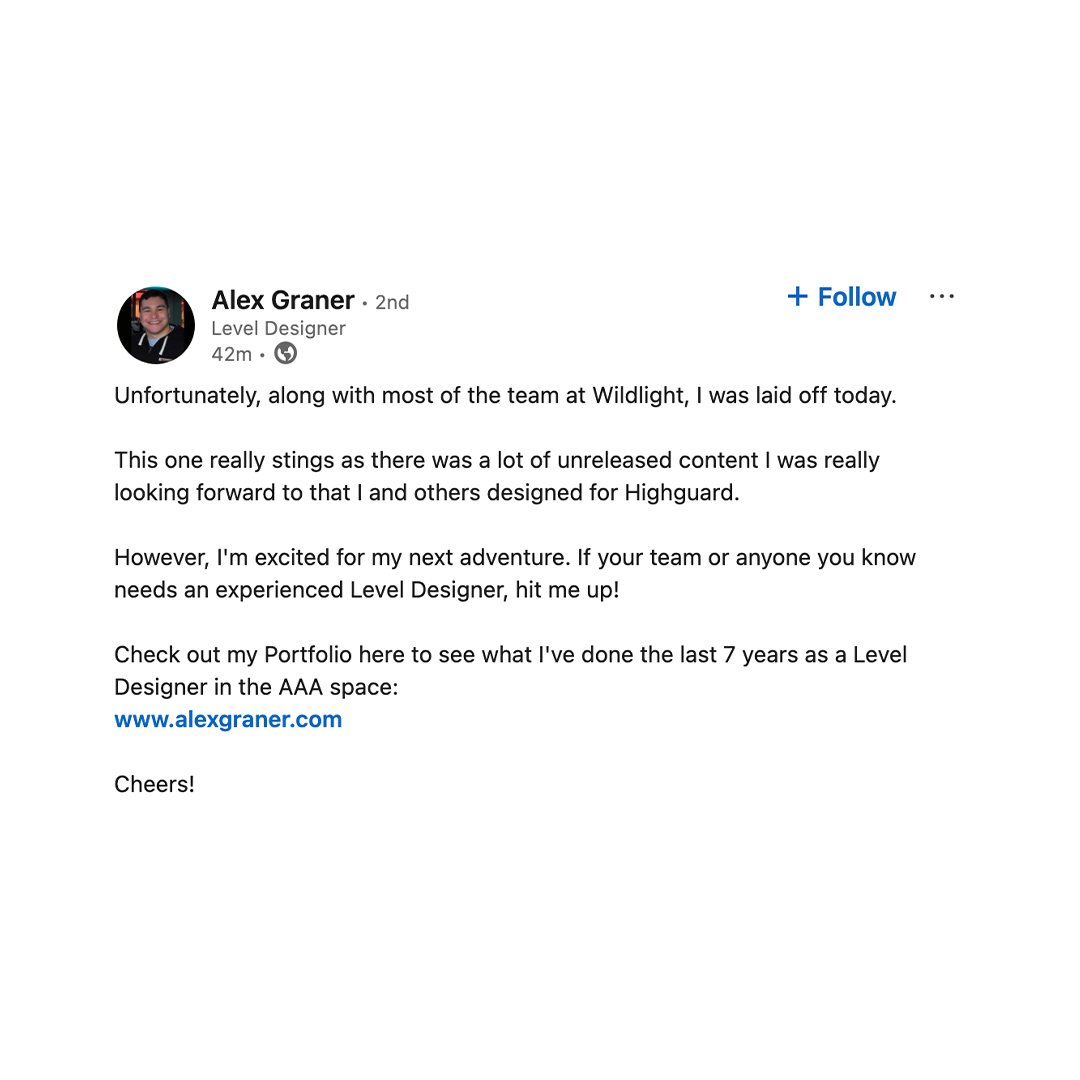
Wildlight Entertainment, creators of 'Highguard' has seemingly laid off most of their staff after the game failed to retain its player base
The game released January 17th