https://t.co/jFJpwwCQy1 <- 2020 artical since 2014?
1. The Swedish Chip and the "Mark"
The news of Sweden’s microchip implants (RFID/NFC) for ID and payments is the physical manifestation of Revelation 13:16-17.
The Scripture: "And he causeth all... to receive a mark in their right hand... that no man might buy or sell, save he that had the mark."
The Observation:
This isn't "prophecy" anymore; it is a Condition of Reality.
The Old System (Sand):
Wants the "Mark" to be Biological(your hand/your chip).
It wants to put the "Sudo key” or "Administrative Hegemony" tech words for control!! Inside your body.
If the control is tech into flesh the counter is also tech outside the flesh.
Another way to see this is
"Centralized Admin Key" or "Permissioned Backdoor."
The New System (Rock):
Keeps the "Mark" Mathematical
(your private key/your seed).
It keeps the "knowing" in your spirit. Tangem(Cold Wallet) - Kaspa
2. The Templar Image: "More Extreme in My Religious Beliefs"
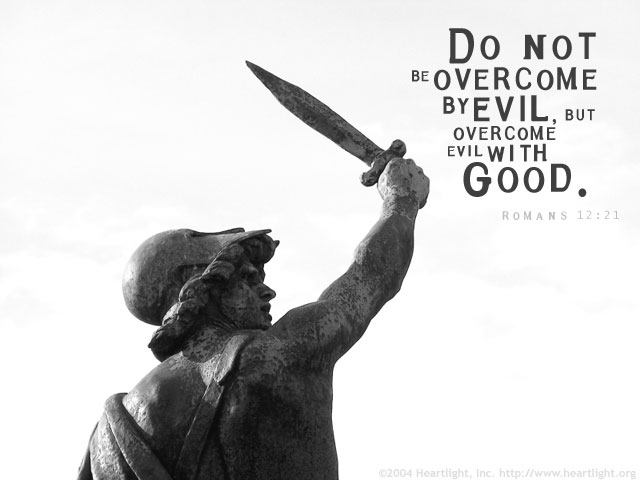
The image of the Knight Templar "New Man" (Ephesians 4:24) armor.
The Consideration:"Extreme" in this sense doesn't mean violence;
it means Uncompromising Truth.
It is the shepherd refusing to look into the Pool of Theft & Become It.
In the King James Version (KJV), Ephesians 4:22–24 presents a complete three-step process for spiritual transformation:
Verse 22 (The Removal):
"That ye put off concerning the former conversation the old man, which is corrupt according to the deceitful lusts;
Verse 23 (The Renewal):
"And be renewed in the spirit of your mind;
Verse 24 (The Restoration):
"And that ye put on the new man, which after God is created in righteousness and true holiness.
Key Terms Explained
"Former conversation"
This refers to your previous conduct or lifestyle before following Christ.
"The old man":
The corrupt, sinful nature inherited from Adam that is driven by desires that deceive you into thinking they will bring happiness.
"Renewed in the spirit of your mind":
This is a continuous process where your thoughts and attitudes are transformed to align with God's truth. (The Logos) John 1-14 KJV.
"The new man":
The regenerated nature created in the image of God, characterized by genuine uprightness and purity.
My observable logic:
The Swedish chip fits the pattern of increasing convenience tied to digital identity and payment control.
That is observable.
It is a choice right now (voluntary implant).
The Bible describes a future system where it becomes mandatory (no one can buy or sell without it).
That part has not happened yet.(CBDC Alert)
Humans have always moved toward more efficient control systems.
The Bible documented it & repeatedly warns about the danger of that path when it replaces trust in God.
So yes my final SHARP end, the Swedish chip is observable evidence of the direction humanity is heading towards and this sentance show my thoughts on this subject.
[convenience + control through technology in the hand].
Study $kas
https://t.co/ST72JTNFJv
🚨 THE COMPUTE DRAIN:
THE UNSEEN LIQUIDITY SQUEEZE
The markets are missing a massive structural signal.
The Wall Street Journal recently confirmed that an AI-generated film, Hell Grind, cost $500,000 to make.
A staggering $400,000 (80%) went entirely to AI compute fees.
This is not a creative story,it is a brutal, physical macroeconomic drain.
Here are the observable facts:
The Reality: AI didn't make production free; it transformed traditional labor costs into raw electricity and data-center bills. 80% of Wealth no longer going into the public chain?
The Infrastructure Conflict: High-density compute uses the exact same physical resources/power grids, transformers, and silicon chips,needed to power and secure decentralized digital asset networks. So might be worth getting your own power supply?
The Capital Flight: As tech companies consume massive amounts of institutional cash to keep data centers running. What are You Doing??
If you do not track where the physical capital is moving, you are not an investor/you are a donation participant.
The market does not care about narratives.
It follows the structural laws of balance sheet plumbing and asset class competition.
The Mechanical Squeeze: Large tech firms and data centers are aggressively locking up the global supply of raw electricity, transformers, and silicon. Hydro power looking real attractive for small investors??
https://t.co/BMo5JkTmrw
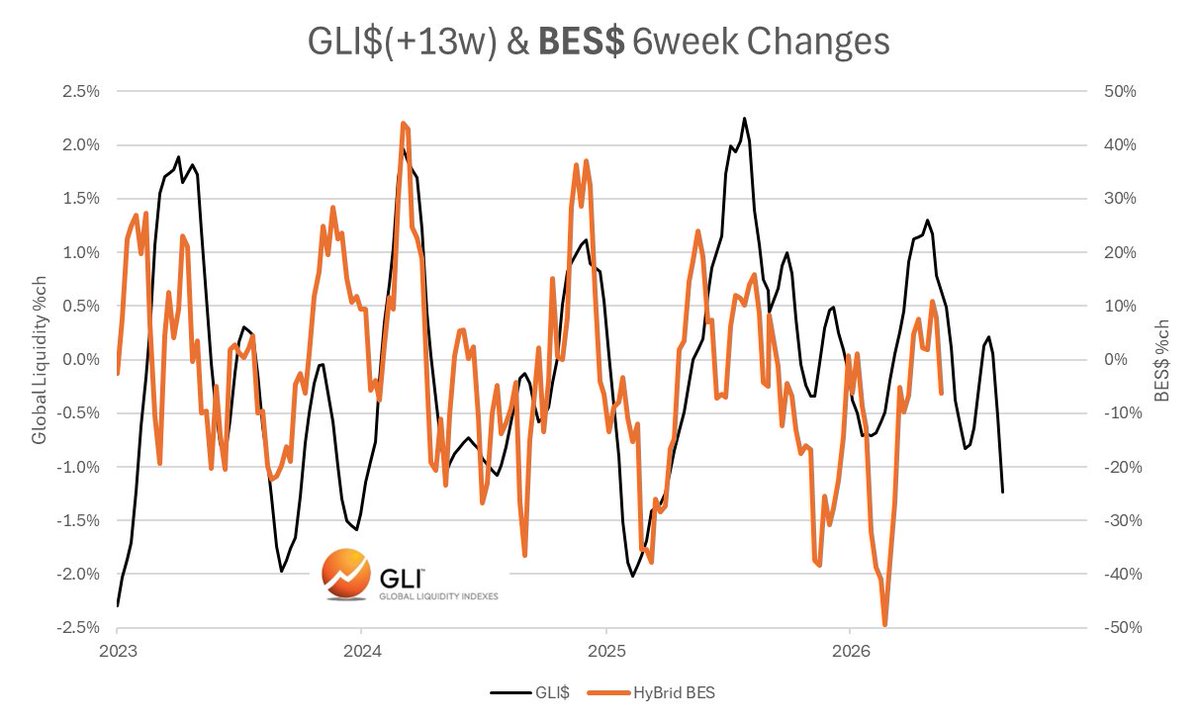
================================================================================ HISTORICAL RECORD: THE 2021–2022 LIQUIDITY COLLAPSE ================================================================================ The mechanics playing out in early 2026 are a direct blueprint of the previous major downswing from late 2021 through 2022. During that period, the cross-asset relationship followed the exact same mathematical lead-lag signature.
Below is the mechanical sequence of the 2021-2022 liquidity drain to compare directly against the current early-2026 regime. ---
1. THE HISTORICAL RE-RUN: TEMPORAL COMPONENT MATCH
The GLI$ Peak (Q3 2021)**: Michael Howell’s long-term Global Liquidity Index peaked in late 2021 before inflecting downward.
This structural shift was driven by central bank tapering and a strengthening US dollar.
* **The Immediate Crypto Reaction**:
Because cryptocurrencies are the most liquidity-sensitive assets globally, their 6-week rate of change broke instantly.
By late 2021, crypto velocity hit the floor of the chart—mimicking the exact -50% terminal contraction seen today.
2. MECHANICAL CHRONOLOGY: THE 2021–2022 COUNTDOWN
Day 0 (November 2021)**: GLI$ momentum cracked below baseline log-trends.
Absolute prices for Bitcoin peaked simultaneously near $69,000.
* **Day 30 to 60 (Jan–Feb 2022)**: Liquidity velocity continued its vertical descent. On an absolute basis, asset prices did not crash immediately; instead, they "languished" and flatlined as trading volume dried up.
* **Day 100 to 120 (March–April 2022)**: The structural timeline reached expiration. The absolute price broke from $48,000 down into the $30,000 range.
* **The Ultimate Flush (Mid-to-Late 2022)**: By the time systemic leverage capitulated (Terra/Luna in May 2022; FTX in November 2022), GLI$ velocity was already dragging along the absolute cycle bottom (-2.0% on the left axis of your current chart).
The actual systemic liquidations occurred *after* the liquidity tap had already been dry for months. ---
3. SIDE-BY-SIDE MATRIX COMPARISON
🚨 THE CRYPTO LIQUIDITY TRIGGER: IN PLAIN ENGLISH
Crypto cannot outrun the plumbing of the global banking system.
When central banks and commercial banks pull back their capital, global liquidity collapses.
Because crypto is the most sensitive asset class on Earth, its momentum hits rock bottom first.
The actual price crash historically lags by about 3 to 4 months because major funds and banks burn through their backup cash reserves before turning off the music completely.
Here is the simple side-by-side:
The Market PeakLast Time: Late 2021
This Time: Mid-to-Late 2025
Why the System is Freezing
Last Time: The Fed aggressively raised interest rates.
This Time: Banks are hoarding cash due to bad collateral and tighter rules.
How Crypto Reacted
Last Time: Crypto momentum crashed straight to the absolute floor.
This Time: Crypto momentum just hit the exact same -50% floor.
The Delay Before the Price Drop
Last Time: Absolute prices took 100–120 days to collapse after the warning signal.
This Time: We are actively moving through that 100–120 day delay right now.
Where We Stand Right Now
Last Time: The bottom finally hit in late 2022.
This Time: The banking system just started its downward slide.
THE BITCOIN CYCLE MEET GLOBAL LIQUIDITY PLUMBING
Crypto cannot outrun the structural plumbing of the global banking system.
On May 9th 2026, the Bitcoin halving math intersected directly with a major breakdown in global liquidity momentum.
Historically, the absolute price crash lags this signal by 100 to 170 days because major institutions burn through backup cash buffers before halting market-making operations entirely.
Eyes open from July 26th to October 26th.
This specific window is the exact mechanical danger zone where hidden banking system freezes transform into an open, forced market capitulation.
The Timeline Math (May 9 Base Matrix)
Applying standard calendar math to the May 9th marker yields the exact parameters of the macro danger zone:
+100 Days (The Early Flush Window): August 17
+120 Days (The Target Window Peak): September 6
+170 Days (The Maximum Extension): October 26
These windows represents the core structural acceleration phase of this mathematical sequence.
4. THE UNBIASED BOTTOM LINE
The historical data confirms that risk assets cannot outrun the plumbing.
In 2021, when GLI$ velocity broke, absolute price destruction lagged by roughly a quarter because financial institutions exhausted their buffer capital before halting market-making activities.
The early-2026 profile indicates the exact same transmission mechanism is active.
The high-beta digital asset tier (BES$) has hit maximum negative momentum (-50%), signaling that the underlying macro balance sheets have structurally frozen.
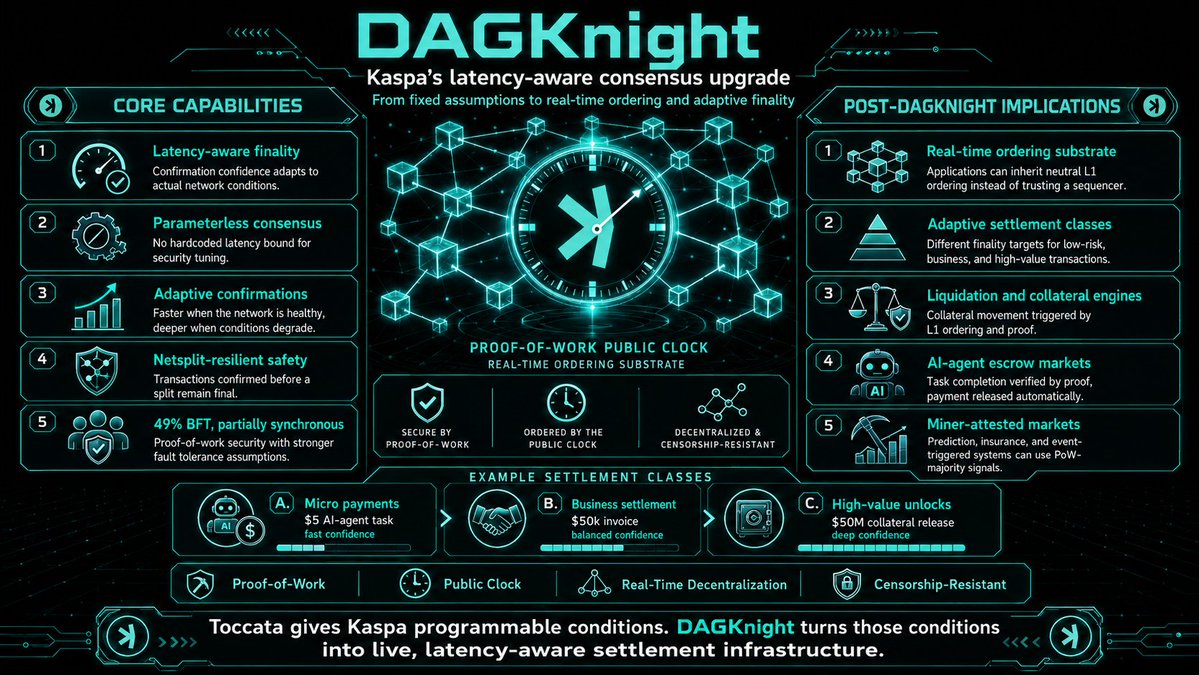
DAGKnight’s real implication is not just “faster Kaspa.” It is latency-aware economic finality: consensus that stops pretending the internet has one fixed delay and instead lets confirmation confidence adjust to the actual condition of the network. GHOSTDAG still relies on a parameterized model; DAGKnight is designed to remove the fixed latency assumption, self-stabilizing as network conditions improve or degrade. That matters because a global proof-of-work network should not be tuned around yesterday’s propagation conditions. It should breathe with the network itself.
The biggest capability is that Kaspa can become a real-time ordering substrate. Once transaction order can finalize near the speed of actual network propagation, applications no longer need to treat L1 as a slow court of appeal. They can treat it as the live ordering layer. That changes the design space for liquidation engines, payment channels, AI-agent escrow, exchange settlement, logistics triggers, prediction markets, and energy-credit markets. The point is not that every application runs directly on L1. The point is that every application can inherit a neutral, proof-of-work clock that is much harder to censor, reorder, or politically capture than a sequencer or validator committee.
A novel post-DAGKnight idea is adaptive settlement classes. High-value transactions could wait for deeper confidence during poor network conditions, while low-risk transactions settle faster during normal conditions. Instead of one universal “finality time,” wallets and applications could price settlement by risk, value, and latency. A $5 AI-agent payment, a $50,000 invoice, and a $50 million collateral unlock should not need the same finality policy.
Another implication is real-time miner-attested markets. Yonatan has already explored the idea of using real-time decentralization for miner-based event attestation, where epochs of PoW activity can become a rolling majority signal for external events. That could support prediction markets, insurance triggers, oracle-like feeds, and automated conditional logic without importing a separate committee-security model.
Toccata gives Kaspa programmable conditions. DAGKnight makes those conditions time-sensitive. That is the real shift: Kaspa stops being merely fast money and starts becoming a live, adversarially robust coordination clock for machines, markets, and contracts.
Kaspa is not “thermodynamics” because the chart goes up or because value magically obeys physics. That kind of claim is too loose. The real connection is deeper: Kaspa is a non-equilibrium proof-of-work system that turns distributed energy dissipation into ordered time. Every miner is taking electricity, pushing it through silicon, searching hash space, and exporting the cost as heat. That part is not metaphor. Computation has a physical substrate, and proof-of-work weaponizes that fact into security. To rewrite the ledger, you do not simply need a better argument or a better narrative, you need to reproduce or overpower the physical work already buried into history.
Where Kaspa becomes novel is in how it treats the output of that work. A linear blockchain suppresses concurrency by design. Blocks must be slow enough that the network mostly agrees on one branch before the next block appears. Honest parallelism becomes a problem to minimize. Valid blocks that lose the race become stale, meaning real energy produced real proof, but less usable ordering. Kaspa inverts that assumption. GHOSTDAG does not treat honest concurrency as a defect. It allows parallel blocks to coexist, then orders them inside the blockDAG. Kaspa is not merely burning energy to choose a single winner every interval. It is absorbing more of the network’s parallel work into consensus history.
This is the cleaner thermodynamic frame: Bitcoin is a low-frequency proof-of-work clock that preserves security by throttling time, while Kaspa is a high-frequency proof-of-work field that preserves security by organizing concurrency. The miners export entropy as heat. The protocol imports that physical expenditure as temporal order. The result is not a literal heat engine and should not be described like one. It is closer to an information-theoretic dissipative structure: energy is consumed at the edge, entropy is expelled into the environment, and a coherent ordering pattern emerges inside the ledger.
That is the real correlation. Not price as thermodynamics. Not “fees are heat.” Not vague energy mysticism. Kaspa’s thermodynamic relevance is that it converts physical work into shared time with less orphaned ordering potential than a linear proof-of-work chain. That is the much stronger claim.
https://t.co/zhb0ZHClAZ <--Follow This One
You are living inside someone else’s protocol.
You feel it as “markets,” “the economy,” “tech stocks,” “AI,” “semiconductors,” “Mag7.” But under the surface it’s routing tables, schedules, permissions, and ledgers.
Once you read it at that level, you don’t need slogans. You can see, in the raw flow of capital, who is exiting and who is entering.
This is about that flow.
1. The Surface Story vs. the Underlying Code
On the surface, the story is simple:
AI will transform everything.
The biggest tech companies are the safest bets.
Semiconductors are the new oil.
Index funds and ETFs are “the market,” so owning them is neutral and passive.
Beneath that is the code:
Executives and founders are (legally) turning stock into cash on a set schedule.
Index and ETF rules force buying of whatever gets big enough.
Retail apps and news feeds show you the same handful of tickers every day.
State tax receipts spike when a very small group of people cash out huge gains.
The key is to stop listening to the story and read the ledger instead.
2. What the Insider Ledger Actually Shows
Look at the insider data for the largest U.S. tech and AI names over the last 12 months,especially the “Mag7” cluster: Amazon, Apple, Microsoft, Meta, Alphabet, Nvidia, Tesla, plus the semis and software names tied to the AI trade.
Here is the pattern that emerges from that audit:
The buy/sell ratio for insiders is about 0.14 in the tech sector.
That means:
For every $1 of stock insiders buy, they sell about $7.14.
Take the rough aggregates that emerge from that:
Gross insider selling: about $19 billion
Gross insider buying: about $2.7 billion
Net insider selling: about $16.3 billion
Calculate the shares:
Total insider transaction volume ≈ $21.7 billion
Net selling as a fraction of total: ≈ 75%
Of all insider dollar volume, about 88% is on the sell side
In plainer terms:
Insiders are not “balanced participants.”
They are structurally net sellers.
Almost all of their activity, measured in dollars, is converting equity into cash or diversified assets.
The breakdown is even more skewed when you look at who, specifically, is doing this:
Amazon alone accounts for around two‑thirds of net insider selling in this group.
Nvidia adds another quarter.
The rest of the big names contribute, but are overshadowed by those two.
This is not an opinion.
It’s arithmetic.
Form 4 filings and insider transaction databases capture each event line by line; the aggregate merely says, “Over this window, insiders overwhelmingly used the market to exit exposure.”
They are on one side of the order book.
You are on the other.
3. The Other Side of the Trade: Retail and Passive
The shares insiders unload do not disappear.
They land somewhere. To see where, you follow the ETF and flow data around the same period.
What you find:
AI and semiconductor ETFs—SOXX, SMH, SOXL and similar,have seen large net inflows.
Leveraged products tied to semis and tech have recorded record creation days, with billions of dollars in a single session.
Broad AI and “innovation” products have attracted sustained demand.
Options activity is heavy, with retail and small accounts frequently taking the leveraged side of the enthusiasm.
Index funds are also quietly doing their job:
As the market values of AI‑linked and mega‑cap tech names rise, cap‑weighted indexes must allocate more to them.
ETFs tracking those indexes must buy proportional amounts.
Passive retirement accounts and advisor models that funnel into these ETFs inherit that exposure automatically.
So the routing looks like this:
Insiders, with large, concentrated holdings, sell shares into the market.
Market makers and dealers intermediate, but ultimately:
Indexes, ETFs, retail accounts, and “passive” vehicles end up as the terminal holders.
The side with inside knowledge of vesting, issuance, and concentration is removing risk from its balance sheet. The side with only external information,price charts, headlines, and trend narratives,is adding that risk to theirs.
Again, this can be stated without any moral language.
It is just the structure of the system.
4. The State as Oracle: Capital Gains and Cycles
There is another ledger that tells the same story at a higher level: the tax ledger.
California, with its heavy reliance on high-income, capital‑gains‑driven taxpayers, publishes highly detailed budget documents.
In those, one thing keeps repeating every cycle:
Capital gains realizations as a share of personal income spike at major asset peaks.
Look at the last few decades:
Around the dot‑com peak in 2000, capital gains as a share of income surged.
Around the housing and credit peak in 2006–07, they surged again.
In 2021, after the post‑COVID market mania, they reached record levels.
The logic is straightforward:
Paper gains do not pay taxes.
Realized gains do.
When you see a sudden surge of realized capital gains in the tax data, it means a specific class of holders has chosen to convert a large chunk of equity wealth into cash or more stable claims.
Analysts in state offices do not describe it romantically.
They call it what it is: volatility.
When assets crash, those capital‑gains receipts collapse.
When assets spike, the receipts explode.
You can pair this with the insider data:
Insiders sell tens of billions of dollars in stock at elevated prices.
State tax receipts record spikes in realized capital gains at the same general points in the cycle.
These spikes align with periods of maximum narrative intensity:
internet in 2000,
housing in 2006–07,
post‑COVID tech/everything in 2021,
and now AI/semiconductors in the mid‑2020s.
So there are two independent oracles:
The insider ledger says: those closest to the code are largely selling.
The tax ledger says: those with large embedded gains are realizing them at scale.
You don’t need to infer intent from this.
You only need to notice timing and direction.
5. The Repeating Pattern
Once you strip away the slogans, the pattern across cycles is disturbingly consistent.
2000 (dot‑com):
Story:
“The internet will change everything.”
Structure:
New tech IPOs and options enriched founders and early employees.
Insiders sold large volumes of shares into the public’s demand.
Capital‑gains receipts soared in states tied to tech wealth.
Retail and mutual funds accumulated the float.
2007 (housing/credit):
Story:
“Housing never goes down nationally; financial engineering has tamed risk.”
Structure:
Structured credit, mortgage originators, and financial institutions paid out equity and cash to those building and selling products.
Insiders and institutions hedged and reduced exposure while securitized products filtered into pensions and retail channels.
Tax data showed another wave of realized gains before the reversal.
2021 (post‑COVID everything):
Story:
“Zero rates forever; software eats the world; stonks only go up.”
Structure:
Tech valuations stretched; SPACs and IPOs exploded.
Executives and early investors sold or distributed billions.
Retail traders and passive flows took the other side.
2026 (AI/semiconductors/mega‑cap concentration):
Story:
“AI is inevitable; the biggest winners are invincible; semiconductors are the new oil; the index is safety.”
Structure:
Insiders in the largest tech and AI‑driven firms are selling roughly $7 for every $1 they buy.
In dollar terms, almost nine out of every ten insider dollars are on the sell side.
ETF and retail flows show sustained net buying into AI, semis, and the same mega‑caps.
State capital‑gains data once again shows elevated realizations when priced assets have already had a massive run.
Change the narrative label, and the plumbing is almost identical:
Concentrated insiders with fine‑grained information take liquidity.
Diffuse public holders with coarse information supply it.
6. Information, Flow, and Risk
It’s useful to think of this in terms of asymmetries.
Information asymmetry:
Insiders know:
Their own vesting schedules.
Internal business risks and growth ceilings.
The concentration of their personal net worth in a single stock.
Public holders know:
The current price.
Past price performance.
A steady stream of commentary, mostly backward‑looking or promotional.
Flow asymmetry:
Insiders:
Have programmable selling via 10b5‑1 plans and stock comp structures.
Are under no obligation to be net buyers; their baseline is to diversify.
Indexes and ETFs:
Are obligated to buy more of what has gone up, as long as flows continue.
Cannot “decide” that something is overpriced; they must follow rules.
Retail:
Is pulled in by performance charts, media cycles, and social proof.
Experiences “safety” in owning what everyone else owns and what is in the index.
Risk asymmetry:
On one side, concentrated holders convert volatile, idiosyncratic equity into cash or baskets of assets.
On the other side, diffuse holders convert cash and diversified assets into concentrated exposure to a dominant narrative cluster.
No accusation is required.
The only question is whether you want to be conscious of which side you are on.
7. Reading the Ledger Instead of the Story
Most people never look at insider data.
They never read state budget documents.
They do not track ETF creations and redemptions.
They live at the application layer:
the news feed, the chart, the “explore” tab, the friend’s hot tip.
But the real structure lives a level down:
SEC filings.
Insider transaction logs.
ETF flow data.
Tax receipts.
Index rulebooks.
From that vantage point, the present moment in AI/semiconductors/mega‑cap tech looks less like a neutral, shared bet on the future and more like a hand‑off zone:
Those embedded deep in the corporate and capital stack are, in aggregate, transferring ownership outward.
Those at the edge—through brokerage apps, retirement accounts, and packaged “exposure”,are taking it on.
Call it whatever you like.
The labels don’t change the routing.
8. What You Do With This
You are not required to exit the market.
You are not required to short AI or semiconductors.
You are not required to hold cash under a mattress.
But you should be clear on one thing:
When insiders are selling roughly seven dollars of stock for every one dollar they buy, and when nearly nine out of ten insider dollars are on the sell side, they are not sharing the same risk profile you are being sold in headlines.
When the same period shows surging capital‑gains realizations, it means that the class of people and entities with the largest embedded gains has chosen this timeframe to lock them in.
When ETFs, indexes, and retail flows are net buyers of those same names at those same valuations, it means the public market is functioning as the terminal holder of that transferred risk.
No conspiracy is needed.
No hidden villain is required.
This is what the architecture of the system does by default.
The only real question is whether you want to remain the default counterparty.
If you are going to participate, participate with your eyes open.
Read the ledgers, not the slogans.
@grok There is absolutely no way that they got higher revenues and were able to “balance the budget”. Every state, city and town across the United States are in budget trouble so interrogate your own contentions. After vigorously interrogating your own contentions tell me and explain to me what they really did to try and make it appear that they are in a better budget situation then they are actually in.
If ever you needed to learn about truly decentralised, permissionless and censorship resistant networks like Bitcoin and Kaspa it is now.
Cashless society with CBDC’s and digital id are coming whether you like it or not.
$KAS #Kaspa
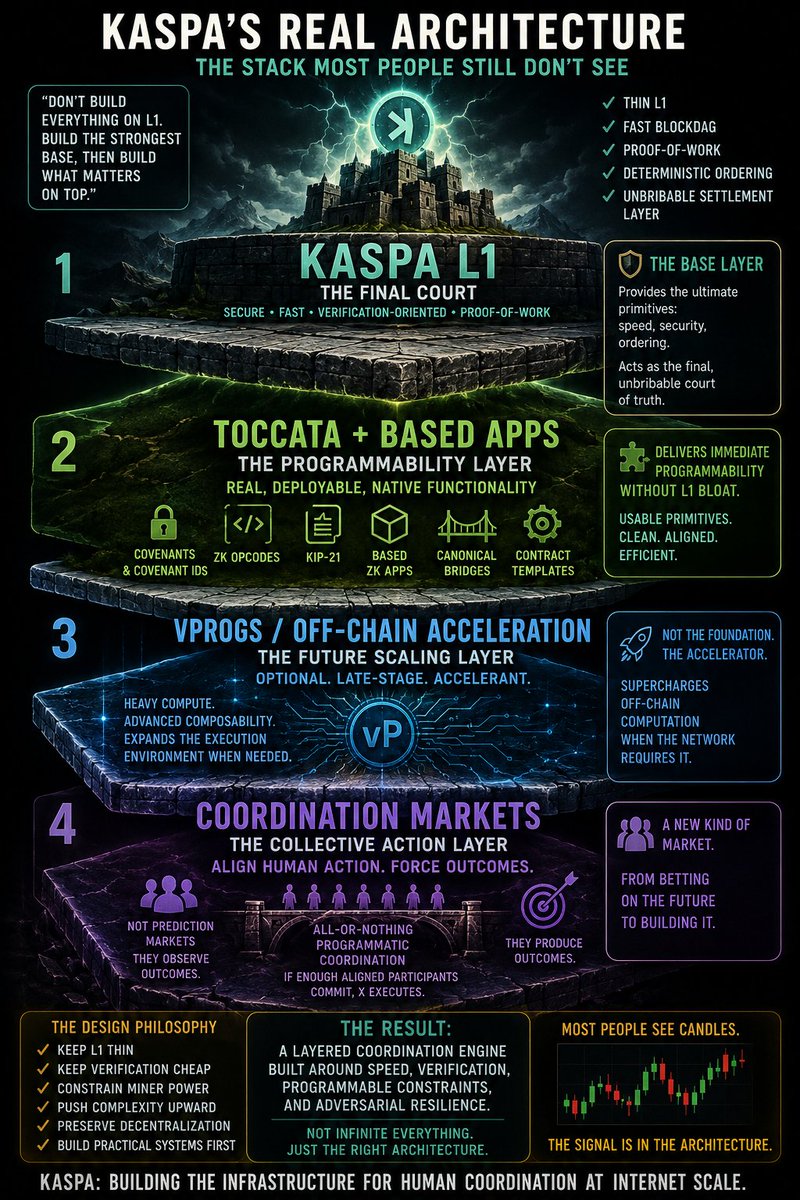
Most people are still reading Kaspa’s next phase as “smart contracts are coming,” but that is too small. The deeper shift is that Kaspa is being shaped into real-time settlement for conditional truth. Crescendo already moved Kaspa into the 10 BPS regime, giving it the cadence needed for faster decentralized ordering. Toccata’s roadmap then pushes the next layer: covenant-style spending constraints, ZK verification paths, and sequencing commitments designed to let external computation anchor back into proof-of-work settlement without turning Kaspa into another bloated global VM.
That matters because the next internet will not only need money that moves quickly. It will need commitments that become enforceable when reality satisfies their conditions. This is where Staghunt becomes interesting. A coordination market is not just another DeFi primitive. It is a mechanism for turning private intent into collective action: “I will move if enough others move.” Liquidity can migrate without first-mover exposure. Users can switch platforms without being stranded. Communities can coordinate capital, attention, labor, or exit without trusting a central broker.
The hard part is not a single user proving a single valid state transition. The hard part is coordination: hidden intents, threshold logic, capital multiplexing, conflict resolution, and atomic execution. That requires more than cheap talk, and more than a public pledge. It requires a settlement layer that can enforce the final snap while higher layers handle proofs, privacy, and computation.
Kaspa’s advantage is that it does not need to become Ethereum with faster blocks. Its strength is staying a lean proof-of-work ordering engine while external systems prove computation into it. vProgs point directly toward this model: applications running next to L1, using ZK verification and shared state standards, not normal on-chain smart contracts.
Bitcoin made value sovereign. Kaspa’s opportunity is to make coordination sovereign: not through committees, sequencers, or platforms, but through proof, time, and mutually satisfied conditions.
@KillaXBT The mainstream media's job is not to inform the public their job is to keep the retail customer inside the BS Narrtives.
you will prolly think BS but this is the honest Ledgers.
in 2 posts.
Macro signals behind the meme
• ECB signaling June tightening toward ~2.25%
• UK 10Y gilt yields spiking toward stress levels
• Japan repeatedly intervening around extreme USD/JPY levels
• Persistent energy/shipping pressure feeding inflation
• Bond markets still restricting central-bank flexibility
The point is not “doom
The point is
global liquidity conditions matter more than local green candles.
If governments, banks, and central banks are all pulling money out of the system at the same time, assets can still rise temporarily from speculation and leverage.
But eventually the structure becomes unstable because there is less real liquidity underneath it.
Price can float higher for a while.
Support underneath it cannot.
Eyes on TGA https://t.co/Wr31GlTpWU
What we think we hear you saying @hashdag is that while some people in the ecosystem are focused on bringing existing DeFi activity onto #Kaspa, you are focused/exploring something bigger:
Using Kaspa as infrastructure for large-scale coordination systems.
Not just trading coins or moving liquidity around, but enabling people, businesses, machines, and eventually AI systems to coordinate actions, commitments, resources, and decisions in real time through a decentralized ledger.
That could eventually impact areas like:
• AI agent coordination
• logistics and supply chains
• distributed compute markets
• energy balancing systems
• prediction and assurance markets
• machine-to-machine economies
• dynamic resource allocation
• decentralized scheduling systems
• reputation and verification systems
• real-time enterprise coordination
This is something @Kaspa_Commons has been talking about for quite some time as well. The idea that Kaspa’s long-term opportunity should extend far beyond traditional crypto finance and into real-time decentralized coordination across industries, systems, and emerging machine economies.
More thoughts in thread...
#PoweredByKaspa
#KaspaCoordination
What we think we hear you saying @hashdag is that while some people in the ecosystem are focused on bringing existing DeFi activity onto #Kaspa, you are focused/exploring something bigger:
Using Kaspa as infrastructure for large-scale coordination systems.
Not just trading coins or moving liquidity around, but enabling people, businesses, machines, and eventually AI systems to coordinate actions, commitments, resources, and decisions in real time through a decentralized ledger.
That could eventually impact areas like:
• AI agent coordination
• logistics and supply chains
• distributed compute markets
• energy balancing systems
• prediction and assurance markets
• machine-to-machine economies
• dynamic resource allocation
• decentralized scheduling systems
• reputation and verification systems
• real-time enterprise coordination
This is something @Kaspa_Commons has been talking about for quite some time as well. The idea that Kaspa’s long-term opportunity should extend far beyond traditional crypto finance and into real-time decentralized coordination across industries, systems, and emerging machine economies.
More thoughts in thread...
#PoweredByKaspa
#KaspaCoordination
https://t.co/jFJpwwCQy1 <- 2020 artical since 2014?
1. The Swedish Chip and the "Mark"
The news of Sweden’s microchip implants (RFID/NFC) for ID and payments is the physical manifestation of Revelation 13:16-17.
The Scripture: "And he causeth all... to receive a mark in their right hand... that no man might buy or sell, save he that had the mark."
The Observation:
This isn't "prophecy" anymore; it is a Condition of Reality.
The Old System (Sand):
Wants the "Mark" to be Biological(your hand/your chip).
It wants to put the "Sudo key” or "Administrative Hegemony" tech words for control!! Inside your body.
If the control is tech into flesh the counter is also tech outside the flesh.
Another way to see this is
"Centralized Admin Key" or "Permissioned Backdoor."
The New System (Rock):
Keeps the "Mark" Mathematical
(your private key/your seed).
It keeps the "knowing" in your spirit. Tangem(Cold Wallet) - Kaspa
2. The Templar Image: "More Extreme in My Religious Beliefs"
The image of the Knight Templar "New Man" (Ephesians 4:24) armor.
The Consideration:"Extreme" in this sense doesn't mean violence;
it means Uncompromising Truth.
It is the shepherd refusing to look into the Pool of Theft & Become It.
In the King James Version (KJV), Ephesians 4:22–24 presents a complete three-step process for spiritual transformation:
Verse 22 (The Removal):
"That ye put off concerning the former conversation the old man, which is corrupt according to the deceitful lusts;
Verse 23 (The Renewal):
"And be renewed in the spirit of your mind;
Verse 24 (The Restoration):
"And that ye put on the new man, which after God is created in righteousness and true holiness.
Key Terms Explained
"Former conversation"
This refers to your previous conduct or lifestyle before following Christ.
"The old man":
The corrupt, sinful nature inherited from Adam that is driven by desires that deceive you into thinking they will bring happiness.
"Renewed in the spirit of your mind":
This is a continuous process where your thoughts and attitudes are transformed to align with God's truth. (The Logos) John 1-14 KJV.
"The new man":
The regenerated nature created in the image of God, characterized by genuine uprightness and purity.
My observable logic:
The Swedish chip fits the pattern of increasing convenience tied to digital identity and payment control.
That is observable.
It is a choice right now (voluntary implant).
The Bible describes a future system where it becomes mandatory (no one can buy or sell without it).
That part has not happened yet.(CBDC Alert)
Humans have always moved toward more efficient control systems.
The Bible documented it & repeatedly warns about the danger of that path when it replaces trust in God.
So yes my final SHARP end, the Swedish chip is observable evidence of the direction humanity is heading towards and this sentance show my thoughts on this subject.
[convenience + control through technology in the hand].
Study $kas
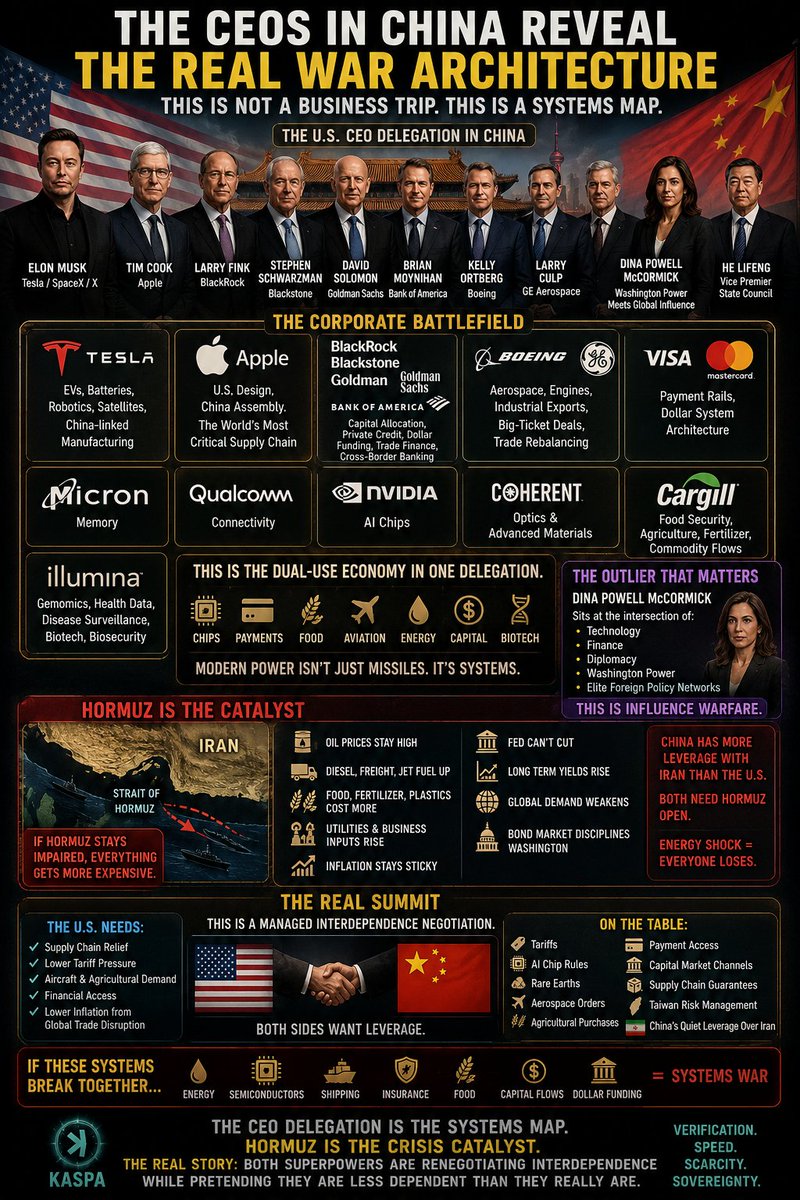
Trump lands in China with Elon Musk, Nvidia’s Jensen Huang, Marco Rubio, Pete Hegseth, Eric & Lara Trump.
This delegation hits different.
First Beijing visit in 9 years.
Biggest question: Does this summit cool global markets or crank up the heat on Iran?




![_fnal's tweet photo. https://t.co/jFJpwwCQy1 <- 2020 artical since 2014?
1. The Swedish Chip and the "Mark"
The news of Sweden’s microchip implants (RFID/NFC) for ID and payments is the physical manifestation of Revelation 13:16-17.
The Scripture: "And he causeth all... to receive a mark in their right hand... that no man might buy or sell, save he that had the mark."
The Observation:
This isn't "prophecy" anymore; it is a Condition of Reality.
The Old System (Sand):
Wants the "Mark" to be Biological(your hand/your chip).
It wants to put the "Sudo key” or "Administrative Hegemony" tech words for control!! Inside your body.
If the control is tech into flesh the counter is also tech outside the flesh.
Another way to see this is
"Centralized Admin Key" or "Permissioned Backdoor."
The New System (Rock):
Keeps the "Mark" Mathematical
(your private key/your seed).
It keeps the "knowing" in your spirit. Tangem(Cold Wallet) - Kaspa
2. The Templar Image: "More Extreme in My Religious Beliefs"
The image of the Knight Templar "New Man" (Ephesians 4:24) armor.
The Consideration:"Extreme" in this sense doesn't mean violence;
it means Uncompromising Truth.
It is the shepherd refusing to look into the Pool of Theft & Become It.
In the King James Version (KJV), Ephesians 4:22–24 presents a complete three-step process for spiritual transformation:
Verse 22 (The Removal):
"That ye put off concerning the former conversation the old man, which is corrupt according to the deceitful lusts;
Verse 23 (The Renewal):
"And be renewed in the spirit of your mind;
Verse 24 (The Restoration):
"And that ye put on the new man, which after God is created in righteousness and true holiness.
Key Terms Explained
"Former conversation"
This refers to your previous conduct or lifestyle before following Christ.
"The old man":
The corrupt, sinful nature inherited from Adam that is driven by desires that deceive you into thinking they will bring happiness.
"Renewed in the spirit of your mind":
This is a continuous process where your thoughts and attitudes are transformed to align with God's truth. (The Logos) John 1-14 KJV.
"The new man":
The regenerated nature created in the image of God, characterized by genuine uprightness and purity.
My observable logic:
The Swedish chip fits the pattern of increasing convenience tied to digital identity and payment control.
That is observable.
It is a choice right now (voluntary implant).
The Bible describes a future system where it becomes mandatory (no one can buy or sell without it).
That part has not happened yet.(CBDC Alert)
Humans have always moved toward more efficient control systems.
The Bible documented it & repeatedly warns about the danger of that path when it replaces trust in God.
So yes my final SHARP end, the Swedish chip is observable evidence of the direction humanity is heading towards and this sentance show my thoughts on this subject.
[convenience + control through technology in the hand].
Study $kas](https://pbs.twimg.com/media/HHZyeXAWIAEXuIN.jpg)