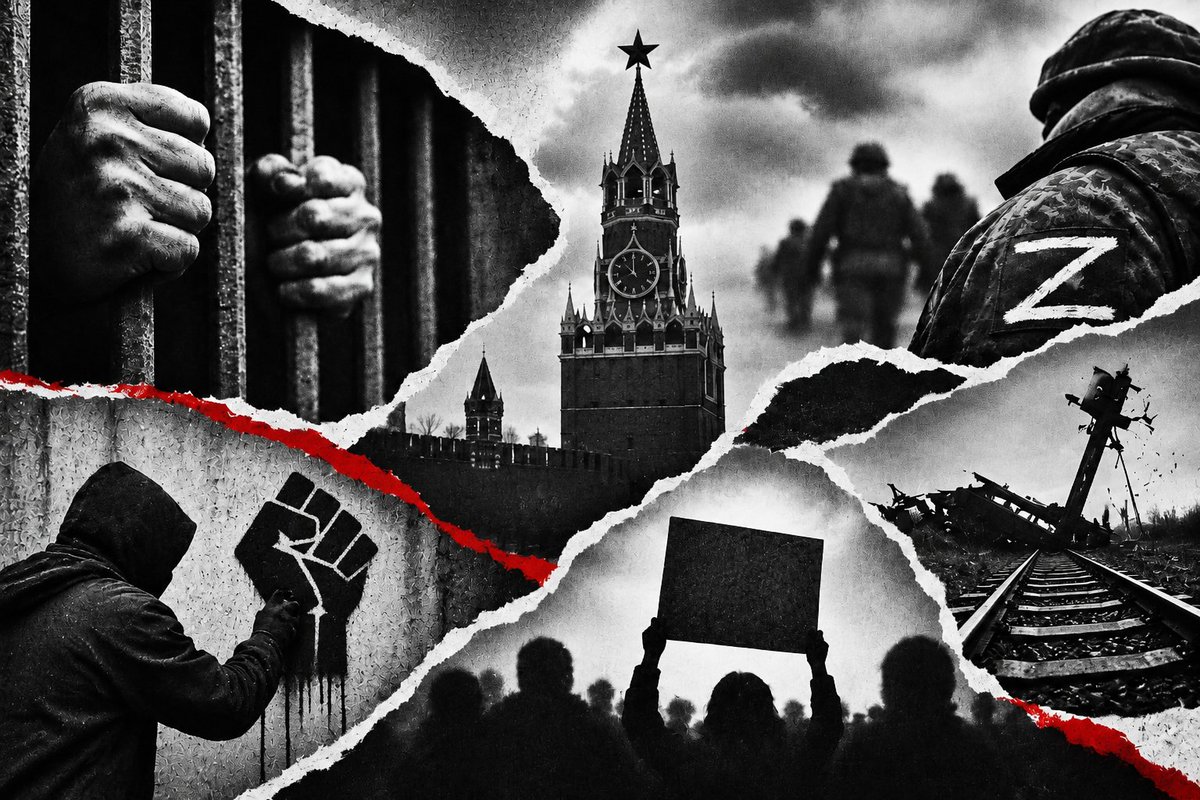
They thought I would break in the storm.And maybe-in parts-I did.But I never left my ground,never lost my line.And when the storm finally passed.I'm still here
A view from the West
I am not Russian. I grew up in Western Europe, far from Russia and the history and conflicts that still shape the country today.
For most people in the West, Russia is quite simple. We know Putin, we know the war, and we know a few opposition personalities from our newspapers and television. Beyond that, Russia is often just Russia, a country of more than 140 million people we hardly ever talk about.
My own view has changed a lot over the last four years. Through my work with the Russian resistance, I started talking to people I would never have met otherwise. I discovered regional movements, people helping political prisoners, activists, volunteers and people resisting the regime from inside Russia. Some have very different ideas about what should come after Putin, and they don't all agree with each other. But that is also part of the reality that is often missing when we talk about Russia in the West.
Most people here have never heard of them. They know the names of a few opposition politicians, but they know very little about the much wider resistance around them. And I think we may regret that one day.
There is a lot of discussion in Europe about what Russia should look like after Putin. Should it remain a federation? Could some regions become independent? Who could take power and who would the West be willing to work with? I follow these discussions, but I have never felt that these decisions belong to me. I can have an opinion, but in the end it is not my country. The people living there, including the different peoples and regions of Russia, will have to decide their own future.
I also understand why it's difficult to talk about Russian resistance in the West today. Russia has been waging this war for years. We have seen threats, propaganda, espionage and attempts to influence our countries. So when somebody comes to us and says, “I am Russian and I want to change Russia,” trust doesn't come automatically. Why should it?
But that makes personal contacts even more important. We need to know who these people are, what they stand for and what they are doing. And they need to understand us as well. There are things about Europe and the West that are difficult to understand from inside the Russian political world, just as there are things about Russia that I needed years to understand.
I don't think we should wait for one big opposition movement or one famous person who somehow represents everybody. The people I have met are far too different for that, politically and personally, and their ideas about Russia's future can be very different too.
For me, that isn't necessarily a weakness. It is simply something the West has to understand if we ever want to deal seriously with the people who may play a role in what comes after Putin.
That is also where I see my own place. I don't support the Russian resistance because I want to tell Russians what their country should become. That's not my decision to make. What I can do is bring people together, explain what I see from here and help voices that are unknown in the West reach people who would otherwise never hear them.
I have learned a lot from doing this, including that the West and the Russian resistance often know surprisingly little about each other.
Putin will not be there forever. Nobody knows whether change will come slowly or whether things will suddenly move very quickly. But when it happens, I don't think that will be the right moment for Europe to start looking around and asking who else exists besides the Kremlin and the same opposition figures we have known for years.
Those contacts should exist before they are needed.
There are people inside and outside Russia already thinking about what comes next. Others are taking risks today without knowing whether they will ever see the Russia they are fighting for.
Their future is theirs to decide.
But I would like the West to know who they are.
Freya FAE
https://t.co/vKyzcqvyrd
Cyber Unit of the Kuban Insurgency Movement Attacks Infrastructure of Rostelecom PJSC
A new unit of the Kuban Insurgency Movement – its cyber wing – conducted a successful offensive operation on November 9th against the state telecommunications infrastructure of the Russian Federation in Southern Russia. The main targets were the Krasnodar region, Novorossiysk, and the Rostov region.
The involvement of the unit has been verified through prior notification to the coordinating center of the United Resistance Front.
Over 1,400 verified reports of communication disruptions have been recorded, with 37% of these occurring in the Krasnodar region.
This marks the emergence of regional underground movements into the realm of hybrid warfare. The attack was directly aimed at "Rostelecom" – the primary operator of the digital concentration camp of the Kremlin in Novorossiysk, a strategically important frontline and naval hub.
The cyber wing of the Kuban Insurgency Movement has opened the score. The Putin regime will have to withstand attacks simultaneously from both partisan fire and digital weapons.
Source: Alresistance
Russian Exiles: “We’re Safe Now, But We Still Don’t Know for How Long”
In a photo essay published by Dissent on November 11, Italian photojournalist Fabio Lovati tells the stories of Russians who fled political persecution and the war in Ukraine, but continue their work against Putin's government from abroad.
The report follows activists, journalists and volunteers living in Georgia, Armenia and Germany. Although they have left Russia, many still face uncertainty over their safety, legal status and ability to return home.
Maria Makarova was arrested in Chelyabinsk in January 2021 after a Telegram post announcing a rally in support of Alexei Navalny. She spent eleven days in detention before eventually leaving Russia following the full-scale invasion of Ukraine. Now living in Tbilisi, she continues her activism through theatre.
Russian journalist Denis Kabakov helps organise meetings and letter-writing events for political prisoners. At Reforum Space in Berlin, exiles gather to write to people imprisoned in Russia for opposing the government and the war. Even these letters are increasingly subject to censorship.
In Armenia, SOTAvision journalist Alipat Sultanbegova continues her work after leaving Russia when criminal proceedings were opened against her. She describes the difficulties of reaching people inside Russia, where government propaganda dominates television and independent information is increasingly difficult to access.
The report also introduces Khandama Tudebei, a Buryat exile who teaches her native language in Berlin. Her work helps preserve the cultural heritage of a people whose language and identity have faced pressure under Russian rule.
Organisations such as Kovcheg (The Ark) provide legal assistance, psychological support and practical help to Russians who have fled persecution. Centre T supports LGBTQ+ Russians, including people who need help leaving the country and rebuilding their lives abroad.
But leaving Russia does not necessarily mean finding lasting security.
Many exiles struggle with residence permits, passports, employment and housing. Some cannot renew their documents through Russian consulates, while others fear that changes in Russian legislation could make their situation even more difficult.
The article also examines the different approaches taken by European countries towards Russian dissidents seeking protection. Humanitarian visas and asylum procedures remain difficult to navigate, particularly for people who have already been forced to leave Russia.
Polina Negulyaeva, a Russian humanitarian worker living in Berlin, describes how new Russian restrictions on citizens abroad could affect access to consular services, bank accounts and property. She warns that people may retain Russian citizenship while losing the practical ability to exercise their rights.
Political differences also remain a challenge within the exile community. People who oppose Putin and the war do not necessarily share the same views on democracy, minority rights or Russia's future.
Despite these difficulties, the people interviewed continue organising, helping others, supporting political prisoners and maintaining contact with those still inside Russia.
As Polina Negulyaeva puts it:
“We’re safe now, but we still don’t know for how long.”
Source: Fabio Lovati, Dissent - November 11, 2026.
https://t.co/pIlm7i8waY
Karelian Resistance Gains International Attention
RFU News has published a report on Pohjoinen Veljeskunta (Northern Brotherhood), a Karelian group that has declared its intention to fight for independence from Russia.
The report covers the group's public statements, its opposition to Moscow and the wider struggle for Karelian self-determination. It also discusses Karelian volunteers fighting alongside Ukraine, including the NORD formation.
Northern Brotherhood's membership and operational capabilities remain unverified.
The report comes as Karelian independence movements are receiving growing attention outside Russia, bringing renewed interest to the region's history, its Finnic population and its relationship with Moscow.
Source: RFU News, November 10, 2026
https://t.co/9K4VlgFExm
@marat5akhmerov Thank you, Marat! I'm glad to help bring these voices and their demands to a wider audience in the West 🤝
Tatarstan and the peoples of Eurasia will be free!
@CelluloidBlonde I agree, revealing names or locations could put people in danger. That's why I mentioned anonymity in my article. But we can report on resistance without exposing the people involved. And not everyone can just leave Russia. That doesn't mean their stories shouldn't be told.
Why Does the West Overlook Russia's Resistance?
Western discussions about Russia often return to the same question: Why aren't Russians doing more to oppose Putin?
But what about those who already are?
Russian political prisoners include journalists, activists and ordinary citizens who opposed the invasion of Ukraine or criticised the Kremlin. Some have received lengthy prison sentences for statements or actions that would be perfectly legal in democratic countries. Apart from a few well-known opposition figures, many remain largely unknown in the West.
Russian soldiers who refuse to fight face different risks. Desertion can mean prosecution, imprisonment and separation from family. Leaving Russia does not necessarily bring safety. European asylum procedures vary, and refusing military service does not automatically guarantee protection.
If European countries want fewer Russian soldiers fighting in Ukraine, why is it so difficult for some of those who refuse to fight to find protection?
Russian volunteer units fighting alongside Ukraine are another part of the resistance. Their members have chosen armed opposition to the Kremlin, often at considerable personal risk.
Partisans and underground groups also form part of the picture. Their activities rarely receive sustained attention in Western media, particularly outside major incidents. The people involved may have good reasons to remain anonymous, making their work difficult to report on.
Regional movements are often overlooked as well. Some seek greater autonomy, while others demand independence for their republics. Their views on Russia's future differ considerably from those of opposition politicians who want to preserve the Russian Federation.
The Russian resistance is divided. Its groups disagree about politics, methods and Russia's future. Personal conflicts and security concerns make cooperation difficult, even among people who oppose the same regime.
Yet Western coverage continues to focus heavily on familiar opposition politicians, their rivalries and their public statements. Smaller movements and less visible forms of resistance receive far less attention.
The absence of mass demonstrations does not mean the absence of resistance. Public protest in Russia can lead to arrest, imprisonment and other serious consequences. People living under these conditions cannot be expected to organise themselves as freely as those in democratic countries.
Political prisoners, deserters, partisans, Russian volunteer units and regional movements face different circumstances. Their needs, goals and methods cannot all be treated in the same way.
Western governments cannot decide Russia's future or appoint representatives on behalf of its people. But political prisoners deserve attention, deserters' protection claims deserve proper consideration, and the work of smaller resistance movements deserves more coverage.
Many people who have paid a high price for opposing Putin remain almost unknown outside Russia.
Before asking why Russians are not doing more, perhaps the West should pay closer attention to those who already have.
~ Freya ~
Denis Kapustin on the Russian Right, the War and the Political Future of the RVC/RDK
In a November 10 interview with Mark Feigin, Denis Kapustin, commander of the Russian Volunteer Corps (RVC), discussed the war in Ukraine, Russian nationalist organisations, the situation inside Russia and the Corps' political ambitions.
The war has changed considerably, with drones playing an increasingly important role on the battlefield. Infantry remains essential for holding territory, but large-scale manoeuvres have become rare. Kapustin described the front as relatively stable and said that any negotiated freeze would likely be temporary, as neither Russia nor Ukraine would be satisfied with the outcome.
The RVC continues to recruit volunteers, including Russians arriving from Europe and other countries. Recruitment is more difficult than during the early years of the invasion, but the Corps continues to grow.
Much of the conversation focused on the Russian right. Kapustin argued that the Kremlin had tried to use nationalist organisations for military recruitment and political purposes while keeping them under state control. He mentioned Española and Russian Community as examples of initiatives that received considerable publicity but failed to develop into independent forces.
The RVC, by contrast, describes itself as a Russian national liberation movement with political ambitions beyond its military activities.
Representatives have been building contacts with Russian emigrant communities, opposition groups and international institutions, including the Parliamentary Assembly of the Council of Europe. These relationships have already brought practical assistance, including equipment and supplies.
Political work is still relatively new to the Corps. Alongside its military activities, it wants to gain political experience, establish alliances and develop its own programme and political representation.
The possibility of organising an underground political movement inside Russia was also discussed. Kapustin considers this extremely dangerous because of surveillance, infiltration and arrests by the security services. He warned against exposing supporters to unnecessary risks, particularly younger Russians who sympathise with the RVC.
The interview also covered Yevgeny Prigozhin and Wagner's march towards Moscow in June 2023. Kapustin recalled indirect contact with Prigozhin during the RVC's operations in the Belgorod region, when Wagner offered to become involved in negotiations over captured Russian soldiers.
He pointed to the limited resistance encountered during Wagner's march, RVC cross-border operations and Ukraine's presence in the Kursk region. In his view, these experiences suggest that many ordinary Russians would be unwilling to defend the Kremlin if central authority weakened.
Another concern raised during the interview was the eventual return of Russian war veterans. Their combat experience, access to weapons and difficulties returning to civilian life could create serious problems for the Russian authorities. Kapustin also suggested that Moscow may have an interest in prolonging the war rather than dealing with their return.
The RVC remains focused on fighting alongside Ukraine, while developing the political contacts, experience and programme it considers necessary for its future role in Russia.
Source: Feigin Live, November 10, 2026 - Interview with Denis Kapustin, commander of the Russian Volunteer Corps.
https://t.co/yfNzn62CxM
Why Does the West Overlook the Russian Resistance?
Western discussions about Russia often return to the same question: Why aren’t Russians doing more to stand up to Putin?
https://t.co/9aq2uUf9WZ
Thank you @RuskyOdboj8 🫡
THE EMPIRE FEARS PEOPLES WHO STOP BEING SILENT
The Presidium of the Congress of Indigenous Peoples of Eurasia is calling on Ukraine and Western governments to support the national liberation movements of Russia's peoples as a separate strategic priority. Waiting until the war ends would only prolong the system that caused it.
Ukraine is defending its independence, Europe's security and the right of peoples to a free future. But the sacrifices are not shared equally. The West provides weapons and money, while Ukrainians pay with their lives. That burden cannot continue to fall mainly on Ukrainian soldiers.
Putin does not rule Russia alone. His power depends on regional authorities who carry out Moscow's policies and benefit from them. Replacing Putin would not be enough to dismantle this system.
These regional authorities have their own opponents: national movements, civic groups, independent journalists and human rights defenders. The Congress wants Ukraine and Western countries to recognise them as partners and work with them regularly.
It calls for funding for independent national media, legal assistance, protection for persecuted activists, documentation of repression and corruption, and the development of political organisations that can represent their peoples.
The statement also raises questions about the people being sent to fight in Ukraine. Why should their sons die to subjugate another nation? Who gave the authorities the right to decide over their lives? Why are decisions about their land made without their consent?
The Congress insists that national movements must remain independent. They have their own histories, political goals and responsibilities towards their peoples. Cooperation with Ukraine and the West must respect their right to decide their own future.
It also places responsibility on the movements themselves. Ukrainians cannot be expected to pay with their lives for the liberation of everyone else. National movements must organise, overcome internal disputes, protect persecuted activists and develop credible plans for the future.
The Congress rejects the idea that preserving Russia's current imperial system guarantees stability. It calls for permanent cooperation between Ukraine, interested Western governments and movements that oppose Russian aggression and support self-determination.
The statement ends with a warning that every delay costs Ukrainian lives.
Source: Presidium of the Congress of Indigenous Peoples of Eurasia
https://t.co/teRUyS1Ypc
ИМПЕРИЯ БОИТСЯ НАРОДОВ, КОТОРЫЕ ПЕРЕСТАЮТ МОЛЧАТЬ
Руководству Украины и западных государств пора сделать поддержку национально-освободительных движений народов России стратегическим направлением.
Президиум Конгресса Автохтонных Народов Евразии
https://t.co/zIiInif7Iz
💥 Episode of "rail war." This morning, in the Arkhangelsk region, a section of a railway bridge over the Vileдь River "suddenly" collapsed, and several cars of a freight train derailed, reportedly as part of an "incident."
This is the only railway line connecting central Russia to the Komi Republic.
Source: Rospartizan
💥 Partisans Report Railway Bridge Sabotage in Russia's Arkhangelsk Region
Unknown partisans have reportedly carried out a successful sabotage operation against strategic transport infrastructure in Russia's Arkhangelsk region. A railway bridge over the Viled River allegedly collapsed as a freight train carrying tank wagons was crossing it.
According to the report, the bridge spans and railway tracks were completely destroyed, sending the tank wagons off the rails. Repairs are expected to require extensive technical resources, specialised equipment and several weeks of work.
The attack reportedly severed an important transport route providing access to strategic ports, Northern Fleet bases, the Plesetsk Cosmodrome and defence industry facilities in Severodvinsk. Rail traffic is said to have been completely disrupted.
The statement describes the incident as part of a growing resistance movement stretching from the southern steppes of Kuban to the railway lines of Russia's Far North. Its authors argue that each such attack brings the collapse of Putin's regime closer.
Source: Alresistance
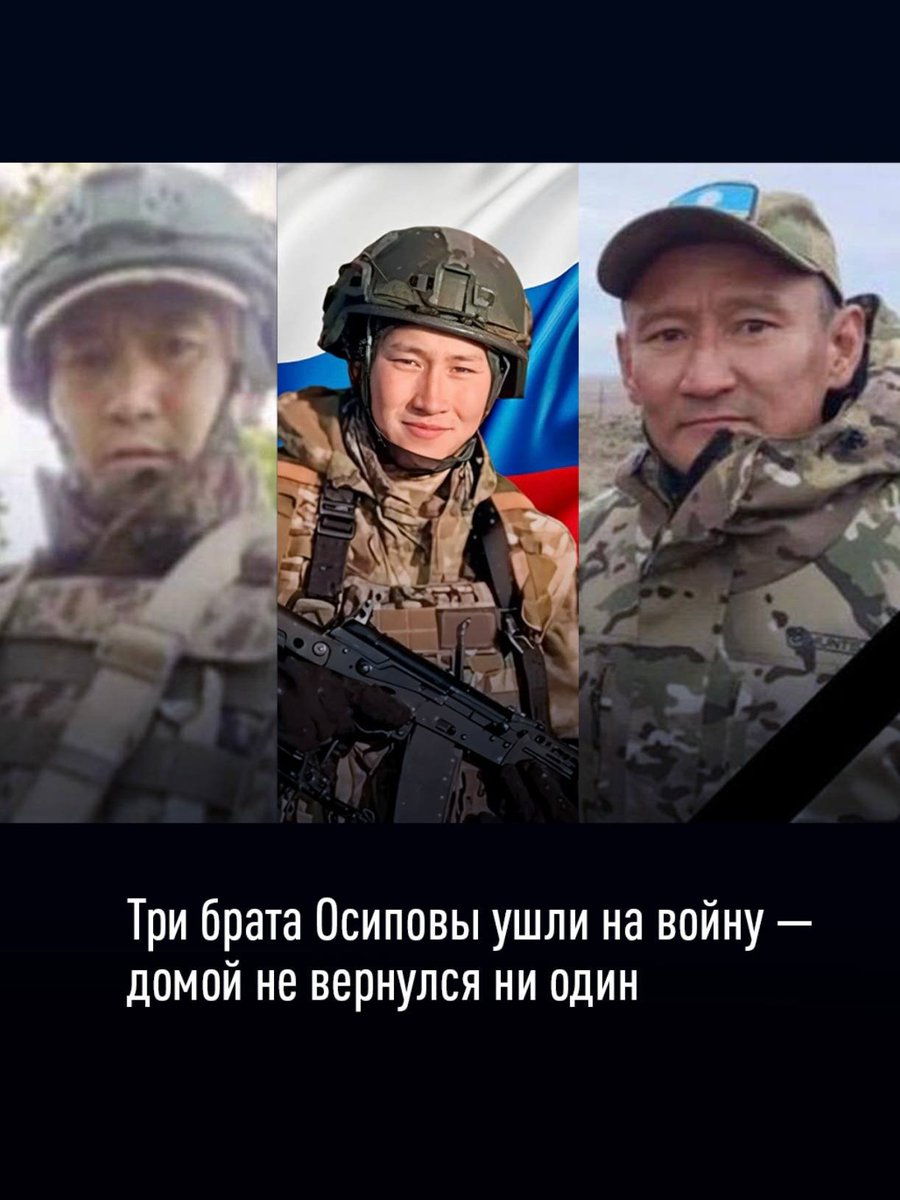
Three brothers died in the special military operation.
The Osipov brothers from the village of Dalar in the Verkhnevilyuysky ulus went to war. None of them returned home.
Propagandists present this as, and I quote, "a symbol of courage and unwavering devotion to the Motherland."
But this is a real and terrible tragedy.
The eldest, Yegor, had participated in the Chechen war. He went to the special military operation so that his brothers wouldn't have to.
But they went after him, because they wanted to help him. As a result, their mother, Valentina, lost all three of her sons.
All she received was the title of "Hero Mother" and a memorial plaque dedicated to the youngest, Anton.
But these sons cannot be brought back. Just like the hundreds of other young men from the Sakha people, whom Putin's war has taken forever.
https://t.co/no6q2ojCIB
Our last video is coming in 5 minutes.
Well, the last one of Season 2
«LEGIONARIES» is a video podcast featuring conversations with Legion fighters who left their past behind and chose to fight for the future.
In the season finale, Ronin shares how he ended up in the Russian army, what he witnessed in a Russian assault unit, and why he ultimately chose to surrender and join the Legion.
Watch the episode and tell us in the comments: what would you like to see on our channel next?
💥 Partisans Report Railway Bridge Sabotage in Russia's Arkhangelsk Region
Unknown partisans have reportedly carried out a successful sabotage operation against strategic transport infrastructure in Russia's Arkhangelsk region. A railway bridge over the Viled River allegedly collapsed as a freight train carrying tank wagons was crossing it.
According to the report, the bridge spans and railway tracks were completely destroyed, sending the tank wagons off the rails. Repairs are expected to require extensive technical resources, specialised equipment and several weeks of work.
The attack reportedly severed an important transport route providing access to strategic ports, Northern Fleet bases, the Plesetsk Cosmodrome and defence industry facilities in Severodvinsk. Rail traffic is said to have been completely disrupted.
The statement describes the incident as part of a growing resistance movement stretching from the southern steppes of Kuban to the railway lines of Russia's Far North. Its authors argue that each such attack brings the collapse of Putin's regime closer.
Source: Alresistance
⚪️🔴⚪️ Viktar "Vitushka" Tryhubau was born in Minsk. He is a lawyer and political scientist by education. In 2015, he joined the "Young Front." He organized protest actions and participated in the defense of Kurapaty. He was arrested in a case related to the "White Legion." In 2018, he became the secretary of "Young Front." He was one of the organizers of an action against the integration of Belarus with the Russian Federation in 2019. In 2021, he was forced to leave Belarus.
In February 2022, he was among the first group of volunteers who left Europe to liberate the Kyiv region. He performed combat missions in the Mykolaiv, Zaporizhzhia, Kharkiv, and Donetsk directions, and defended Bakhmut. He also participated in operations on Russian territory.
He participated in the "Vivaldi" operation as part of the "Hatred" battalion of the 3rd Separate Assault Brigade (3-я АШБр). He died while performing a combat mission in the Lyman direction.
He is buried at the National Military Memorial Cemetery, in section 7, row 7, plot 25.
We remember. We will avenge.
https://t.co/OYNlFJ1zlU
Fighters from the Kuban Partisan Movement (KPD) report carrying out a successful sabotage operation in Krasnodar, in the Gidrostroiteley district, in the courtyard of a residential building at 4/2 Machugi Street.
According to the group, two explosions completely destroyed the car of Russian National Guard Major Viktor Nikitin, who had participated in the war against Ukraine.
The vehicle reportedly burned out completely and is beyond repair. The group also claims that the partisan responsible for the operation is now safely out of danger.
KPD describes the attack on a member of Russia's security apparatus, deep in the country's southern rear, as a demonstration of the resistance's ability to identify and track security officers and participants in Russia's war against Ukraine.
The group also accuses the regional authorities of remaining silent about the incident, interpreting their silence as a sign of confusion and an inability to protect their own officers.
KPD concludes its statement with a warning that those it holds responsible will face retribution.
Source: Alresistance
The Russian Resistance Needs All Our Support
https://t.co/C8ytvgcbJH
In a recent interview with Anyuta Stepanova, former Russian MP Ilya Ponomarev (@iponomarev) discussed the decline of the Russian armed resistance, the difficulties faced by Russian volunteers seeking to fight for Ukraine, and the security threats facing Russian opposition members living in exile.
Asked whether more Russians were joining the armed resistance on Ukraine's side, he said the numbers had fallen significantly. He described the lack of systematic support from Ukraine as one of the biggest mistakes made during the war.
Much of the work had been left to individual enthusiasts rather than being developed into a properly supported structure. According to him, efforts in this direction had practically stopped since 2024.
Resistance movements cannot survive without outside support. Underground networks need resources, equipment, communication and assistance from states willing to support them.
The discussion also turned to the Freedom of Russia Legion. Stepanova said she had met members of the unit two weeks earlier and raised the difficulties Russian volunteers face when trying to join Ukrainian forces.
Security checks are only part of the problem. Even volunteers who pass the screening process cannot necessarily be accepted if there are no funded positions, equipment, accommodation or other resources available.
Another concern was the safety of Russian opposition members living in exile. Threats and attacks can intimidate those who might otherwise become politically active. According to Ponomarev, they can also offer members of the Russian security services opportunities for career advancement.
While a small number of opposition leaders have professional protection, most remain vulnerable.
The possibility of Putin being removed by people within his own political system was also discussed. In Ponomarev's view, the risks of opposing him still outweigh the consequences of doing nothing, leaving little incentive for those around him to act.
Toward the end of the interview, he advised people inside Russia not to expose themselves unnecessarily through political activities that could attract the attention of the authorities. They would be needed when the time came to rebuild the country.
The interview raises questions about the future of the Russian resistance: how it can continue without sustained support, what prevents willing volunteers from joining Ukrainian units, and how Russian opposition members abroad can continue their work while facing security threats.
FROM THE 1992 CONSTITUTION TO A COLONIAL DOCUMENT: HOW MOSCOW DESTROYED TATARSTAN'S STATEHOOD
November 6th marks the 34th anniversary of the adoption of the Constitution of the Republic of Tatarstan. According to a resolution of the Supreme Soviet in 1992, Tatarstan was defined as a sovereign and democratic state, a subject of international law, establishing its relations with the Russian Federation on the basis of agreements based on equal rights.
Notably, the Constitution of Tatarstan was adopted a year before the Russian Constitution.
This indicates that the statehood of Tatarstan did not originate from the Russian Constitution, nor was it granted by it, but rather possessed its own, primary, and earlier source of legitimacy.
The Constitution of the Republic of Tatarstan was based on the Declaration of State Sovereignty of August 30, 1990, and the results of a referendum held on March 21, 1992, in which 61.4% of participants supported the republic's sovereignty.
Over the past decades, the republic's Basic Law has been repeatedly rewritten at the direction of Moscow. All key provisions have been eliminated: sovereignty, the supremacy of Tatarstan laws within its territory, the status of the office of the President, and articles related to citizenship of the Republic of Tatarstan. A provision was removed from the Constitution stating that Tatarstan would not participate in military conflicts. The Constitutional Court of the Republic of Tatarstan was abolished.
The current Constitution of Tatarstan is a colonial document that reflects the republic's subordinate position to Moscow. Only the date of its adoption and the official holiday remain from the 1992 Constitution.
In fact, we have witnessed a constitutional coup carried out under pressure from Moscow.
However, the memory of the 1992 Constitution lives on. It remains a symbol of the people of Tatarstan's desire for state sovereignty, independence, and the right to freely determine their own future. The future independent Tatarstan will undoubtedly have a new Constitution based on the principles and ideals of the 1992 Basic Law.
Sincerely,
Marat Akhmerov - Deputy Prime Minister of the Government-in-Exile of the Independent Republic of Tatarstan, Responsible for Legal and Legislative Affairs
https://t.co/PKYHFre1yB
1992 EGEMEN ANAYASASI'NDAN SÖMÜRGE BELGESİNE: MOSKOVA TATARİSTAN'IN DEVLETLİĞİNİ NASIL YOK ETTİ
Marat Akhmerov — Sürgündeki Bağımsız Tataristan Hükümeti Başbakan Yardımcısı, Hukuk ve Yasama İşlerinden Sorumlu
https://t.co/hyQwBVtAya
🔥 Our fighter struck at Putin's infrastructure, destroying a relay cabinet in the Arkhangelsk region.
Our comrade is ensuring security. Objects like this are legitimate targets in our fight for the liberation of Russia, as they support the logistics of the military apparatus.
🔹We are building a network, ensuring the safety of each participant and providing tools for the systematic dismantling of the Putin regime.
We do not abandon our own.
We are true to the principles of the revolution.
For those who are ready to become part of the "Renunciation" movement, our official contacts are here.
Our revolution has stagnated! It's time to get to work.
https://t.co/IlE3RuQan2
Rostov. One of the most important logistical hubs of the Russian military machine. This region is a key route for supplying the Putin group that is waging war against Ukraine. But even here, military equipment cannot expect a peaceful service far from the front lines.
🔥The fighters of the "OTPOR" movement carried out another operation: a military vehicle was burned. The vehicle was completely destroyed and is beyond repair.
For the Russian army, this is another loss of equipment, while for the Resistance, it is another result of their work in a place where the regime is accustomed to considering itself in control.
War requires a constant supply of resources. And that means that the military machine will always have vulnerable points.
https://t.co/91fCUh5IV1