Председатель Съезда Народных Депутатов. Депутат Госдумы от Новосибирска в 2007-2016 гг.
Chairman, Congress of People's Deputies of Russian Republic. MP 2007-16
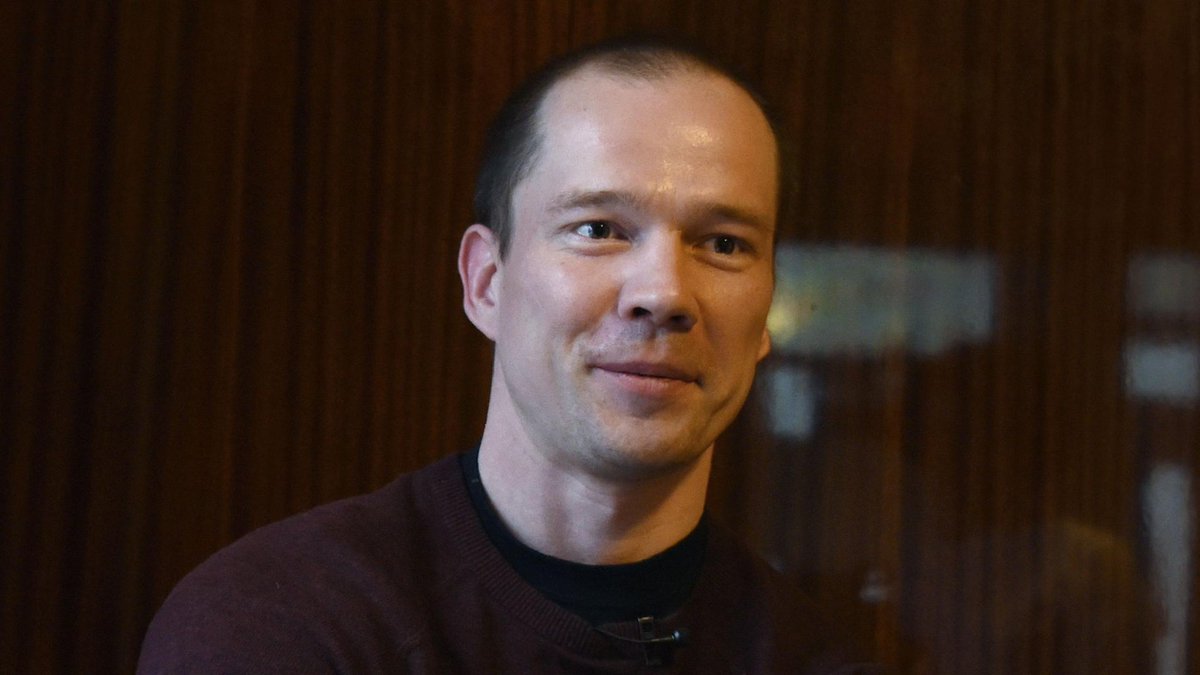
Ildar Dadin - “Gandhi.”
April 14, 1982 - October 5, 2024
A man who stood for nonviolence, for dignity, for resistance without weapons - and was imprisoned for it, simply for refusing to stay silent.
His name wasn’t a symbol. He lived it.
And then came the war.
He went to the front, not to prove anything, not to talk. Just to do what he thought had to be done.
From peaceful resistance to the battlefield.
He knew the cost - and he went anyway.
Glory to the Hero - Rest in peace🕯🫡
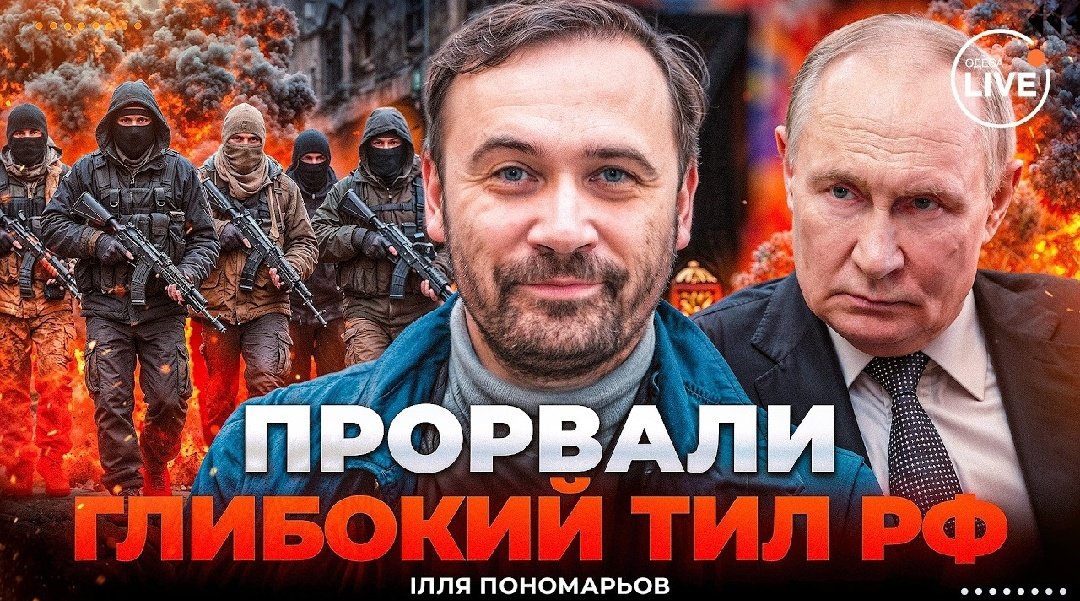
New interview with Ilya Ponomarev (@iponomarev) about Russian resistance, internal dynamics and shifting public perception inside Russia.
https://t.co/vfrahWPcSF
🔹️Kremlin threats towards Europe rely largely on fear and information pressure
🔹️Russia is losing control over the information space, including inside the country
🔹️Telegram is becoming a problem for the Kremlin’s control system
Public perception is becoming a decisive factor
🔹️The Russian resistance is not driven by liberal opposition
The main internal pressure comes from pro-war (Z) circles and the front
🔹️The system relies on fear, balance and manipulation rather than absolute control
🔹️Strikes on Moscow could change how Russians perceive the war
New interview with Ilya Ponomarev (@iponomarev) focused on Ukraine, stalled negotiations, and the broader geopolitical picture.
https://t.co/LkfhTqtov8
🔹️Strikes on Russian infrastructure, especially export routes, are starting to hit where it matters - resources and logistics.
🔹️Sanctions alone are not decisive, but combined with targeted attacks they begin to disrupt the system behind the war.
🔹️Signals from the West toward Kyiv remain mixed - between support and attempts to restrain escalation.
🔹️Negotiations are effectively frozen. From this perspective, talks are less about solutions and more about buying time.
🔹️Dates like May 9 are not symbolic only - they can become political pressure points.
🔹️The U.S. factor remains central. Trump’s approach is not ideological, but based on balancing risks and opportunities.
🔹️Escalation around Iran adds another layer - limiting U.S. options while increasing global uncertainty.
🔹️NATO and Western support are shaped not only by strategy, but also by internal limits and political hesitation.
Ilya Ponomarev (@iponomarev) on Ukraine, Russian opposition, and the need for uncompromising decisions.
https://t.co/KzKK71HY6n
• Russians are already fighting on Ukraine’s side, and there are also political efforts around them, but nothing ever really came together into something coherent.
• In Ukraine people inside political and security structures have been dealing with this for years, there were ideas, drafts, different attempts, but no decision was ever pushed through to make it work in practice.
• At the same time the public mood pulls in the opposite direction - support for those who fight, but rejection of anything broader connected to Russia.
• So it stays in this in-between state, where the potential is there, but it never turns into something structured.
• The Congress of People’s Deputies is not about taking power now, it’s more about preparing a political framework for later, trying to outline how things could look after a change.
• For him, actual power still comes from force, and only after that do political structures start to matter and hold things together.
• Sanctions were supposed to include both pressure and a way out, but in reality only the pressure part remained, which ended up pushing people closer to the system instead of splitting it.
A recent interview with Ilya Ponomarev (@iponomarev) on Russian resistance and what may actually drive change inside Russia:
https://t.co/8pCY3gJyEC
🔹 Russian units like the Freedom of Russia Legion and the Russian Volunteer Corps are still active. They haven’t disappeared - but are increasingly treated as military rather than military-political projects.
🔹 This limits their potential. Without a political dimension, military action alone is unlikely to change Russia.
🔹 The resistance inside Russia is significantly larger than commonly perceived - and many operations would not be possible without local Russians on the ground.
🔹 At the same time, this role often remains in the shadows, which may be holding back the movement’s growth.
🔹 Much of the liberal opposition remains focused on discussion rather than creating tangible pressure.
🔹 Elites are unlikely to move because of arguments alone. They react when pressure inside the country becomes real.
🔹 That pressure requires armed units, the partisan movement, and force within Russia itself. Without it, expectations of change remain largely theoretical.
🔹 Ukraine still approaches this too defensively. It could play a more proactive role in shaping developments in the region, including inside Russia.
🔹 Putin may seek to end the “hot phase”, but only on terms that can be presented as a form of victory - while continuing the war in another form remains the easier option for now.
🔹 Russian business elites remain largely passive - not only out of fear, but because many continue to operate and profit within the system.
🔹 Overall: without internal pressure, nothing changes
Ilya Ponomarev (@iponomarev): Trump knew from the beginning - the war with Iran may have been planned long before it started.
https://t.co/L70AevQON8
🔹️ Airstrikes alone won’t decide the conflict. The real turning point would be a possible ground operation and regime change in Tehran.
🔹️ Trump’s policy isn’t really isolationist - it’s transactional: pragmatic deals and power calculations rather than ideology.
🔹️ A long war could become politically risky in the US, especially if American casualties start rising.
🔹️ Europe remains divided over the conflict, and Washington may not wait for full European alignment.
🔹️ Iran is also part of the bigger US–China equation, as Beijing depends heavily on Iranian oil.
🔹️ Russia benefits from rising oil prices in the short term - but the war also exposes weaknesses in its systems.
🔹️ Inside Russia, growing internet restrictions and pressure on Telegram reflect increasing nervousness within the system.
Interview on Ukrainian channel “Fabryka Novyn”.
In Estonia, Tallinn hosted a cool event - on the day of the Volunteer, a TV bridge was organized with RVC fighters and the Freedom of Russia Legion. The location was stunning - the parish of the Lutheran Estonian Church in the Läsnamäe district, where many lovers of the 'Russian world' live.
The purpose of the event was to support Russian volunteers fighting in the ranks of the ZSU and collect donations for them on the squares and turnstiles.
It's very nice that RVC is going to show our film "Prisoners: System of Terror" to captured Russians who stubbornly believe that they are de-nasifying Ukraine!!
Imagine, they don't want to surrender because they believe in propaganda myths that Ukrainians will cut off their ears and other body parts and disassemble them for organs ...
I hope our film will help split the zombifications with Russian propaganda !
The pastor of a Protestant Estonian church, Pavel Zayakin, announced the launch of the important Step by Step project. This project provides for the arrival of RVC fighters who have been injured in Estonia to recuperate.
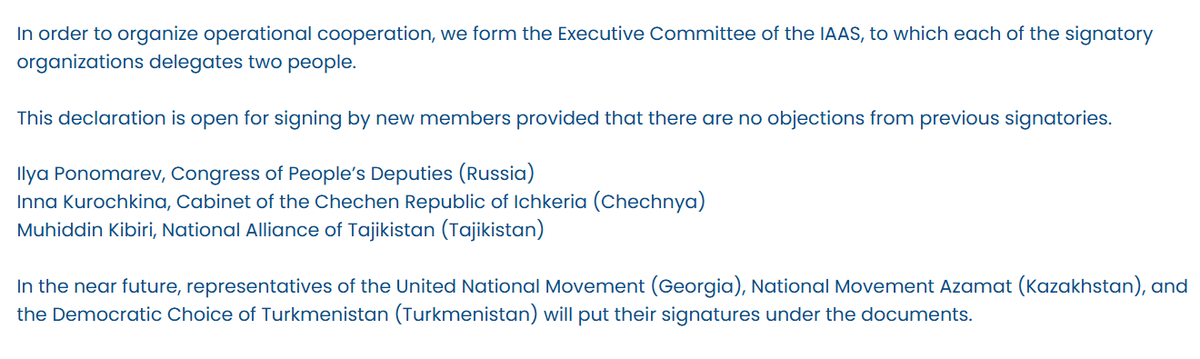
@Tscherkessien Perhaps both sides can have their ways: @iponomarev's Congress of People's Deputies, a gov-in-exile of Russia allied w @legion_svoboda, wrote a proposed constitution that includes self-determination.
They're also apparently allies with the Ichkeria gov-in-exile.
Your thoughts?
⚡️ Four years into the full-scale invasion - and we’re still asking the same question:
Why did so many experts get it wrong?
Why did almost everyone - Ukrainian, Russian and Western analysts alike - believe a full-scale invasion was unlikely?
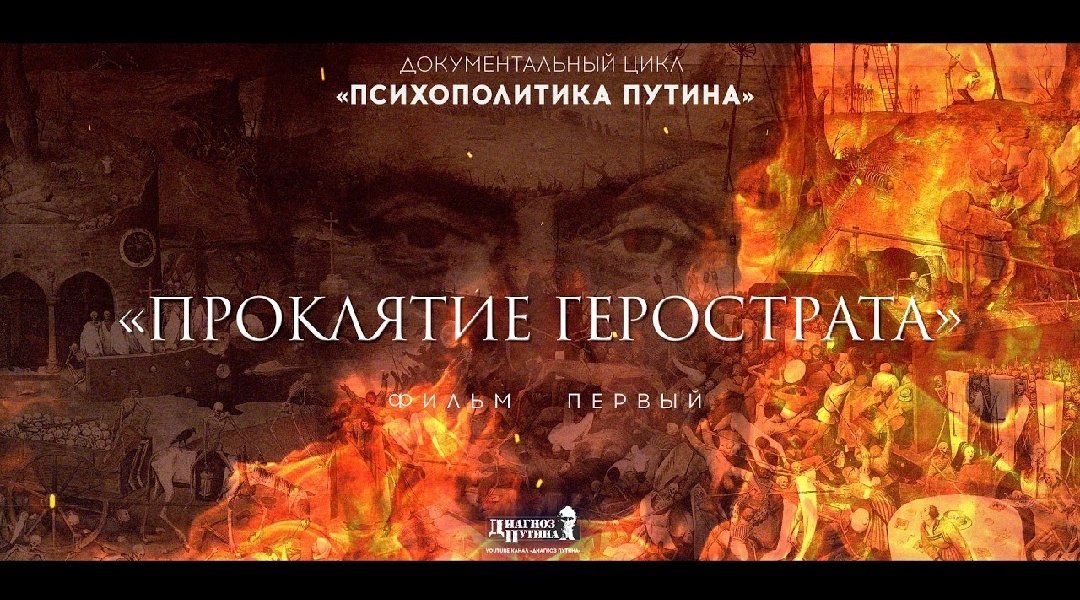
“The Curse of Herostratus” is the first film in the documentary series Putin’s Psychopolitics, and it approaches the war from a different angle: not just geopolitics - but psychology.
https://t.co/Ta3OFTm7GA
The core argument is simple but uncomfortable:
In a personalist dictatorship, the system does not decide. One person does.
If the model of the "rational actor" keeps failing, perhaps the flaw lies in the model itself.
The film explores:
▪️ Why traditional political science proved insufficient
▪️ What a personalist dictatorship really means
▪️ How psychological profiling of political leaders works
▪️ The "shame → resentment → revenge → destruction" mechanism
▪️ The meaning of a "Herostratus act" in modern warfare
Participants include:
🔹️ Sergey Antonov (Diagnosis of Putin project)
🔹️ Larisa Rybalchenko (journalist, Kyiv)
🔹️ Oleg Dunda (@oleg_dunda), MP of Ukraine
🔹️ Alexander Morozov (Charles University, Prague)
🔹️ Ilya Ponomarev (@iponomarev), Chairman of the Congress of People’s Deputies, former State Duma deputy
🔹️ Abbas Gallyamov
🔹️ Pavel Zhovnirenko
🔹️ Dmitry Popov
🔹️ Vladimir Fesenko
🔹️ Fredo Arias-King
To understand this war, you have to understand the person making the decisions.
Lviv attack - destabilization or a signal before negotiations?
In his latest interview, Ilya Ponomarev (@iponomarev) discusses the recent attack in Lviv and its broader implications.
https://t.co/LjOJ8SBdun
▪️ A 23-year-old police officer was killed. More than 25 people were injured.
▪️ The attack doesn’t clearly fit a simple "revenge" explanation.
▪️ It may have been meant to create fear and internal tension.
▪️ Terror can be used as pressure when negotiations are approaching.
▪️ A real high-level meeting would only take place if serious groundwork has already been done.
▪️ This war will end - the only question is how and at what cost.
⚡️ ⚡️⚡️BREAKING: U.S. forces have intercepted another Russian #ShadowFleet tanker: the Aquila II was boarded by American military in the Indian Ocean after violating President Trump’s Caribbean quarantine for sanctioned vessels. The ship tried to flee — the @DeptofWar tracked and hunted it from the Caribbean all the way across to the Indian Ocean. It was carrying Russian and Venezuelan oil. Aquila II is sanctioned by the US, EU, UK, Switzerland, Canada and Ukraine. Video: Department of War
Ponomarev (@iponomarev) on territorial bargaining, internal Russian conflicts and limits of Western pressure.
https://t.co/uUUe43LmTR
🔹️The alleged assassination attempt on a GRU general shows multiple inconsistencies and aligns more with internal Russian security service conflicts than with a Ukrainian operation.
🔹️ Only one negotiation scenario is described as realistic: a territorial deal involving Donetsk versus Zaporizhzhia and Kherson
🔹️Demands for formal territorial recognition are presented as negotiation leverage, not a final red line.
🔹️A frozen frontline without territorial gain is described as politically insufficient for the Kremlin.
🔹️Further U.S. pressure via oil price collapse is considered structurally limited due to shale production constraints.
🔹️Effective pressure is described as targeting buyers, shipping, insurance and secondary sanctions, rather than oil prices alone.
🔹️The Galitsky case is framed as a private family tragedy, without political or Ukrainian involvement.
🔹️ Epstein-related claims of Russian intelligence control are rejected; Epstein is described primarily as part of criminal trafficking networks.
🔹️ Large-scale publication of Epstein files is described as creating information saturation, reducing political impact.
Post-Davos Briefing (recap) – Ilya Ponomarev (@iponomarev) - Chairman of Congress of People's Deputies - on what Davos 2026 signaled and whether dialogue is still feasible.
https://t.co/Kfuxc7RcPh
🔹️ Davos is less about plenary speeches and more about access: leaders, investors, and policymakers all in “one village” networking mode.
🔹️ The three speeches he flags as most telling: Canada (unity vs fragmentation), Trump (self-focused agenda), Zelensky (direct appeal to Europe’s role).
🔹️ Major shift vs last year: Ukraine increasingly viewed not only as a country to support, but as a defense & security partner and a source of battlefield innovation.
🔹️ Growing discussion on Europe’s security vacuum: NATO’s future, European re-armament, and the risk of a wider war if Russia isn’t stopped.
🔹️ Greenland rhetoric: likely more perception than reality, but damaging because it feeds the “NATO split” narrative.
🔹️ Russia at Davos: largely absent as a participant (no “Russia House” era anymore) - present mainly as a security problem. War outlook: Russia can’t win fast militarily; the strategy remains attrition and waiting for Western fatigue.
🔹️ (From the event Q&A)
Energy pressure: refinery strikes matter, but tanker/shadow-fleet disruption is the stronger leverage point.
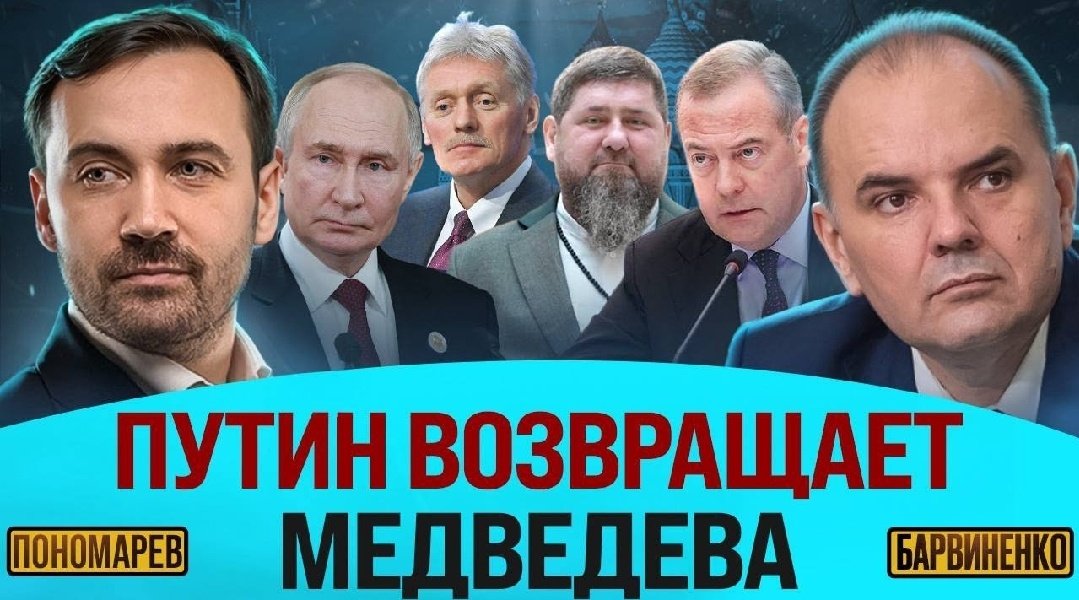
Илья Пономарёв @iponomarev в интервью Виталию Барвиненко идеально разложил ситуацию с так называемой рос. оппозицией и снял розовые очки с европейских политиков и с тех, кто считает ФБК рвушееся в ПАСЕ (для ��его и для кого?) чем-то существенным. Браво! https://t.co/qtLQQXDoWB
Ilya Ponomarev (@iponomarev) on negotiations, Putin’s logic, Ukraine, Trump, Europe, and Russia’s internal dynamics.
https://t.co/XXqf47tpqp
Talks exist - but peace is not the Kremlin’s real objective.
🔹 Putin’s priority is elite loyalty, not public opinion. Any end must look like a non-defeat to his inner circle.
🔹 That’s why Donbas, Crimea, and the NATO narrative matter symbolically more than frontlines.
🔹 Kyrylo Budanov is seen in Moscow as a more “reliable” counterpart than many politicians - he says what he means, which keeps certain channels functional.
🔹 Zelensky’s sharp tone toward Europe reflects reality: some states moved on defense and cooperation, others still move slowly.
🔹 Whatever one thinks of Trump domestically, his pressure pushed Europe toward higher defense spending, clearer security priorities, and less symbolic politics.
🔹️On tensions inside the Russian opposition: Leonid Volkov is criticized for positions seen as attacking Ukrainian leadership or undermining Russians fighting for Ukraine - a serious political problem for exiled opposition figures in Europe, where legitimacy is tied to clear alignment against Kremlin aggression.
🔹️Inside Russia the system is under strain:
• returning fighters & rising violence
• regional budget crises
• elite competition under the surface
• “support” shaped more by fear than belief
🔹️Core point:
As long as the Moscow system remains intact, any pause is unstable. Ending the war requires structural political change inside Russia - not just diplomacy.
Ilya Ponomarev (@iponomarev) on FreedМ: Why peace talks are unlikely – and why this war ends only with regime change.
https://t.co/Yqgzfsk8Zc
In this interview, Ilya Ponomarev argues that meaningful negotiations with the Kremlin remain highly unlikely.
🔹️Public opinion matters less than elite loyalty: Putin’s priority is proving he "did everything right" to his inner circle.
🔹️The war is structural, not personal: it won’t end by compromise, but only through dismantling the regime’s system logic.
🔹️Domestic violence will escalate: returning fighters and social strain are a predictable "boomerang effect."
🔹️The Kremlin’s cynicism: the war is used as a tool of social engineering and elite control.
🔹️Change depends on pressure on elites: both increased risk and clear incentives are needed to trigger internal rupture.
Пока одни создают на войне и трагедии карьеру и сохраняют комфорт, другие выбирают реальный риск и разрыв всех связей с режимом.
🎥 Рекомендуем к просмотру: https://t.co/zq9cWlzpYs
Евгения Чирикова прямо говорит о том, как власть использует такие маркеры для манипуляции сознанием, сокрытия реальных проблем и навязывания лояльности — даже под вид��м «альтернативы».
Мы продолжаем держать вверенные нам рубежи украинского фронта, несмотря на снегопады, мороз и непогоду.
И сегодня нам необход��ма ваша поддержка: для эффективного выполнения задач и сохранения жизней.
Украинское командование обеспечивает легионеров всем необходимым вооружением и снаряжением. Но война требует постоянных ресурсов: ремонт техники, закупка расходных материалов и оперативное закрытие критических потребностей.
Текущие сборы:
▫️ на БПЛА: https://t.co/upMyQpfwBu
▫️ на ремонт и закупку автомобилей: https://t.co/JgSNXtarTQ
PayPal:
▫️ [email protected]
Все актуальные реквизиты помощи размещены на странице «Поддержать» официального сайта Легиона. Там же открыты «монобанки» с приорит��тными направлениями сборов и криптокошельки.
Оформите ежеме��ячную подписку на поддержку Легиона — станьте частью борьбы против путинского режима.
Ilya Ponomarev: THIS WORKED!
Putin miscalculated. Deceiving Trump turned into a catastrophe.
A brief assessment of 2025 and its strategic consequences by @iponomarev.
https://t.co/0EWuNn7cd3
🔹️Trump is pro-American, not pro-Russian. Kremlin expectations collapsed.
🔹️Ukraine remains the frontline - for Europe and the West.
🔹️Russia’s future was lost in 2014 (Crimea). 2022 accelerated the decline.
🔹️Record military losses point to a strategic dead end.
🔹️ Inside the system, elites understand the crisis but publicly deny it.
🔹️China does not support Russia - it exploits it.
As long as Putin remains in power, Russia has no future.
Ponomarev: A New Peace Plan Is Already in the Kremlin.
Putin’s Concessions Are Inevitable.
Zelensky Has Made the First Move.
https://t.co/A5YqZnubqG
In a recent interview, Ilya Ponomarev (@iponomarev) explains why a new “peace plan” has already reached the Kremlin and why Moscow is negotiating from a position of weakness, not strength.
🔹️The negotiation process never stopped. Over the past year, positions have slowly shifted, not because Putin wants peace, but because sustained pressure is forcing adjustments.
🔹️Putin needs something he can present as a “victory.” Sanctions are biting, oil discounts are deep, reserves are shrinking. The confidence he projects is bluff.
🔹️Territory remains the hardest issue. Almost everything else is negotiable. That’s why the Kremlin talks and delays at the same time.
🔹️Trump’s push for fast deals adds pressure to the process. Moscow tries to exploit urgency, because delay and impatience have always been Putin’s leverage.
🔹️The Russian resistance is part of this pressure. Not diplomacy alone, but internal resistance, sabotage, and refusal to accept the regime’s narrative shape the situation on the ground.
🔹️Any pause without real change won’t end the war. As long as Putin remains in the Kremlin, violence will only shift - not stop.