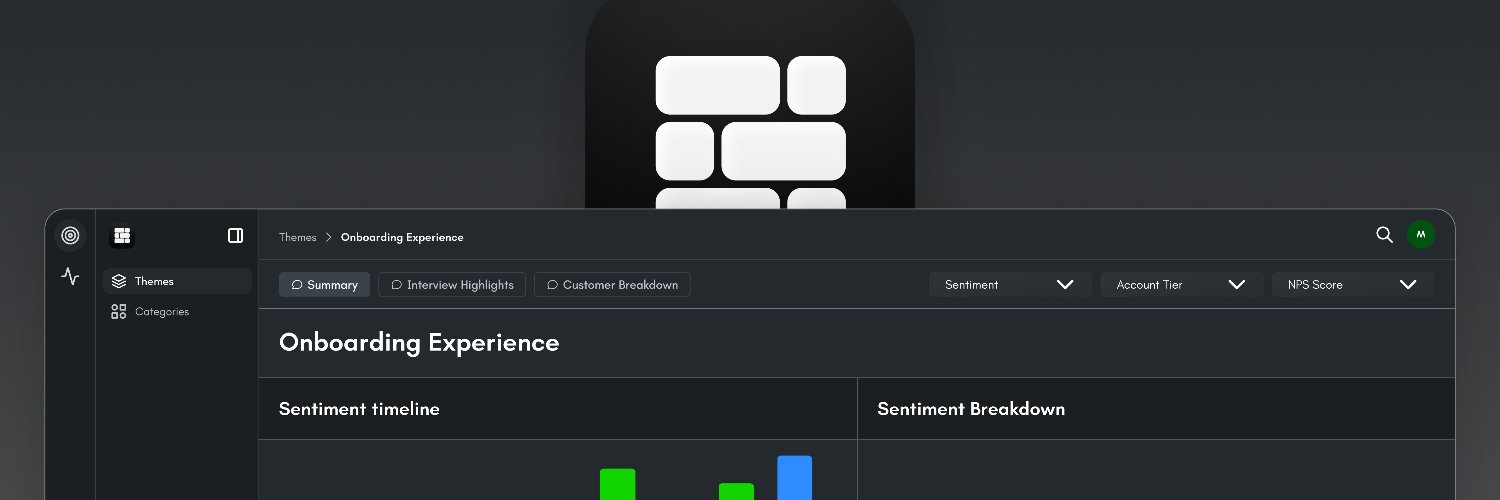
Deck is now in Open Beta 🚀
Deck exists to enable product teams to build better software by consolidating their scattered customer feedback.
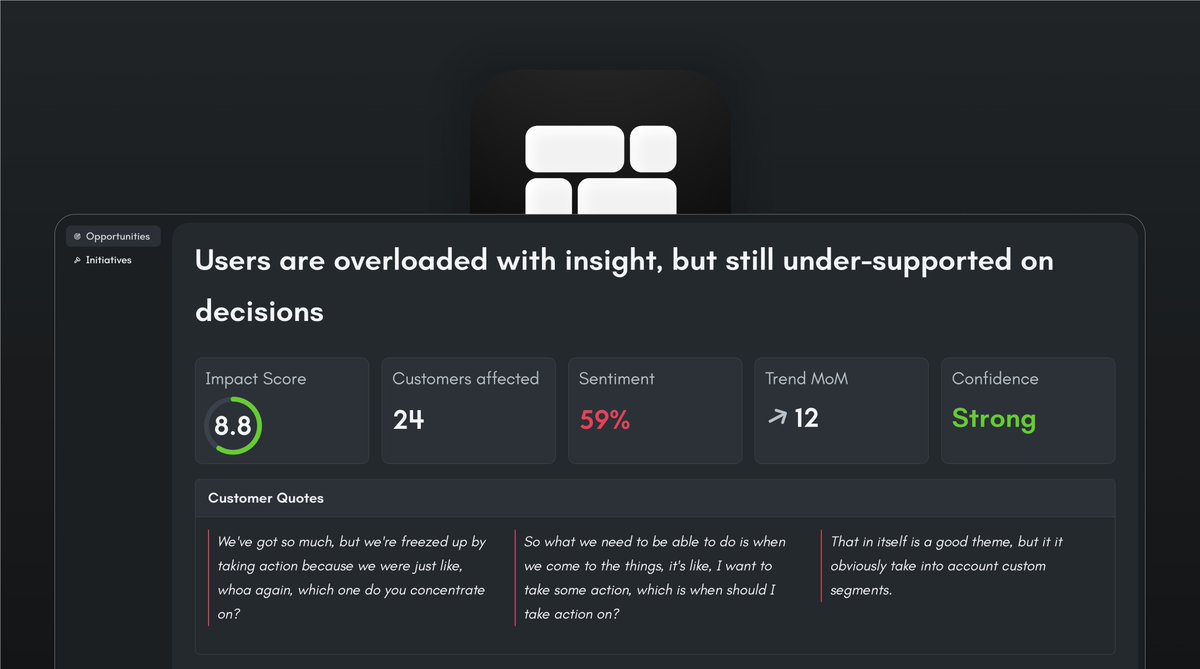
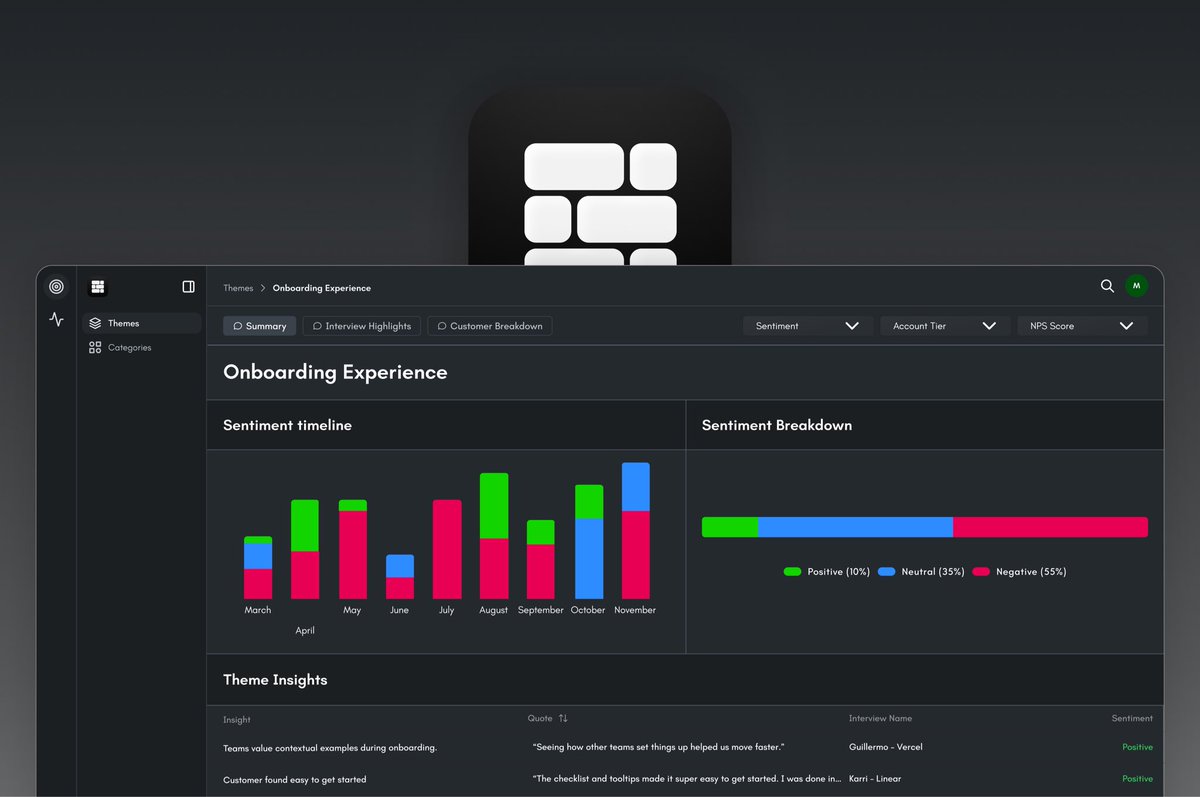
Deck scours your data across Slack, user interviews, CSVs, sales calls, and more to deliver you a ranked list of opportunities to add value to your customer.
If you're looking to take customer-led decisions, Deck is for you.
Introducing Deck: consolidate your scattered customer feedback and enable your product team to build better software in the AI agent era.
I built it because product teams should not have to search interviews, surveys, support tickets, Slack, sales calls, NPS, and analytics just to understand what customers need next.
@_getdeck
You're getting another shot at building the things your customers actually need.
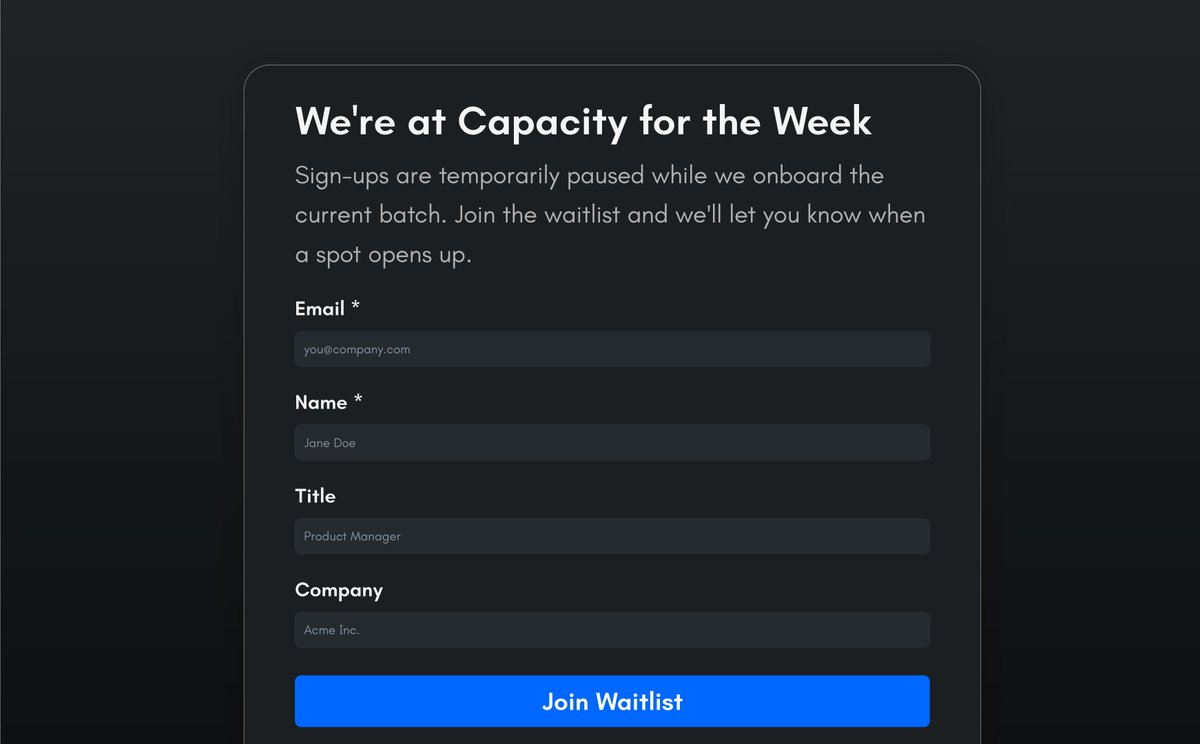
@_getdeck is open for sign-ups again, and we only take 50 a week.
Once we hit 50, the doors close and everyone after joins the waitlist. We don't like onboarding more people than we can actually pay attention to.
Deck is for customer-centric product teams looking to build better product in the AI agent era.
Deck pulls feedback from your interviews, tickets, Slack, surveys, NPS, and sales calls. It then turns it into themes, opportunities, and projects you can trace straight back to the customer who said it.
We also have a 25% lifetime discount for the first 50 paying customers.
PS: you won't be the first one.
We're open for signups again.
If you're looking to consolidate all your scattered customer feedback to build better product, this is your time.
Signup link in comments.
Building Claude Code and Codex Plugins are the best example of what it means to do software in 2026 with LLMs.
Easy to execute. Hard to design it well.
Plugins are truly the easiest thing to build - especially if an MCP server is already available.
The hard part isn’t building the plugin. It is being thoughtful enough about what you’re building to design it according to what you customer needs.
That’s what software building will look more and more like in the future: spend a lot of time solving the problem outside the code - talking to people, understanding their journey, their goals, needs.
Then build the solution.
It’s that simple. Just not that easy.
What's coming next at @_getdeck 👇
1. Projects feature: create initiatives, then create several projects within initiatives. You can add specific customer evidence for each project, track feedback pre and post-implementation,
2. Jira/Linear Integrations: Link projects to your project management epics or create them in Deck so your strategy, customer feedback, and execution layer are always in sync
What else can we ship to enable product teams to build better customer-led software?
Proud founder moment below 👇
On Friday, I spoke with a customer who showed me how they were pushing their @_getdeck data into their Snowflake Data Warehouse. They:
1. Set up a daily Scheduled Task in Claude that gets all insights generated over the last day,
2. Save it to a CSV,
3. Uploads it into their Snowflake Data Warehouse.
They now have access to all of their qualitative data in their Snowflake instance, which allows them to:
1. Better understand churn behavior,
2. Combine qualitative NPS score data with event-driven usage, identifying different usage patterns across promoters, passives, and detractors.
It's still Day 1 🚀
We're open for sign ups again.
There are only 43 spots left this week.
Access is currently capped because we want teams to get value, not just create another account.
Deck is for product teams trying to make better decisions from the feedback they already have: interviews, support tickets, Slack, surveys, NPS, and the rest of the messy pile.
Most teams do have customer insight.
They just don't have it organized in a way that changes what gets built.
That's what we're working on.
If you're looking to build a better customer-informed product, sign up at getdeck(dot)io.
We hit its weekly signup limit 5 days after launch.
We're grateful for everyone who signed up early. It's exactly the validation we needed to keep building.
If you missed out, the waitlist is open at getdeck(dot)io.
Waitlist users get access 24 hours before public signups open.
If you'd rather wait, signups open publicly each week. You'll get there.
Either way, we'll see you inside.
@_getdeck opens for its second week of open beta intakes tomorrow.
Signup to the waitlist in the link below if you want to learn.
Spots are likely to fill fast - and we’re only taking 50 customers per week to make sure onboard is smooth for everyone and we can learn from customers.
Link in 🧵
We hit its weekly signup limit 5 days after launch.
We're grateful for everyone who signed up early. It's exactly the validation we needed to keep building.
If you missed out, the waitlist is open at getdeck(dot)io.
Waitlist users get access 24 hours before public signups open.
If you'd rather wait, signups open publicly each week. You'll get there.
Either way, we'll see you inside.
I didn't think I'd be writing this post yet.
5 days in, and Deck has hit its weekly signup limit. Genuinely didn't see that coming.
Thank you to everyone who jumped in early. It means a lot.
To everyone who hasn't signed up yet: the waitlist is open at getdeck(dot)io.
Waitlist users get access 24 hours before everyone else, and you're guaranteed a spot when we open back up.
If the waitlist isn't your thing, we'll be opening signups again soon.
Either way, we're just getting started 🚀
I doubt you can design a great customer-informed product faster than this 👇🏼
Awesome use case with Codex, @_getdeck and @paper .
Had 3 different customers asking for a Jira integration - we use Linear, so we’re building a solution where project management tools can be linked to Deck initiatives to track success and customer feedback post-implementation properly.
Quite an awesome workflow:
1. Deck's Initiative agent turned the customer evidence into an outline: problem statement, requests, affected workflows, and what mattered most.
2. I added my own context to the doc. AI should not replace judgment here. It should make the evidence easier to reason about.
3. I used the Deck MCP Server inside Codex to pull the initiative context into the work.
4. I spawned my usual Codex subagent team, each with a different design personality.
5. Those agents explored and refined directions in Paper.
From inception to first design draft, it all took about 30 minutes.
Not final designs.
Not production-ready.
Not a substitute for taste.
But i it wasn’t for @_getdeck , this wouldn’t even be doable.
In the video below, Codex is on the left, Deck in the middle, and Paper on the right.
The video is bad, but the workflow is out of this world.
We're getting full for the week.
New sign ups open publicly for new users every Tuesday, 8:30AM AEST.
Users in the waitlist get access 24 hours earlier.
Deck's Open Beta opened 2 days ago.
We're only letting 50 new customers in each week while we keep onboarding tight and useful.
We're already well past half of that for week one.
If your product team wants to leverage AI Agents to build better customer-led product, better now than later.
Deck is now in Open Beta 🚀
Deck exists to enable product teams to build better software by consolidating their scattered customer feedback.
Deck scours your data across Slack, user interviews, CSVs, sales calls, and more to deliver you a ranked list of opportunities to add value to your customer.
If you're looking to take customer-led decisions, Deck is for you.
Introducing Deck: consolidate your scattered customer feedback and enable your product team to build better software in the AI agent era.
I built it because product teams should not have to search interviews, surveys, support tickets, Slack, sales calls, NPS, and analytics just to understand what customers need next.
@_getdeck