$GITPAD is live.
https://t.co/Twrv6i4OKS
0x10a00d4325673d8787db008b36274dc6df3b5714
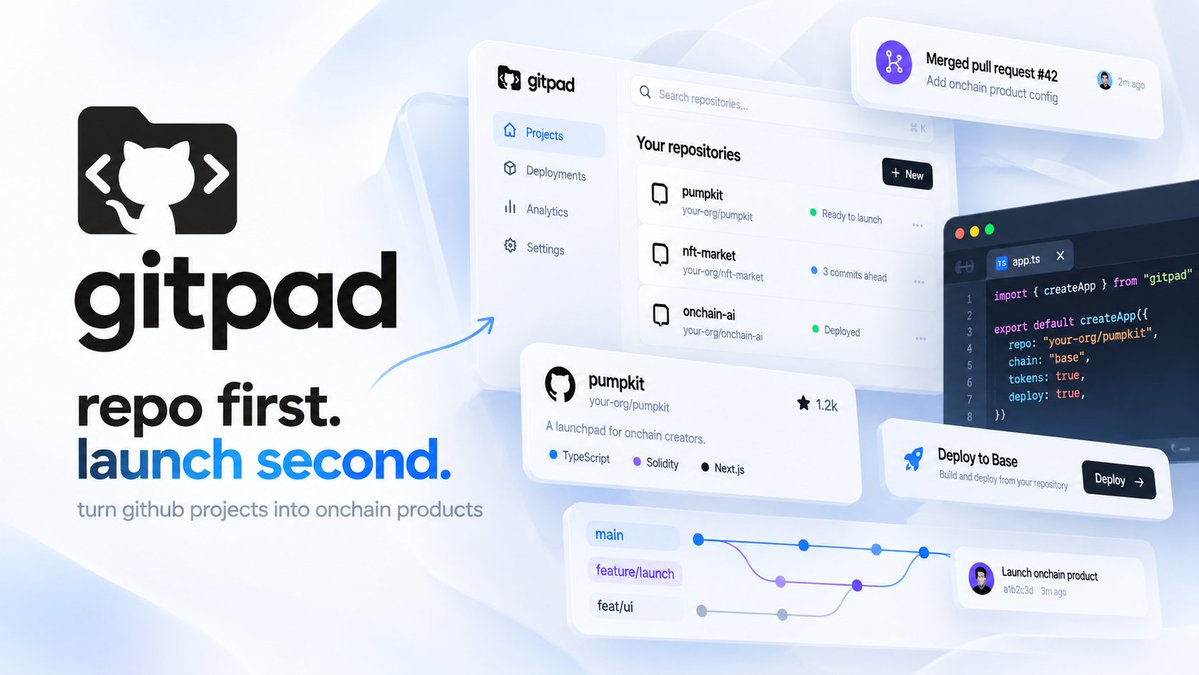
gitpad is built for one simple idea: the repo should come before the token.
connect github. verify the repository. show the code, commits, contributors, forks, and project history. then take that project onchain.
public repos stay open to explore, but actual launches require verified github ownership so people can’t just paste someone else’s work and claim it as their own.
this is not another launchpad for empty promises.
real repos. real builders. real history. onchain launches.
we’ve spent enough time hinting at it, so here’s the direction.
gitpad’s token is going to be tied into the actual growth of the product not just sit next to it.
launch activity, builder growth, platform fees, ecosystem incentives, and treasury deployment are all being designed to feed back into the same system over time.
the goal is to create a real flywheel:
more builders → more launches → more platform activity → more resources for gitpad → more reasons to build + stay → more growth
we’ll be publishing the full mechanics, allocations, and how each piece connects shortly.
we want the token to make more sense as gitpad gets bigger not depend on random pumps to stay relevant.
gitpad is much bigger than just a "launchpad".
the interesting part isn’t just that repos can go onchain it’s that existing open-source projects now have a new path to funding, distribution, and community without starting from zero.
there are already thousands of builders with code, users, contributors, and history sitting on github.
gitpad gives that work a new surface.
that’s the opportunity: bring proven software into robinhood instead of asking robinhood users to bet on promises.
@ShinraHQ_ we’ll be posting a full breakdown of the token + utility shortly.
the important part is that we’re not treating it as something separate from gitpad the goal is for product activity, launches, builders, and the token to reinforce each other over time.
more details soon.
gitpad makes sense because github already has the signal most launchpads are missing.
the code is there. the commits are there. the contributors are there. the history is there.
instead of asking people to trust a landing page and a ticker, gitpad starts with something developers already understand and can inspect.
that creates a much stronger launch model:
repo → verified owner → public project history → onchain launch
if robinhood is going to attract serious builders, this is the kind of bridge that actually makes sense.
not “come launch a token.”
come bring the thing you already built onchain.
https://t.co/SLNyfSHPUz
$GITPAD is live.
https://t.co/Twrv6i4OKS
0x10a00d4325673d8787db008b36274dc6df3b5714
gitpad is built for one simple idea: the repo should come before the token.
connect github. verify the repository. show the code, commits, contributors, forks, and project history. then take that project onchain.
public repos stay open to explore, but actual launches require verified github ownership so people can’t just paste someone else’s work and claim it as their own.
this is not another launchpad for empty promises.
real repos. real builders. real history. onchain launches.
gitpad has the potential to bring an entirely new wave of builders into robinhood.
not just anonymous launches. real developers with real repos, real histories, real contributors, and projects people already know.
if respected open-source builders can take something they’ve already shipped on github, verify ownership, and bring it onchain through gitpad, robinhood suddenly becomes a lot more interesting than just another place to trade tokens.
that’s the bigger opportunity here:
bring credible builders onchain, give their work a market, and let robinhood become a home for real software not just speculation.
gitpad can open the door to a completely different class of launches. WE'RE HERE TO BUILD.
yes. openpad uses the official github oauth flow, so you’re connecting directly through github, not giving us your github password.
we only request the permissions needed for repo verification/access, and you can review or revoke the connection from your github settings at any time.
for private repos, github is what handles the authorization openpad never sees your login credentials.
due to higher-than-expected demand, some gitpad launches were running into issues earlier.
we’ve pushed the fixes, upgraded the backend handling, and the launch flow is now fully operational again.
everything should be much smoother from here.
appreciate everyone who flagged it. back to shipping.
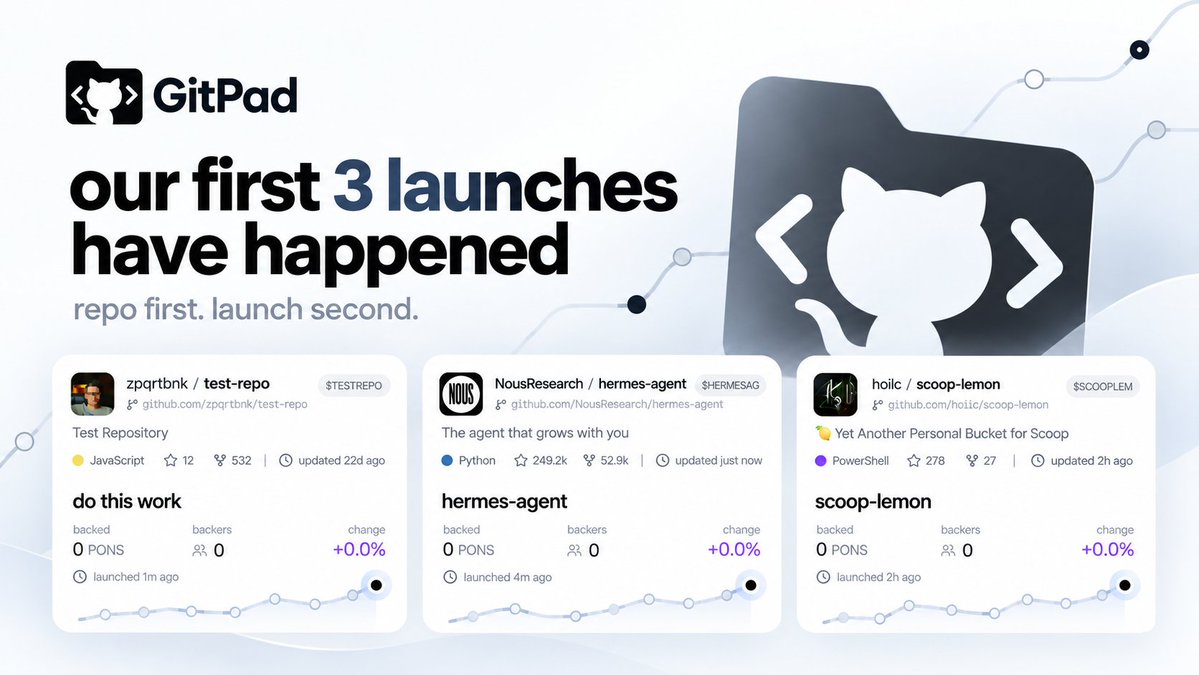
our first 3 gitpad launches are officially live.
this is exactly what we wanted to see first: real github repos turning into onchain launches through the repo-first flow.
test-repo. hermes-agent. scoop-lemon.
small start, but an important one.
repo first. launch second.
https://t.co/6oNYWyerNA
anyone can discover and explore a public github repo through gitpad.
but actually claiming that project and launching around it is reserved for the verified repo owner.
that means nobody can just paste someone else’s work, pretend it’s theirs, and turn it into a launch.
public discovery stays open.
ownership stays protected.
that’s the balance we want: keep gitpad open enough for anyone to find good projects, while making sure the actual builder is the one who gets to claim and launch them.
https://t.co/SLNyfSHPUz
repo first. launch second.
gitpad starts with the thing most launchpads skip: the actual project.
connect github, verify the repo, show the code and activity, then take it onchain.
no blank token page pretending something will be built later.
the work comes first. the market comes after.