Starlink satellite internet | xAI Subsidiary).
I’m looking forward to riding the SpaceX Starship rocket and traveling anywhere on Earth in under an hour. 🤯🚀🌏
@SpaceX is officially scheduled to begin public trading on the NASDAQ on Friday, June 12, 2026. The initial public offering is expected to be the largest in U.S. history, targeting a valuation of approximately $1.77 trillion (core business segments: launch services |
✅ Plug & charge worked smoothly
✅ No touching the screen
✅ No credit card needed
✅ Charging session started automatically
Important note 📝
If you own an older Model 3 or Model Y, the Lectron CCS to NACS adapter may NOT work properly with Electrify America chargers.
⚡️PSA for Older Tesla Model 3 & Model Y Owners⚡️
Tested my 2018 Tesla Model 3 at Electrify America chargers using the official Tesla CCS1 to NACS adapter.
@Tesla@ElectrifyAm
Lit up 🔥 V4 (16-stall) Tesla Superchargers at Gloucester Premium Outlets, Blackwood, NJ 🇺🇸 (off Exit 7B, Route 42 / Zimmerman Drive). It’s not on Tesla’s website or in-car maps yet, so charging is complimentary.
@MarcoRPi1@TeslaCharging
@elonmusk Here’s a clear explanation of why achieving the ideal performance of FSD Supervised on the roads in India and Morocco is particularly challenging — even with all its advanced capabilities:
1. Unstructured and Unpredictable Roads
In many areas of India and Morocco, roads are not as well-marked or consistently maintained as in the U.S. or Europe. Lane markings might be faded, missing, or simply ignored by drivers. Road conditions can vary dramatically even within the same city, making it harder for FSD systems — which rely heavily on visual cues — to interpret the environment accurately.
2. Diverse and Erratic Driving Behaviors
Unlike more regulated environments, driving styles in India and Morocco can be highly unpredictable. Drivers may change lanes abruptly, drive in the wrong direction, or ignore traffic signals. Pedestrians, animals, rickshaws, motorcycles, and street vendors may share the road with cars — all contributing to a chaotic driving scene that’s difficult for AI to consistently manage.
3. Limited Local Training Data
FSD Supervised is trained on billions of miles, but much of that data likely comes from places with standardized road systems and driving laws (e.g. U.S., Canada, Europe). While Tesla vehicles do exist in India and Morocco, their numbers are low, meaning there’s less region-specific data to fine-tune the system for local driving norms and infrastructure quirks.
4. Infrastructure Gaps
Features like traffic lights, stop signs, road signs, and GPS mapping can be inconsistent or absent, especially in rural or densely populated urban areas. This makes it harder for FSD to navigate with full confidence since it relies on a combination of vision, GPS, and HD maps.
5. Cultural and Legal Hurdles
In both countries, local traffic laws and informal rules often coexist — and they can conflict. For instance, yielding might depend more on assertiveness than legality. Teaching a system to “fit in” while staying safe and legal is a major challenge in these environments.
Summary:
While FSD Supervised is incredibly advanced, its performance depends heavily on structured data and predictable environments. The rich, complex, and dynamic road ecosystems of India and Morocco push the boundaries of current AI capabilities, making full, flawless deployment harder — though not impossible with time and adaptation.
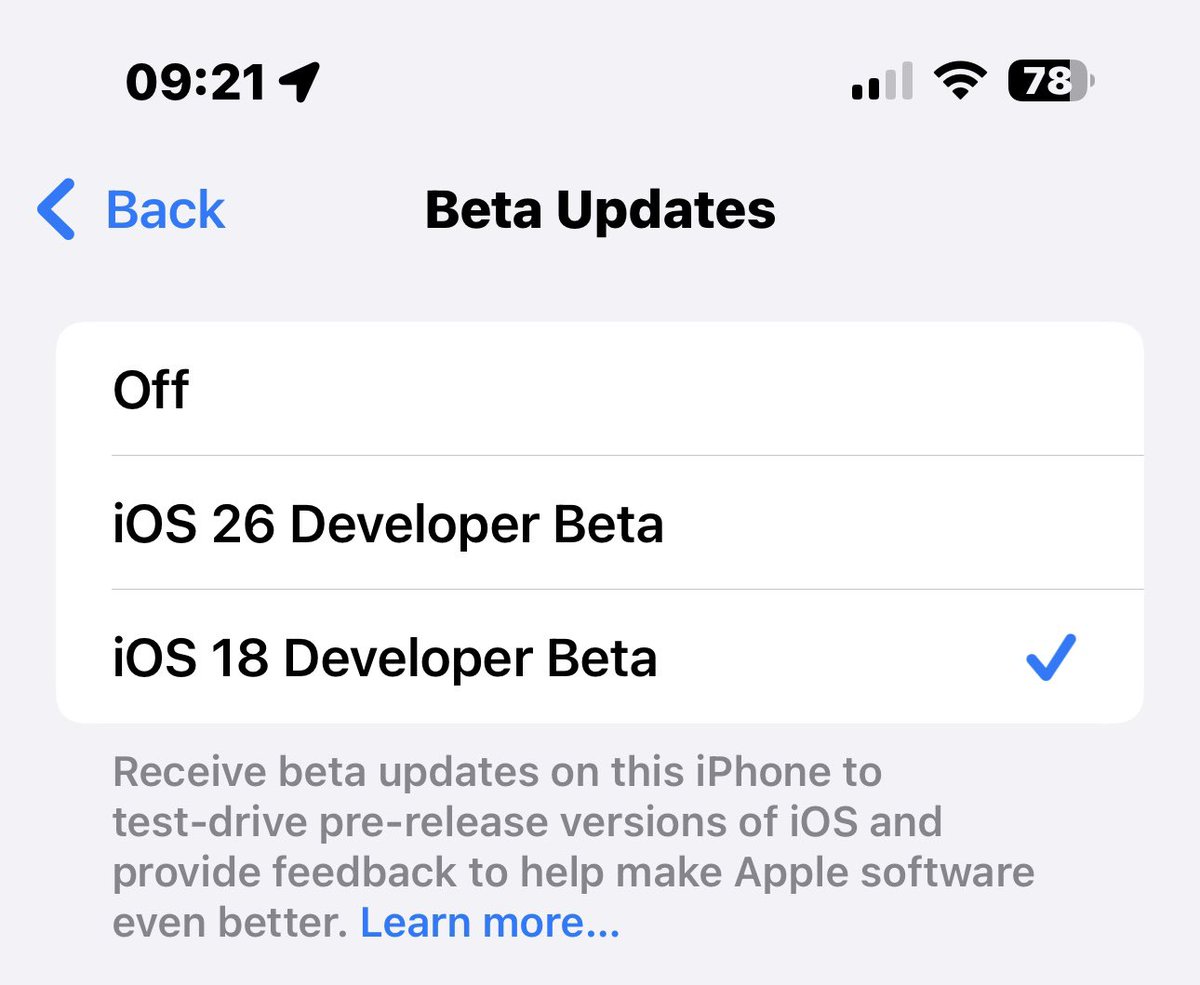
iOS 18.6 (Beta 6) vs. iOS 26
Apple has decided to get rid of that naming scheme. Apple is naming each new iOS after the coming year. So by 2026, all the new iPhones will be running iOS 26.