Peer-reviewed articles with an international perspective pertaining to the clinical care of patients with disorders of the central and peripheral nervous system
🚨 How long should dual antiplatelet therapy (DAPT) really be continued after minor ischemic stroke or high-risk TIA?
A new systematic review and meta-analysis of 27,167 patients examined the week-by-week balance between ischemic benefit and bleeding risk after initiation of DAPT.
✅ Significant reduction in major ischemic events during week 1 (RR 0.71)
✅ Major bleeding increased during weeks 1 and 2
✅ Benefit-to-risk ratio was most favorable during the first week (12.87) and declined rapidly thereafter
✅ Supports further investigation of personalized DAPT duration, particularly in patients at higher bleeding risk
The study provides a fascinating time-course perspective on DAPT efficacy and safety, building upon lessons from CHANCE, POINT, THALES, and INSPIRES.
📄 Article: Optimal duration of dual antiplatelet therapy for secondary stroke prevention: A systematic review and meta-analysis
https://t.co/StjUhnQqgr
#Stroke #Neurology #VascularNeurology #StrokePrevention #TIA #AntiplateletTherapy #DAPT #EvidenceBasedMedicine #NeurocriticalCare #JournalOfClinicalNeuroscience #SecondaryPrevention #MedTwitter #NeuroTwitter #NeurologyResearch
Proud to share our new meta-analysis on DAPT duration after minor stroke/TIA.
In 27,167 patients, the greatest reduction in ischemic events occurred during the first week, while bleeding risk remained elevated for ~2 weeks.
Worth exploring in patients at higher bleeding risk.
Neuroinflammation continues to emerge as a key driver of outcomes after aneurysmal subarachnoid hemorrhage.
This prospective cohort study found that a sustained elevation in neutrophil-to-lymphocyte ratio (NLR) from days 3–12 post-ictus was independently associated with poor long-term functional outcomes following aSAH.
Interestingly, prolonged inflammatory signaling appeared more predictive of outcome than delayed cerebral ischemia or hydrocephalus alone.
Important work highlighting the potential role of dysregulated inflammation in secondary brain injury — and the need to better understand the molecular pathways driving recovery after aSAH.
Read the article here: https://t.co/d0nPVe4nIm
hashtag#NeurocriticalCare hashtag#Stroke hashtag#SubarachnoidHemorrhage hashtag#Neuroinflammation hashtag#CriticalCare hashtag#Neurosurgery hashtag#Neurology hashtag#ICU hashtag#NeuroICU hashtag#Research hashtag#MedTwitter hashtag#AneurysmalSAH hashtag#BrainInjury hashtag#CriticalCareMedicine
New systematic review exploring advanced MRI biomarkers following stem cell implantation in stroke recovery.
This review highlights how multimodal imaging — particularly DTI and fMRI — may help track neuroplasticity and motor recovery after stem cell therapies, with the strongest associations currently seen in mesenchymal stem cell (MSC) trials. Fascinating intersection of neurorecovery, imaging biomarkers, and regenerative neuroscience.
Important work as we continue to refine how we objectively measure recovery and therapeutic response after stroke.
Read the article here: https://t.co/2Mer5rB6NW
hashtag#Stroke hashtag#NeurocriticalCare hashtag#Neurology hashtag#Neuroscience hashtag#StemCells hashtag#MRI hashtag#DTI hashtag#fMRI hashtag#Neurorehabilitation hashtag#RegenerativeMedicine hashtag#BrainInjury hashtag#ClinicalResearch hashtag#JournalOfClinicalNeuroscience
📢 Now published in the Journal of Clinical Neuroscience: Wongsripuemtet et al. investigate whether early blood pressure variability, a marker of autonomic dysfunction, is associated with clinical outcomes and brain injury biomarkers in patients with moderate-to-severe TBI.
Drawing on the multicentre TRACK-TBI dataset (18 U.S. Level 1 trauma centres, 2014–2018), this study explores BPV and associations with functional outcomes, blood-based biomarkers and mortality.
Key findings:
→ Higher 24-hr systolic BP variability (SSD) associated with increased in-hospital mortality (OR 1.13, 95% CI 1.00–1.27; p = 0.048)
→ 72-hr SSD linked to elevated hs-CRP
→ No significant association with 6-month functional outcome (GOSE-TBI)
Read the full article:
🔗 https://t.co/DxHYUI4dyf
#TraumaticBrainInjury #TBI #CriticalCare #Neurotrauma #NeuroCriticalCare #TRACKBI #BrainInjury #ICU #Neuroscience #ClinicalResearch #Biomarkers #OpenAccess #JournalOfClinicalNeuroscience
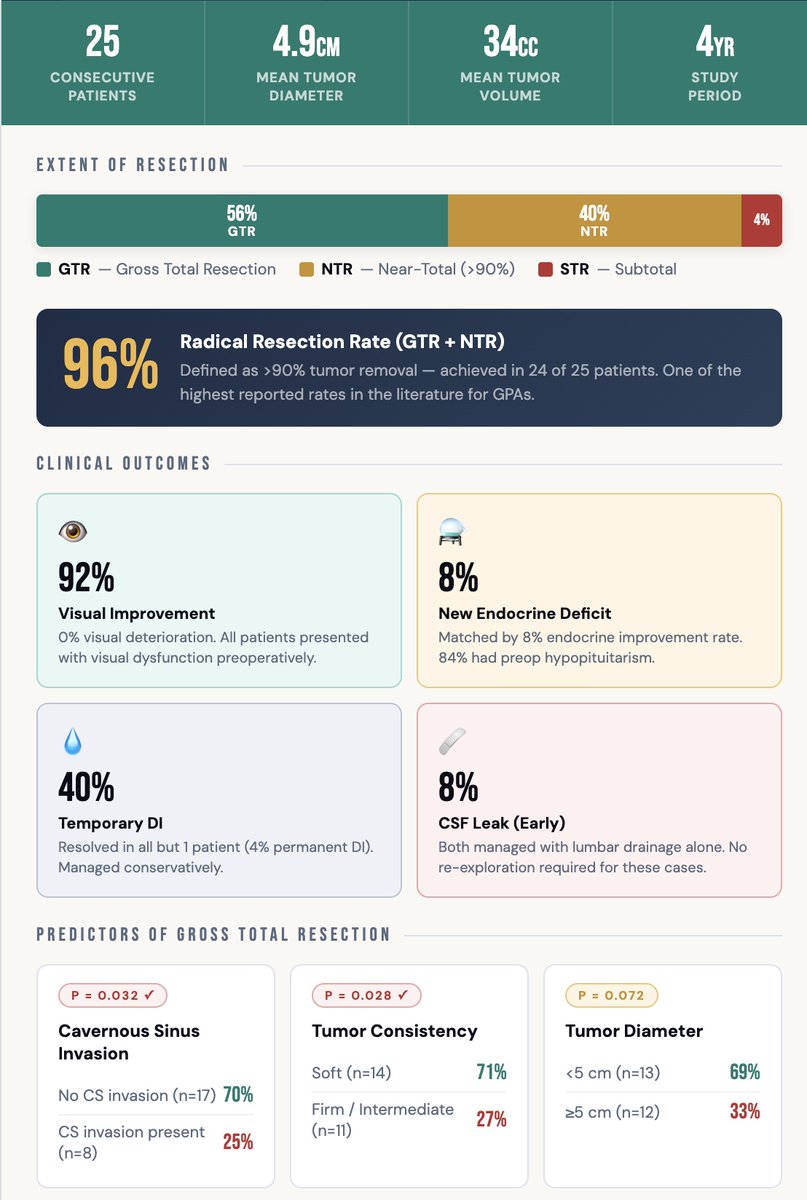
🧠 A new manuscript on experience with Giant Pituitary Adenomas using the Endoscopic Endonasal Approach (EEA):
In 25 consecutive cases at AIIMS New Delhi:
✅ 96% radical resection rate (GTR + NTR)
👁️ 92% visual improvement
🚫 Zero vascular injuries
🚫 Zero perioperative mortality
A lesson? Tumor consistency & cavernous sinus invasion, not size or volume, are what truly predict whether you'll achieve gross total resection.
📄 https://t.co/2fs38W3ucT
#Neurosurgery #PituitaryAdenoma #SkullBase #EndoscopicSurgery #AIIMS #Neuroscience #BrainSurgery #ResearchPublication #MedicalEducation
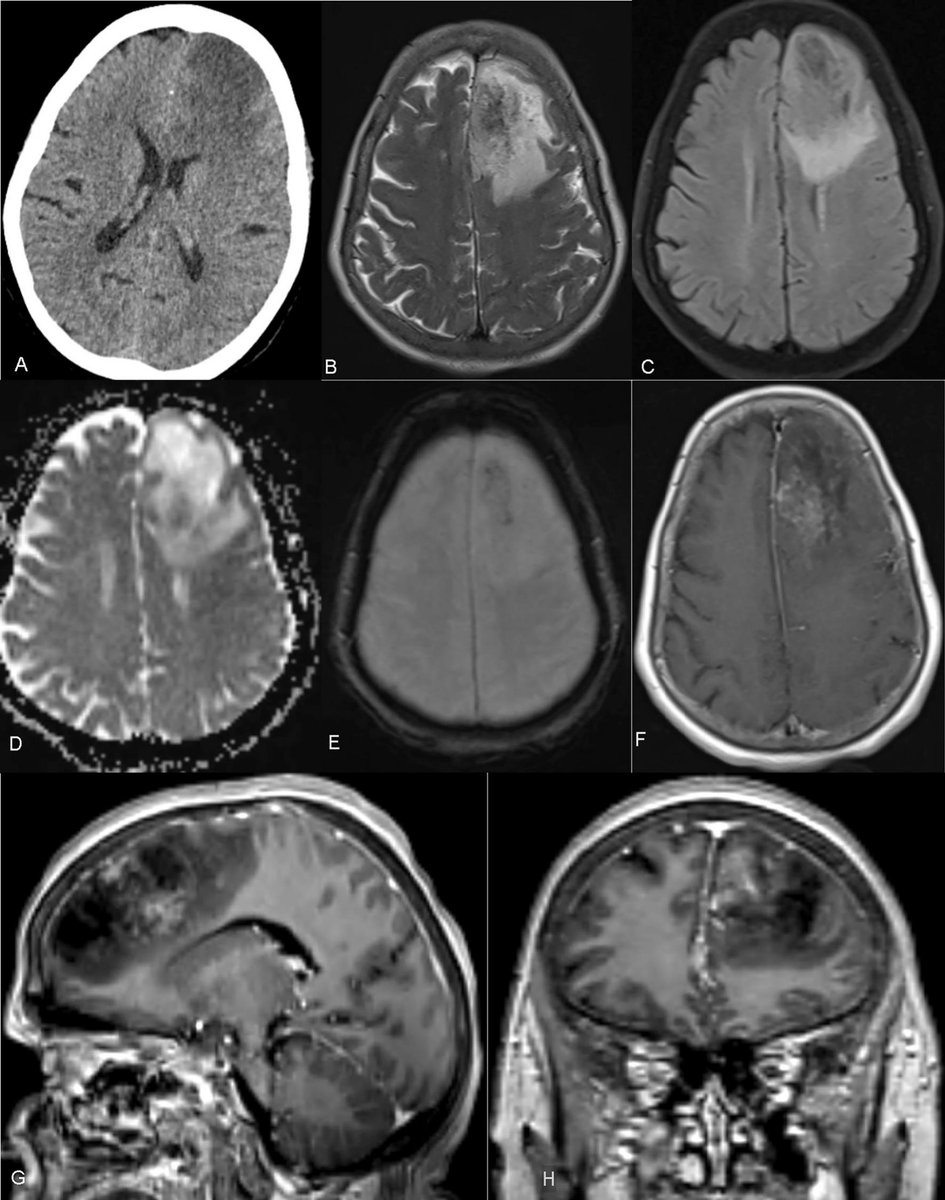
Cerebral rheumatoid vasculitis masquerading as an intracranial neoplasm — a great reminder to keep autoimmune etiologies on the differential for atypical brain lesions. When imaging is inconclusive, biopsy is essential. Early immunosuppression can change outcomes.
🔗 https://t.co/hUPvvs9stw
#NeuroTwitter #NeurocriticalCare #Neuroimaging #Stroke #Rheumatology #CNSVasculitis #MedEd #AcademicMedicine #JCN
Early ketamine in severe #TBI may be safer than historically believed. In a national cohort, early ketamine was associated with lower mortality and lower brain death rates, without increased craniotomy/craniectomy.
Important data challenging old dogma.
🔗 https://t.co/dZx87uMgTR
#NeurocriticalCare #NeuroICU #Trauma #Ketamine #BrainInjury #CriticalCare
🧠 Anterior spinal artery aneurysm — a rare cause of SAH
What could cause this?
A reminder to think beyond intracranial aneurysms when conventional angiography is negative.
🔗 https://t.co/H7SsjHz4FI
#NeuroTwitter#NeurocriticalCare#SubarachnoidHemorrhage#Spine #Neurosurgery #NeuroImaging #RareDiseases
🦴 PT after spine surgery — helpful or hype?
New systematic review (31 studies, 4,300+ pts) shows early PT benefits pain & function after non-fusion lumbar surgery, with mixed results after fusion.
Safe, short-term gains; long-term clarity still needed.
🔗 https://t.co/de59PNuyKN
#SpineSurgery #PhysicalTherapy #NeuroTwitter #OrthoTwitter #Rehab #EvidenceBasedMed #JOCN
Clipping vs coiling for ruptured ACOM aneurysms...is one really better? 🤔
New systematic review shows clinical equipoise, with higher occlusion rates for clipping but similar functional outcomes overall.
🔗 https://t.co/W6pEFsOsgU
#NeurocriticalCare#Neurosurgery #Endovascular #SubarachnoidHemorrhage
🧠 Images in Neuroscience
Twiddler syndrome after GPi deep brain stimulation—an important, rare cause of DBS failure. Lead coiling, fracture, and symptom recurrence resolved with surgical revision and generator fixation.
🔗 https://t.co/QKc2WLFATp
#Neurosurgery#DBS #MovementDisorders #Neuroimaging #JOCN
National trends in infectious intracranial aneurysm management: Endovascular treatment ↑, open surgery ↓ from 2000 to 2019—with no difference in in-hospital mortality. Important implications for IE-associated cerebrovascular disease.
🔗 https://t.co/K8jnyiA8P4
#NeurocriticalCare #NeuroIntervention #Stroke #Endocarditis #TCD #Neurosurgery
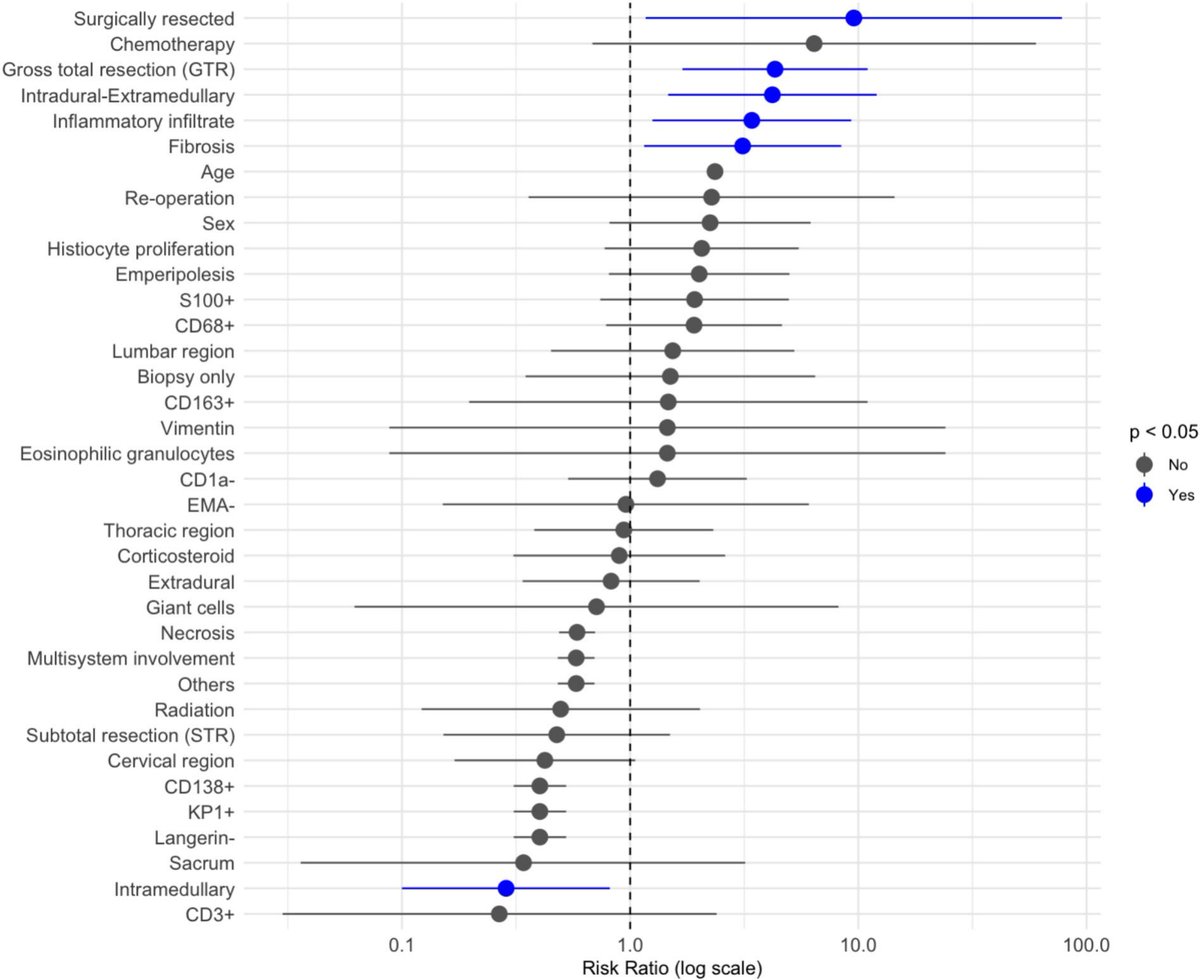
Spinal Rosai–Dorfman disease is rare, but outcomes depend heavily on anatomy and surgical strategy.
🧠 Key findings from this IPD meta-analysis:
• Intradural-extramedullary location strongly predicts full neurological recovery
• Intramedullary disease is linked to significantly worse outcomes
• Gross total resection independently improves recovery
• Early postoperative recurrence peaks → close surveillance is critical
Evidence supports more standardized surgical and follow-up protocols.
🔗 https://t.co/WjAcZ7Ho1h
#Neurosurgery #SpineSurgery #NeuroOncology #RareDisease #RosaiDorfman #Histiocytosis #EvidenceBasedMedicine #JOCN