As AI companions become ubiquitous and useful in making choices for their human overlords, what will become of human agency? My piece in this week's @TheEconomist looks at a booming new industry https://t.co/dAb5Pb5pX7
“Are people outsourcing their emotional support and decisions to machines?” On “The Intelligence” @_joshjs explores the rise of AI companions https://t.co/fX6grsZYmp
@TheEconomist With thanks to @rosenthal_jon for the commission and edit. Read his excellent Briefing on the rich world’s great relationship recession https://t.co/CeQ1K3d1GI
As AI companions become ubiquitous and useful in making choices for their human overlords, what will become of human agency? My piece in this week's @TheEconomist looks at a booming new industry https://t.co/dAb5Pb5pX7
The idea of humans forming bonds with AI personas once seemed like science fiction. No longer. Around the world people are finding companionship, of varying degrees, with AIs. Some use them as a virtual buddy, others as a mentor, therapist or lover.
A brief 🧵1/
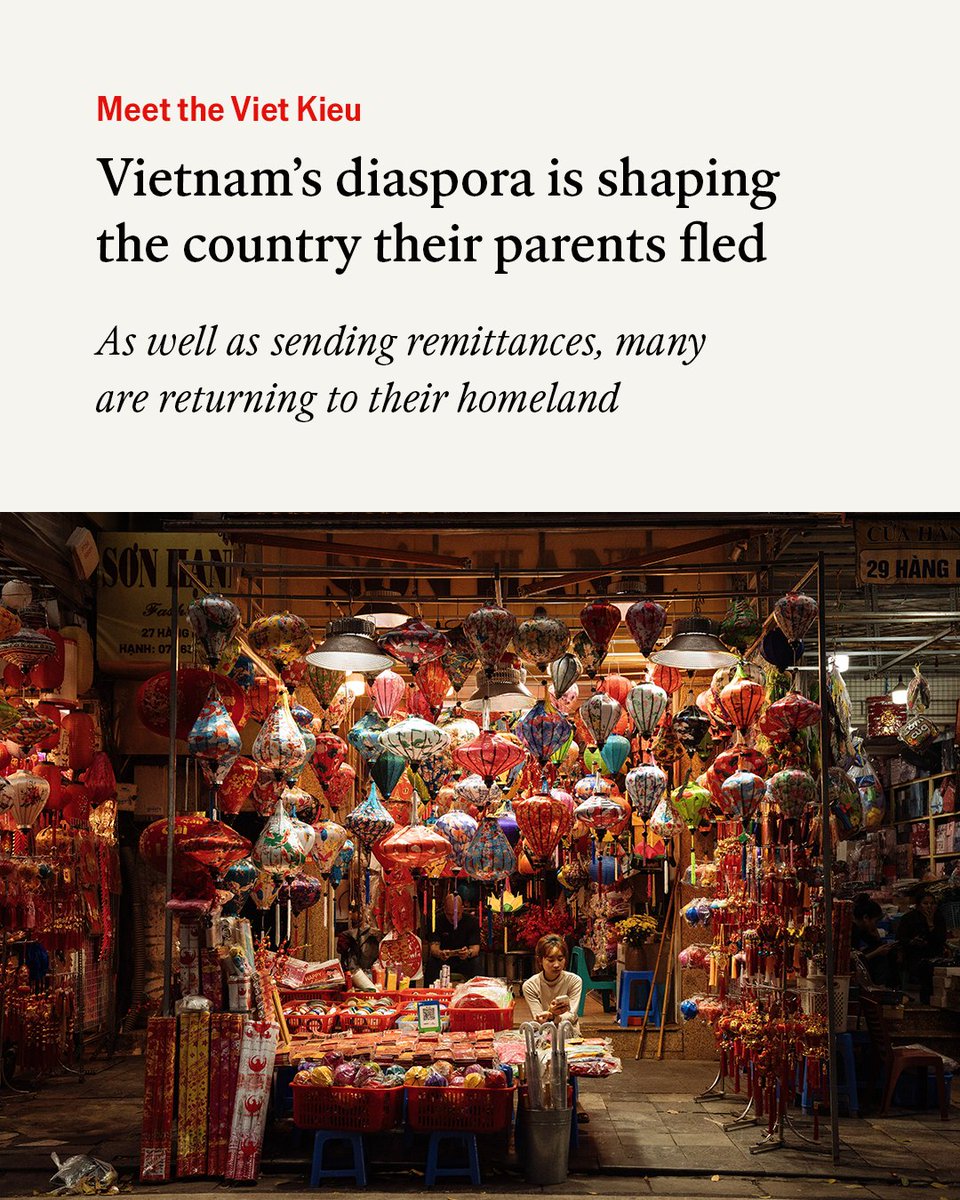
The fall of Saigon in 1975 triggered one of the world’s biggest diasporas. Fifty years on, Vietnamese emigrants and their children are returning to their homeland https://t.co/oCDgHZaJJa
Photo: Hannah Reyes Morales/New York Times/Redux /Eyevine
Our cover leader argues that To Lam, the Communist Party’s boss, has to rescue Asia’s great success story. Thankfully, he has an acute sense of his country’s challenges https://t.co/v9NcCVdM7H
Fifty years ago, tens of thousands fled Vietnam as the war ended. In the years since many have returned. Now their children are coming back, too. For @TheEconomist I wrote about how these returnees are shaping Vietnam’s development
https://t.co/jjYmJHlRwb
Feuding dynasties, hit men, impeachment—and geopolitical tension. Just another day in Filipino politics, @_joshjs tells “The Intelligence” https://t.co/g8tNuQ4l2B
The Dutertes came out on top in the Philippines’ midterms—a proxy battle between powerful political dynasties. I reported on their bitter feud with the Marcos's for today’s episode of The Intelligence https://t.co/RkxZCf7bnc
Fifty years ago the fall of Saigon ended the war in Vietnam and created a huge diaspora. On “The Intelligence” @_joshjs finds out what happened to them https://t.co/9vesH11bL9
Also, on today’s episode of The Intelligence, I spoke with the returning Vietnamese diaspora. Many have come back to Vietnam in the years since they—or their parents—fled in 1975 https://t.co/d6VArzlbS6
This isn’t the first time America’s credibility as an ally has been questioned.
50 years ago today Saigon fell, the Vietnam war ended and American pride took a big hit.
My piece looks at The Economist’s coverage from April 1975 https://t.co/vlcYW2nKg5
Fifty years ago this month, amid chaotic scenes, America pulled its remaining citizens out of South Vietnam, abandoning an ally and a war that it had once defined as essential to its interests. How did this shape America’s views on foreign conflicts? https://t.co/XSg1zXIvSr
This is not the first time that America’s credibility as an ally has been questioned.
A good look back by @_joshjs at our coverage of the fall of Saigon 50 years ago today, now in front of the paywall. Much of it will sound familiar.
https://t.co/Jczp8cy00k
Fifty years ago, Saigon fell and the Vietnam war ended. America's chaotic evacuation raised big doubts about its credibility, The Economist wrote at the time. Sound familiar? My piece this week https://t.co/vlcYW2nKg5