All bullshit aside, if you only ever read one of my tweets, let it be this.
I’m not a mental health expert or anything, but candidly, I have a family member that deals with depression and it’s taught me one thing above all else.
No matter how great your life is in any given moment, you cant expect to be at your happiest 24/7/365.
You’ve gotta come down from the highs every now and then to see just how good they were in the moment.
But just because you aren’t at your happiest right now doesn’t mean you’ll be at the bottom forever.
It’s incredible how local commercial real estate is as an industry.
90% of my market went to 2 colleges and 1 of 5 local high schools.
In a “who you know, not what you know” industry, it helps to meet people early.
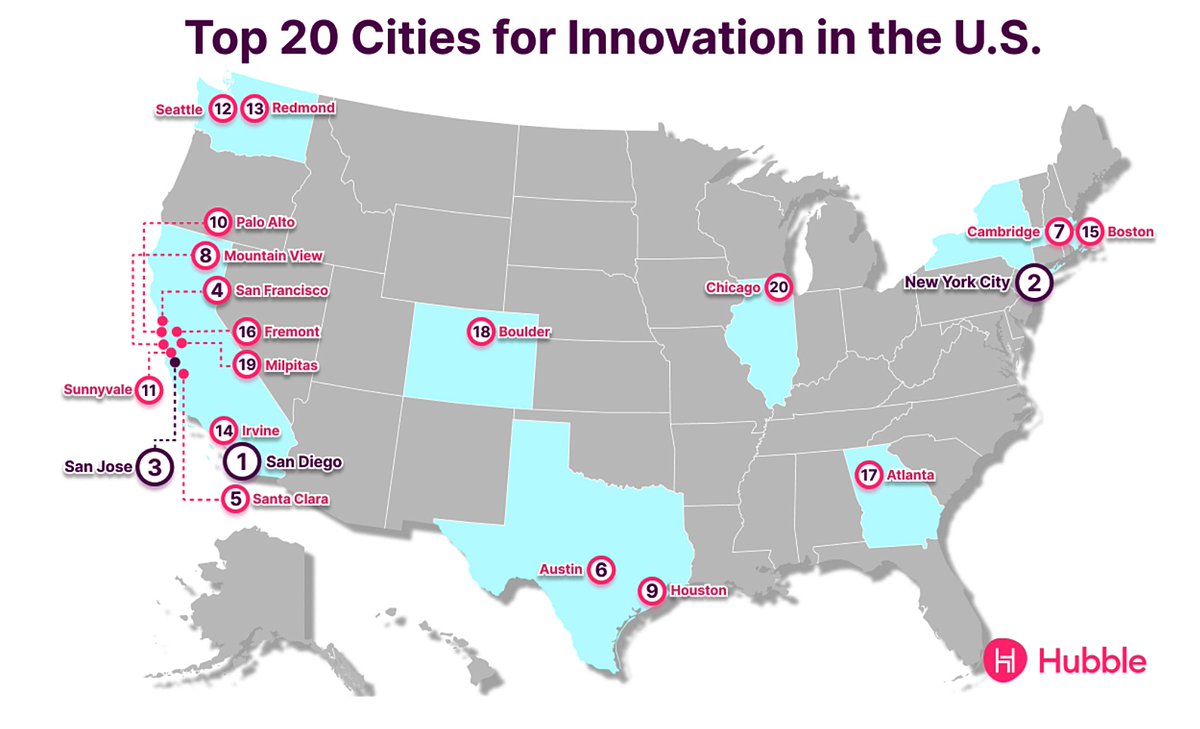
Top 20 U.S. Innovation Hubs
San Diego tops Hubble’s ranking of U.S. innovation hubs.
California dominates, with 10 of the top 20 cities. Its strengths span AI, semiconductors, advanced manufacturing and life sciences
Houston ranks ninth, supported by NASA, the Texas Medical Center and Helix Park, a growing climate-tech sector, and universities.
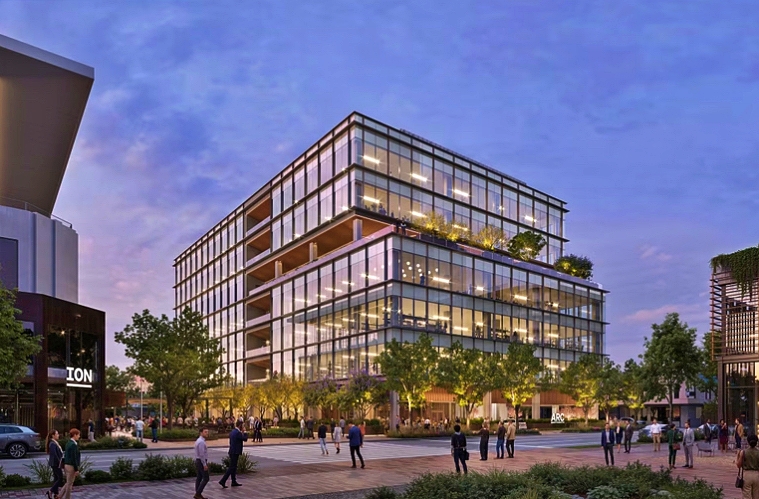
Rice is really punching above weight with the Ion District development.
Seeing how well Tech Square (Ga Tech), Kendall Square (MIT), Cortex, and Research Triangle Park have done makes me think Rice can spark some great things with the right support.
Rice University has broken ground on the Arc, a nearly 200K SF seven-story lab and office building in Houston’s Ion District. Rice will occupy 80K SF, about 40%, as anchor tenant.
How long until we get places like DraftKings and Kalshi opening brick and mortar ‘prediction markets’ in retail centers?
If it’s not ‘gambling’ then you’re not restricted to casino operations I imagine.
Feels like a matter of time before you’ll be placing bets otw home from work just like you buy a vape.
Heard multiple times in the past week that “the past 5 years have been the most challenging years in commercial real estate in close to a century”.
Given these have been my only 5 years, i’m curious what truth there is to that.
Cool custom home in the Woodland Heights neighborhood of Houston.
Paul Barabash Grocery & Meats turned custom home/compound.
My thoughts:
1. Damn, thats sweet
2. Owner must be in real estate or family of the former grocer
Office crashed before multifamily because an unemployed single-parent has more borrowing power than a small-business relative to their income.
Can’t pay apartment rent? Debit card, 2,3,4+ credit cards, personal loan, then hard money.
Can’t pay your office lease? Too bad.
Dinner with an exec/friend at a large national property management company tonight. This person oversees ~150k apartments; access to an insane amount of data.
Current multifamily market in most of the country is worse than S&L, .com bust, or the GFC. Worst they’ve seen.
Class A mostly fine, decent rent growth. However:
- credit scores at class A have gone down meaningfully over the past 3 years.
- more people are paying rent via credit card.
- average bank account balance noticeably lower than even 2 years ago
- class A tenants stretched thin, living beyond their means. 20k comes in, 20k goes out every month.
- starting to see these renters move down a tier
Class B:
- simply too many apartments, we built too much new stuff. Ripple effect is enormous.
- fewer renters tomorrow than today. Same store foot traffic noticeably down year over year. Some markets down 40-50%
- considering dropping rents below $700 a month on some 1beds in major southern markets.
Class C:
- looking at degrading NOI. Rents aren’t growing for a long time, but expenses keep creeping up
- more renters are one missed paycheck away from disaster than they can remember seeing in decades
- tenants aren’t paying rent because they simply don’t have it
- wage growth has not kept up
Lenders:
- some major investment funds, household names, haven’t paid their mortgages in 2-3 years. Banks won’t foreclose because “X is a big client.” Mexican standoff.
- a roof leak gets ignored, becomes water damage, then mold, then a down building. Buildings are rapidly deteriorating as some owners choose cash preservation over funding losses.
- number of pre-foreclosure and REO deals is the highest as a % of total units they can recall.
- data providers know it’s bad, but they’re paid to sell optimism to owners/lenders. So every forecast is “it will probably get a little better next year maybe” and that gets regurgitated at investment committees all over.
I asked “how do you think this ends?”
“Not sure. My gut says slowly then suddenly, and things will get really bad. Been doing this 40 years, you can feel it in the air. But, there’s a chance it’s just a decade of tolerable pain. I’m praying for that.”
Something i’ve noticed, only anecdotally:
Average age of renters in my area going up. No more retiring to a house on the beach. Empty nesters now retiring to Class A apartments.
Something about this situation that makes sense when you think about it:
The consumer has more borrowing power than the institutions.
When a fund reaches it’s allocation or blacklists and asset class/market/sponsor, the spiggot gets turned off. No debt spread is high enough to get a lender interested when they turn the spiggot off. But consumers always have botrowing power because they can take out another credit card and make minimum payments at 29% interest with no immediate repercussions. Rent can go on a credit card until you can’t make the minimum payments. Debt service cannot, despite workouts and extensions.
One day the consumer will no longer be able to borrow their rent payment.
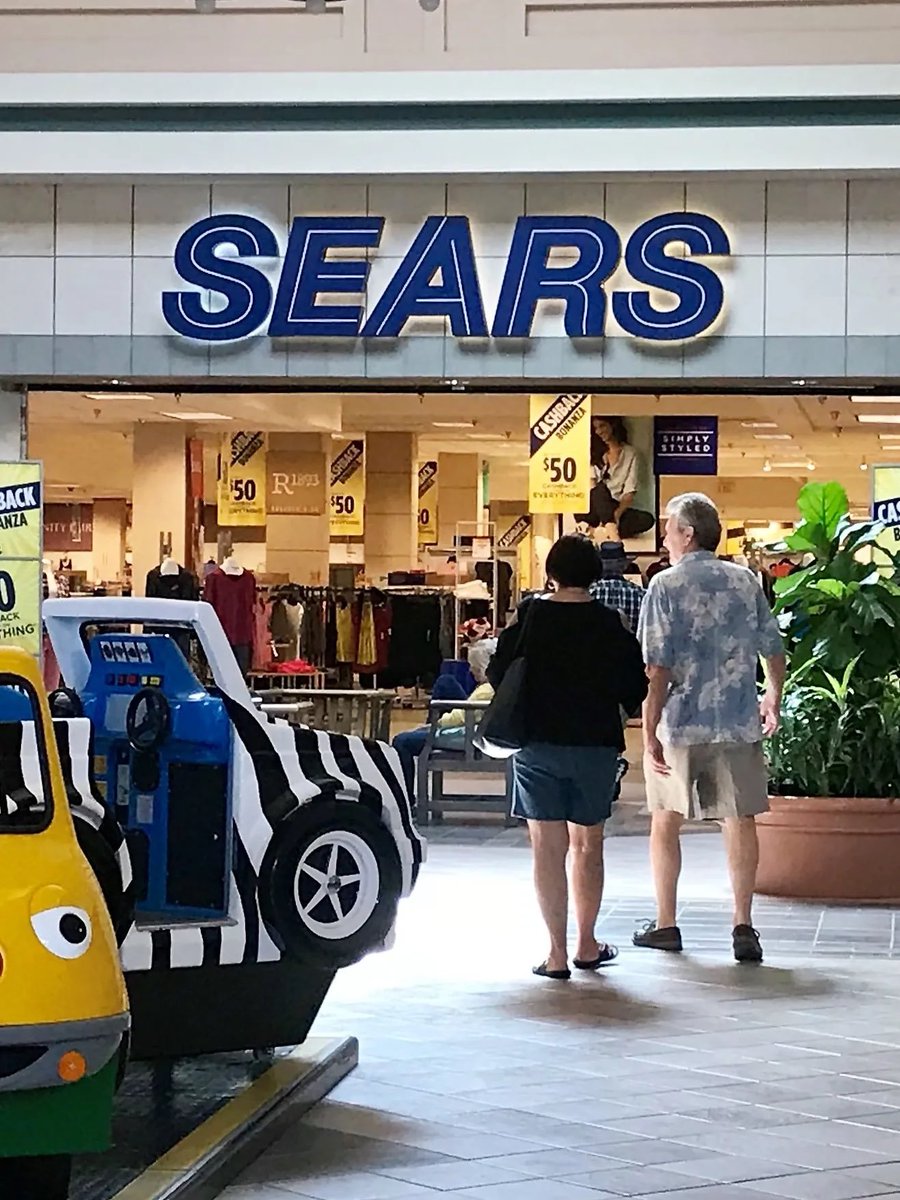
Sears is a very interesting case study in retail real estate.
When Sears and Kmart combined in 2005, they had about 3,500 stores and $55B in annual revenue.
But Sears spent years underinvesting in its stores while competitors like Walmart, or Target continued improving theirs. Eventually, the real estate Sears occupied became part of the story itself.
We have a great example here in Houston.
Sears was the original anchor at Memorial City Mall when it opened in 1964. When the store closed in 2018, it left behind roughly 209,000 SF.
Now,The former Sears site is being redeveloped, with plans for a 27 acre mixed use district featuring retail, restaurants, office, multifamily and public space.
That’s what makes these old department store boxes so interesting. Sears left behind 200,000+ SF, but that same space gave MetroNational the opportunity to rethink an entire section of the mall.
Retail changes, but real estate can always be repurposed.
@CREgir1 Another cool case study in Midtown Houston of a former Sears which was converted to the Ion Building. And it was an actual re-development, not a total tear down.
Department store to the hub of an innovation district is a one-of-a-kind conversion.
Today a local social media food influencer posted about a spot I frequent
And holy shit this place has never been as busy as it is right now
I’m a believer that everybody should be utilizing social media influencers bc whatever they paid that influencer was immediately worth it
Today a local social media food influencer posted about a spot I frequent
And holy shit this place has never been as busy as it is right now
I’m a believer that everybody should be utilizing social media influencers bc whatever they paid that influencer was immediately worth it
Asking thoughtful questions is maybe the best way to make yourself stand out.
In a 1-on-1 convo, I asked a board member why he so willingly was giving me his time.
Could tell he hadn’t expected to be asked that but gave a really thoughtful answer.