Honored to have the great @GregGrandin provide the first guest dispatch for the new TomDispatch @theintercept.
How Florida’s Cuban Diaspora and the Israeli Lobby Came Together — and Are Coming Apart
https://t.co/FDN3zme5l2
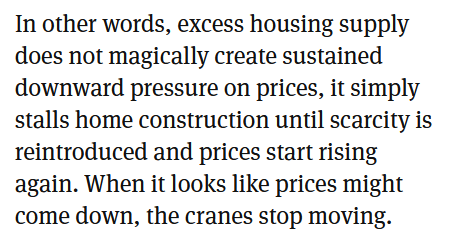
It seems that fiscal rules constrain spending (particularly in welfare), in order to reduce the deficit and get the debt-to-GDP in a falling trajectory, without considering the fact that debt in domestic currency is not dangerous. Labour didn’t do enough to change that
During the pandemic, the Israeli regime blockade of Gaza prevented enough masks from going into the strip. Yahya Sinwar, who during this time was always stressing the need for masks, went on TV and gave a tutorial on wrapping your Keffiyeh to make a makeshift mask:
🚨 Leaked audios reveal Israeli-backed effort behind President Trump’s pardon of Honduran ex-president
Leaked WhatsApp, Signal, and Telegram recordings published by Spain’s Canal RED and Hondurasgate indicate that an Israeli-backed lobbying effort—reportedly involving Trump ally Roger Stone and supported by Prime Minister Benjamin Netanyahu—helped secure President Trump’s pardon of former Honduran President Juan Orlando Hernández, who had been sentenced in the U.S. to 45 years for drug trafficking.
According to the recordings, the arrangement involved trading the pardon for a package of concessions in Honduras. The audios reference plans for a new military base and expanded access for foreign partners, alongside the expansion of semi-autonomous ZEDE zones and major AI and infrastructure contracts tied to U.S.-linked companies. The recordings do not clearly delineate which concessions are assigned to which actor, but frame them as part of a joint U.S.- and Israel-aligned agenda in the country.
In one audio, Hernández says: “The prime minister of Israel…had everything to do with my release and negotiation.” In another, he claims the money tied to his release came from “a group of rabbis and people who supported Israel.”
The recordings, dated Jan–Apr 2026, also show Hernández coordinating with newly elected President Nasry Asfura on a plan to remove legal obstacles and clear the way for Hernández’s return to power.
Hernández has publicly dismissed the recordings as fabricated, calling them part of a “campaign of disinformation” by “the radical left,” and insisting the voice in the audios is not his. Drop Site News has not independently verified the authenticity of the audio recordings.
🚨 "The Strait of Hormuz is closed" — Central Headquarters of Iran's Hazrat Khatam al-Anbiya.
"Due to the blatant breach and violation by the United States of the first clause of the ceasefire agreement, and in response to the continuous and relentless violations of the ceasefire by the Zionist regime in southern Lebanon, the merciless killing and displacement of hundreds of thousands of oppressed people of this land, and also considering the failure of the Zionist occupying forces to withdraw from southern Lebanon, it is declared that the Strait of Hormuz will be closed to vessel traffic.
It is noted that this is the first step in response to the enemy's breach of covenant, and if the aggression continues, further steps will be planned and taken to compel the enemy to fulfill its commitments." — IRIB
O Merval, como o Milei, diz que Argentina era um país rico e moderno, mas entrou em decadência por populismo, estatismo, irresponsabilidade fiscal e excesso distributivo; os Kirchner seriam continuidade desse desvio /1
A Seoul court has found former South Korean President Yoon Suk Yeol guilty of sending drones to Pyongyang to provoke a military confrontation with North Korea meant to create grounds for declaring martial law in 2024 https://t.co/vCgOq9wRIM
AI is fossil capital accumulation:
One of govt's “public policy benefits” of constructing data centres is creating new markets for Canadian fracked gas producers, w/ build-out of vast electricity-consuming data centres providing markets for energy giants
https://t.co/5H65GZFjsE
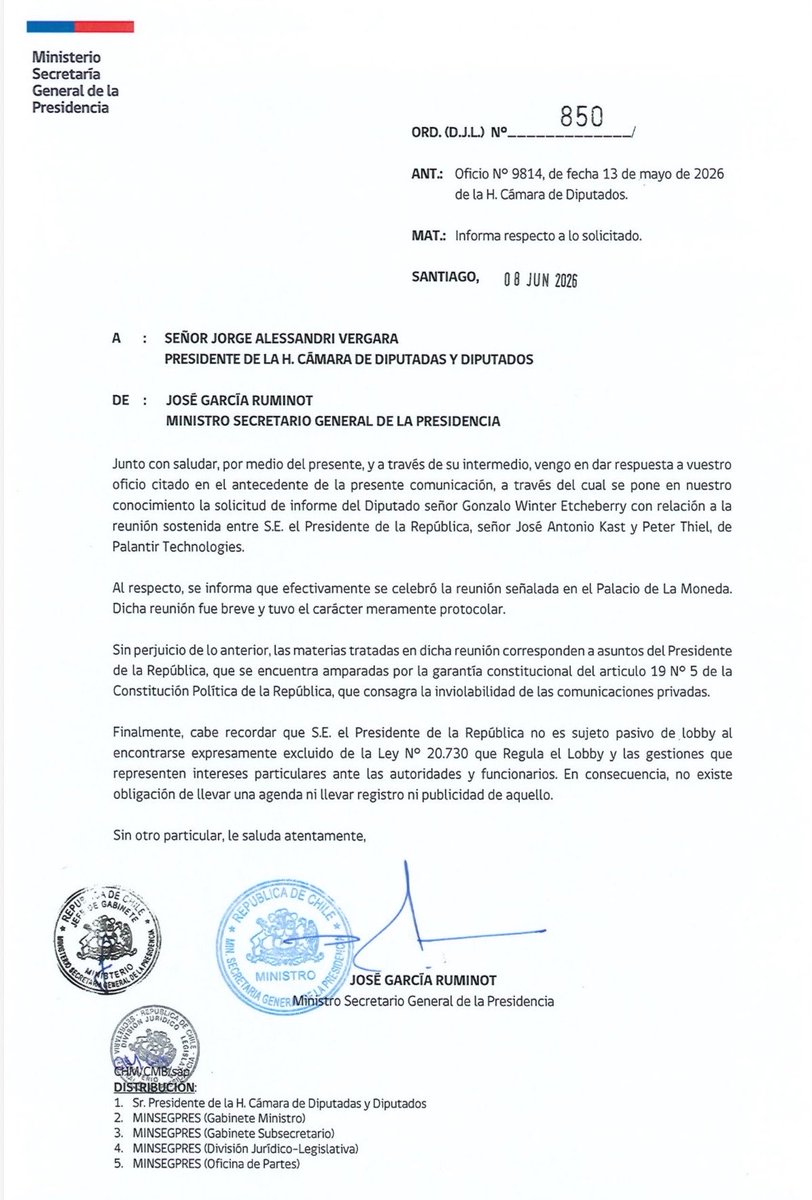
Confirmed: Chilean President José Antonio Kast hosted Palantir's Peter Thiel at the presidential palace in Santiago. The Chilean government described the meeting as "brief and merely protocolary," refusing to disclose any details.
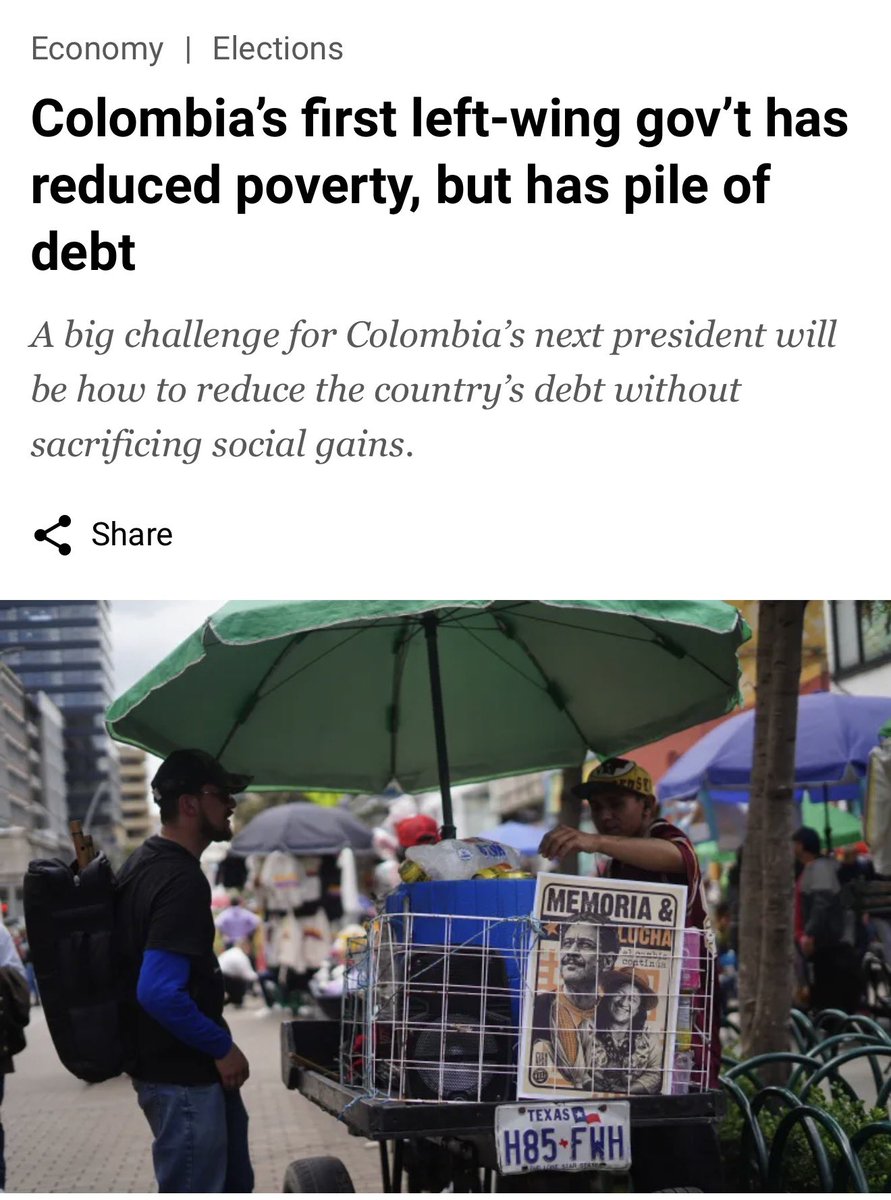
El desempeño económico de Colombia, incluyendo la reducción de la desigualdad, niveles históricamente bajos de desempleo, una mayor participación laboral y avances en la reindustrialización, justifica mayores niveles de deuda pública. Estos logros, junto con la reducción de la deuda denominada en moneda extranjera del 42% al 25%, demuestran que la economía avanza hacia el fortalecimiento de la capacidad productiva del país y una menor vulnerabilidad frente a choques externos.
Esto forma parte de una estrategia de desarrollo heterodoxa que desafía las expectativas neoliberales que durante décadas han mantenido a países como Colombia en una posición de dependencia, austeridad y subordinación dentro de la economía mundial.
La pregunta correcta es en que moneda. Colombia no tiene un problema externo (el servicio de la deuda en dólares como proporción de las exportaciones es bajo), y no hay razón para preocuparse con la deuda en pesos
ARGENTINA QUEDÓ ÚLTIMA EN EL RANKING DE INVERSIÓN EXTRANJERA EN LA REGIÓN
De acuerdo con datos de la Organización para la Cooperación y el Desarrollo Económico (OCDE) para 2025, el país recibió US $3.134 millones de inversión extranjera directa y quedó muy por debajo de los registros del resto de la región. El dato generó incomodidad en el Gobierno.
El Ejecutivo apuesta a revertir la situación con el RIGI, el Super RIGI y el impulso a sectores estratégicos. Sin embargo, las inversiones vinculadas principalmente a recursos naturales y energía aún no alcanzan para generar un proceso amplio de atracción de capitales.
Cuánto registraron los demás países
— Brasil: US$ 77.000 millones
— México: US$ 40.000 millones
— Chile: US$ 13.000 millones
— Colombia: US$ 11.000 millones
— Costa Rica: US$ 6.000 millones
Fragmentos del reporte de Misión Productiva con datos de OCDE
"El contraste refleja las dificultades persistentes de la Argentina para consolidarse como destino de capital productivo de largo plazo, aun en sectores donde el país posee ventajas competitivas y fuertes incentivos regulatorios".
"La inversión extranjera difícilmente pueda expandirse de manera sostenida en un contexto de mercado interno deprimido, utilización ociosa de capacidad instalada y ausencia de financiamiento de largo plazo".
(+) en Clarín: https://t.co/lzUJLA5qWr