We sold our 300K house in 2017 for 100 #Bitcoin
We can buy back that same house which today costs 400k for 4 #Bitcoin
If we would have held the 300K on a bankaccount from 2017 we would not have been able to buy back the house
That’s the #BTC difference 👊🏼
Ojalá que volaras más que otros los pilotos en todas vueltas en una carrera como samurai🇯🇵🌸Muchas gracias @alo_oficial por me han dado con todas tus amores y invitación para entrar a tu garage😊Planeo llevar a mis padres para presentarte en 2025.Los 2 también quieren conocerte🤝
Hoy es un día histórico para #Bitcoin: se aprobaron 11 ETFs de Bitcoin en USA.
Increíble pensar lo que hemos logrado con Bitcoin y muy emocionado por lo que se viene. En mi opinión, la masificación de Bitcoin como instrumento de inversión y una tremenda expansión de su mkt cap🔥
The OP_RETURN discussion is not new and dates back to 2014 when Bitcoin Core 0.9.0 was released with the OP_RETURN policy included which was intended to discourage more egregious forms of spam. At that time, 40 bytes was the default max datacarriersize limit across all node implementations; this was and still is sufficiently large for tying data to a transaction (32 bytes for a hash and 8 bytes for a unique identifier). Core subsequently increasing the default to 80 bytes was an entirely voluntary decision and in no way contradicts the design objective that OP_RETURN creates a provably-prunable output to minimise damage caused by data storage schemes, which have always been discouraged as abusive. There are also other good technical reasons which I have chosen to retain the lower default in Bitcoin Knots, and no justification for increasing it.
It is not my intention, nor that of my team at @ocean_mining, to filter coinjoins. These present an innovative tool for increasing Bitcoin’s privacy and, when constructed properly, coinjoins can easily stay within the OP_RETURN limit (indeed, there is no reason for them to have *any* OP_RETURN data at all). I have some ideas on how to alleviate the recent issue where some coinjoin transactions were flagged as spam from Knots v25, and I am willing, with the full resources of my team, to work collaboratively on a solution in good faith.
Bitcoin does and always has allowed nodes to set filters based on multiple sets of criteria and Knots v25’s defaults are IMO what is best for Bitcoin at this time. Others may disagree and that is ok. They are free to (and should) run their own nodes - it is good for Bitcoin to have more people running nodes, including miners, and there should be a natural diversity in node policies. As was stated before, OCEAN is on a path to decentralization and very soon we are going to be in a position where hashers will be able to fully participate as miners and perform the intelligent parts of mining such as deciding which version of node software to run and what filters or other policies to apply to block template construction.
BREAKING: BlackRock tells SEC it will seed its spot #Bitcoin ETF in October in preparation for approval.
576 ETF applications.
575 ETFs approved.
They know what they're doing... 👀
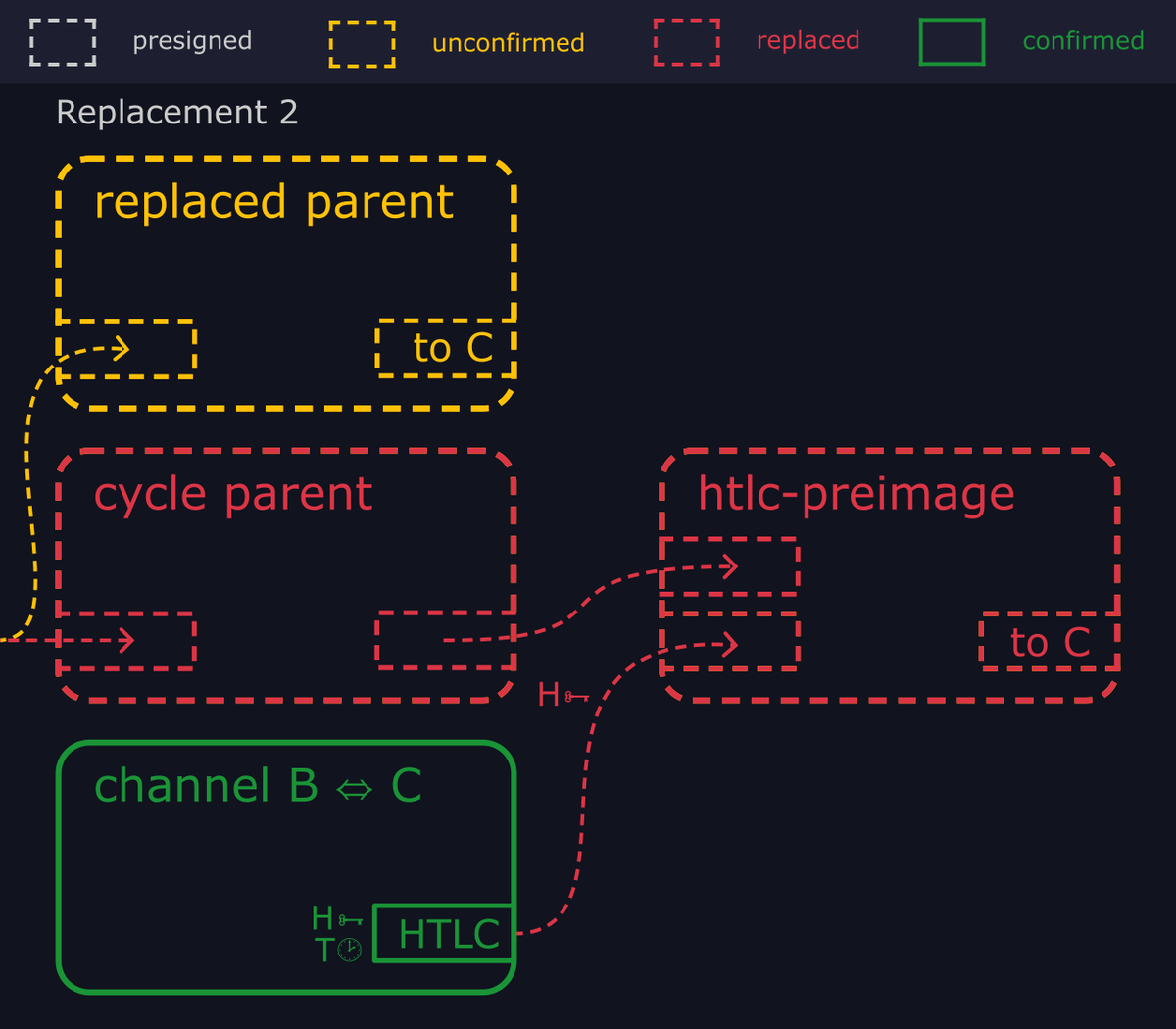
How does a lightning replacement cycling attack work?
There's a lot of discussion about this newly discovered vulnerability on the mailing lists, but the actual mechanism is a bit hard to follow.
So here's an illustrated primer...
🧵 1/n
@abrahamcr@Bitso Te echaremos de menos en @Bitso !Eres muy grande! Pocas personas tienen tanta pasión y viven nuestra misión #makecryptouseful como tu. Te va a ir muy bien en tu nueva aventura ;)
Periodismo nivel avanzado: “Las familias recurren a la ingeniería financiera para combatir la inflación”
- Papa tengo hambre
- No me molestes ahora hijo que no logro resolver el polinomio del ahorro
https://t.co/iCcJpeq6Kj
Today we're excited to announce the initial code for Taro 🍠, a new protocol to issue and transfer assets on #bitcoin and Lightning 🔜.
With this release, we're one step closer to bitcoinizing the dollar, and the global financial system! 🌍💱
https://t.co/mRrLyttgXv
Today we're excited to announce the initial code for Taro 🍠, a new protocol to issue and transfer assets on #bitcoin and Lightning 🔜.
With this release, we're one step closer to bitcoinizing the dollar, and the global financial system! 🌍💱
https://t.co/mRrLyttgXv