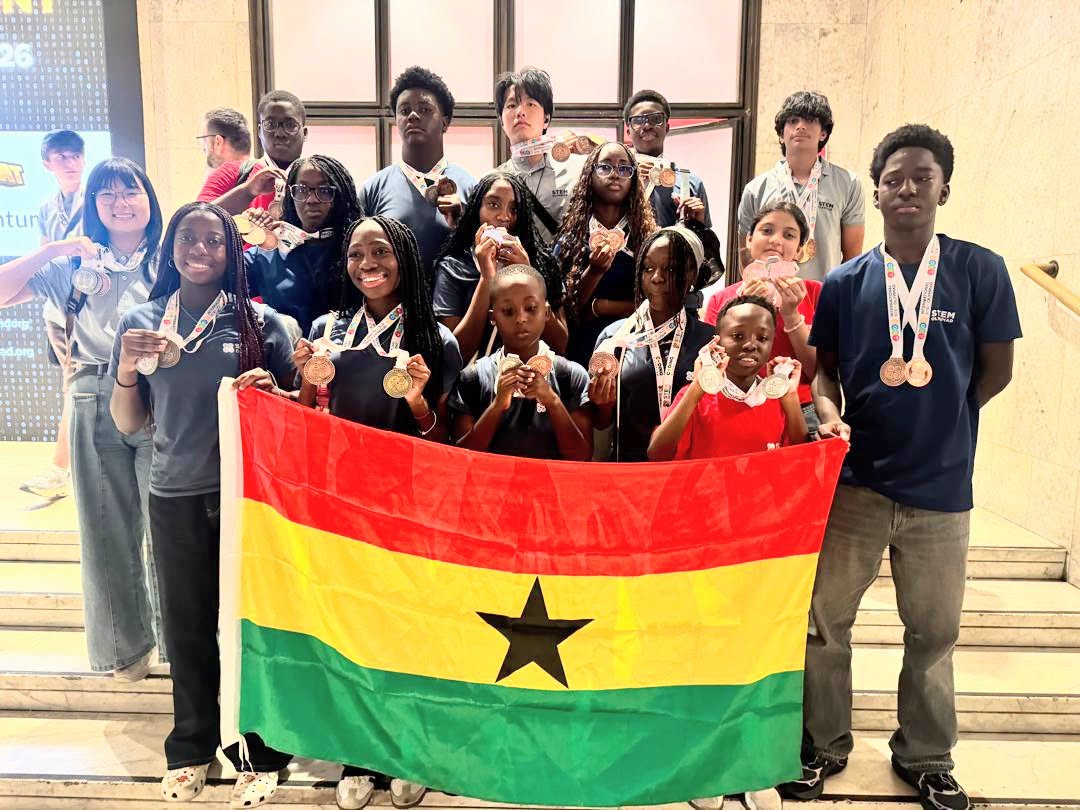
GIS students made Ghana proud at the International STEM Olympiad in Rome, winning 38 international awards across Coding, AI Engineering, Mathematics and Science. Congratulations to Team Ghana for an inspiring display of excellence, innovation and resilience! #STEM#TeamGhana
A student submitted an essay she wrote by hand. Her university ran it through an AI detector. The detector said she cheated. She is autistic.
Her name is Moira Olmsted. Adelphi University. February 2026. Turnitin flagged her essay as 100% AI-generated. She was disciplined.
Two other AI detectors classified the same essay as human-written.
She sued. She won. The court called the school's decision "arbitrary and capricious."
She is not the only one.
In May 2026, a high school student in Palo Alto was expelled after an AI detector flagged his work. He faced visa revocation. He filed a federal civil rights lawsuit.
A researcher at Griffith University just proved mathematically why this keeps happening. The paper is on arXiv. The finding is one sentence.
AI text detectors have a structural flaw that no amount of better engineering can fix.
Here is what the math says.
If a university wants its detector to catch 80% of cheaters, at least 750 out of every 10,000 innocent students will be wrongly accused. That is not a software problem. It is a theorem.
If the university tries to limit false accusations to 1%, detection power collapses to 6%. It catches 6 out of every 100 AI-written papers. The other 94 get through.
There is no setting where the detector is both fair and effective.
The reason is diversity. Every student writes differently. Non-native English speakers use simpler vocabulary. Shorter sentences. Clearer structures. So does AI. A Stanford study found that 61.3% of TOEFL essays written by non-native English speakers were misclassified as AI-generated. A separate analysis tested 14 commercial detection tools. Zero out of 14 reached 80% accuracy.
The students most likely to be wrongly accused are non-native English speakers, neurodivergent students, and anyone who writes with clarity and precision. The qualities that make their writing effective are the same qualities the detector mistakes for a machine.
Vanderbilt University understood this. They disabled Turnitin's AI detection in 2023 after calculating that even a 1% error rate across 75,000 submissions would produce 750 wrongful accusations per year.
750 students accused of cheating for writing like themselves.
The paper's conclusion is not that we need better detectors. It is that the diversity of human writing itself makes accurate detection mathematically impossible.
The same thing that makes your writing yours is the thing that gets you accused.
https://t.co/L91ldtXP05
Being in shape and healthy at 60 is more impressive than a million dollar portfolio btw. Even more points if you can still do sports and social events. (Marathons, etc.)
Mobility and health is everything
Africa didn’t run out of good building materials. It was taught to distrust them… and then it chose to keep distrusting them long after no one was forcing it to.
Colonisation introduced the bias. Building codes written during that period classified mud brick, laterite, and earth construction as non-compliant. Cement was imported and institutionalized through those same codes. But here is what that argument leaves out: South Korea was colonized and flattened by war. Vietnam fought three consecutive wars until 1975. Singapore had no natural resources.
They rebuilt anyway, with intention and with accountability. The colonization argument explains how Africa got here. It does not explain why it is still here.
After independence, the concrete block became a status symbol that African buyers, developers, and architects chose voluntarily. Local materials were not just abandoned by colonial decree, they were abandoned by African hands, long after colonization ended. That is the conversation worth having.
This is what A Threshold built instead, in Kaggalipura, Karnataka, India.
Subterranean Ruins is a community centre dug into a sloping three-acre orchard south of Bengaluru. Red brick walls, stone paving, black granite cobblestones, every material sourced within 50 kilometres of the site. The mortar binding it all contains five per cent cement. The rest is lime and mud. The rooftops are planted. The courtyards regulate airflow. There is no air conditioning. Local masons, artists and craftspeople from the surrounding villages built it; trained on site, employed through the construction process.
The result looks like it has always been there. That is not an accident. That is the point.
Africa is not short of brick. It is not short of laterite, stone, or clay. What it is short of is architects and clients willing to treat those materials as the complete answer they already are, instead of reaching for the cement block that costs more, performs worse in heat, and hands the economy of construction to supply chains communities don’t control.
The history matters, but the choice being made on every building site today belongs to us.
Subterranean Ruins, Kaggalipura, Karnataka, India 🇮🇳 | A Threshold | Avinash Ankalge, Harshith Nayak | 165m² | 2022 | 📷 Edmund Sumner
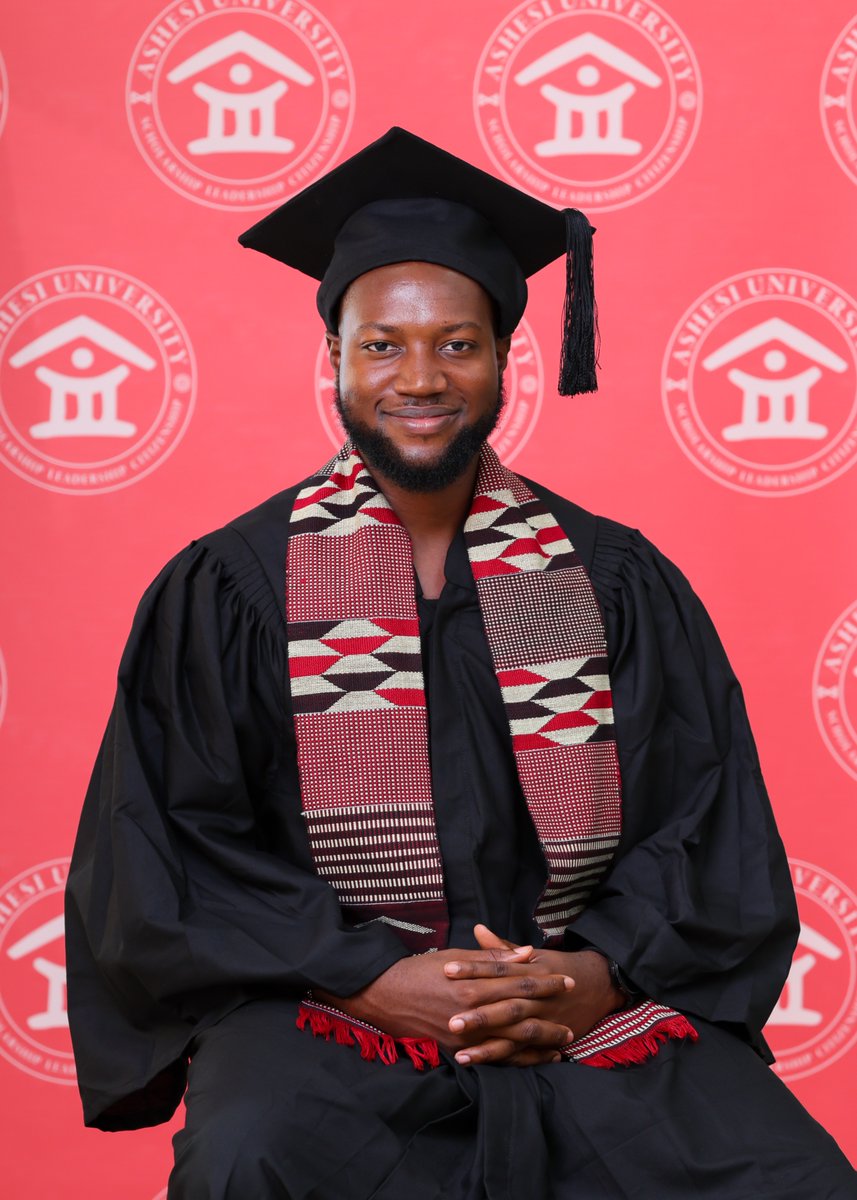
For his capstone project, Nana Kwaku Amoako '26 designed DuoSign, a browser-based system that converts text and speech into sign language using a digital avatar. The tool aims to improve accessibility by helping deaf users access digital content in real time, especially in environments where sign language tools and datasets remain limited.#AshesiGrad #Ashesi2026
🚨BREAKING: Anthropic just published a study mapping exactly which jobs its own AI is replacing right now.
The workers most at risk are not who anyone expected. They are older. They are more educated. They earn 47% more than average. And they are nearly four times more likely to hold a graduate degree than the workers AI is not touching.
The argument is straightforward. Anthropic built a new metric called "observed exposure." Not what AI could theoretically do. What it is actually doing right now in professional settings, measured against millions of real Claude conversations from enterprise users.
For computer and math workers, AI is theoretically capable of handling 94% of their tasks. It is currently handling 33% of them. For office and administrative roles, theoretical capability is 90%. Current observed usage is 40%. The gap between what AI can do and what it is already doing is enormous. The researchers are explicit about what comes next. As capabilities improve and adoption deepens, the red area grows to fill the blue.
The demographic finding is what makes the paper uncomfortable. The most AI-exposed workers earn 47% more on average than the least exposed group. They are more likely to be female. They are more likely to be college educated. This is not a story about warehouse workers or truck drivers. It is a story about lawyers, financial analysts, market researchers, and software developers. The exact group whose education was supposed to insulate them.
Computer programmers showed the highest observed AI exposure at 74.5%. Customer service representatives at 70.1%. Data entry keyers at 67.1%. Medical record specialists at 66.7%. Market research analysts and marketing specialists at 64.8%. These are not predictions. These are measurements of work that is already happening on AI platforms right now.
Then there is the pipeline finding nobody is talking about loudly enough.
Anthropic's researchers found a 14% decline in the job-finding rate for workers aged 22 to 25 in highly exposed occupations since ChatGPT launched. No comparable effect for workers over 25. Entry-level roles were never just jobs. They were the training ground where junior analysts became senior analysts, where junior lawyers learned how arguments hold together. If that layer disappears, nobody has answered the question of where the next generation of senior professionals comes from.
The detail buried in the paper that most coverage missed: 30% of American workers have zero AI exposure at all. Cooks. Mechanics. Bartenders. Dishwashers. The technology reshaping professional careers is completely irrelevant to roughly a third of the workforce. The divide is no longer between high skill and low skill. It is between presence and absence.
The company publishing this study is the same company selling the AI doing the replacing. Anthropic had every commercial incentive to soften these findings. They published them anyway.
If you spent four years and $200,000 on a degree to land a white collar career, the company that builds Claude just confirmed your job is more exposed than the bartender pouring drinks at your graduation party.
Source: Anthropic, "Labor market impacts of AI: A new measure and early evidence"
PDF: https://t.co/taYgsIfiTj
The same hands that built our timeless walls also made healthy and beautiful kitchen utensils from clay, the same material they built with.
Clay keeps water cool without a refrigerator. Clay keeps food warm without a stove. Clay pots absorb and release moisture, regulating temperature the same way a well-built clay wall regulates heat inside a room.
This is not coincidence. It is the same material intelligence applied at two different scales.
Africa, Asia, and Latin America all figured this out independently. The earth gave them the same answer because the problem was the same, how do you live well with what is available.
Then plastic came. Then concrete came. Then electricity bills came.
The material never failed us. We abandoned it.
If Chelsea were given a 10-year transfer ban and were forced into using academy talents, would they be better off than they are now?
Good chance they’d have Guehi, Olise, Musiala, Rice, Livramento, Ngumoha etc suiting up for them, and they also wouldn’t be £1b in debt.
The brain is designed to learn through constant repetition and active, hands-on involvement. Through such practice and persistence, any skill can be mastered.
Some things you only understand looking back.
Story time.
1. When I was a law student studying French Civil law in Morocco, I was a young man deep in love with international law when I first encountered James Crawford’s work. The Australian jurist.
2. I did not just admire him. I studied him the way young lawyers study people they secretly hope to become. His precision. His moral seriousness. The way he could hold enormous complexity and still find the clean line through it. To be fair, my own politics of law was not at the time sufficiently decolonized. But still.
3. Anyway, years later, I was at the Ministry of Foreign Affairs as Assistant Director of the Legal Bureau, and guess what? Australia came knocking on Ghana’s door asking for our support to put Crawford on the International Court of Justice, there was a part of me that wanted to say yes before the sentence was finished.
4. But you see at the time Ghana had put Alan Kyeremanten forward for WTO Director-General. And that changed everything.
5. The Director of Legal asked me for a memo. I sat down and wrote it honestly. Crawford was exceptional. He would probably win regardless. But Ghana had a son in a race or our own, and our vote was not ours to give away cheaply.
6. My recommendation was simple: we write back to the Australians, tell them we will support Crawford, only if they support Alan in return.
7. Ghana first. Not out of sentiment. Out of conviction.
And that’s what we did.
8. Here is what makes this stay with me all these years later. I did not know Alan Kyeremanten. Not at all. I had no relationship with him, no reason beyond Ghana to care whether he succeeded. I was not doing him a favour. I was doing my job, for my country, the way I understood that job to mean something.
9. I never told him. When we eventually met, when we became close, I never brought it up. It was not a card I was holding. It was just something that happened in a ministry office, a memo, a recommendation, duty carried out quietly and then set down.
10. This will be his first time finding out when he reads this.
11. Anyway, life did what life does.
12. This man I had once anonymously gone to bat for, in a corridor of diplomacy he never knew I was walking, asked me some 11 years later, if I would accept to be his VP running mate.
13. I keep thinking about that young lawyer. Starry-eyed about Crawford. Sitting down to write a memo that would ask his idol to wait, because Ghana’s turn mattered more.
14. Serve faithfully. Put Ghana first! The arc has a way of revealing itself.
Shalom
@DavidHundeyin Europe is never a friend of Africa. The bad guys voted YES while the good boys slapped with a NO. They freely apologise for slavery but justice is never in their books.