🥳 Huge preprint 🔔 Today we share something our group has been working toward for a long time, led by
@LucasMoriniere We asked can we predict which receptor a phage targets from its genome sequence alone? For most phages, we couldn’t. So Lucas set out to do something crazy!
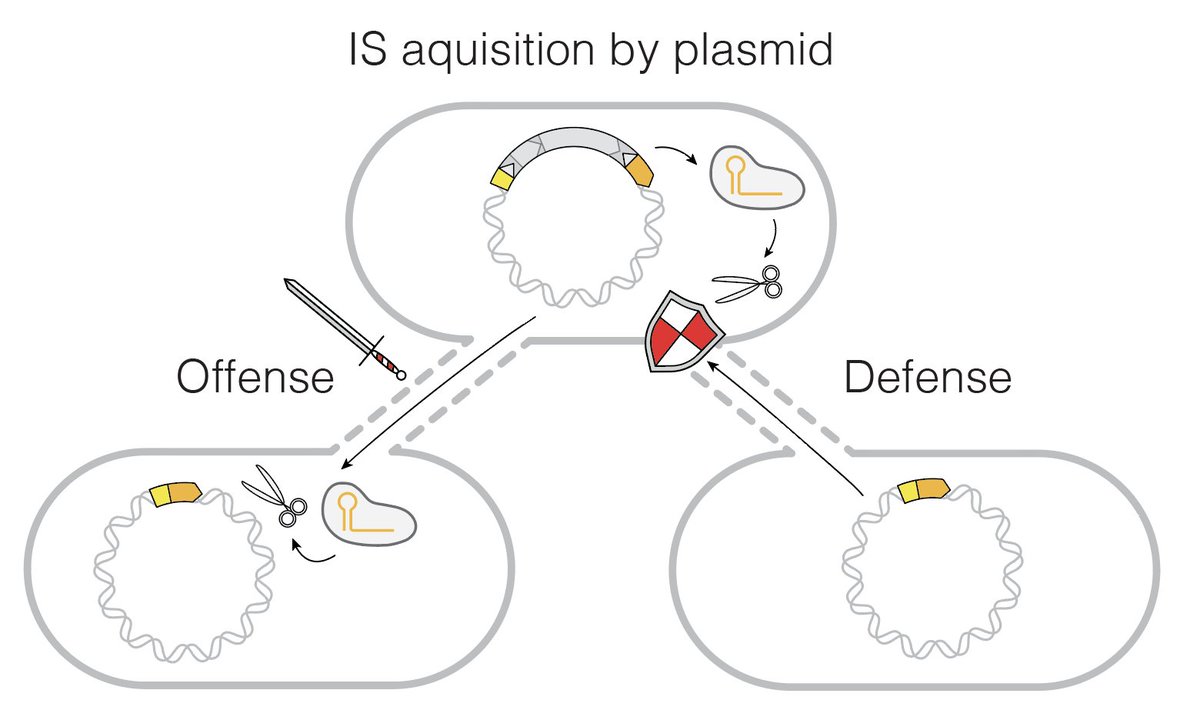
What is the best strategy to win any contest?
Eliminate your opponents of course.
Recently, my colleague @fernpizza showed how plasmids compete intracellularly (check out his paper just published in Science today!). Together with @baym, we now know how they can fight.
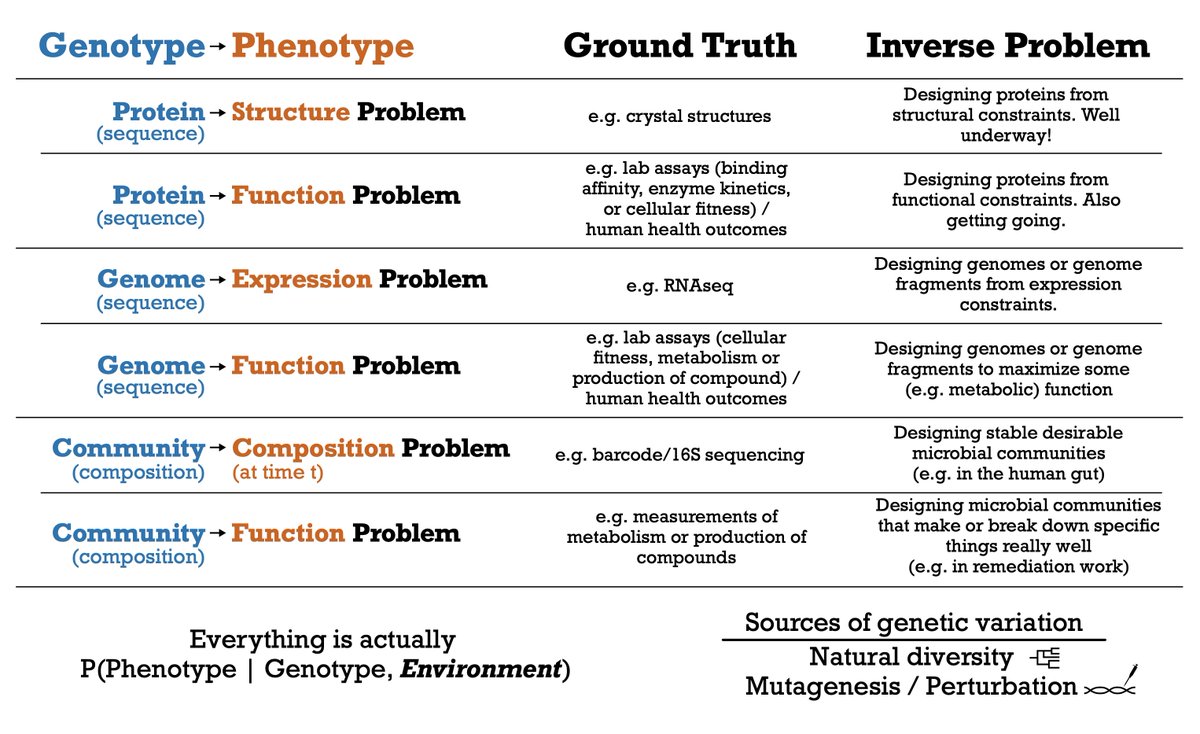
Excited to share pt 2 of my blog on genotype-phenotype maps! We are good at predicting protein sequence->structure. How did it happen? Why was it possible? Can we make similar predictions for protein function, whole-cell phenotypes, or community function
https://t.co/CvoFbODtjo
Curious about how evolution takes place? Are you looking for a "first-course" in the subject?
My book, Fundamentals of Evolutionary Biology (CRC Press), takes a microbe-first approach and explains how molecular and cellular processes drive evolution.
I'm very excited to share something I've been working on off-and-on for a long time now: a new blog about genotype-phenotype landscapes! The first post is a Gödel-Escher-Bach-style dialogue to introduce the topic. If you like it please share/repost! https://t.co/2l3eswCSzo
Know any recent or upcoming college graduates who are looking for a (full-time&paid!) microbio research experience? Point them towards RaMP! @darian_doakes and I are co-mentors for an MGE project that I think is going to be really cool. Apps+recs by 5/25 https://t.co/RAtAJhEQ8a
@PetrovADmitri@skryazhi It also could be important that the backgrounds are from a cross (so maybe gene regulation is very non-optimal) - again really speculating wildly here, but I think that is one possible form of specificity of these results.
@PetrovADmitri@skryazhi To tack onto what Sergey said with some wild speculation: maybe in the really really slow growing strain/env combos, just not expressing any nonessential gene is likely to be beneficial. I don't know enough about cell biology to know how reasonable that sounds, but it's an idea.
A little late to the party, but I'm really excited to see this work out from Sarah Ardell, Alena Martsul, and Sergey Kryazhimskiy over at UCSD, with some help from me from afar. Sergey's thread goes over the main results. Here's why I think they are fun to think about:
It looks like I never posted anything (*but see below) on what are probably the most surprising results my lab obtained so far. Anyway, this work—led by an outstanding former PhD student Sarah Ardell in collaboration with @_miloj—is now published:
https://t.co/FyWOAaZr06
Major thanks to Alena for leading the experimental work on this, to Sarah for leading the analysis, and to Sarah and Sergey for carefully pulling it all together, writing, etc.!