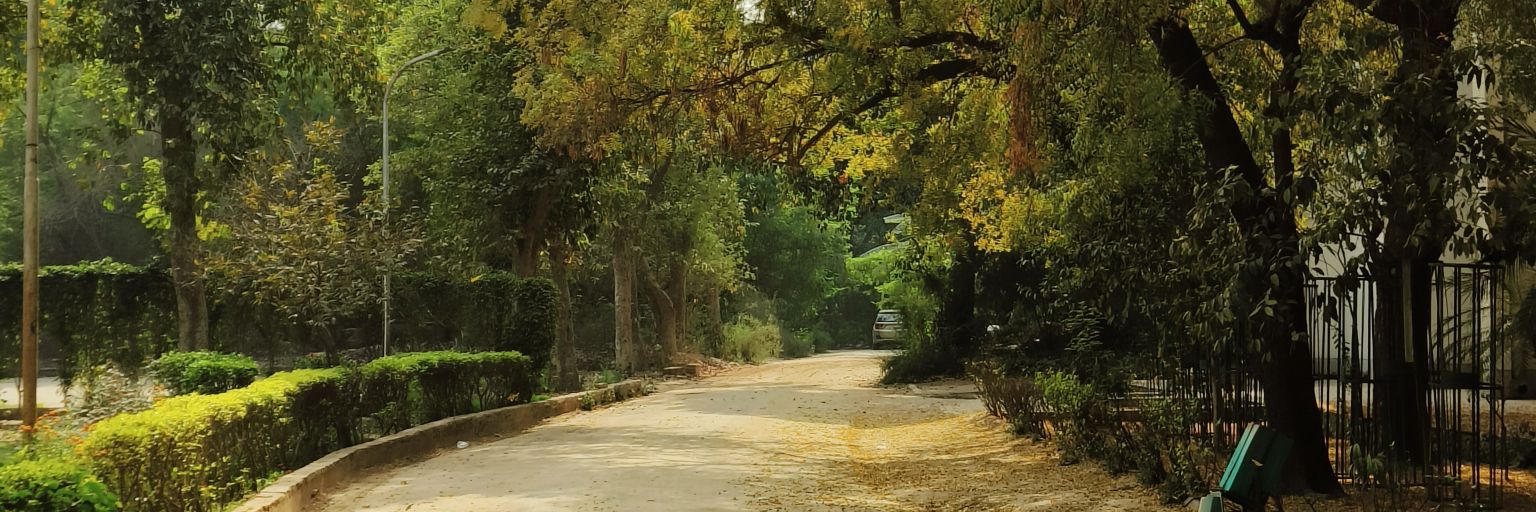
Kite flying was once a cherished tradition in many parts of India, with people crowding the rooftops during kite festivals. But today the tradition is dying out. I write for the @BBCWorld
https://t.co/orOTnv7gHK
"Another India-Pakistan conflict is highly likely ... it could prove even more serious than the war last year. But for now, there is at least some reason to believe that both countries are aware of this great danger, and that they want to do what they can to avoid such a scenario," writes Michael Kugelman https://t.co/pRSn1txtHH
New story:
An Indian billionaire was targeted by the Trump administration.
Then he poured millions of dollars into an obscure startup secretly backed by Donald Trump Jr.
Wrote this piece to understand India’s Pakistan policy and what went wrong
“Certainly, India’s strategy of undercutting and indeed isolating Pakistan, regionally and globally, has backfired in a big way,” @MichaelKugelman told @AJEnglish
https://t.co/Gmw2CNITud
Kite flying was once a cherished tradition in many parts of India, with people crowding the rooftops during kite festivals. But today the tradition is dying out. I write for the @BBCWorld
https://t.co/orOTnv7gHK
For Asia Democracy Chronicles, I write about Rohingya refugee women in India, trying to navigate their lives in fear and uncertainty with a constant threat of deportation.
https://t.co/lKIozvSgjl
After jailing Imran Khan two years ago, Pakistan’s military establishment has tried to erase him from public life. @OsmanSamiuddin) travelled to Islamabad, Karachi and Lahore to report on this bizarre effort to disappear the country’s most famous man.
https://t.co/gvbN2oKtbg
At 4am outside AIIMS, this is the cost of “free healthcare”. India’s poorest patients sleep on pavements in biting cold—feeding tubes, swollen limbs, plastic sacks for mattresses, medical files as pillows amidst garbage. My reportage for @timesofindia https://t.co/rrDqSMplZ2
“Neeraj Chopra’s javelin travelled a triumphal distance, scoring an arch of cheer across India; it fell well short of Kashmir,” @SankarshanT once wrote. A brilliant journalist, a storyteller at heart, and someone who valued his commitment to his craft.
Sankarshan Thakur (63)
A Reporter Who Wrote With a Poet’s Pen
By A.J. Philip
I first met Sankarshan Thakur in Patna in the mid-eighties. He was then a handsome, young and enthusiastic reporter with Sunday, a magazine sold for just one rupee a copy. Though it was cheap in price, I rated the weekly high. I admired its editor M.J. Akbar’s flair for reporting—his piece on the funeral of Lok Nayak Jayaprakash Narayan was one I must have read several times.
Akbar had an eye for spotting talent and nurturing it. He made many outstanding reporters and editors. One of them was undoubtedly Sankarshan Thakur. Journalism, after all, was in his blood like the red corpuscle. His father, Janardhan Thakur, was a formidable figure in the profession. Sankarshan inherited not just the instincts but also the literary verve of his father.
What drew me most to Sankarshan was his flair for writing. He was not the conventional reporter who filled his copy with dull phrases like “he said, he observed, he concluded.” He wrote instead with the heart of a storyteller and the brush of a painter. He could set a scene with the detail of a novelist: “As the sun set in the west and as the fisherman rowed his boat laden with only his net and no fish, Ramesh…”—that is the kind of opening line one might see in his reports.
He never disappointed me as a reader. His journalism had rhythm, cadence, colour. He made politics and conflict human, and human beings political, weaving narratives that were both sharp and lyrical.
Of course, I once locked horns with him. When his maiden book, The Making of Laloo and the Unmaking of Bihar, appeared, I picked up an early copy and wrote a review article. I praised the book but pointed out what I considered a lapse of taste. He had mentioned that Lalu Prasad Yadav scratched his groins. I asked, in my review, if a man felt like itching, what else could he do? To me it was unbecoming of a journalist to mock a leader’s mannerisms and pronunciation. He had every right to criticise policies, corruption, and governance, but not physical habits.
A few months later, I met Lalu Yadav in the company of my former colleague Nalin Verma. Lalu took me to a room in his wife and Chief Minister Rabri Devi’s official residence, stacked with books. “Don’t think I read any of them,” he said candidly. “These are books I receive. You can take any or all of them home.” Among them I noticed Thakur’s book. Lalu made some remarks about the author which are better kept in memory.
For years, I remained a regular reader of The Telegraph, where Sankarshan’s long features and dispatches stood out for their richness. One thing I noticed about him was his willingness—almost an impatience—to report from the scene of activity. As one of his editors remarked, “Within two hours, he would reach the scene by car or train or by air.”
He was holidaying in Goa when he heard about the “war” in Kargil. Without hesitation, he rushed there. His reports from the conflict zone were nuanced and riveting. Television reporters like Barkha Dutt became household names with their ground-zero coverage, but Sankarshan’s words captured the complexity of the war with a depth that only print could provide.
It was during the Kargil war that tragedy struck him personally. His father passed away while he was at the front. Twenty years later, he remembered the moment in a tweet that revealed the tenderness beneath his journalistic toughness:
“It has been 20 years, and we lost him while I was reporting the war over Kargil. Nothing fades, or it fades and colours up again and again, like shades on olden photographs. A tribute to the man who made me. He was also my father.”
Only a son with the soul of a writer could have composed such a tribute.
Providence made us colleagues when he joined the Indian Express as Associate Editor. On a few occasions, I requested him to write editorials, but he showed little interest. Perhaps because editorials carried no byline, and Sankarshan was a man who valued his signature on his work.
Yet he was generous in another way. He often wrote to the editor asking him to convey thanks to the sub-editors who improved his copy with subtle but effective editing. It was a rare acknowledgment in a profession where reporters often bristle at editorial changes.
Our relationship may have remained cool, but Sankarshan was known to be warm to his friends. He loved to host them with good food and conversation. Like some of my Maithil Brahmin friends, he was fond of cooking—especially mutton slow-cooked and served with litti, the baked wheat ball stuffed with roasted gram flour and dripping with ghee. His table, like his prose, had flavour and richness.
Journalism—and nothing but journalism—was his passion. He began humbly as a trainee at the Free Press Journal. From there, through Sunday, The Telegraph, and Indian Express, he rose steadily to the very top. He eventually became Editor of The Telegraph, a position that marked the zenith of a career built on curiosity, integrity, and craft.
But the summit was shadowed by illness. Cancer—described by author Siddhartha Mukherjee as “The Emperor of All Maladies”—crept into his life. Diagnosed with lung cancer, he was admitted to a prominent hospital in Gurugram. For a time, he responded well to treatment. Family and friends began to believe he might rally. But the disease was relentless. His health deteriorated, and he was finally put on a ventilator. It could not save him.
Sankarshan Thakur died this morning, leaving behind his wife, a daughter who is a conservationist with INTACH, and a son who graduated in law from Jindal University, besides a large circle of relatives, friends, colleagues, and admirers.
In his death, Indian journalism has lost one of its great practitioners. Sankarshan was not merely a reporter but a writer who turned reportage into literature. He humanised Bihar politics for a national audience, gave texture to war reporting, and kept alive the belief that journalism could be at once factual and lyrical.
For those of us who knew him in person or through his prose, his passing is an irreplaceable loss. Journalism in India has grown noisier, shallower and more transient. Sankarshan Thakur reminded us, by his example, that words can still be precise, humane, and enduring. I join his family, friends, and countless readers in mourning his death and celebrating his life.
[email protected]
Arundhati Roy had never planned to write a memoir. That changed when she lost her most captivating and complicated subject: her mother, Mary Roy.
I interviewed her on her new book, ‘Mother Mary Comes to Me’.
https://t.co/ZKPomgMwK3
The situation is tense in #Srinagar, Kashmir. People are closely monitoring the rising waters in the river Jehlum. It is a flood like situation. The tension is looming in the air.
This is my will and my final message. If these words reach you, know that Israel has succeeded in killing me and silencing my voice. First, peace be upon you and Allah’s mercy and blessings.
Allah knows I gave every effort and all my strength to be a support and a voice for my people, ever since I opened my eyes to life in the alleys and streets of the Jabalia refugee camp. My hope was that Allah would extend my life so I could return with my family and loved ones to our original town of occupied Asqalan (Al-Majdal). But Allah’s will came first, and His decree is final. I have lived through pain in all its details, tasted suffering and loss many times, yet I never once hesitated to convey the truth as it is, without distortion or falsification—so that Allah may bear witness against those who stayed silent, those who accepted our killing, those who choked our breath, and whose hearts were unmoved by the scattered remains of our children and women, doing nothing to stop the massacre that our people have faced for more than a year and a half.
I entrust you with Palestine—the jewel in the crown of the Muslim world, the heartbeat of every free person in this world. I entrust you with its people, with its wronged and innocent children who never had the time to dream or live in safety and peace. Their pure bodies were crushed under thousands of tons of Israeli bombs and missiles, torn apart and scattered across the walls.
I urge you not to let chains silence you, nor borders restrain you. Be bridges toward the liberation of the land and its people, until the sun of dignity and freedom rises over our stolen homeland. I entrust you to take care of my family. I entrust you with my beloved daughter Sham, the light of my eyes, whom I never got the chance to watch grow up as I had dreamed.
I entrust you with my dear son Salah, whom I had wished to support and accompany through life until he grew strong enough to carry my burden and continue the mission.
I entrust you with my beloved mother, whose blessed prayers brought me to where I am, whose supplications were my fortress and whose light guided my path. I pray that Allah grants her strength and rewards her on my behalf with the best of rewards.
I also entrust you with my lifelong companion, my beloved wife, Umm Salah (Bayan), from whom the war separated me for many long days and months. Yet she remained faithful to our bond, steadfast as the trunk of an olive tree that does not bend—patient, trusting in Allah, and carrying the responsibility in my absence with all her strength and faith.
I urge you to stand by them, to be their support after Allah Almighty. If I die, I die steadfast upon my principles. I testify before Allah that I am content with His decree, certain of meeting Him, and assured that what is with Allah is better and everlasting.
O Allah, accept me among the martyrs, forgive my past and future sins, and make my blood a light that illuminates the path of freedom for my people and my family. Forgive me if I have fallen short, and pray for me with mercy, for I kept my promise and never changed or betrayed it.
Do not forget Gaza… And do not forget me in your sincere prayers for forgiveness and acceptance.
Anas Jamal Al-Sharif
06.04.2025
This is what our beloved Anas requested to be published upon his martyrdom.